
I wasn’t sure how to answer this prompt—
What bothers you and why?
—until my girlfriend and I had a conversation on AI. Which is not unusual, since she’s a pretty staunch advocate against it. I’m fairly neutral on it, to be fair. I think it opens up lots of exciting possibilities, and it’s a tool like anything else, but at the same time, there are multitudinous problems with it that no one seems to want to address. Hell, I experimented with it against my better judgment and realized it was making my imposter syndrome so much worse. The unfortunate truth is we’re just going to have to learn to adapt to this somehow. There’s no putting this genie back in the bottle.
But it’s disheartening, because the advent of AI might be the final nail in the coffin of the music industry. And that is what has been bothering me lately.
And the sad truth is, the state of music has been in decline since the dawn of the internet. In fact, Suno is just finishing a job started by Napster all those years ago and continued by Spotify to this day.
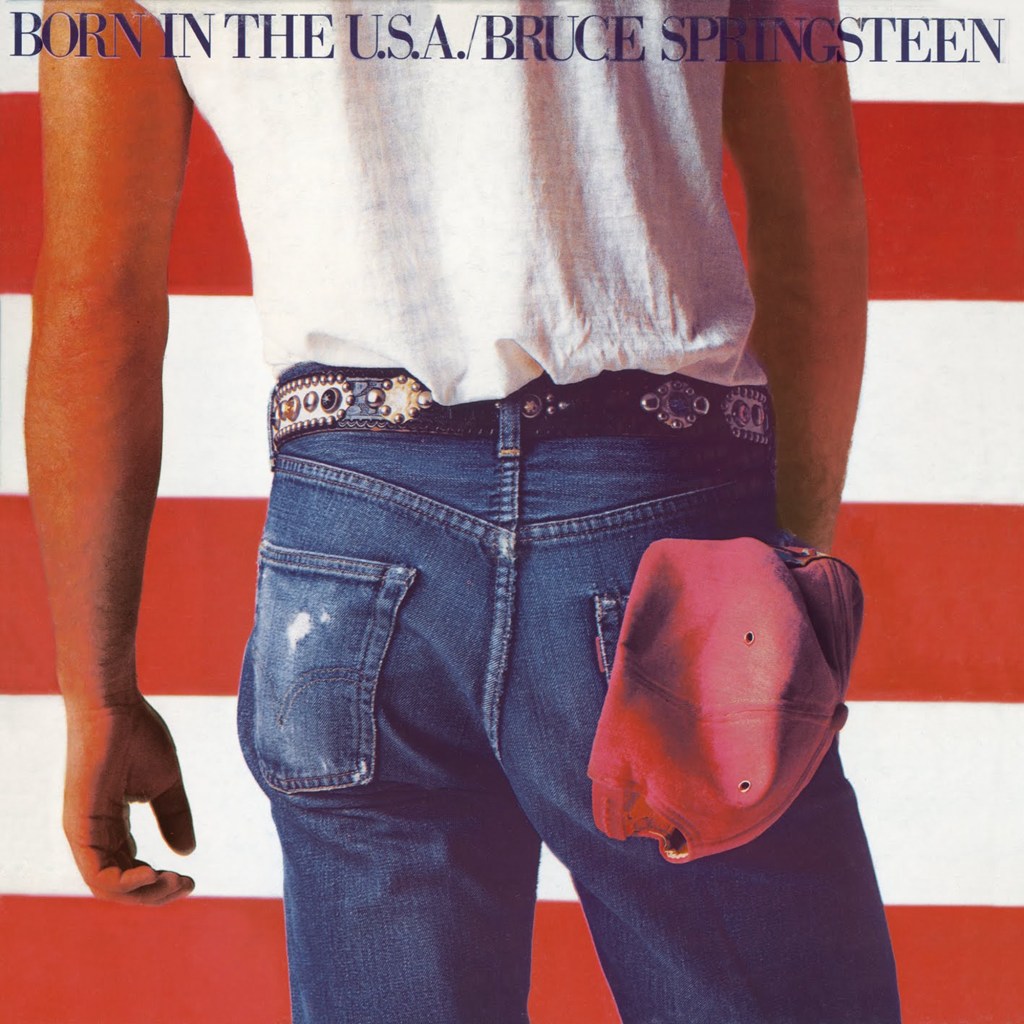
Back in the 80s, everyone and their mother knew who Michael Jackson was. You only had a handful of radio stations in any given town to listen to, and if you wanted to hear a particular song any time you wanted, you had to go out and buy it. The albums would be prominently on display in your local Kmart. Even grandma was familiar with Bruce Springsteen’s ass.
Television isn’t as much of a special interest to me as music, so I don’t really care as much about its history, but you can see this kind of monoculture in TV throughout the years too. In the beginning, you had ABC, NBC, and CBS (and DuMont, the weird fourth one no one remembers). Everyone in your city was watching The Andy Griffith Show at the same time on the same channel and having this shared experience. Then cable came and divided everyone. If you were into sports, you went to ESPN. If you were into music, you went to MTV. If you’re into watching Amish people do mundane things, you went to TLC. Even the big cable networks splintered eventually — from MTV you get MTV 2, MTV Tres, VH1, VH1 Classic, CMT…
With more technology, you get more options. But I’m starting to wonder if that’s a good thing.
We’re seeing a shift in music especially. We no longer have a monoculture, and I blame this on how easily accessible the entire catalogue of music is nowadays. If you want to listen to nothing but obscure pirate metal for the rest of your life, you don’t have to go on a wild goose chase hunting down every obscure pirate metal album ever made by every band that’s ever done obscure pirate metal. It’s as easy as going to a specialized Spotify playlist. And let’s say you want to listen to nothing but obscure pirate metal about your cat for the rest of your life. With AI, that’s entirely possible.
Why on earth would anyone seek out new music if they can just beep-boop an entire playlist tailored to their specific taste with lyrics reflecting their own life?
I think that’s what bothers me most about the future of music and how it has been intertwining with AI. I’m not scared of it taking my job necessarily, at least not in the traditional sense. I know human-made stuff is still largely superior. I’m really not even so afraid of the environmental stuff, since the planet’s borked anyways (I’m an optimist). It’s the death of culture and interpersonal connection that scares me. A survey said 62 percent of people actually prefer chatbots to humans. There are people straight up dating AI bots. How much more isolated are we going to allow ourselves to get?
My prediction is that eventually, this AI bubble will burst — but not without seeing huge reforms to the music industry. I can’t see the current model lasting much longer. I can see a return to smaller, more intimate shows as people get sick of how overflooded music platforms are with AI slop, low-effort music, and whatever the executives are trying to feed us. At least the true music fans will pivot that way.
Humans have a thirst for something real. It’s why American Idol always pushed artists with sob stories. We love when the art we consume comes with a captivating backstory, and entering a prompt and pushing a button was a cool backstory — the first thousand times it happened. Like, if you told someone in 2018 that a robot wrote the music for this song, that would be some neat Futurama shit. But the fact that technology can beep-boop songs from scratch is old news now, and people don’t want manufactured backstories. There was already a recent backlash against a band that was revealed to be AI. People are quick to turn on an artist when they sense disingenuousness. Remember that author who penned an autobiography that got noticed by Oprah, only to have it all come crashing down when it was revealed the story was fabricated?
I think the music industry is going to change in a lot of ways in the upcoming years. My hope is that we musicians don’t become obsolete and that the human need for connection and genuineness is stronger than the fleeting coolness that is AI. And I think we do have a need for real, human-made music. You can’t replace the camaraderie of your local punk scene or the chills a live orchestra brings or the sheer joy of going out to karaoke. Music in our souls. It’s what humanity sounds like.
If you enjoyed the writing in this post and elsewhere on the site, please consider donating to Jessa’s tuition fund! Any help is appreciated!
CashApp: $TheJessaJoyce
Venmo: @TheJessaJoyce


By God! You’ve nailed it! You’ve hit on so many of my hot-button issues in this post. Excellent writing. And, I will stay as far away from AI as I can for as long as I can. Where’s the talent and intellect in AI?
LikeLiked by 1 person
I don’t think AI is going to destroy anything legitimate. If anything, it will make humans hold it more valuable. There are two types of music: that carefully crafted earworm that makes producers and executives money. And then there is the music like Wet Leg’s debut album, which was raw and raunchy and spoke about all the feelings I’ve had throughout my life, even though the musicians are half my age.
Kinda wish I was going to live long enough to see what the world will look like when you’re old. Oh, the stories you’ll tell.
LikeLiked by 1 person