I wrote this piece in one sitting a few weeks ago, but I only shared it with a few close friends. It’s a bit darker than anything I’ve written before, at least in tone, but I wanted to write about something I’m incredibly passionate about: writing itself! This piece could almost be considered a sister piece to the one I published yesterday on the divine power of creativity, in that it touches on several of the same topics.
I write this intro paragraph from Tucson’s botanical gardens, where a prominently displayed butterfly-dotted monolith memorializes the many, many children who were brutally murdered in the Holocaust. A quote from Anne Frank’s diary decorates the towering monument. She was only a young girl, but she knew the power of the written word. And her words have transcended space and time to humanize folks like her to the world at large. Storytelling is more than a way to pass the time. It’s how we connect to each other and share our struggles. Anne herself may not have survived, but her words are forever immortalized as a symbol of hope.
That’s why I write. And that’s why I felt the need to share these words with you.
It is said that history is written by the victors. But the funny reality of it all is that, when you think about it, history is simply written by the writers. After all, if a tree falls in the forest and no one is there to record it, did it truly fall? Did the tree ever matter in the first place? Was the tree even real? Without the word “tree,” you probably wouldn’t know what I was talking about. Without words, there are no stories. And without stories, we lose our humanity.
You see, humanity is stories. Billions of them, all happening simultaneously. Every person is a story in their own right. We all have a beginning and an end, and our lives consist of the moments in between the covers of the book. Like all good plots, there will be unexpected twists and surprises. Sometimes, you don’t get the things you want. Sometimes, no amount of meticulous planning will prepare you for whatever the Great Author has penned in your pages. As an aside, that’s kind of why I’ve taken to thinking of God, whoever He (or She, or They) may be, as the “Author.” Because at the end of the day, we are all characters with a role to fill in the greater story of humanity.
So, then, if all of these things are true, what is my role in this story?
That is the question I’ve been agonizing over for years.
But I know this much — I am a writer. I was born a writer. And because of this, I have the power to define my own reality. I can put into words the things other people cannot. Some people rely on technology for these purposes, but the real story of humanity can’t be told via machine. The story is flesh and blood. The Gospel of John talks about how in the beginning of everything, there was the Word, and the Word was not only with God, but the Word was God. And the Word became flesh, and that, there, is the key. In order to disseminate His message to the world, even the Great Author had to experience humanness.
Stories are at the very heart of what it means to be human.
I’ve spent many years on this planet learning what it means to be human, and I suppose I’ll never know all of the answers. What good is it to a human to know all of the answers, anyways? Does it change the path of the earth around the sun? Will it avert the inevitability of tomorrow and the day after? More knowledge does little to quell the constant screaming feeling that we are powerless little ants in a terrarium on fire.
But we press on. And in every moment, we find those reasons to continue. Those reasons aren’t the same for every person, but they all point back to the very act of creation. We create houses to live in. We create meals for our loved ones. We create inventions to make life easier. We create children. We create relationships. We create meaning. We all want to play a little part in the sacred act of creation. We all want to write our own stories.
And me? I’m just a writer. But in a world that is moved by words, a writer is a powerful thing to be.
I have been since I was a little kid. Honestly, since I could hold a pencil and string together a coherent sentence. The stories were always there. The words were always there. One magical day in second grade, I just decided that writing stories was more interesting to me than actual work. So I started finishing all my schoolwork really fast and spent the rest of class time penning short stories. Usually they were thinly veiled rip-offs of Homeward Bound that only a lonely seven-year-old could get away with writing. But it was a start, and it got me falling in love with the art of language. From there, I wrote and read obsessively. I read so many books in fourth grade, my school even rewarded me with a hot air balloon ride!
A few years later, I’d go on to attend church regularly, mostly because I wanted to impress all my good little church kid friends and the hot guy at youth group. There, I’d learn about a whole different book. You know, the one you’d find in a shady motel drawer to rip the pages out of for joints?
That is, the capital-B Bible.
Christianity places a lot of importance on words. Jesus Himself is described as “the Living Word of God” in some contexts. The apostle John’s gospel even begins with the phrase “In the beginning was the Word, and the Word was with God, and the Word was God.” God is a storyteller, first and foremost. And the more I write, the more I begin to understand how the divine moves, even if my worldly brain can’t begin to comprehend it in its entirety.
Every day, there are eight billion stories being penned. Eight billion plot lines. Eight billion main characters. And no two of their stories are going to be exactly the same. Sure, you’ll find commonalities to the human experience, but for the most part, no one has gone through the same exact struggles in the same exact ways. Every life is as unique as a fingerprint.
And sometimes I wonder if God thinks of our lives and stories the way I think of my characters and their stories. I love my characters, every single one. Even the villains! I’ve put so much heart into each of them. I always say I’ve never written a character flaw I don’t already have as a person. That’s how much of myself I pour into these silly little guys who move the stories I write. I think God does something similar. We were supposedly created in His (or Her, or Their) image, so it makes sense that we were given divine gifts as human beings. Acts of compassion and senses of humor are something only humans — and God — have. (And if you don’t believe God has a sense of humor, look at the freakin’ platypus. Who designed that thing??) Another divine gift? Creativity.
We create because we were created. Human beings just want to share in the beauty of creation with our Creator. Our Author, if you will. That’s why kids practically come out of the womb singing and scribbling and smashing stuff together to make new things — until we beat the creativity out of them. By denying our kids and ourselves of art and creation, we’re denying the part of us that was divinely gifted to us. And that’s really sad.
I think the Church as a whole has a creativity problem. We don’t exactly have a C.S. Lewis of our generation. Worship songs are usually considered some of the worst slop in the music world, and Christian artists are typically marketed as the “moral alternative” to some other sexier, more scandalous musician. Like how Skillet is just Christian Nickelback, you know? The films are equally garbage. Can anyone claim to have actually enjoyed the God’s Not Dead series?
It’s sad that there has become such a disconnect between “God the figurehead of the Abrahamic religions” and “God the creative.” I’ve seen people come to the Lord and feel like they have to lay down their life’s passion in order to be saved. And I’m here to tell you that is a lie from the enemy. I hate to even bring up that impish little guy, since he’s been weaponized to scare the living daylights out of churchgoing children for time immemorial, but I do feel like there is some force of evil in this world, be it a literal Satan figure or simply the absence of God and goodness. And I feel like the Devil himself smiles whenever a sadly misled born-again Christian puts down his guitar for the last time.
We were created to create, and we were designed to use our gifts to serve others, honor God, and leave the world a better place than we found it. If I could serve you a little bit of Christmas in July, remember that song “Little Drummer Boy” (which Aly & AJ has a spectacular cover of)? That song is so interesting to me theologically. It likely didn’t ever happen and was entirely fabricated by the songwriter, and let’s be so real, why on earth would Mother Mary subject her sweet newborn king to a freakin’ drum solo? Still, it manages to paint a sweet picture of what humbly using our gifts to serve can look like. This kid has nothing to give, but he makes music nonetheless. He gives himself through his art. That’s enough.
The world is a deeply creative place, as it was given to us by a deeply creative Creator. My theological beliefs are evolving at breakneck speeds lately, and a lot of what the Lord is revealing to me as of late has to do with art and spiritual gifts. It’s a damn shame that so many Christians and religious folks in general have neglected this part of their faiths, and it’s even sadder that more of those folks would be offended by me saying “damn” than by religious institutions stifling the human spirit of creativity. Sure, making great art won’t get you into Heaven, but I don’t think that’s what it’s supposed to be for in the first place. We were never supposed to be saved by our acts on this earth, anyways, and I feel so many people miss the mark by zeroing in on the afterlife. God put us here, on this planet, and while we’re here, we gotta do something with our time. So He just gave us a lesser form of creation to indulge in. Art is how we regulate and express our own feelings and communicate with each other. Art is an analgesic for the unending pain of life. Art is God’s way of letting us know He loves us and wants us to cherish our time in this world.
I don’t have all the answers, but I do know that in order to live full, healthy lives, people need art. They need to make it, or at least be surrounded by it. People need to play. People need to get messy. People need to throw themselves into something they’re passionate about. This was not a mistake. This was a desire placed inside us by our Creator, the Great Author. That being said, do whatever it is you were meant to do. Maybe you’re a painter, or a knitter, or a writer like me. Even just spending some time in the character creation engine in The Sims can be beneficial. Whatever it is you do, give it your all. It is our divine gift, right, and duty to create.
When I was just a wee whippersnapper, I was The Voice of Summit Academy High School.
If the jazz band was performing a tune that required vocals, I was a shoo-in for the position. The year the choir performed “Single Ladies,” they put my scrawny pasty ass in a leotard and made me the designated Beyoncé. I was commissioned to write theme songs for the drama club’s productions. The one and only year I got to be in drama, the teacher even wrote a musical number into my role. Of course, I was typecast as the blonde bimbo (which is probably at least a solid 20 percent of the reason why I dye my hair black these days), but she could sing.
The ruby red cherry on my all-American existence as the golden-haired, golden-voiced Siren of Summit Academy was my role on Friday nights. I was the official national anthem singer for my school’s athletic events.
It was an awesome gig. I loved getting a chance to shine, especially after being ostracized for most of my life. I was no longer the class pariah. I was the class Mariah. The parents would occasionally come up and compliment my singing, and every now and then one would come forward as a veteran of some sort and really drive home the importance of the words I was giving life.
And the rockets’ red glare The bombs bursting in air
The brave men and women who shared their military testimonies made it clear that the anthem was more than just an anthem. It was a capital-A Anthem. Like, the dudebros at Warped who’d wear little neon tank tops with rifles and the words DEFEND POP-PUNK were total posers. Those guys would never die for Good Charlotte’s seminal hit “The Anthem” off their breakthrough album The Young and the Hopeless (2002). But something about this anthem inspired these folks to quite literally risk life and limb for it. Or rather, for what it represented. You know, the good ol’ American Dream.
And for a young goody-two-shoes who finished third in her class and dated the football player and went to church for fun and wasn’t yet jaded by the weight of the world, the American Dream seemed like something that was promised to me. It was my very birthright. It was everyone’s birthright, right? We believed in life and liberty and the pursuit of happiness after all. The Statue of Liberty was built to welcome weary travelers and invite them to nestle into her warm copper bosom. And probably bake them some sweet, sweet apple pie too, because dammit, this is America!
I guess I always knew in my heart of hearts that the country I was brought up to love and respect had a seedy underbelly. My dear late father swore up and down he was part indigenous, having grown up in the hollers of Kentucky before the days of 23&Me. While the jury is still out on that little factoid, his “connection” to his “Native American heritage” inspired him to curse the Custer statue in our hometown under his breath whenever we passed it. And he didn’t shy away from the grisly backstory of the man behind the statue. He and his men slaughtered a bunch of indigenous folks, but he ultimately got his comeuppance when they retaliated and fucked his shit up. My father made it clear he sided with the Native tribes, who were unequivocally the good guys in his retelling of the story. In school, they (kinda) taught us about stuff like “Manifest Destiny” and Trail of Tears, so I assumed there wasn’t exactly a happy ending to the saga in the end. But it never really hit me just how much history has been rewritten by the victors — that is to say, the Americans.
We gloss over a lot of sketchy shit in our social studies classes. When you’re a kid in school, you’re inundated with constant messaging about how great this country is. A lot of the messaging revolved around this esoteric idea of “freedom.” You were free to do things over here that you weren’t free to do in other nations. Mind you, they never actually told us what cool things you were free to do over here that you couldn’t do in like, Switzerland. But FREEDOM!
I think there’s a reason the US keeps its propaganda so vague. By getting the population to make the word association of “America” with “freedom,” it becomes a lot harder to contend with the fact that many Americans were never truly “free” at all. For the majority of its existence, the US has been a great place of hope and opportunity — if you’re a white, cishet, able-bodied, Christian dude. Missed out on even one of those categories? Tough luck. Your America experience is going to be on Hard Mode.
That’s what makes it so hard for us to separate America the Beautiful from America the Broken. We’re raised from birth to embrace blind patriotism as a noble virtue. “Loves America” used to be a descriptor that instantly denoted somebody as a good person. Like, one of Tom Petty’s most famous songs uses that exact quality to paint the love interest as a salt-of-the-earth “good girl. But nowadays, I find myself side-eyeing anyone who proudly proclaims the American label, at least not without a hearty “but” after it. It’s the same way I’ve come to feel about other Christians, despite me being one myself, technically. I will only trust someone who introduces themself as a Christian if the statement is immediately followed by “but not one of the awful homophobic asshole ones.” Similarly, if you tell me “I’m proud to be an American,” I’m sincerely hoping your next words will be “but we need some serious fixing as a country.”
And I don’t want to think that way. I want to look at the flag blowing in the wind in front of my family’s home with pride. I want to wear cheesy star-spangled bikinis and rock out to “Party in the U.S.A.” and indulge in all of the trappings of Americana. Patriotism shouldn’t be an inherently bad thing, but like any fandom, America’s stans can take on parasocial, toxic qualities. Any time your object of affection reaches untouchable status, you’ve crossed into dangerous territory. I love Taylor Swift and think the world of her as a songwriter and storyteller. Do I think she’s above criticism? Absolutely not, but tell that to a certain subset of Swifties and they’ll crucify me for considering their beloved queen a flawed human. I love this big dumb country. I love the people here. I love how we have so many cultures and so much diversity. I love our rich history of art and music and innovation. But god damn, this administration is America’s biggest Trainwreckord, and I wouldn’t blame the “fandom” for turning on it. People need to realize that loving something shouldn’t keep you from critiquing its problematic elements.
I would love to be proud of my homeland, but I’m increasingly concerned about the direction it’s headed in. Even just a few years ago, I didn’t feel unsafe as a queer disabled woman in this nation. Now, my wife and I are even beginning to search for exit ramps from this country’s highway to hell, because at the end of the day, we don’t want to go down with this ship if we can help it. We’ve looked into Canada, the UK, Germany, even Thailand, searching for options to escape from here. We don’t have health insurance. If something were to happen to us, welp, we had a good three decades or so. We’re essentially thirty-somethings with DNR orders. That’s how a lot of folks my age feel. And holy shit, how are we fucking okay with that mentality as a people? You realize that if you were to get a broken bone as a Canadian citizen, you could literally just…go get it treated? Not play this stupid game of “Well, the prognosis without treatment isn’t great, but I gotta eat and pay rent.”
I don’t want to leave the land that I love. Michigan especially has a hold on my heart. I adore my precious Mitten, my little pristine corner of the universe with her array of lakes, both beautiful and mighty. I also think about the ancestral homeland of some of my more recent forebears, who settled in the storied misty mountains of Appalachia. I think about Florida, where I lived briefly after college, and exploring its vast wetlands and sparkling coast. I remember how I audibly gasped the first time I drove out to Denver when the Rockies first appeared on the horizon. In a few short weeks, my company will be sending me out to Arizona, the furthest I will have ever travelled from home, and I’m excited to experience an entirely different side of the country that I’ve never seen before. My point is, we as Americans have a lot to be proud of.
That’s why it hurts my heart to see her — America — in shambles.
I realize I never wrote a “Pride” post this year, when I typically have a lot to say about the subject every June. I guess I just don’t feel a lot of pride in much of anything these days. I’m not allowed to be proud to be queer in this day and age because it’s literally not safe, and I can’t be proud of my country when it’s become a parody of itself. I don’t have a flag I feel comfortable waving outside my home anymore.
But I also don’t want to raise the white one just yet.
As of writing, I’m figuring out what my role is in this great story of humanity. We often romanticize the role of freedom fighter or rebel leader. We all want to be a Katniss Everdeen or a Luke Skywalker without realizing what that life entails. I’m not a fighter, but I want to fight for my country. And my weapon is much mightier than any sword, or gun, or bomb. My weapon is the pen, and as long as I have fingers to type or a voice to speak, I will continue to use my words to shed light on the stories and lives of everyday people. Everyday Americans. I write because I want to humanize myself and the folks in my life who may not look or act or believe exactly like what the asshats in charge want from its denizens. The government officials want to dehumanize, demonize, and erase us, but We the People won’t be lost to the ethers of history. We are America, whether they like it or not, and our stories are ours to tell.
I’ve chronicled my musictherapyjourney on this blog quite a bit in recent years. It was a huge part of my life’s story, having been the focus of my studies for more than a decade on and off. Even when I wasn’t actively pursuing music therapy at my university, I still had every intention of obtaining that sweet degree at some point and slapping a fun little “MT-BC” after my name. Heck, if I was feeling really feisty, I could even go back to school again and throw a Dr. in front of my name as well.
Obviously, as I’ve detailed in painstaking detail on this blog, that dream died a hilariously brutal death in the godforsaken city of Fort Wayne, Indiana.
But that wasn’t my first — or only — dream.
When I was a little girl, I wanted nothing more than to be a rock star.
Now why does that sound so familiar?
After my tragic and abrupt exit from the music therapy world, I decided to refocus my energy on making it as a professional recording artist. LORE was intended to be my “Hello!” to the music world. I crafted the eight-song album to be a proper debut, with a smattering of songs from an array of genres demonstrating my abilities as a performer, songwriter, and producer. I redid my socials, pestered my besties with the demos, and even dragged my poor wife into a frozen-over forest for the promo shots. I had every intention of this album becoming a breakthrough of sorts.
Then, release day came. Friday the 13th. It felt poetic, but the moment came and went, and I found myself absolutely paralyzed at the thought of doing any self-promotion. I remembered the tragedy that was me trying to promote my ill-fated Chappell Roan cover, which was inundated with (at least charmingly creative) insults. Putting my original material out there, which I emptied my entire heart and soul into, felt even more vulnerable. Ultimately, I chickened out.
The album languished.
But here’s the weird part.
I actually wasn’t as disappointed as I should have been.
Because the older I get, the more I realize I don’t want to be the next Taylor Swift. In fact, the idea is becoming increasingly terrifying.
It’s not a secret that the music industry sucks. I literally just posted an entire piece about that yesterday. And truthfully, the more I learn about its seedy underbelly, I’m not entirely sure that’s the future I want for myself.
Maybe this is the dream I need to let die.
Last night, I had the most incredible opportunity. I got to meet my lifelong hero, Ann Wilson, the legendary frontwoman of the classic rock band Heart. And I had the chance to ask her exactly one question. Now when the time finally came, I definitely panicked. My initial thought was to ask her about her childhood and being bullied, and what kinds of things she told herself to stay strong throughout those struggles, but I didn’t want to get too dark, especially since I was one of the first in line. I ended up trying to ask her if any neat happy accidents had ever ended up in a Heart song, but I forgot how to articulate the phrase “happy accidents” and flubbed the question so bad that she had to ask me to reword it (not my proudest moment).
What I’m really glad I didn’t ask, however, was the question that was my other first instinct — what is your advice to up-and-coming musicians?
Her answer boiled down to “quit your day job and go all in.”
Which, sure, might have been decent, if a little reckless, advice back in the seventies when she was getting her start. But following that advice as a working class artist in the year of our Lord 2026 is a near definite death sentence. The chances are very slim that you will actually make it. The chances are much higher that you will wind up with this as your sick rock and roll castle:
“Hello MTV and welcome to my Crib!”
Perhaps her disappointingly out-of-touch response was the final wake-up call that I needed to stop pursuing music on such a grandiose scale.
After all, being a rock star was the dream of a child, and at some point, you have to put away childish things.
There’s a verse (1 Corinthians 13:11, to be precise) about this very concept in the Good Book, and I always hated it whenever I heard it in church. I’m a kid at heart and never wanted to grow up (and when I did inevitably grow up, I wanted to skip to the part where I got to be a lazy grandma). I thought the whole idea of having to act serious and proper and “adult” was a silly and unnecessary social convention. Who cares if someone still loves cartoons and toys and goofy jokes after some arbitrary cut-off?
What I’m learning recently, however, is that the verse in question isn’t referring to watching SpongeBob as a grown-up at all.
My wife has been without a job for a good amount of time for a number of good reasons. Because of the circumstances, our roommate and I are not pestering them to be employed at the moment. Still, bills need to be paid, and so my wife has begun to sell off their prized possession — their beloved Pokemon cards.
For years, that was all my wife asked for. Forget chocolates and Hallmark cards, if I didn’t come home with Pokemon cards on Valentines, I was in the metaphorical doghouse. I seriously gave this woman (well, nonbinary woman-shaped cryptid) a bouquet with multiple booster packs taped to shish kabob skewers tucked within it. Pokemon cards were their one obsession.
A few days ago, I was talking with my wife about the sudden change of heart. As it turns out, like many things we cherish, capitalism has soiled the card collecting hobby as well, with scalping running rampant. And more than that, they admitted making sure my roommate and I, their two favorite people on the planet, were fed and cared for was more important than some dumb flimsy cardboard.
Now that is maturity. Now that is growing up.
“Alexa, play Blink-182 ‘Dammit.’”
Maybe the childish things in our lives aren’t crayons and kids’ books. Maybe they’re the things that keep us from what’s actually important in life. No, I don’t want to be a rock star anymore. I want to be a loyal partner to my favorite people. I want to be a good mother someday. I want to build a home and a career I can take pride in. And I want to change the world through music on my own terms.
When I was a little girl, I wanted nothing more than to be a rock star.
It was all I ever fantasized about. I’d put on headphones and my favorite albums and run around the house imagining myself as the artists. I loved watching the VH1 Behind the Music specials about the bands I admired and daydreamed at length about my future episode after I’d inevitably conquered the music world myself. I had entire storylines in my head about my meteoric rise to stardom and my tragic downfall and my against-all-odds battle back to the top, when I’d finally be given my flowers and have my name added to the Rock and Roll Hall of Fame at last.
I was a very imaginative child.
But as a certain green-hued witch once sang, something has changed within me.
I don’t want to be a rock star anymore.
I’m done playing the game.
I was originally set out to write about the ways in which the music industry has recently proven itself to be a toxic place, but as I really began to visualize the points I wanted to make with this post, I had a dark realization. The music industry was never a decent place. Even as far back as the days of Vivaldi, the music that actually got heard by the masses was largely composed under the eye of kings and the Church and made by folks who already had money and connections. Sadly, the world is moved by whoever has the most resources, and like a lot of great things in life, capitalism had to take a shit on music as well.
In recent years, it’s become increasingly clear that much of the songs we’ve come to love and cherish throughout the years were brought to life by the worst people you know. The old adage of “never meet your heroes” has never been more true. Almost all of the musicians I looked up to have at least one gnarly skeleton in their closets, and that’s not even getting into the bigwigs behind the scenes who curated what we heard on the radio our whole lives. You know none of that shit was organic. We’re slowly finding out just how interconnected and insidious the folks in power really are. And it’s really, really disheartening. Sometimes I really do feel like Elphaba learning the true nature of Oz and the Wizard.
A charlatan with a knack for manipulating the masses? He’d fit right in with the industry.
“But Jessa,” you say, “you keep saying all this stuff about how the music world is fucked up, but you’re not giving us any real examples of why it’s fucked up.” Well, that’s the part I decided to put in a silly listicle like Cracked back when it was good. There are at least seven concrete reasons why the status is not currently quo. Let’s begin with an issue that’s been plaguing pop music since its very inception, to the point where it’s nearly baked into its DNA. And that would be…
1. Racism
Are you ready for an uncomfortable truth? All modern popular music was stolen from black Americans. From the dawn of the blues, white folks have been ganking the tunes of the very people they enslaved and oppressed. Even before recorded music, minstrel shows appropriated the sounds brought over to the US via the African slave trade and perverted them into gross mockeries. Wikipedia itself goes as far as to describe one of the most famous minstrel songs as “a key initial step in a tradition of popular music in the United States that was based on the racist ‘imitation’ of black people.” And that was pre-record industry. Once people found ways to slap music onto vinyl, the suits in charge bent over backwards to whitewash whatever music that meant. Pat Boone made an entire career out of reworking “black music” into something palatable for the mayo masses. Some of the early Caucasian rock artists did have a deep reverence for the origins of the music they made — Elvis famously attended black churches in his youth and was typically known to respect his musical forefathers. But one would have to be entirely ignorant to believe his relative success compare to artists like Sister Rosetta Tharpe wasn’t in part due to his whiteness. Record execs believed they had to sell a “sanitized” version of rock and roll to America, and that’s how we as a society collectively divorced rock — and pop music in general — from blackness.
But the truth is, nearly every genre of popular music can be traced back to the black Americans who pioneered the art. Rock owes its entire existence to black folks, as does rap. Even country, the genre damn near everyone associates with the very whitest people on the planet, has its roots in traditional African music, with the banjo being an instrument brought over via the slave trade. We would not have music as we know it if not for the black people we stole it from. That being said, racism isn’t the only ugly -ism that plagues the music industry. Sexism is also rampant, and this next point is one that seems to disproportionately affect the ladies…
2. Body-Shaming
Remember back when Britney got fat?
CALL MY 600-POUND LIFE, STAT! WE GOT A FATTY!
Like, look at all that blubber. You could hide a whole ass ham sandwich for later inside those big ‘ol folds, right? Never mind the fact that a slight breeze could probably knock over poor Brit in these pictures, she’s just so fat, right?
It probably shouldn’t come as a huge surprise in a post-Epstein world that powerful men wanted to keep their pretty pop princesses tiny and dainty and girlish. Strong men love weak women, or more accurately, girls. The minute one’s adult curves begin to blossom, young women are inundated with messages that for some reason, this is bad. That pressure is even stronger for female artists who make genres of music where image is important. And let’s be so for real right now, image is important for women in practically every genre because our society maintains that women are primarily a thing to be looked at, not heard. One of the most heartbreaking cases I know in the industry is the story of Karen Carpenter, who ultimately lost her battle with her eating disorder. We missed out on so much potential music because our society pushed a world-class drummer and vocalist to fucking starvation. That is not okay.
My Roman Empire is the way Heart frontwoman Ann Wilson was treated by the industry in the eighties. Because for some reason, the worst men on earth took a look at this woman and thought “whale.”
“OH MY GOD WHAT A SHE-BEAST!”
If you’re unaware of her story, she was bullied throughout her life for not being a stick figure, but when she hit 30 and started looking a little more woman-shaped, the record execs panicked, dressed her in all black (which was unintentionally the origin story of my goth phase, as I spent years trying to emulate her style during this era), and attempted to hide her behind her blonde, skinny, more “conventionally attractive” guitarist sister, Nancy. She went as far as using cocaine and getting fucking surgery to get back down to an “acceptable” weight, and I have no doubt that had she hit it big in the year of our Lorde 2026, the suits would be hurling Ozempic at her. Sure, whatever, maybe she reached an unhealthy weight at some point, but let’s be so for real, who the fuck cares? She’s not a model — she’s the greatest living female rock singer, and to reduce her to whether or not she’s overweight is absolutely bananapants to me. Even at her heaviest, I thought she was the most beautiful woman in the world as a child, and I was not about to let some misogynistic asshole in the music biz try to convince me otherwise.
3. Payola/Nepo Babies
Did you think your favorite artists actually had a rags-to-riches story?
Yeah, those rarely exist.
I remember a few years ago when Chappell Roan came out and everyone here in the Midwest was excited that one our own “made it big” in the music scene. She was one of us. She lived in a trailer park or something and worked in a drive-thru coffee shop and fought her way to the top through sheer grit alone. She’s the crab who escaped the bucket, and instead of trying to drag her back down, we actually elevated her and celebrated her.
What you probably didn’t know, however, is that it quietly later came out that her backstory was a little bit…embellished.
A lot of details have since come out about the true background of Chappell Roan. For one, her family is not nearly as destitute as we’ve been led to believe. Her grandfather Dennis Chappell, whose name she borrowed for her music persona, was a shrewd businessman who started an insurance company that brings in around $10 million annually. Her mother was a successful veterinarian who had her own practice. And her uncle might be the worst one — Congressman Darin Chappell, whose slimy pro-forced birth policies will likely kill a lot of vulnerable women. In defense of Chappell herself, she’s been vindicated over and over when it comes to parasocial relationships in music (more on that in a bit), and has obviously been the target of several smear campaigns to dull her influence. Still, it’s not a great look to be disingenuous about your upbringing, and I would have respected her a lot more if she’d just acknowledged all the legs up she’d been handed through her birth family’s wealth and influence.
The problem is that Chappell is not an isolated case. It’s pretty well-known by now that pop music juggernaut Taylor Swift was never the “girl next door” unless you lived in a goddamn gated community. Sure, she grew up on a farm if you wanna get real technical, but it wasn’t Old McDonald’s. Her parents were wealthy businesspeople who could afford to literally take out a full-page ad in The Wall Street Journal bragging about their little bundle of joy who’d go on to bring the music world to its knees. Yet fans will point to her as the “poor little girl who made it despite all odds.” The truth is, the odds were always stacked in her favor. That’s what happens when you’re born into money. That’s to say nothing of her talent, as she’s obviously incredibly talented and personally one of my favorite songwriters of all time. But it hurts my heart when I wonder about all the Taylor Swifts trapped in trailer parks whose songs will never get heard.
When you have money, you have safety nets. When pursuing your wildest dreams, there’s a good chance something will eventually go wrong and you’ll have to regroup. It happened to me with my dream of becoming a music therapist. Attempting to make it on a large scale in the entertainment business is an even riskier endeavor for a lot of folks. In many cases, you have to move to where the magic is happening, and just moving to a big city is a risk in and of itself. Rich kids get the second and third and fourth chances working class musicians don’t get, and then you factor in the sad fact that music only gets heard when you throw money behind it. Payola was the industry’s way of paying off radio stations to promote their songs, and despite getting technically banned, surprise surprise, it is still fucking happening in the 21st century. The things the radio feeds you are not organic. It’s all carefully curated, and more often than not, it’s the artists with a sizable amount of lucre who get played. Speaking of lucre…
4. Financially Screwing Artists
A lot of everyday people don’t really realize what a record deal really is. The dream we’ve been sold is that when the right guy hears your music, he’ll be swept away and throw you a deal, and with it comes all the fame and fortune of rock stardom.
What they don’t tell you, though, is that all that money they give you? You have to pay it back. Or perhaps more accurately, pray the meager royalties you earn from your music offset that advance you’re given.
I know a tragic story from my personal life about a dear friend who I casually dated back in college. He was a phenomenal guitarist, one of the best I’d ever heard in person, and he joined up with a band that subsequently “hit it big” and landed a sweet deal with a relatively small label. Sadly, nothing really came of the deal. The label more or less sat on the band and did little to no promotion, and when they were all “surprised Pikachu face” at the fact that no one was streaming their music, they unceremoniously dropped the band — who still had to pay off that advance. On the off chance a “regular person” gets their foot in the door, there’s a good chance someone will be waiting right around the corner to screw them out of thousands or even millions of dollars.
Music does not produce a lot of revenue. We’ve cheapened the very art of music down to something you can stream willy-nilly at any time. There’s no upfront cost aside from the measly Spotify subscriptions we pay, and while that’s amazing for consumers, it absolutely fucks over any chance of the musicians behind the scenes actually making a living. Spotify gives you little over $2 for 1000 streams, and unless you have a ton of followers who stream your material on repeat, that doesn’t add up to much. A lot of artists have to maintain day jobs to stay afloat. When I was working at a traumatic brain injury rehabilitation facility in Ann Arbor, I was shocked to learn that one of my coworkers was the frontman of a fairly prominent mu-metal band. It’s wild how many musicians need outside income. Even very established artists are resorting to selling their life’s work for a lump sum in order to squeeze a little more money out of their songs. The companies buying these songs clearly don’t give a flying fuck about creative integrity, but that obviously doesn’t matter either, because the machine is also known for…
5. Creatively Screwing Artists
It’s not a secret that once the execs have their hooks in you, you’re at their very whim, and when the soundscape changes, you have to change. Going back to my Heart example, back in the eighties, they were basically given a deal that in order to keep being rock stars, they had to play the new MTV game. The band had to trade heavy guitars and introspective lyrics for big synths and songs written by outsiders. Ann even admitted that the music they were forced to make in that time frame was “stifling.” And they’re far from the only examples.
Music today is a numbers game. Pop fans watch the charts the same way football fans watch their favorite players’ stats. If an album doesn’t sell as well as the last one, people are quick to declare that said artist is a “flop.” Folks have already coined the term “Khia asylum” to describe female one-hit wonders, and if their favorite’s newest release don’t top the charts, that’s where they wind up. Never mind the fact that “Milkshake” is a legendary song. Khia has literally become shorthand for “not being able to follow up on your best work,” and fans are so hasty to determine that a woman has already written her magnum opus at 22. Remember how Halsey was so excited to share her deeply personal and experimental album about her health struggles, only to have the entire industry drag her for it? She’s not even allowed to release new music now because that album didn’t do as well as Taylor’s newest release. Record executives are holding our artists hostage and silencing them for having the guts to do something different. We’re punishing creatives for their creativity.
If I’m allowed on my soapbox for just a moment, I just want to say that music should never be about numbers. Music is not something that should be quantifiable. Music is highly subjective and deserves to be regarded for its quality rather than how many average Joes one can dupe into listening to it. This is how we’ve devolved into a place where AI can take over. Who cares about artists anymore? We can just beep-boop anything into existence instantly without the hassle of managing a fully human musician with wants and needs and personalities. That’s what executives want. Notice how you never see bands anymore (except Geese for some reason). That’s not an accident. The more people you have signed, the more liabilities you have. People fuck up, and in our current zeitgeist, that’s not allowed. Which leads me to my next point.
6. Parasocial Relationships
This is more on the fans than the industry itself, but it bears noting that the industry does little to curtail this phenomenon, and in some cases even encourages it. People get obsessed with their favorites. I’m not talking my childhood obsessions with Shania Twain or Bon Jovi or the aforementioned Heart. Those were innocent fascinations stemming from the fact that I was a lonely undiagnosed autistic child with no friends, and the music became a sort of surrogate friend to me.
But that’s not what this is.
I hate using her as an example again, but fuck it.
I mean, she is the music industry.
It’s not a secret that Taylor was madly in love with Matty Healy of The 1976. But when the Swifties found out that their beloved mother was seeing a skeevy dude who did some questionable shit in the past, they had the entirely normal response of writing an open letter to her explaining why she, a grown woman, should dump him. It, uh, did not go over well with her. She’s lucky her fans didn’t go even further, unlike one of Bjork’s fans back in the 90s. He was pissed his sweet little innocent muse was dating (gasp!) a black guy, and that was enough to send him into a violent spiral. He ended up killing himself on camera, but not before sending a bomb to Bjork to punish her for her transgressions. Mercifully, the package was intercepted before it could reach its final destination, but the case is a cold, bitter reminder of how dangerous these parasocial relationships can get.
I blame my fellow Michigander Eminem for some of my fears regarding parasocial relationships in music. In case you’re too young to know the real origins of the term “stan,” “Stan” was the name of a song that essentially told the tale of a young man who was obsessed with Eminem. He begins the song with a simple request for a letter back from the rapper, but it soon escalates into the fan committing murder-suicide — and blaming Eminem. That was my worst nightmare for years as an artist. I never want my music to contribute to human suffering, and it’s so easy for one unhinged person to latch onto you and your songs. Charles Manson took Paul McCartney’s innocent little ditty about a playground slide and interpreted it to mean “slaughter a bunch of people.” If Paul’s not even safe, I don’t know who is.
7. Grooming
I saved what might be the most disgusting part about the industry for last. The music world is brimming with predators. From the earliest days of rock and roll, the greats were busy dating, raping, and even marrying little girls. As a former little girl myself, and one who was really into classic rock, I spent years turning a blind eye to the fact that my heroes were out there hurting kids like me. It’s hard to think about the fact that famous groupies like Sable Starr were literally just children who were taken advantage of. So many rock stars were complicit in the abuse of her and so many others. It’s almost easier to list prominent rockers who haven’t had liaisons with underage girls.
Jonny, please, don’t let me down.
As hard as it is to admit, some of my personal favorites have been under fire for their relationships with young girls (although thankfully not Jon Bon Jovi). John Frusciante is hands down my favorite guitarist, but it’s difficult to divorce his music from the fact that he made a great chunk of it with admitted PDF file Anthony Kiedis. I love the lyrics “Show love with no remorse” from the song “Dosed,” but a part of me is glad I never tattooed it on myself because I know in my heart of hearts that the line was penned by an absolute creep. Brand New was one of my favorite emo bands for years, but after hearing about Jesse Lacey’s controversies, I feel icky revisiting them. I’ve never heard a song, Christian or secular, that quite sums up my faith like “Jesus Christ,” and I can’t even listen to the song without feeling gross anymore. Even the female musicians aren’t immune. I admire Sia as a songwriter, but you gotta admit her relationship with Maddie Ziegler was weird as hell. This is the kind of stuff that rightfully got Michael Jackson scrutiny. And speaking of which, while I love the man’s music and feel for his experiences as a child, that’s not an excuse for the way he behaved with children.
And the list goes on and on and on.
We have our Diddys and R. Kellys. We have our Phil Spectors and Dr. Lukes. When you give people unbridled power and access to vulnerable folks, abuse happens and the cycles continue.
That’s part of why I wanted to write this piece. The music industry is a dark, seedy place, and the older I get, the more I want no part in it. Let’s be clear — this is in no way a statement that I want to discontinue making music. Rather, it’s a statement that I’m done chasing “rock stardom,” whatever that even means in this day and age. It’s a trap, full stop.
So if we’re saying “fuck the music biz,” what even is the alternative?
Real music.
The future of music isn’t in the music industry. It’s in the hands of everyday artists who use their instruments to tell stories and move hearts. It’s in open mics, karaoke nights, and punk shows. It’s in some kid opening up a MacBook for the first time, screwing around on GarageBand, and discovering a passion he never knew. It’s in a small girl picking up a guitar for the first time and finding the way the notes fit together.
The mainstream media can have its robots and nepo babies. Real, authentic music will thrive in the dark recesses of every small town with a dive bar or coffee shop.
Prime example, my childhood autistic obsession band was Bon Jovi, and it proceeds to get worse. I primarily listen to podcasts that are a guy reading scary stories to fall asleep to. The television shows I tend to watch skew toward crude adult animation — Bojack Horseman is as introspective as I usually get. My favorite film is the cinematic masterpiece A Goofy Movie, starring the esteemed character actor Goofy.
I have certainlytriedmyhandat music criticism, but there is good reason why I title those articles “Music Reviews Nobody Asked For.” I am well aware that my recommendations don’t hold a lot of water solely based on the fact that my preferences in music are notoriously awful. Pitchfork would laugh me out of their offices if I ever attempted to contribute anything to their publication.
My point being, I am not a bastion of good taste.
But I had a realization recently. Perhaps art doesn’t have to be necessarily objectively good to be entertaining.
I wrote a little recently about the phenomenon known as outsider art, art created by folks whom the established industry has decided to exclude for whatever reason. Perhaps the creator is wildly mentally ill, which is an unfortunate situation a lot of creatives find themselves in. Maybe they’re not rich or attractive enough to break into the business proper, or perhaps they don’t even want to be famous. Whatever the case is, there is a wealth of art out there that many people will never experience because it’s not being promoted by the taste-makers with money and influence.
And that’s really kind of sad, honestly.
How many Taylor Swifts are trapped in a trailer park somewhere? How many amazing film ideas will never get made because they’re stuck in the noggin of a burger flipper? How many paintings, how many books, how many podcasts will go unfinished because the creators behind them have to work three jobs to keep their homes?
Creativity is our birthright as human beings. I work with autistic children as part of my day job, and one of the first things any kid autonomously does is create. As soon as a child can hold a crayon, she is doodling all over everything she owns, and as soon as she can speak, it won’t be long until she starts singing too. But then life happens. We get that sense of creativity kicked out of us eventually, between unsupportive parents and closed-minded teachers. I’ll never forget when I was working as a paraprofessional with children with special needs, and I helped a little boy color his snowman pink. That was the color he chose. But his teacher punished both of us for thinking outside the box, and my heart broke for that kid. We punish creativity.
In a world where we can just beep-boop anything that comes to mind, human creation is even more precious, and the beautiful thing is that it doesn’t have to be good to be entertaining. A week or so ago, my wife, roommate, and I went to a secondhand electronics store and found a strange DVD collecting dust. The film was called Gypsy Vampire’s Revenge, which is not exactly the most politically correct title, and the cover was, well…
But something compelled us to grab it. And when we popped it into the DVD player at home, we were presented with one of the most bananapants movies we’d ever laid eyes on. It made The Room look like an Oscar winner. It looked like it was filmed with a first generation iPod and the plot was damn near incomprehensible, but something occurred to us while we were watching it together. People made this. Someone put their heart into this film, and even if it’s not a masterpiece, it’s human.
Maybe that’s what we need more of.
I feel like people hesitate to make anything because it’ll never measure up to the output of major studios with all the financial backing and big names attached. But if that godawful movie could hold the attention of my entire household, maybe you don’t need fancy shit to make something cool. All you need is a vision and the determination to make it happen.
More than ever, we need human art. It doesn’t have to be perfect. All it needs is heart.
As a burgeoning bisexual, I didn’t really have any bicons to look up to.
Like, I loved Freddie Mercury, but growing up, his story was so sanitized, I really didn’t have a clear idea of his queerness. The most any of the adults would tell me was that he was “a little fruity.”
“Yeah, I can totally see him rocking that hat. What’s the issue?”
Needless to say, having roots in the evangelical church, I didn’t embrace my own identity for a long time. I realized I was bi when I got weird feelings from both the covers of Heart’s Dreamboat Annie and Peter Frampton’s I’m in You (yes, I’m probably the only Millennial who can credit classic rock with her sexual awakening). And I’d publicly come out after the conversion therapy controversy at my old church. Still, it was only after watching the biographical film Bohemian Rhapsody did I get the full picture, and it changed everything.
Freddie loved men. He very much enjoyed the company of men. He really liked banging men. He even fell for a man. Hard.
Giggity.
But he was also madly in love with a woman.
At the time, bisexuality was not really understood, so his female lover was essentially like “Dude, you’re gay, what are you doing?”
But he absolutely, one hundred percent, without a doubt loved her too.
Watching the way Freddie owned his sexuality even in a time when it was widely frowned upon lit something up inside me.
Sometimes the bravest thing you can be is yourself.
It’s a scary time to be queer. Politicians are making laws at breakneck speed trying to outlaw our very existence. I’d link to all the recent developments, but it’s honestly too depressing to even search right now. I’ll just let this terrifying map speak for itself. Everything the blue touches is our kingdom. But that shadowy red place? Don’t fucking go there, Simba.
Maybe ten years ago, it was fun and trendy and “yay rainbows!” to be queer, but the time for merriment has passed. We have more battles to fight. And if they’re going to try to silence us, that just means we have to be louder. Silence is letting them win.
Now is the time to live out loud.
When you live authentically, it gives the people around you a pass to be themselves, and from there, it just envelopes more and more folks. Once that first match is lit, everything around it catches fire. And that fire has the power to make real, tangible change in our world. What if Marsha P. Johnson hadn’t had the courage to be herself or stand up to her oppressors? We owe it to our queer forefathers (and mothers, and nonbinary parents) to stand in the freedom they bought for us with their bravery, and in some cases, their lives. Never forget the tragedy that was Alan Turing’s story. A celebrated scientist who set the foundations for modern computing and helped the good guys win WWII, he took his own life after the humiliating and inhumane way he was treated by the British government. All for the terrible sin of loving another man. Like, we foughtlike hell so that shit never happens again, and in the year 2026, I feel like we often take for granted how far we’ve come as a community.
And we better not lose sight of that, because now more than ever, we risk losing all of the progress we’ve made as a society.
I’ll end this with a story from about a week ago. I was in South Bend with my beautiful girlfriend, Olivia, and we were itching to do some karaoke. My schedule is wonky, so I had to come down on a weird night, and the only bar offering karaoke was a sketchy little dive bar on the decidedly less-gay side of town. My girlfriend is a trans woman, although you wouldn’t automatically assume this when meeting her. I hate the whole “passing” thing and I know a lot of my trans friends understandably do too — you don’t “owe” it to anyone to look “girly” enough to pass as cis, and there’s no right or wrong way to be a woman anyways.
Well, I can think of a few wrong ways to be a woman.
But still, I get why passing is a concern, especially in a red state like Indiana. It comes down to safety, and if some bigoted fucker deems her just a little too tall to be a cis girl, it becomes a very real threat. She didn’t want to bring too much attention to herself, lest the wrong transphobic fuckwad be there.
In short, she was not performing.
So, content to settle into her seat for the night and just watch me sing, we went to this little bar together. We get there, dude starts singing Kid Rock, all around not good vibes. I have it in my mind to sing one song, finish my nonalcoholic beer I’d already committed to, then get the Chicken McFuck outta there before anybody noticed the awkward lesbos in the corner.
I get offstage after a half-assed Bonnie Raitt tune and this gray-haired man with kind eyes approaches me, hand extended, telling me I did wonderful. I smile, say thanks, and start heading back over to where Olivia was seated. Then, he says something else:
“My name’s Randy, and this is my husband.”
With that one simple sentence, the floodgates opened. I smiled and introduced myself and my girlfriend, no longer worried we’d get hate-crimed in this bar, because now, we had friends. We had folks we knew were on our side. They assured us they had a “rainbow family” — many of their close relatives were also members of the LGBTQ community, and they’d cultivated a loving and supportive environment. They also mentioned that it hadn’t always been that way, and that when they’d first come out, some of the older kinfolk weren’t as accepting. But through living and loving authentically, they were able to change the entire vibe of their family.
I signed up for a selection from Rent with Randy, and Olivia finally felt the courage to sign up for one of the like two Caroline Polachek songs Karafun actually has. What started as a night of uncertainty became a night of celebration. That’s the power of living your truth. That’s the power of living out loud.
As of writing, it is day two of the fourth annual Emo’s Not Dead cruise, and ya girl is having the time of her life. Like, you have not lived until you’ve watched Hawthorne Heights from a hot tub in the middle of the ocean. I can’t believe I almost elected to not do this cruise, and while it’s set me back financially waaaaaaaay more than I’d like to admit, I don’t regret this trip at all. Knock on wood, the voyage has been quite literally smooth sailing.
There are activities at practically all hours on this boat, but one particular event caught my attention — a panel on the history of emo, hosted by the guys from the aforementioned Hawthorne Heights. I wasn’t super familiar with the band before the panel, but I am a bonafide music history buff, so I’d be remiss if I missed out on the discussion. So I set my alarm alarmingly early for someone who’s supposed to be on vacation and hauled my ass up to the deck to catch it. And I’m so glad I did, because it was a reminder of how much this genre and this music scene has meant to me throughout the years.
Prior to high school, all I listened to was classic rock. I never even entertained the idea of seeking out music that had been made after I was born. To younger me, the best stuff had been already made and all new music was garbage and inferior to my heroes. But something unusual happened around tenth grade. My good friend at the time was dating her now-ex-husband, who turned out to be a total fucko, but he had great taste in music. So I was over at his place one time and, knowing I was a music lover, he offloaded all his old CDs on me. Among them was Jimmy Eat World’s follow up to their breakthrough album, Bleed American. It was titled Futures and it had a dark, ominous cover featuring a telephone booth. Something about it drew me in. So on a band field trip to Chicago, I put on my headphones and loaded it into my portable CD player.
And I’d never be the same.
Everything about their sound captivated me in that moment. I was playing cinematic movies in my head to the moody melodies and desperate lyrics. Every word and every twinkly guitar riff was soaked in pure emotion. The music sounded like what feelings sound like. It was a strange sort of synesthesia. And it made me realize that there were still bands out there making great music. In a way, JEW (which is a hella awkward abbreviation for a band name) was my conduit to the emo genre as well as the 21st century of music as a whole.
Funnily enough, Hawthorne Heights cited JEW as their conduit to the scene as well, and they talked in great detail about how they had similar journeys to mine. They were Midwesterners too, Ohioans to be specific, and they didn’t have much in the way of record stores or places to discover new music. But a friend had gifted one of them Clarity, the precursor to Bleed American, and that was that. Like me, the guys were drawn in by the music and the deeply emotional lyrics.
And that’s why they call it emo — it’s literally just emotions set to melodic punk rock. The guys from HH (a much better band abbreviation, by the way) brought up the fact that the word “emo” has a lot of baggage. In the beginning, it was almost an insult to be called emo. Bands didn’t want to be known as emo. Hell, I remember the slight moral panic in the MySpace era where authority figures assumed emo was shorthand for self-injury and other self-destructive habits. In schools, guys in the scene were often called f*gs and other cruel slurs, and girls in the scene were characterized as sluts or posers. But as the years have progressed, the “emo” label has since been reclaimed. Millennials like myself proudly wear the title “elder emo,” and younger folks are adopting the name and subculture as well.
I think fondly about the emo and emo-adjacent music I listened to as a young woman. I’ve had a lot of memories in the music scene, going to multiple Warped Tours and other festivals and making connections with the other attendees and artists. Live music is so important, and I’m glad I got to experience so much of it throughout the years (although I’m sure my ears aren’t so glad). I’ve written quite extensively on here about my fears regarding AI and the future of music, and those fears definitely still stand. But you can’t engineer away live shows. You can’t beep-boop an experience like the one I’m having on this cruise. That’s something the robots can’t replicate — the real, authentic human connection that comes with screaming along to your favorite songs with your 100 new best friends.
When the panel wrapped, the guys opened up the floor for guests to share their “coming to emo” moments. I hesistantly raised my hand and introduced myself as a fellow Midwesterner, albeit a Michigander (they forgave me). I shared my story of discovering JEW as well and how their music spoke to me like nothing else did. I also told them I appreciated how HH had come up out of Ohio of all places, because I get it. When you grow up around nothing but cornfields, finding beauty in the everyday isn’t easy. You have to make your own beauty, and that’s something else I love about music. I love the way folks can alchemize pain and hardship and even boredom into something lovely, something other people can appreciate too.
As an elder emo and a musician myself, this cruise has been a reminder of why I am in this game. It’s why I find guitar picks in my washing machine. It’s why I have callouses on my fingertips and can’t get baddie nails. It’s why I chose classical guitar over pre-med in college. It’s why I agonize over every word in every song I write. And it’s why I still believe in beauty in this world, even though I’ve seen so much of its ugliness as well. Music truly is what emotions sound like, and there is so much power in channeling those feelings into song. It’s a form of emotional bloodletting. It shows you that you’re not alone in this world. It saves lives.
That’s what emo is about. That’s what music is about.
I realize this blog functions as something of a barometer of how my life is going at the moment. When things are great, you get fun travelblogs and reviews of Taylor Swift’s newestreleases. When things are not so great…well, that’s this post, sadly.
I feel like I’m sending a letter in a bottle to whoever is willing to listen. My life has been on a solid downhill track since Charlie Kirk had to get shot and ruin my entire plans for the future. Did you know my wife was the Office Depot girl? We were in the process of buying a house when the controversy went down and she lost her job over it, tanking my credit score and requiring us to drain my wife’s entire life savings to survive. Now I never liked Kirk, but I don’t think he deserved to die, and I’m especially pissed his smarmy ass got capped now because it literally avalanched into fucking with my well-being. Every time I walk by the house we were supposed to buy for our future family, I die a little inside.
A while back, I wrote this song. It’s called “Grandma.”
Now when I wrote this song, I wrote it as a personal manifesto — I will reach old age, and I will become a grandma someday. Even though it hasn’t been very long since I wrote it, with each passing day, it gets harder to sing it with my full chest. Because truth be told, I don’t know if I’ll ever reach senescence. I can’t help but feel either that either I’ll be gone in the next few years, or the entire world as we know it will be gone.
My entire life, I’ve wanted to follow in the footsteps of the rock stars I’ve looked up to growing up. Now, we barely have rock stars. We’ve got Taylor Swift, a shit ton of political talking heads, and a smattering of microinfluencers that like two people actually care about. That’s it. Those are your “rock stars.” If you’re lucky, you’ll have a song blow up on TikTok for a second, but then what? There’s no gaining fame and fortune from music anymore, especially with the advent of AI. Why would anyone seek out new music when you can just beep-boop three thousand pirate metal songs about kanagaroos? I probably sound like “old man shouts at cloud,” but having played with fire and seeing how destructive it is firsthand, I think I’m justified in feeling a little paranoid.
Now, I don’t even know if I want to go public with my music, or anything for that matter. I’ve seen how quickly things can go south. You can get cancelled over the slightest transgressions, and I don’t know if I could handle that kind of scrutiny. Not to mention the litigious nature of the music industry as it stands today. Music is and has always been a derivative art form — musicians are constantly aping other artists they look up to. But in a post-“Blurred Lines” world, you can get slapped with a lawsuit over songs that share a similar vibe, regardless of whether or not they have any commonalities on a theory level. It’s enough to sue over a song that’s inspired by someone else’s. That’s right— you can’t even have inspirations anymore. Why the fuck would I want to keep writing music when there’s a chance my heroes can slap me with a suit? I’d put down my guitar forever if that happened to me. I’d rue the day I picked it up in the first place, in fact.
And not to mention that a bisexual white woman who was near my age was just fucking murdered by the state, and what is the general public’s response? Instant character assassination. I can’t even share some of the shit I saw people post about the late Renee Good, who was, by all accounts, a great person. But according to the shitheads online, she was a terrible mother who had it coming. Never mind the fact that she could have been like, Casey Anthony levels of “terrible mother” and she’d still deserve a fair trial. How the hell are we letting these armed thugs wander the streets acting as judge, jury, and executioner. This is America. Where the fuck was her due process?
I don’t know where I’m going with this. I’m just scared. The political violence is ramping up and I don’t know if I’ll be the next victim. And if I am the next victim, what will the world write about me? Will they say I’m a slut who deserved it? Will they bring up my divorce and say I was a bad wife? Will they make up even worse for me in order to justify my murder? I sincerely don’t want to be a martyr. I always dreamed I’d be the next Ann Wilson, not Anne Frank. I wanted to change the world through my music, not be slain with such casual cruelty and thrown away like garbage. I always dreamed of better for myself. I sound like I’m suicidal, and I promise I’m not, if only because the only thing that scares me more than this life is the thought of what could come afterwards.
I don’t like the direction the world is going, and I sincerely wish I could get off this ride. I don’t want to die, but I don’t want to keep living like this.
Chappell Roan is simultaneously living my dream and my nightmare. Imagine being some random ass girl from the Midwest one minute, and in the next, the eyes of the entire world are on you as if you’re Lesbian Jesus. On paper, she has the exact life I’ve fantasized about for decades. She wrote that one hit song (or two…or three) that will immortalize her for generations to come. She gets to wear some of the most extravagant outfits I’ve ever seen on a performer, stuff I’d die for a chance to wear.
Imagine getting to wear this in public.
And her infinite coolness has even been acknowledged by my own childhood heroes, the Wilson sisters of Heart. Nancy Wilson accompanied her onstage for a cover of “Barracuda,” and she even got to sit down and talk with Ann Wilson on her podcast. Needless to say, when I wished upon a star all those years ago, I’m pretty sure the wires got crossed somewhere and my wish went to Chappell instead. And let’s be real, the girl deserves it. She does have talent. She’s an incredible performer, and her songs are catchier than anything anyone’s else has been doing in this boring-ass pop music landscape. But there’s one aspect of Chappell’s life I’m so glad I don’t have going for me:
The scrutiny. God, the scrutiny.
So Brigitte Bardot died recently. Don’t reach for your tissues just yet, because she wasn’t really someone worth mourning. She actually kind of sucked. Like, a lot. She was literally so racist that the government of France fined her over it. She basically called the entire #MeToo movement bullshit. She called queer folks “fairground freaks” and blamed the destruction of French culture on the gays (as if French culture isn’t already, by definition, pretty gay). That last point is probably the most important to note, as Ms. Bardot has become something of an unwilling lesbian icon thanks to the aforementioned Chappell Roan.
In the opening lines of her song “Red Wine Supernova,” Chappell croons “She was a playboy, Brigitte Bardot,” paying homage to the cinema legend’s exquisite looks. Obviously, it’s a shallow reference that doesn’t address the fact that Brigitte would flick her nose at the kind of fairground freakiness Chappell gets up to. Nobody really took issue with the throwaway line initially — it was understood that Brigitte’s name was simply used as shorthand for the kind of glamour that only existed in a bygone era. She could easily have used Marilyn Monroe, or Greta Garbo, or Jayne Mansfield, or even Elizabeth Taylor, as a certain other frequently sequined starlet recently did. But “Brigitte Bardot” just fit the rhyme scheme better, and as a bonus, Chappell gets to put on a sexy lil French accent when she says it. Everybody wins!
But then, this happened.
To be fair, Brigitte would hate this for herself.
If my Threads and Reddit feeds were anything to judge by, the Pink Ponies (Is that what we’re calling Chappell Roan fans?) were livid at the sight of the tribute, which entirely glossed over Brigitte Bardot’s checkered legacy. To be fair, a little while later, she’d post this:
To a lot of folks I encountered online, though, the damage had been done. Her reputation had already recently taken a hit from partnering with MAC Cosmetics, a company that notably supports Israel, after she famously passed on a White House performance over Palestine. But eulogizing a certifiable asshole was a step too far, and Chappell had been officially…cancelled.
We cancel a lot of people. Taylor Swift, who I alluded to earlier, even wrote a catchy ass villain song about it. Sometimes, the cancellation is justified. For example, Bill Cosby? Pretty fucking justified if you ask me — I can’t see a situation in which it would ever be acceptable to name-drop him as anything other than a predator and creep. Same with guys like Diddy and the absolute monster from Lostprophets. As the intro to that one Law and Order spinoff says, sexually charged crimes are especially heinous and should be weighed as such when considering uncancelling someone. But take, for example, Snoop Dogg, who recently came under fire for some questionable remarks regarding same-sex relationships in media. Is it time we retire “Gin and Juice” as a feel-good anthem forever?
We still got this bluegrass cover!
But here’s the thing — Snoop apologized. And he acknowledged he is still learning. In fact, I’d say his apology was damn near spot-on: “Teach me how to learn,” he said in his statement. “I’m not perfect.”
There’s the difference. That’s what separates the rightfully cancelled from the flawed human beings who sincerely want to do better. It’s right there — that self-awareness that you are imperfect, and that willingness to improve. That the secret. It’s completely understandable to want to hold people accountable. That’s the only way advancements will happen in society. But we can’t keep pushing away potential allies for every transgression. We’ll always stay divided.
I think very few people are beyond redemption. Honestly, if Kanye and Nicki wanted to have a massive heel-face turn and walk away from the right-wing grift, I’d welcome them back with open arms, and not just because I want to listen to the indisputable banger that is “Monster” guilt-free again. But they’d need to show some remorse. Grace should be given freely and abundantly, but the person receiving that grace needs to be legitimately sorry for what they did too. It’s a two-way street.
I think the folks trying to cancel Chappell for her Bardot post don’t realize they’re shooting us in the foot by dividing us further. We already don’t trust each other as a society and we’re falling deeper and deeper into isolation. Community is scarce, and there really is an epidemic of loneliness wreaking havoc on our society. What we need now isn’t some puritanical litmus test. We don’t need a “perfect ally” — we just need folks who are willing to stand up for us, and sometimes those folks aren’t perfect.
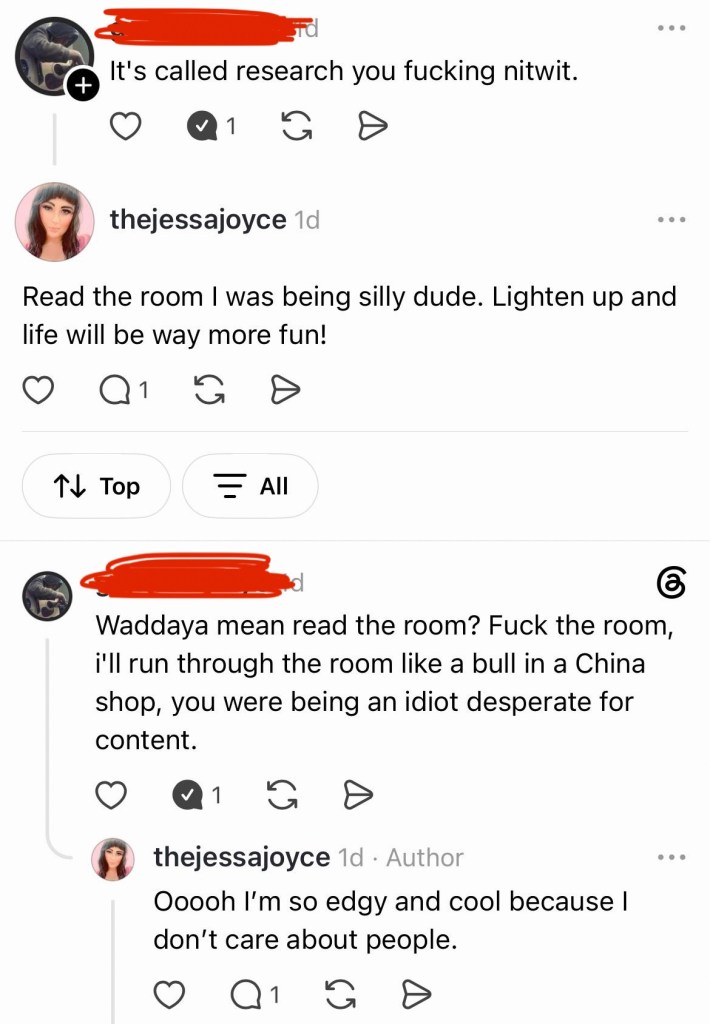
It’s funny, just this evening I got into a verbal tussle on that godforsaken social media site we all know and hate over whether or not “rest in power” was an appropriate phrase to say in remembrance of a white person. Never mind that said white person, Renee Good, was oppressed in other ways (being queer and a woman, for example) and was literally killed by her oppressor. This person, who I imagine had good intentions, maintained that the phrase can only be used for people of color. That is the kind of over-the-top policing that hardens hearts. How does that black-and-white mentality make us any different from the conservative evangelicals who dictate that we have to do x, y, and z to be saved?
I’m not saying we shouldn’t call people out for egregious screw-ups, or even smaller transgressions that maybe came across wrong (Chappell’s memorial post is a great example), but there needs to be some grace delivered alongside the message. Otherwise, we’re going to cancel each other into the fucking ground. We need to begin viewing each other as people again — beautiful, deeply flawed, and capable of change.