
When I was a little girl, I wanted nothing more than to be a rock star.
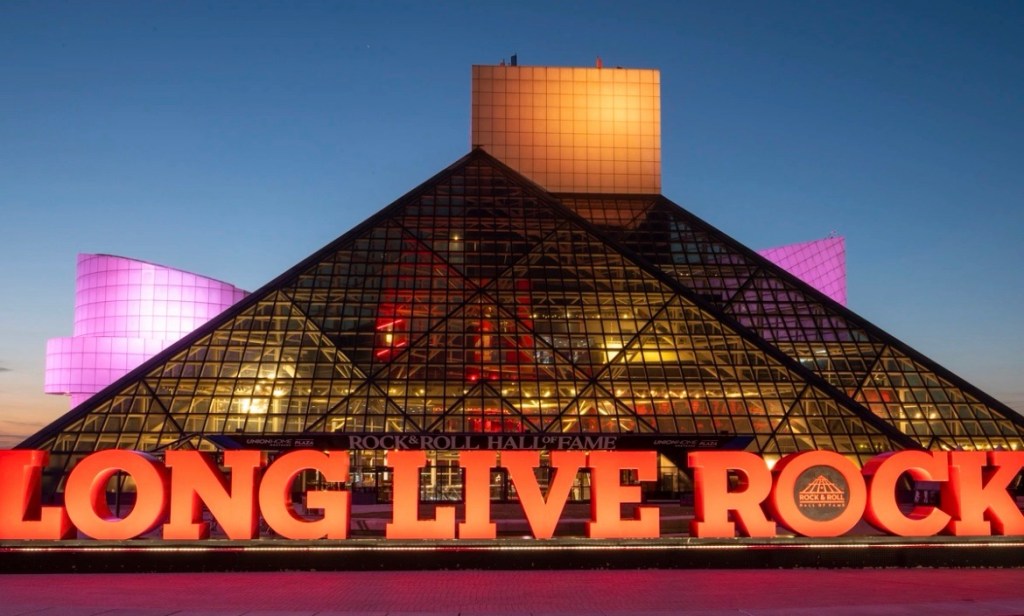
It was all I ever fantasized about. I’d put on headphones and my favorite albums and run around the house imagining myself as the artists. I loved watching the VH1 Behind the Music specials about the bands I admired and daydreamed at length about my future episode after I’d inevitably conquered the music world myself. I had entire storylines in my head about my meteoric rise to stardom and my tragic downfall and my against-all-odds battle back to the top, when I’d finally be given my flowers and have my name added to the Rock and Roll Hall of Fame at last.
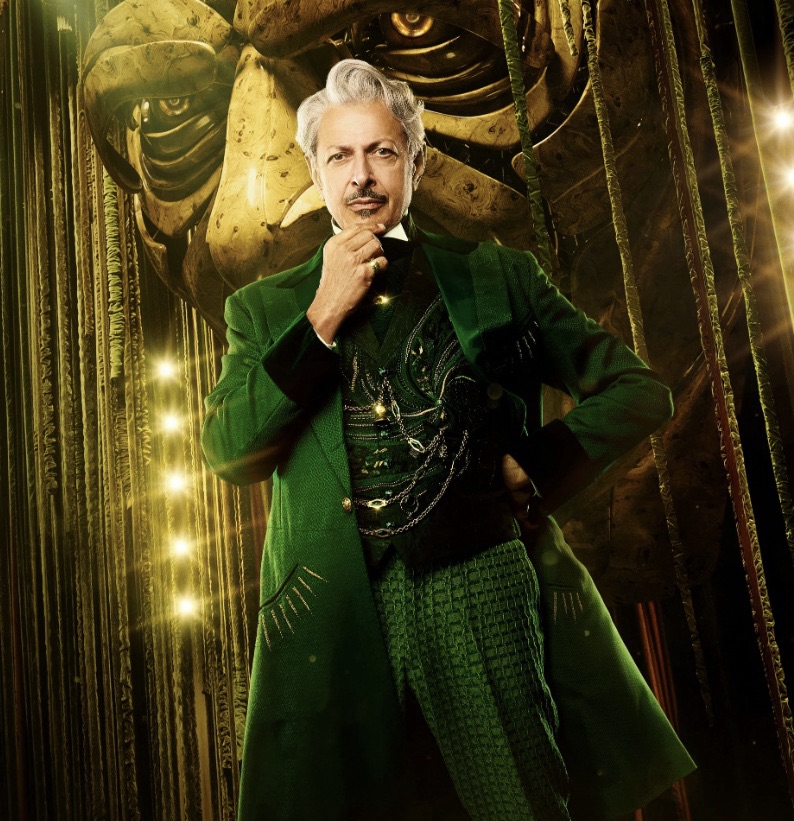
But as a certain green-hued witch once sang, something has changed within me.
I don’t want to be a rock star anymore.
I’m done playing the game.
I was originally set out to write about the ways in which the music industry has recently proven itself to be a toxic place, but as I really began to visualize the points I wanted to make with this post, I had a dark realization. The music industry was never a decent place. Even as far back as the days of Vivaldi, the music that actually got heard by the masses was largely composed under the eye of kings and the Church and made by folks who already had money and connections. Sadly, the world is moved by whoever has the most resources, and like a lot of great things in life, capitalism had to take a shit on music as well.
In recent years, it’s become increasingly clear that much of the songs we’ve come to love and cherish throughout the years were brought to life by the worst people you know. The old adage of “never meet your heroes” has never been more true. Almost all of the musicians I looked up to have at least one gnarly skeleton in their closets, and that’s not even getting into the bigwigs behind the scenes who curated what we heard on the radio our whole lives. You know none of that shit was organic. We’re slowly finding out just how interconnected and insidious the folks in power really are. And it’s really, really disheartening. Sometimes I really do feel like Elphaba learning the true nature of Oz and the Wizard.
“But Jessa,” you say, “you keep saying all this stuff about how the music world is fucked up, but you’re not giving us any real examples of why it’s fucked up.” Well, that’s the part I decided to put in a silly listicle like Cracked back when it was good. There are at least seven concrete reasons why the status is not currently quo. Let’s begin with an issue that’s been plaguing pop music since its very inception, to the point where it’s nearly baked into its DNA. And that would be…
1. Racism
Are you ready for an uncomfortable truth? All modern popular music was stolen from black Americans. From the dawn of the blues, white folks have been ganking the tunes of the very people they enslaved and oppressed. Even before recorded music, minstrel shows appropriated the sounds brought over to the US via the African slave trade and perverted them into gross mockeries. Wikipedia itself goes as far as to describe one of the most famous minstrel songs as “a key initial step in a tradition of popular music in the United States that was based on the racist ‘imitation’ of black people.” And that was pre-record industry. Once people found ways to slap music onto vinyl, the suits in charge bent over backwards to whitewash whatever music that meant. Pat Boone made an entire career out of reworking “black music” into something palatable for the mayo masses. Some of the early Caucasian rock artists did have a deep reverence for the origins of the music they made — Elvis famously attended black churches in his youth and was typically known to respect his musical forefathers. But one would have to be entirely ignorant to believe his relative success compare to artists like Sister Rosetta Tharpe wasn’t in part due to his whiteness. Record execs believed they had to sell a “sanitized” version of rock and roll to America, and that’s how we as a society collectively divorced rock — and pop music in general — from blackness.
But the truth is, nearly every genre of popular music can be traced back to the black Americans who pioneered the art. Rock owes its entire existence to black folks, as does rap. Even country, the genre damn near everyone associates with the very whitest people on the planet, has its roots in traditional African music, with the banjo being an instrument brought over via the slave trade. We would not have music as we know it if not for the black people we stole it from. That being said, racism isn’t the only ugly -ism that plagues the music industry. Sexism is also rampant, and this next point is one that seems to disproportionately affect the ladies…
2. Body-Shaming
Remember back when Britney got fat?
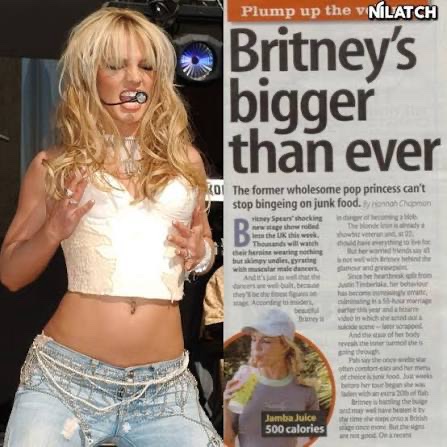
Like, look at all that blubber. You could hide a whole ass ham sandwich for later inside those big ‘ol folds, right? Never mind the fact that a slight breeze could probably knock over poor Brit in these pictures, she’s just so fat, right?
It probably shouldn’t come as a huge surprise in a post-Epstein world that powerful men wanted to keep their pretty pop princesses tiny and dainty and girlish. Strong men love weak women, or more accurately, girls. The minute one’s adult curves begin to blossom, young women are inundated with messages that for some reason, this is bad. That pressure is even stronger for female artists who make genres of music where image is important. And let’s be so for real right now, image is important for women in practically every genre because our society maintains that women are primarily a thing to be looked at, not heard. One of the most heartbreaking cases I know in the industry is the story of Karen Carpenter, who ultimately lost her battle with her eating disorder. We missed out on so much potential music because our society pushed a world-class drummer and vocalist to fucking starvation. That is not okay.
My Roman Empire is the way Heart frontwoman Ann Wilson was treated by the industry in the eighties. Because for some reason, the worst men on earth took a look at this woman and thought “whale.”
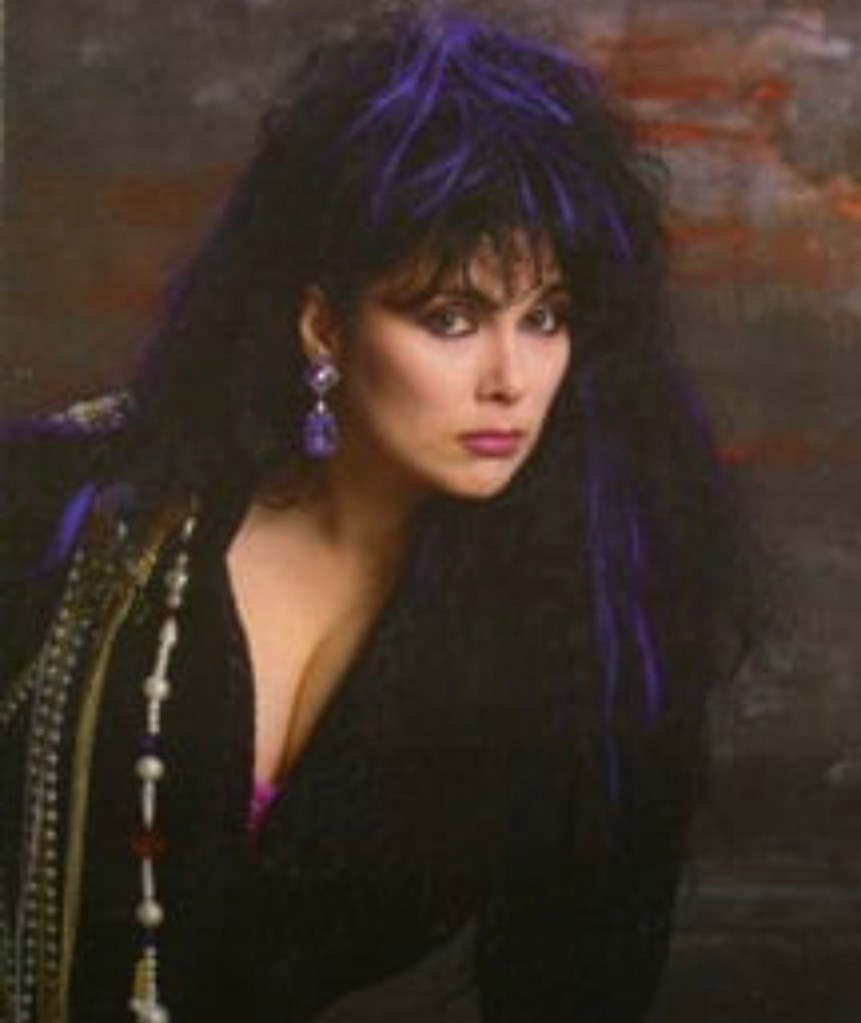
If you’re unaware of her story, she was bullied throughout her life for not being a stick figure, but when she hit 30 and started looking a little more woman-shaped, the record execs panicked, dressed her in all black (which was unintentionally the origin story of my goth phase, as I spent years trying to emulate her style during this era), and attempted to hide her behind her blonde, skinny, more “conventionally attractive” guitarist sister, Nancy. She went as far as using cocaine and getting fucking surgery to get back down to an “acceptable” weight, and I have no doubt that had she hit it big in the year of our Lorde 2026, the suits would be hurling Ozempic at her. Sure, whatever, maybe she reached an unhealthy weight at some point, but let’s be so for real, who the fuck cares? She’s not a model — she’s the greatest living female rock singer, and to reduce her to whether or not she’s overweight is absolutely bananapants to me. Even at her heaviest, I thought she was the most beautiful woman in the world as a child, and I was not about to let some misogynistic asshole in the music biz try to convince me otherwise.
3. Payola/Nepo Babies
Did you think your favorite artists actually had a rags-to-riches story?
Yeah, those rarely exist.
I remember a few years ago when Chappell Roan came out and everyone here in the Midwest was excited that one our own “made it big” in the music scene. She was one of us. She lived in a trailer park or something and worked in a drive-thru coffee shop and fought her way to the top through sheer grit alone. She’s the crab who escaped the bucket, and instead of trying to drag her back down, we actually elevated her and celebrated her.
What you probably didn’t know, however, is that it quietly later came out that her backstory was a little bit…embellished.
For one, this is her terrible run-down childhood home:
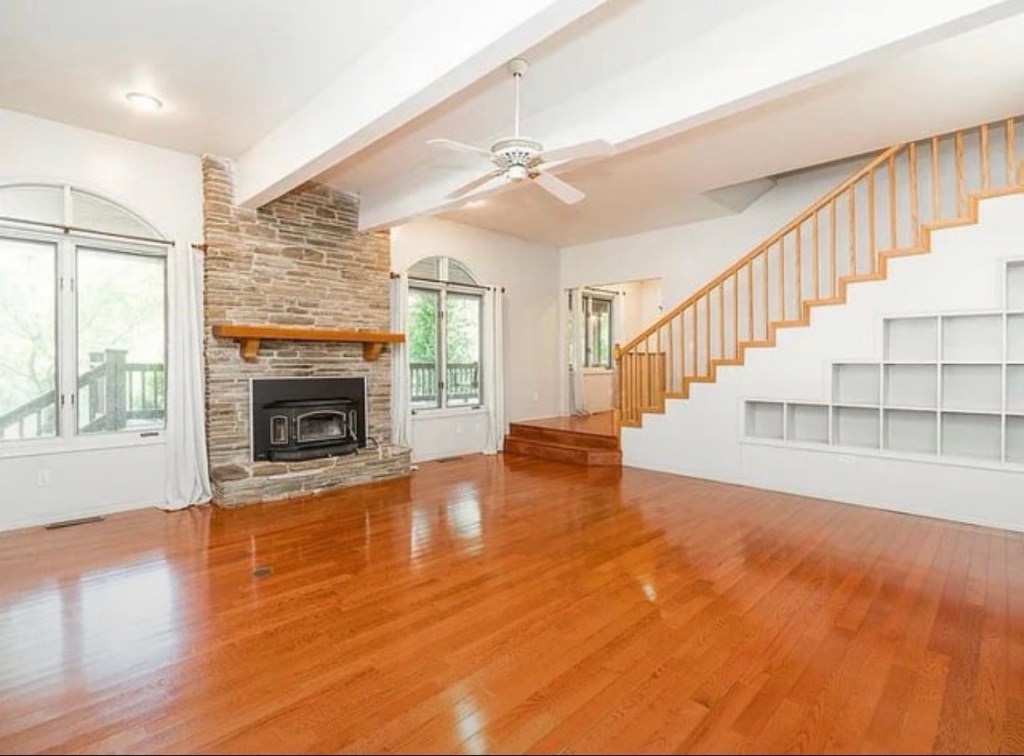
A lot of details have since come out about the true background of Chappell Roan. For one, her family is not nearly as destitute as we’ve been led to believe. Her grandfather Dennis Chappell, whose name she borrowed for her music persona, was a shrewd businessman who started an insurance company that brings in around $10 million annually. Her mother was a successful veterinarian who had her own practice. And her uncle might be the worst one — Congressman Darin Chappell, whose slimy pro-forced birth policies will likely kill a lot of vulnerable women. In defense of Chappell herself, she’s been vindicated over and over when it comes to parasocial relationships in music (more on that in a bit), and has obviously been the target of several smear campaigns to dull her influence. Still, it’s not a great look to be disingenuous about your upbringing, and I would have respected her a lot more if she’d just acknowledged all the legs up she’d been handed through her birth family’s wealth and influence.
The problem is that Chappell is not an isolated case. It’s pretty well-known by now that pop music juggernaut Taylor Swift was never the “girl next door” unless you lived in a goddamn gated community. Sure, she grew up on a farm if you wanna get real technical, but it wasn’t Old McDonald’s. Her parents were wealthy businesspeople who could afford to literally take out a full-page ad in The Wall Street Journal bragging about their little bundle of joy who’d go on to bring the music world to its knees. Yet fans will point to her as the “poor little girl who made it despite all odds.” The truth is, the odds were always stacked in her favor. That’s what happens when you’re born into money. That’s to say nothing of her talent, as she’s obviously incredibly talented and personally one of my favorite songwriters of all time. But it hurts my heart when I wonder about all the Taylor Swifts trapped in trailer parks whose songs will never get heard.
When you have money, you have safety nets. When pursuing your wildest dreams, there’s a good chance something will eventually go wrong and you’ll have to regroup. It happened to me with my dream of becoming a music therapist. Attempting to make it on a large scale in the entertainment business is an even riskier endeavor for a lot of folks. In many cases, you have to move to where the magic is happening, and just moving to a big city is a risk in and of itself. Rich kids get the second and third and fourth chances working class musicians don’t get, and then you factor in the sad fact that music only gets heard when you throw money behind it. Payola was the industry’s way of paying off radio stations to promote their songs, and despite getting technically banned, surprise surprise, it is still fucking happening in the 21st century. The things the radio feeds you are not organic. It’s all carefully curated, and more often than not, it’s the artists with a sizable amount of lucre who get played. Speaking of lucre…
4. Financially Screwing Artists
A lot of everyday people don’t really realize what a record deal really is. The dream we’ve been sold is that when the right guy hears your music, he’ll be swept away and throw you a deal, and with it comes all the fame and fortune of rock stardom.
What they don’t tell you, though, is that all that money they give you? You have to pay it back. Or perhaps more accurately, pray the meager royalties you earn from your music offset that advance you’re given.
I know a tragic story from my personal life about a dear friend who I casually dated back in college. He was a phenomenal guitarist, one of the best I’d ever heard in person, and he joined up with a band that subsequently “hit it big” and landed a sweet deal with a relatively small label. Sadly, nothing really came of the deal. The label more or less sat on the band and did little to no promotion, and when they were all “surprised Pikachu face” at the fact that no one was streaming their music, they unceremoniously dropped the band — who still had to pay off that advance. On the off chance a “regular person” gets their foot in the door, there’s a good chance someone will be waiting right around the corner to screw them out of thousands or even millions of dollars.
Music does not produce a lot of revenue. We’ve cheapened the very art of music down to something you can stream willy-nilly at any time. There’s no upfront cost aside from the measly Spotify subscriptions we pay, and while that’s amazing for consumers, it absolutely fucks over any chance of the musicians behind the scenes actually making a living. Spotify gives you little over $2 for 1000 streams, and unless you have a ton of followers who stream your material on repeat, that doesn’t add up to much. A lot of artists have to maintain day jobs to stay afloat. When I was working at a traumatic brain injury rehabilitation facility in Ann Arbor, I was shocked to learn that one of my coworkers was the frontman of a fairly prominent mu-metal band. It’s wild how many musicians need outside income. Even very established artists are resorting to selling their life’s work for a lump sum in order to squeeze a little more money out of their songs. The companies buying these songs clearly don’t give a flying fuck about creative integrity, but that obviously doesn’t matter either, because the machine is also known for…
5. Creatively Screwing Artists
It’s not a secret that once the execs have their hooks in you, you’re at their very whim, and when the soundscape changes, you have to change. Going back to my Heart example, back in the eighties, they were basically given a deal that in order to keep being rock stars, they had to play the new MTV game. The band had to trade heavy guitars and introspective lyrics for big synths and songs written by outsiders. Ann even admitted that the music they were forced to make in that time frame was “stifling.” And they’re far from the only examples.
Music today is a numbers game. Pop fans watch the charts the same way football fans watch their favorite players’ stats. If an album doesn’t sell as well as the last one, people are quick to declare that said artist is a “flop.” Folks have already coined the term “Khia asylum” to describe female one-hit wonders, and if their favorite’s newest release don’t top the charts, that’s where they wind up. Never mind the fact that “Milkshake” is a legendary song. Khia has literally become shorthand for “not being able to follow up on your best work,” and fans are so hasty to determine that a woman has already written her magnum opus at 22. Remember how Halsey was so excited to share her deeply personal and experimental album about her health struggles, only to have the entire industry drag her for it? She’s not even allowed to release new music now because that album didn’t do as well as Taylor’s newest release. Record executives are holding our artists hostage and silencing them for having the guts to do something different. We’re punishing creatives for their creativity.
If I’m allowed on my soapbox for just a moment, I just want to say that music should never be about numbers. Music is not something that should be quantifiable. Music is highly subjective and deserves to be regarded for its quality rather than how many average Joes one can dupe into listening to it. This is how we’ve devolved into a place where AI can take over. Who cares about artists anymore? We can just beep-boop anything into existence instantly without the hassle of managing a fully human musician with wants and needs and personalities. That’s what executives want. Notice how you never see bands anymore (except Geese for some reason). That’s not an accident. The more people you have signed, the more liabilities you have. People fuck up, and in our current zeitgeist, that’s not allowed. Which leads me to my next point.
6. Parasocial Relationships
This is more on the fans than the industry itself, but it bears noting that the industry does little to curtail this phenomenon, and in some cases even encourages it. People get obsessed with their favorites. I’m not talking my childhood obsessions with Shania Twain or Bon Jovi or the aforementioned Heart. Those were innocent fascinations stemming from the fact that I was a lonely undiagnosed autistic child with no friends, and the music became a sort of surrogate friend to me.
But that’s not what this is.
I hate using her as an example again, but fuck it.
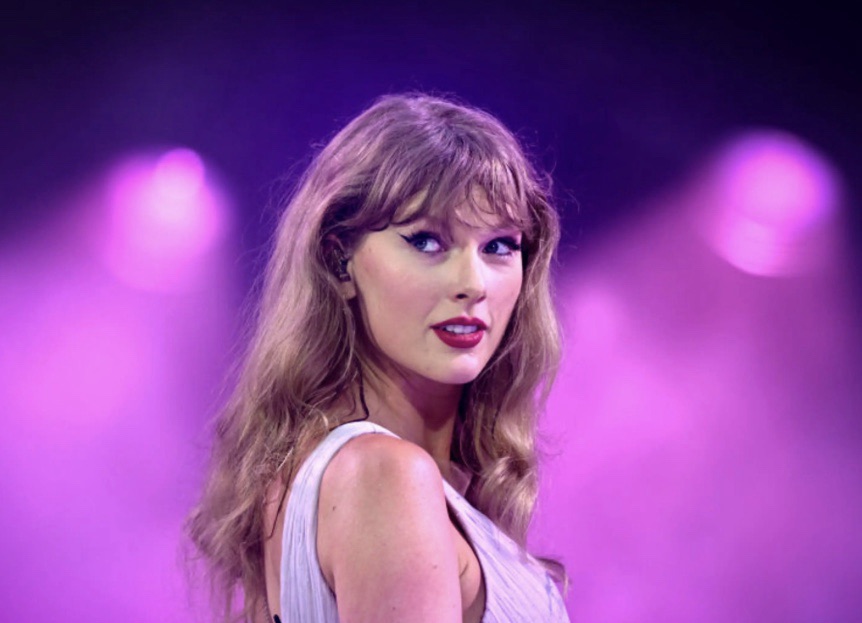
It’s not a secret that Taylor was madly in love with Matty Healy of The 1976. But when the Swifties found out that their beloved mother was seeing a skeevy dude who did some questionable shit in the past, they had the entirely normal response of writing an open letter to her explaining why she, a grown woman, should dump him. It, uh, did not go over well with her. She’s lucky her fans didn’t go even further, unlike one of Bjork’s fans back in the 90s. He was pissed his sweet little innocent muse was dating (gasp!) a black guy, and that was enough to send him into a violent spiral. He ended up killing himself on camera, but not before sending a bomb to Bjork to punish her for her transgressions. Mercifully, the package was intercepted before it could reach its final destination, but the case is a cold, bitter reminder of how dangerous these parasocial relationships can get.
I blame my fellow Michigander Eminem for some of my fears regarding parasocial relationships in music. In case you’re too young to know the real origins of the term “stan,” “Stan” was the name of a song that essentially told the tale of a young man who was obsessed with Eminem. He begins the song with a simple request for a letter back from the rapper, but it soon escalates into the fan committing murder-suicide — and blaming Eminem. That was my worst nightmare for years as an artist. I never want my music to contribute to human suffering, and it’s so easy for one unhinged person to latch onto you and your songs. Charles Manson took Paul McCartney’s innocent little ditty about a playground slide and interpreted it to mean “slaughter a bunch of people.” If Paul’s not even safe, I don’t know who is.
7. Grooming
I saved what might be the most disgusting part about the industry for last. The music world is brimming with predators. From the earliest days of rock and roll, the greats were busy dating, raping, and even marrying little girls. As a former little girl myself, and one who was really into classic rock, I spent years turning a blind eye to the fact that my heroes were out there hurting kids like me. It’s hard to think about the fact that famous groupies like Sable Starr were literally just children who were taken advantage of. So many rock stars were complicit in the abuse of her and so many others. It’s almost easier to list prominent rockers who haven’t had liaisons with underage girls.
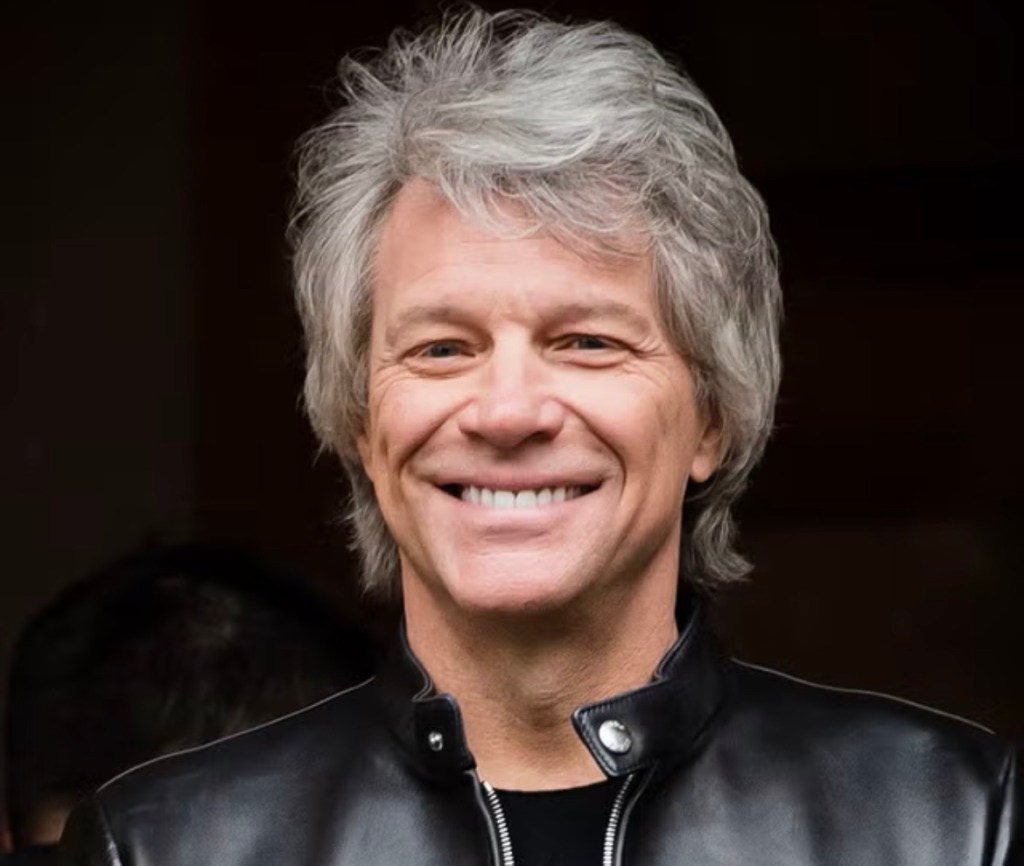
As hard as it is to admit, some of my personal favorites have been under fire for their relationships with young girls (although thankfully not Jon Bon Jovi). John Frusciante is hands down my favorite guitarist, but it’s difficult to divorce his music from the fact that he made a great chunk of it with admitted PDF file Anthony Kiedis. I love the lyrics “Show love with no remorse” from the song “Dosed,” but a part of me is glad I never tattooed it on myself because I know in my heart of hearts that the line was penned by an absolute creep. Brand New was one of my favorite emo bands for years, but after hearing about Jesse Lacey’s controversies, I feel icky revisiting them. I’ve never heard a song, Christian or secular, that quite sums up my faith like “Jesus Christ,” and I can’t even listen to the song without feeling gross anymore. Even the female musicians aren’t immune. I admire Sia as a songwriter, but you gotta admit her relationship with Maddie Ziegler was weird as hell. This is the kind of stuff that rightfully got Michael Jackson scrutiny. And speaking of which, while I love the man’s music and feel for his experiences as a child, that’s not an excuse for the way he behaved with children.
And the list goes on and on and on.
We have our Diddys and R. Kellys. We have our Phil Spectors and Dr. Lukes. When you give people unbridled power and access to vulnerable folks, abuse happens and the cycles continue.
That’s part of why I wanted to write this piece. The music industry is a dark, seedy place, and the older I get, the more I want no part in it. Let’s be clear — this is in no way a statement that I want to discontinue making music. Rather, it’s a statement that I’m done chasing “rock stardom,” whatever that even means in this day and age. It’s a trap, full stop.
So if we’re saying “fuck the music biz,” what even is the alternative?
Real music.
The future of music isn’t in the music industry. It’s in the hands of everyday artists who use their instruments to tell stories and move hearts. It’s in open mics, karaoke nights, and punk shows. It’s in some kid opening up a MacBook for the first time, screwing around on GarageBand, and discovering a passion he never knew. It’s in a small girl picking up a guitar for the first time and finding the way the notes fit together.
The mainstream media can have its robots and nepo babies. Real, authentic music will thrive in the dark recesses of every small town with a dive bar or coffee shop.
Real music will never die.

