
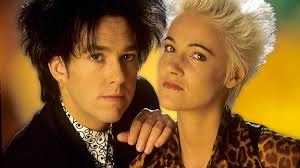
I’ll admit it — I’m a poptimist. I was converted back in seventh grade, when I first heard the Swedish pop duo Roxette.
Prior to Roxette, I was firmly in the “rockist” camp. This music journalism term refers to the belief that rock music is superior to pop music in artfulness and authenticity. That was one-hundred percent me at the ripe old age of twelve. You’d think I was a grizzled boomer man instead of an innocent millennial girl judging solely by my music taste. I preferred Boston to Britney Spears, Led Zeppelin to Lindsay Lohan, and ELO to whatever *NSYNC was doing at the time. I looked down upon my fellow tweens for their shallow taste in music, convinced my favorite artists were leagues ahead of theirs.
Then, I heard “Listen to Your Heart.” Not the bullshit DHT version (I will stand by that opinion). The real version by Roxette. I remember being taken aback by the bombast, the emotion, the sheer magnetism of the hook. It had everything I liked about my rock music, but with a pop veneer. I had to investigate, which led me to dig deep in their discography. Their songs were so…catchy. It lit something within me that’s been burning ever since. There had to be an art to creating pop music, because Roxette had mastered that art.
I then fell down an even deeper rabbit hole of pop music, uncovering songwriters like Max Martin, Kara DioGuardi, and (unfortunately) Dr. Luke, who’d go on to shape my entire worldview as a songwriter in my own right. I challenged myself with creating music that was as catchy as theirs. This elusive concept of “catchiness” became my lifelong obsession. To this day, I get a twinge of glee when someone says they get a song of mine stuck in their head. That’s always been my goal, and while I’m still a rock girlie at heart, my love of pop tints all the music I touch.
So why have I fallen out of love with pop music in recent years?
I initially chalked it up to aging. After all, studies have shown that your taste in music solidifies after 30, which is why your mom still listens to hair metal (which, to be fair, is an underrated genre). But there had to be more to it. Since the dawn of popular music, old folks have complained that the younger generation’s new music was too loud, too brash, or too risqué. The Silent Generation complained about Boomers and their heavy metal, the Boomers complained about Gen X and their grunge, and Gen X complained about Millennials and their rap. But I found I wasn’t offended by the pop music the younger generation was putting out. In fact, it was offensively inoffensive, too bland and soft to really stand out. It wasn’t brazen or daring enough, nor was it, dare I say, catchy.
I recently went to a karaoke night at a bar that’s frequented by Gen Z patrons. After all, I live in a college town, so many of the local hot spots are hangouts for younger folks. Although I still look fairly young for my age, I was almost certainly one of the oldest people there. You’d think karaoke night would be the time to sing your favorite party anthems, but to be honest, the song selections were a total snoozefest. One sad slow song after another. I had to leave, it was just getting me down.
When did pop music get so…somber?
I blame the almighty Lorde.
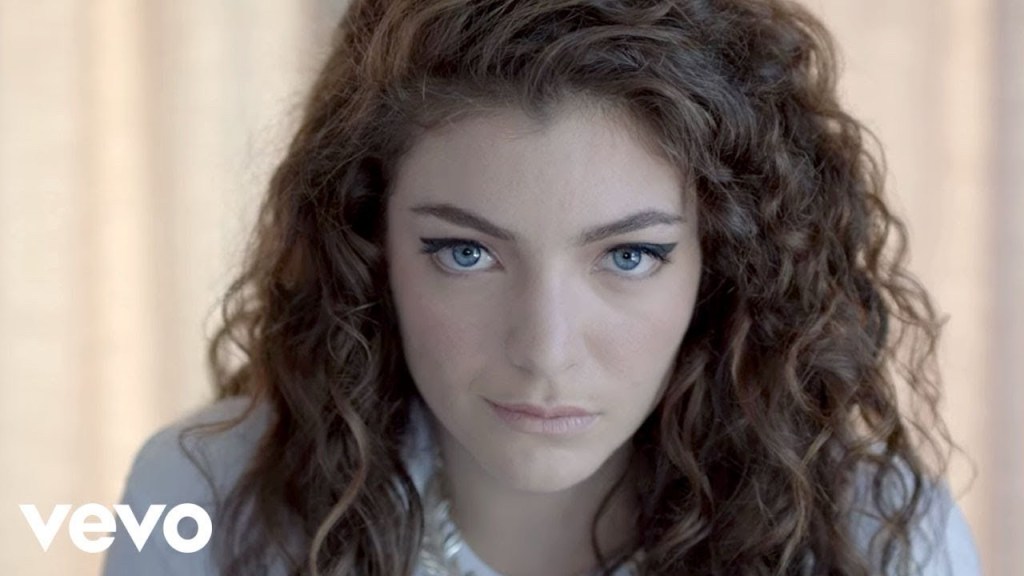
In the early 2010s, we were still experiencing a boom in silly mindless party songs, which, while not exactly lyrically groundbreaking, were sheer poppy fun. We had guys like LMFAO creating bops like “Party Rock Anthem” and ladies like Kesha and Lady Gaga with their array of club bangers. Then, the “Smells Like Teen Spirit” of Gen Z hit and wiped out that scene as fast as Nirvana had dissipated the hair metal that came before. That song was “Royals,” and it set the bar for everything that came after it. Suddenly, pop wasn’t “fun” anymore. It was much more subdued. That’s not necessarily a bad thing, and “Royals” is certainly not a bad song, but it made “avocadas and bananaes” the standard for female vocals, and — worst of all — it killed off the big choruses and catchy hooks I loved.
My wife and I have a joke about the trend of sad repetitive trappy songs. It sounds like musical Xanax, we always say. And it’s true. One of my favorite newer artists, The Band CAMINO, has a song I really love called “Roses.” “Why you wanna be a sad boy?” they ask in the first verse. The whole song ponders why we as a society have to be so sad all the time when you can just “stop and smell the (fuckin’) roses.” I get it — life sucks sometimes, and then you die. But pop music is supposed to be an escape from all that negativity. There’s a time and a place for sad bops, but when all you’re being served is sad bops, it gets a little tiring.
I think that’s the real reason it’s been harder for me to get into recent pop. We’re still living in a post-“Royals” world, but I do have hope that things are turning around. This summer, the newest generation of pop girls set the world ablaze. Olivia Rodrigo is bringing rock-tinged pop back to the charts. Charli XCX engineered an entire movement with her Brat album (and got a nod from President Obama of all people!). Sabrina Carpenter’s newest song has been on repeat for me this past week, and I don’t foresee it leaving my Spotify “on repeat” playlist for a while. And don’t even get me started on Chappell Roan. What we need is a pop music revolution. A femininomenon, if you will.
So let’s stop being sad and play a song with a fucking beat!
 JESSA JOYCE