“Perfection is the Enemy of Completion”: My NaNoWriMo Experience So Far

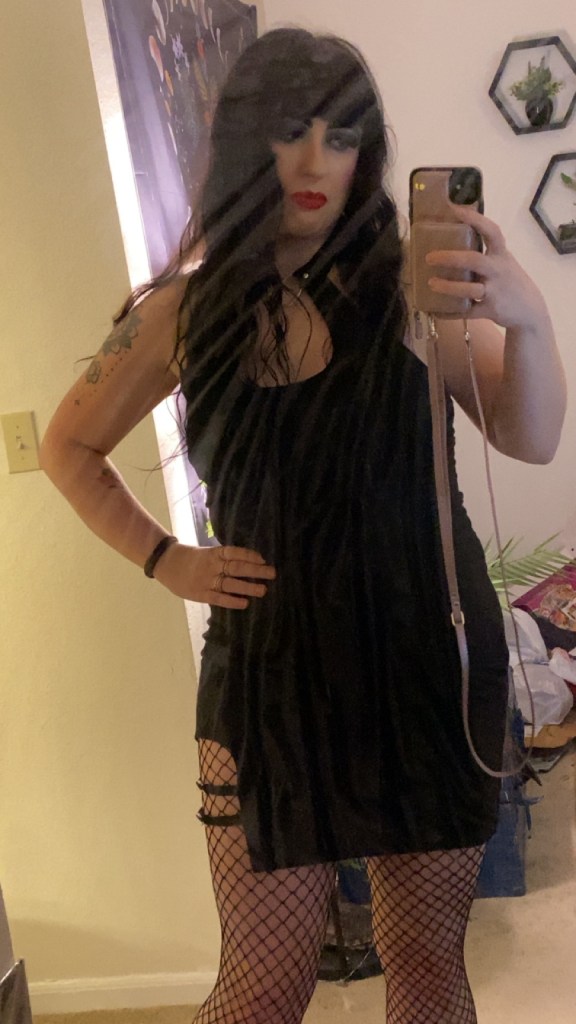
I realize I haven’t been very active on here as of late. That’s for a couple of reasons. First of all, I’ve been busy packing and preparing for the move to Fort Wayne this January, which is rapidly approaching. To be honest, clearing out our apartment and getting together all the things we’ll need for the sixth months of the internship is kind of a full time job. Especially when you’re me and have an ungodly amount of clothes. Like, dragon hoard levels of clothing.

I’d be a very fashionable dragon.

Most importantly, I’ve been working on NaNoWriMo this year. Will I actually finish a novel? Probably not, if I’m being realistic. I restarted my story like five times already and decided to ditch it altogether for an idea I had like a year ago, so there’s that.

I haven’t actually finished a story since elementary school. When I was a kid, I’d come up with stories all the time, and while the teacher was rattling off about long division, I was busy penning the first great children’s book written by an actual child. I was kind of legendary among the staff at my school for my precocious writing abilities. It was one of the few things I was good at, because God knows “obeying social norms” and “paying attention in class” was not among those things.

The signs were right there.

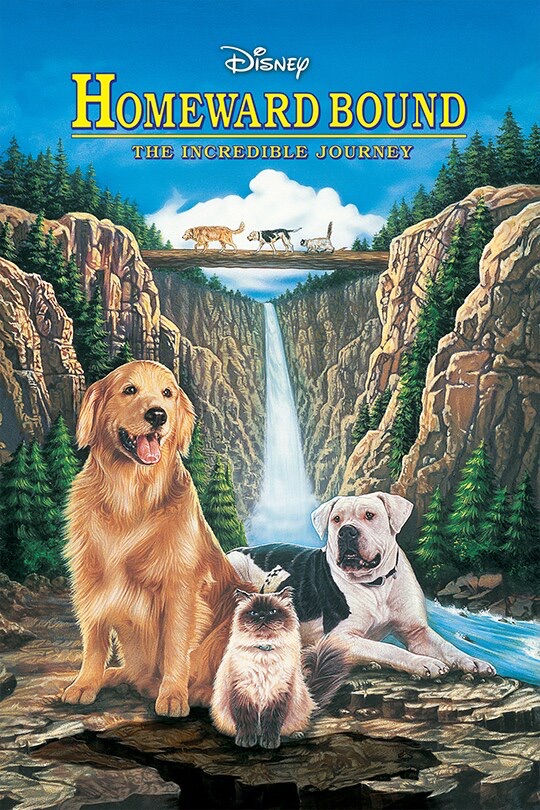
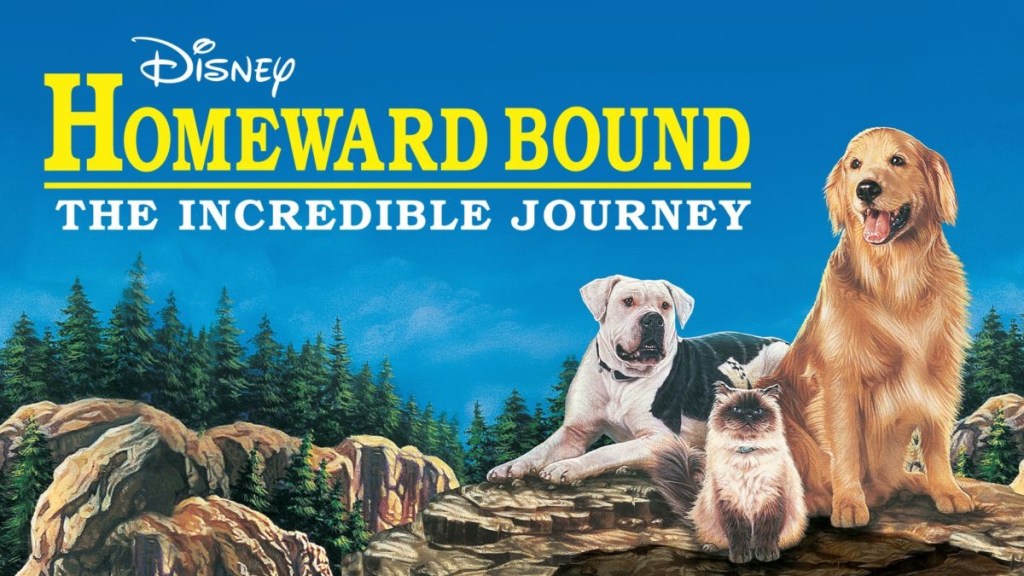
I still remember the series I sunk my heart and soul into: The Great Adventure. Creative name, I know. And the plot was equally creative — three pets get lost and have to find their way home. No, I definitely didn’t steal the idea from Homeward Bound.

Why would you think that?

As I got older, the stories I came up with got more complex, and the middle school teachers I had weren’t as keen on me writing during class, so I just kind of…stopped. For a while at least. When I finally picked up the pen again, or rather, booted up the word processor on my family’s shiny new computer for the first time, I found myself unable to get past the first chapter of, well, anything. All of my amazing story ideas were dead on arrival.

I think as I got older, I lost that sense of fun I had when it came to writing. Now that I was in my teens, and eventually twenties and thirties, I held myself to higher standards than I did as a child. Everything had to be perfect. I couldn’t half-ass anything, lest the entire project turn to dog crap. I couldn’t even write a few pages without having to revise everything and eventually rewrite what I had altogether.

“Chapter Two”? I don’t know her.

For NaNoWriMo this year, I decided to try something different. I have this character from the project I’ve been working on (that I’ll probably never finish) named Tessa, and she’s canonically thirteen years old at the start of the story. I thought to myself, what if I write the story from her perspective? Perhaps writing from the point of view of a literal child will allow me to get into that headspace I had when I was a kid, when I could write anything. There was room for errors because hey, I was a kid. I don’t have to hold myself up to these ridiculous standards because realistically, a thirteen year old’s diary would be a trainwreck of ideas and stream of conscious blathering.

And so far, it’s been working. I’m kind of excited to follow this character through seven years and watch her grow. I plan to adjust my writing as she gets older, which will be a fun experiment in style. I don’t think I’ll finish this project by the end of November, but I’m off to a great start finally creating something, anything.

My girlfriend often tells me perfection is the enemy of completion, and it’s better for something to be published and imperfect than flawless but unpublished. What use are stories if no one ever gets to hear them? For once, I want to finish something I’ve started, and I’m feeling good about this one.

Without further ado, here’s a little snippet of what I’ve been working on:

Saturday, September 13, 2008

Dr. Roberta told me to start keeping a journal to track how I’m feeling every day. She also told me to stop selling my Adderall to the high schoolers. Welp.

My mom bought me this college-ruled notebook from Meijer. It’s got enough pages to last until I’m like, twenty. The front has a bunch of flowers and crap. (Wait, am I allowed to say that?! Crap crap crap CRAP!) I don’t really know what I’m doing as far as writing goes. Do I just write down whatever pops into my big dumb head? Do I address this to anyone? Like, “Dear Diary, this is Tessa Mae Harlow reporting on my boring life.” I don’t even know what to write about. I’m thirteen, I’m not interesting yet.

I’m writing this from the stoop of the old brick house down the street. I usually come here after school to get away from my parents and brother and listen to the cassette tapes my mom passed down to me. That is, if I’m not hanging out with Kit or going to youth group for the evening. The house itself was built in the 20s I think. It’s “has a radiator in the living room” old. Sometimes I sneak through the window when I’m feeling brave and take pictures of the interior. It was probably a pretty place in its prime, but now it’s what you’d call dilapidated. “Dilapidated,” incidentally, was one of the words I had to spell for the spelling bee last year, and the definition is “decayed, deteriorated, or fallen into partial ruin especially through neglect or misuse.” I could spell that, but not “below.” I’m still salty about that.

Yeah, I’m having a lot of fun with this. I’ll keep y’all posted.

Richie Sambora Had a Charizard (And Other Tales From My Childhood)

I’ve been doing a series of healing prompts in my personal journal. The topics are meant to probe into your soul and reveal stuff about you, or something deep like that. Anyways, the first prompt in the journal was “What did you like to do as a child?” And well…

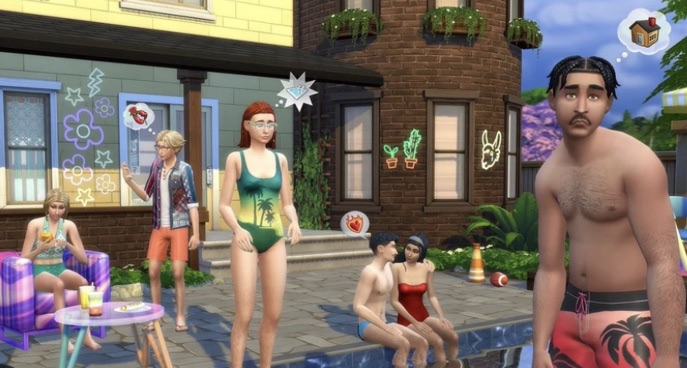
I was a weird kid. I would often read the dictionary and encyclopedia for fun. I remember curling up with my grandma’s Encyclopedia Brittanica collection and reading about whatever interested me at the time (and sex, because of course!). I also liked drawing out ideas for inventions and projects I wanted to do, like a bird circus or a flying couch. At night, I’d put on my favorite Richie Sambora CD or the local classic rock station and play The Sims for hours until I fell asleep. I enjoyed making Sims and killing them off, not because I was a terrible sadist as a child, but because killing them would turn them into ghosts, and I wanted to make haunted houses. I also liked putting on my headphones and pacing around the house listening to my favorite songs. With friends, I enjoyed playing make-believe, usually pretending to be our favorite musicians, pro wrestlers, anime characters, and/or Pokémon. (It was an odd cast of characters.) I liked writing down the ideas for stories I had in my head and often dreamed about becoming the youngest author ever. I didn’t like to read because I was too busy making my own books!

Yeah, I was weird as heck.

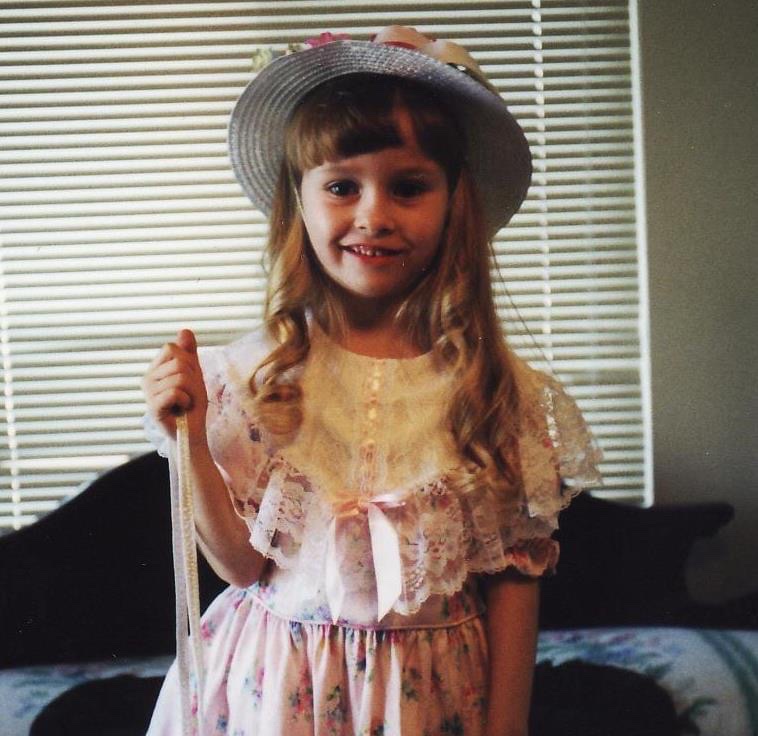
Look at this little nerd.

I’ve written quite a bit about my childhood on here, but I don’t think I’ve ever talked about my elephant-sized imagination as a kid. Anyone who came in contact with me knew about the endless worlds in my head, about my stories and make-believe games. I’d talk about them anyone who’d listen, from my mom to the lady checking us out at Kmart (especially the lady checking us out at Kmart). And all two of my friends naturally had to take part in my shenanigans.

We had this game, right? We called it Pokémon and Friends. The first part is obvious. We’d play as Pokémon. Pretty straightforward. Where it gets interesting is the “and Friends” part. That could mean anyone. Like I said in the prompt, the characters ranged from Bon Jovi to Jennifer Lopez to some pro wrestlers to Goku and even the witches from Charmed, if anyone actually remembers that show.

The Sanderson sisters, but hot and without the whole “eating children” schtick.

We’d play that stupid game from dawn to dusk if we could, pretending to be all these random characters as Pokémon trainers. I can still remember every single Pokémon each character had (Richie Sambora had a Charizard, for one). The game followed us on vacation, and if we watched an interesting movie, we’d adapt the plot to whatever storyline we were working on. There were so many intricacies, I had to start writing them down.

And that’s how I got into writing.

As we got older, my friends lost interest in Pokémon and Friends, but I still had a million stories going in my head at once. So I changed the names of the characters, filed off the serial numbers, so to speak, and wrote them back to life in my own works. Most of those stories are lost to time or remained unfinished, but some of the character archetypes and plot lines made it into the stories I’m still working on today.

I guess I have to credit Baby Jess for her creativity, and Adult Jess for never letting it die. I hope I never lose that simple joy of creating.

ADHD: An Owner’s Manual (Part Four: Habits You Can Keep!)

I’ll admit I haven’t been keeping up on my ADHD: An Owner’s Manual posts as much as I’d like. It’s almost like I have ADHD! Who’d a thunk it, right?

Nevertheless, I want to get back into writing these again, since I know a lot of people found them useful. When the daily prompt of “habits” came up, I figured it was a perfect opportunity to jump into some of my own personal habits for success with ADHD. These are simply habits that work for me, but feel free to borrow any or all of them for your personal life.

Without further ado…

What are your daily habits?

1. Read

This one is so important. I’ve always been an avid reader, usually of nonfiction. There’s so much out there to learn that it feels neglectful not to study a topic of interest a little bit every day. My habit tracker simply says “read,” but I try to aim for at least a page of something a day. That typically turns into several pages, maybe even several chapters, but the most important thing is getting your foot in the door with just a single page.

Here’s the cheat for ADHD — it doesn’t need to be a physical book. The cool thing about having a phone with you at all times is you can download whatever you want to read and have it in your pocket at all times. Whip it out whenever you have a spare moment. Hint: bathroom breaks are perfect for reading.

Another trick is to pick a topic that interests you. If you’re like me and have something (like a badass glam emo band) to promote, look into a book on digital marketing like One Million Followers by Brendan Kane. If you want to improve your communication skills, How to Win Friends and Influence People by Dale Carnegie is a classic. If you want to better yourself as a whole, I highly recommend Atomic Habits by James Clear or Eat That Frog! by Brian Tracy. Another one of my favorite authors is Austin Kleon, whose books should be essential reading for any creative. Whatever book you choose, make sure it’s interesting to you!

2. Study a Language

Languages are the building block of human civilization — so why does there have to be so freaking many of them?! I’ve been to Sunday school, I know the story. A bunch of ancient assholes ruined it for us as always, right?

The hubris!

The downside of there being a bazillion languages is that a portion of humanity is essentially behind a paywall, and the price you have to pay is hours upon hours of studying a foreign language. But as daunting as the task is, learning languages can be fun! Gone are the days of burying your face in a book and trying to figure out how to conjugate verbs on your own. Modern technology has game-ified language learning, which makes it accessible to even the most ADHD among us.

There’s two apps I regularly use — Duolingo and Drops. Duolingo is better for grammar, Drops for vocabulary. Both are good options and certainly be used together. As for which language to learn, that’s up to you. Obviously anything that uses the Roman alphabet is going to be easier for the most part, but if you want a challenge, take up something that uses a different writing system. I did the latter, choosing Arabic, which has the added bonus of being the second language of many of my coworkers. That’s another consideration — do you have people to practice with? Consider choosing a language many people in your area speak.

3. Clean a Thing

That’s it. That’s the habit. Just pick one thing in your dwelling space and put it where it belongs, or give it a good scrub. You don’t need to make an entire ordeal of it, and just cleaning a little every day will make cleaning your entire home less daunting. Sometimes cleaning one thing will snowball into cleaning another thing, then another, and another, but the important part is initiating the act of cleaning. Breaking up huge, seemingly impossible tasks into bite-sized pieces like this helps me to keep a clean apartment.

4. Do Something Creative

That’s it! I make it a point to either write or do art every single day. Whatever your passion is, indulge yourself in it daily for at least five minutes — and don’t stop yourself if you get lost in the sauce and want to keep going. Again, the trick is to overcome that executive dysfunction and get started, and once you’re in the zone, don’t fight it. Use your hyperfocusing powers to your advantage.

It’s crucial to do this every day if you can. Think of it in terms of identity. For a long time, I called myself a writer — but I barely wrote anything! What good is calling yourself a writer if you don’t, you know, write? Put your identity first. What do you want to be? A painter? A musician? A dancer? A chef? Once you establish who you are, be that kind of person, which means doing whatever it is that person does. Being and doing are intertwined. Ask yourself every day, “What would a real (insert whatever it is you want to be here) do with their free time?” Then do it!

My artist wife has a saying — “You gotta want it every day.” She makes it a point to draw at least one illustration a day, even when she’s having a creative block. Just doing something is better than nothing. It’s all about building those little habits.

5. Get Moving

This is another important one. It’s no secret that we ADHDers benefit from exercise. The CDC recommends 150 minutes of physical activity a week with two days of strength training. While that seems like a lot, it breaks down to less than a half hour a day if you do it every day.

Going to the gym might be a good idea for concentration purposes. If you try to work out at home, you’ll be fighting off every distraction imaginable, from video game console on your tv stand to the sweet siren call of your bed.

IT’S A TRAP!

When choosing a gym, your number one consideration should be location, location, location. You want to remove as few obstacles as possible and make the habit as obvious as possible. If you’re torn between an LA Fitness you pass every day on your commute and a Planet Fitness that’s five minutes out of the way, drop that little extra for the LA Fitness. Speaking of making your exercise habit as easy as possible to maintain, keep some running shoes and workout clothes in your car at all times. If you have to run home to grab them, well…

DON’T DO IT!!

Our natural ability to double task is useful for working out because we can easily get our cardio in while reading or watching Netflix. Also, music is a great reward for working out — listening to your favorite songs while putting in the work makes time go by faster. And if going to the gym is out of the question for whatever reason, just taking tiny steps to stay in shape still helps. Take the stairs, ride your bike, do some morning stretches, whatever gets you moving. As I always say, small victories are still victories.

Do you have any daily habits? Feel free to comment them below!

If you enjoy my writing and want to help support me and this site, you can donate via Venmo (@jessjsalisbury) or CashApp ($TheJessaJoyce). Every little bit is greatly appreciated! Thanks for taking the time to read my work, and don’t forget to check back every few days for new content!

The Creative Grind: What You Should Be Doing Every Day

There’s only two types of people in the world — the ones that entertain and the ones that observe. Is that a direct quote from a Britney Spears song? Maybe. Whatever. Just stick with me here.

You see, my problem is this. I’m dreaming away—

DAMMIT BRITNEY.

—wishing I had a stable career as a writer, or musician, or really anything creative. Like, I’ve been streaming “let’s play” content in a dog costume because at this point, I’m just throwing spaghetti at the fridge and seeing what sticks.

And let’s face it, I make an adorable doggo.

And I’m not alone in these dreams. Last night, I was sitting in a dear friend’s living room with my wife discussing how we wished we could make a living off of our creative endeavors, me as a musician and writer, my wife as an artist, and my friend as an actress and playwright. That’s when my wife shared a gem of wisdom.

“You gotta do it every day. Even when it’s hard.”

She’s been practicing what she preaches too, drawing even just a small doodle on days when she feels uninspired. And it’s been paying off — her art has been getting way more attention lately, just because of the sheer volume of work she’s putting out into the world. I could make an entire separate blog post about the benefits of being prolific when it comes to putting your work out there, but in this post, I mostly just want to focus on how your perspectives change when you’re forced to work every day.

Like I previously said (or rather, like Britney said), there are two types of people in the world — those who entertain, and those who observe. Creators vs. consumers. And the difference isn’t necessarily creativity. Lots of creators really aren’t that creative, and lots of consumers have plenty of latent creativity waiting in the wings. No, what separates the two categories is the willingness to put in the work, to make something happen. Saying you’re doing something isn’t the same as doing it. You can call yourself a writer all you want, but if you never write, you’re actually a liar, and nobody likes those.

The solution is to constantly engage yourself in your creative interest. Every. Single. Day. It seems daunting at first, but it’s the only way to progress in your field. The trick is to build up whatever it is you want to do into a habit, even just a tiny one.

In James Clear’s book “Atomic Habits” (which I highly recommend), it is suggested that one find the initial spark of what it is you want to do, and turn that into a habit. Maybe you want to run more, but running a marathon seems too out of reach. Make your daily habit putting on running shoes. Put those shoes in the way of your door so you don’t forget. You might not necessarily go for a run, but you made that first step, and once you cross that line, you’re more likely to actually go for a run. It’s all about getting past that threshold.

This can work for just about any creative endeavor. Wanna write more? Just open up your word processor once a day. Maybe read through some past stuff. For convenience, do your writing on whatever device you use most. I’m writing this on my phone while sitting on the toilet, as a matter of fact. I’ve made a habit of just opening up my writing software whenever I have to, uh, answer nature’s call. Which is more frequently than I’d like to admit, but it’s good for my writing output.

IBS stands for “incredible blogging skills,” obviously.

If you make it a point to even just get a tiny bit better at your craft every single day, over several weeks or months or years, you’ll see exponential improvement in your skills. You just have to force yourself to do the thing, even on days when it feels like an impossible task. Carve out even a few minutes a day to practice or write or draw or what-have-you. Even if it’s not presentable, at least you did something for the day, and that’s what matters. It’s all about keeping up that inertia — the more you do it, the more you’ll keep doing it.

So my challenge to you this week is to find a way to make your creative passion into a daily habit. Find ways to make that habit unavoidable, and keep up that creative grind. It’ll all pay off in the end.