On Writing: A Manifesto of Sorts

I wrote this piece in one sitting a few weeks ago, but I only shared it with a few close friends. It’s a bit darker than anything I’ve written before, at least in tone, but I wanted to write about something I’m incredibly passionate about: writing itself! This piece could almost be considered a sister piece to the one I published yesterday on the divine power of creativity, in that it touches on several of the same topics.

I write this intro paragraph from Tucson’s botanical gardens, where a prominently displayed butterfly-dotted monolith memorializes the many, many children who were brutally murdered in the Holocaust. A quote from Anne Frank’s diary decorates the towering monument. She was only a young girl, but she knew the power of the written word. And her words have transcended space and time to humanize folks like her to the world at large. Storytelling is more than a way to pass the time. It’s how we connect to each other and share our struggles. Anne herself may not have survived, but her words are forever immortalized as a symbol of hope.

That’s why I write. And that’s why I felt the need to share these words with you.

It is said that history is written by the victors. But the funny reality of it all is that, when you think about it, history is simply written by the writers. After all, if a tree falls in the forest and no one is there to record it, did it truly fall? Did the tree ever matter in the first place? Was the tree even real? Without the word “tree,” you probably wouldn’t know what I was talking about. Without words, there are no stories. And without stories, we lose our humanity.

You see, humanity is stories. Billions of them, all happening simultaneously. Every person is a story in their own right. We all have a beginning and an end, and our lives consist of the moments in between the covers of the book. Like all good plots, there will be unexpected twists and surprises. Sometimes, you don’t get the things you want. Sometimes, no amount of meticulous planning will prepare you for whatever the Great Author has penned in your pages. As an aside, that’s kind of why I’ve taken to thinking of God, whoever He (or She, or They) may be, as the “Author.” Because at the end of the day, we are all characters with a role to fill in the greater story of humanity.

So, then, if all of these things are true, what is my role in this story?

That is the question I’ve been agonizing over for years.

But I know this much — I am a writer. I was born a writer. And because of this, I have the power to define my own reality. I can put into words the things other people cannot. Some people rely on technology for these purposes, but the real story of humanity can’t be told via machine. The story is flesh and blood. The Gospel of John talks about how in the beginning of everything, there was the Word, and the Word was not only with God, but the Word was God. And the Word became flesh, and that, there, is the key. In order to disseminate His message to the world, even the Great Author had to experience humanness.

Stories are at the very heart of what it means to be human.

I’ve spent many years on this planet learning what it means to be human, and I suppose I’ll never know all of the answers. What good is it to a human to know all of the answers, anyways? Does it change the path of the earth around the sun? Will it avert the inevitability of tomorrow and the day after? More knowledge does little to quell the constant screaming feeling that we are powerless little ants in a terrarium on fire.

But we press on. And in every moment, we find those reasons to continue. Those reasons aren’t the same for every person, but they all point back to the very act of creation. We create houses to live in. We create meals for our loved ones. We create inventions to make life easier. We create children. We create relationships. We create meaning. We all want to play a little part in the sacred act of creation. We all want to write our own stories.

And me? I’m just a writer. But in a world that is moved by words, a writer is a powerful thing to be.

Meet “The Author”: The Connection Between the Creativity and the Divine

If nothing else, I am a writer.

I have been since I was a little kid. Honestly, since I could hold a pencil and string together a coherent sentence. The stories were always there. The words were always there. One magical day in second grade, I just decided that writing stories was more interesting to me than actual work. So I started finishing all my schoolwork really fast and spent the rest of class time penning short stories. Usually they were thinly veiled rip-offs of Homeward Bound that only a lonely seven-year-old could get away with writing. But it was a start, and it got me falling in love with the art of language. From there, I wrote and read obsessively. I read so many books in fourth grade, my school even rewarded me with a hot air balloon ride!

A few years later, I’d go on to attend church regularly, mostly because I wanted to impress all my good little church kid friends and the hot guy at youth group. There, I’d learn about a whole different book. You know, the one you’d find in a shady motel drawer to rip the pages out of for joints?

That is, the capital-B Bible.

Christianity places a lot of importance on words. Jesus Himself is described as “the Living Word of God” in some contexts. The apostle John’s gospel even begins with the phrase “In the beginning was the Word, and the Word was with God, and the Word was God.” God is a storyteller, first and foremost. And the more I write, the more I begin to understand how the divine moves, even if my worldly brain can’t begin to comprehend it in its entirety.

Every day, there are eight billion stories being penned. Eight billion plot lines. Eight billion main characters. And no two of their stories are going to be exactly the same. Sure, you’ll find commonalities to the human experience, but for the most part, no one has gone through the same exact struggles in the same exact ways. Every life is as unique as a fingerprint.

And sometimes I wonder if God thinks of our lives and stories the way I think of my characters and their stories. I love my characters, every single one. Even the villains! I’ve put so much heart into each of them. I always say I’ve never written a character flaw I don’t already have as a person. That’s how much of myself I pour into these silly little guys who move the stories I write. I think God does something similar. We were supposedly created in His (or Her, or Their) image, so it makes sense that we were given divine gifts as human beings. Acts of compassion and senses of humor are something only humans — and God — have. (And if you don’t believe God has a sense of humor, look at the freakin’ platypus. Who designed that thing??) Another divine gift? Creativity.

We create because we were created. Human beings just want to share in the beauty of creation with our Creator. Our Author, if you will. That’s why kids practically come out of the womb singing and scribbling and smashing stuff together to make new things — until we beat the creativity out of them. By denying our kids and ourselves of art and creation, we’re denying the part of us that was divinely gifted to us. And that’s really sad.

I think the Church as a whole has a creativity problem. We don’t exactly have a C.S. Lewis of our generation. Worship songs are usually considered some of the worst slop in the music world, and Christian artists are typically marketed as the “moral alternative” to some other sexier, more scandalous musician. Like how Skillet is just Christian Nickelback, you know? The films are equally garbage. Can anyone claim to have actually enjoyed the God’s Not Dead series?

It’s sad that there has become such a disconnect between “God the figurehead of the Abrahamic religions” and “God the creative.” I’ve seen people come to the Lord and feel like they have to lay down their life’s passion in order to be saved. And I’m here to tell you that is a lie from the enemy. I hate to even bring up that impish little guy, since he’s been weaponized to scare the living daylights out of churchgoing children for time immemorial, but I do feel like there is some force of evil in this world, be it a literal Satan figure or simply the absence of God and goodness. And I feel like the Devil himself smiles whenever a sadly misled born-again Christian puts down his guitar for the last time.

We were created to create, and we were designed to use our gifts to serve others, honor God, and leave the world a better place than we found it. If I could serve you a little bit of Christmas in July, remember that song “Little Drummer Boy” (which Aly & AJ has a spectacular cover of)? That song is so interesting to me theologically. It likely didn’t ever happen and was entirely fabricated by the songwriter, and let’s be so real, why on earth would Mother Mary subject her sweet newborn king to a freakin’ drum solo? Still, it manages to paint a sweet picture of what humbly using our gifts to serve can look like. This kid has nothing to give, but he makes music nonetheless. He gives himself through his art. That’s enough.

The world is a deeply creative place, as it was given to us by a deeply creative Creator. My theological beliefs are evolving at breakneck speeds lately, and a lot of what the Lord is revealing to me as of late has to do with art and spiritual gifts. It’s a damn shame that so many Christians and religious folks in general have neglected this part of their faiths, and it’s even sadder that more of those folks would be offended by me saying “damn” than by religious institutions stifling the human spirit of creativity. Sure, making great art won’t get you into Heaven, but I don’t think that’s what it’s supposed to be for in the first place. We were never supposed to be saved by our acts on this earth, anyways, and I feel so many people miss the mark by zeroing in on the afterlife. God put us here, on this planet, and while we’re here, we gotta do something with our time. So He just gave us a lesser form of creation to indulge in. Art is how we regulate and express our own feelings and communicate with each other. Art is an analgesic for the unending pain of life. Art is God’s way of letting us know He loves us and wants us to cherish our time in this world.

I don’t have all the answers, but I do know that in order to live full, healthy lives, people need art. They need to make it, or at least be surrounded by it. People need to play. People need to get messy. People need to throw themselves into something they’re passionate about. This was not a mistake. This was a desire placed inside us by our Creator, the Great Author. That being said, do whatever it is you were meant to do. Maybe you’re a painter, or a knitter, or a writer like me. Even just spending some time in the character creation engine in The Sims can be beneficial. Whatever it is you do, give it your all. It is our divine gift, right, and duty to create.

So, go forth and create!

In Defense of “Bad Art”

I had this terrible realization recently.

I have absolutely abhorrent taste in media.

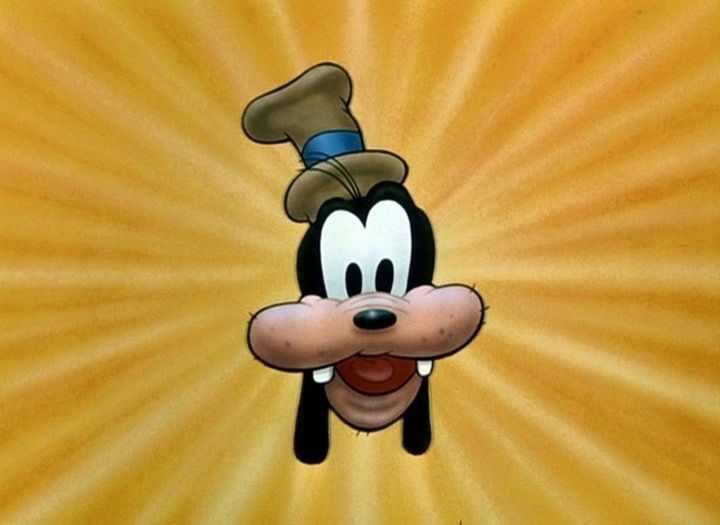
Prime example, my childhood autistic obsession band was Bon Jovi, and it proceeds to get worse. I primarily listen to podcasts that are a guy reading scary stories to fall asleep to. The television shows I tend to watch skew toward crude adult animation — Bojack Horseman is as introspective as I usually get. My favorite film is the cinematic masterpiece A Goofy Movie, starring the esteemed character actor Goofy.

I have certainly tried my hand at music criticism, but there is good reason why I title those articles “Music Reviews Nobody Asked For.” I am well aware that my recommendations don’t hold a lot of water solely based on the fact that my preferences in music are notoriously awful. Pitchfork would laugh me out of their offices if I ever attempted to contribute anything to their publication.

My point being, I am not a bastion of good taste.

But I had a realization recently. Perhaps art doesn’t have to be necessarily objectively good to be entertaining.

I wrote a little recently about the phenomenon known as outsider art, art created by folks whom the established industry has decided to exclude for whatever reason. Perhaps the creator is wildly mentally ill, which is an unfortunate situation a lot of creatives find themselves in. Maybe they’re not rich or attractive enough to break into the business proper, or perhaps they don’t even want to be famous. Whatever the case is, there is a wealth of art out there that many people will never experience because it’s not being promoted by the taste-makers with money and influence.

And that’s really kind of sad, honestly.

How many Taylor Swifts are trapped in a trailer park somewhere? How many amazing film ideas will never get made because they’re stuck in the noggin of a burger flipper? How many paintings, how many books, how many podcasts will go unfinished because the creators behind them have to work three jobs to keep their homes?

Creativity is our birthright as human beings. I work with autistic children as part of my day job, and one of the first things any kid autonomously does is create. As soon as a child can hold a crayon, she is doodling all over everything she owns, and as soon as she can speak, it won’t be long until she starts singing too. But then life happens. We get that sense of creativity kicked out of us eventually, between unsupportive parents and closed-minded teachers. I’ll never forget when I was working as a paraprofessional with children with special needs, and I helped a little boy color his snowman pink. That was the color he chose. But his teacher punished both of us for thinking outside the box, and my heart broke for that kid. We punish creativity.

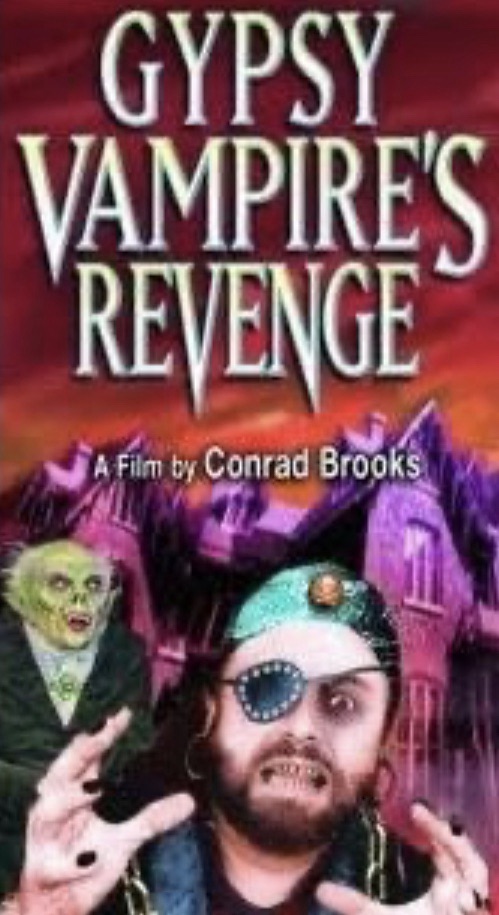
In a world where we can just beep-boop anything that comes to mind, human creation is even more precious, and the beautiful thing is that it doesn’t have to be good to be entertaining. A week or so ago, my wife, roommate, and I went to a secondhand electronics store and found a strange DVD collecting dust. The film was called Gypsy Vampire’s Revenge, which is not exactly the most politically correct title, and the cover was, well…

But something compelled us to grab it. And when we popped it into the DVD player at home, we were presented with one of the most bananapants movies we’d ever laid eyes on. It made The Room look like an Oscar winner. It looked like it was filmed with a first generation iPod and the plot was damn near incomprehensible, but something occurred to us while we were watching it together. People made this. Someone put their heart into this film, and even if it’s not a masterpiece, it’s human.

Maybe that’s what we need more of.

I feel like people hesitate to make anything because it’ll never measure up to the output of major studios with all the financial backing and big names attached. But if that godawful movie could hold the attention of my entire household, maybe you don’t need fancy shit to make something cool. All you need is a vision and the determination to make it happen.

More than ever, we need human art. It doesn’t have to be perfect. All it needs is heart.

Emo’s Not Dead: A Defense and Celebration of a Misunderstood Genre

As of writing, it is day two of the fourth annual Emo’s Not Dead cruise, and ya girl is having the time of her life. Like, you have not lived until you’ve watched Hawthorne Heights from a hot tub in the middle of the ocean. I can’t believe I almost elected to not do this cruise, and while it’s set me back financially waaaaaaaay more than I’d like to admit, I don’t regret this trip at all. Knock on wood, the voyage has been quite literally smooth sailing.

There are activities at practically all hours on this boat, but one particular event caught my attention — a panel on the history of emo, hosted by the guys from the aforementioned Hawthorne Heights. I wasn’t super familiar with the band before the panel, but I am a bonafide music history buff, so I’d be remiss if I missed out on the discussion. So I set my alarm alarmingly early for someone who’s supposed to be on vacation and hauled my ass up to the deck to catch it. And I’m so glad I did, because it was a reminder of how much this genre and this music scene has meant to me throughout the years.

Prior to high school, all I listened to was classic rock. I never even entertained the idea of seeking out music that had been made after I was born. To younger me, the best stuff had been already made and all new music was garbage and inferior to my heroes. But something unusual happened around tenth grade. My good friend at the time was dating her now-ex-husband, who turned out to be a total fucko, but he had great taste in music. So I was over at his place one time and, knowing I was a music lover, he offloaded all his old CDs on me. Among them was Jimmy Eat World’s follow up to their breakthrough album, Bleed American. It was titled Futures and it had a dark, ominous cover featuring a telephone booth. Something about it drew me in. So on a band field trip to Chicago, I put on my headphones and loaded it into my portable CD player.

And I’d never be the same.

Everything about their sound captivated me in that moment. I was playing cinematic movies in my head to the moody melodies and desperate lyrics. Every word and every twinkly guitar riff was soaked in pure emotion. The music sounded like what feelings sound like. It was a strange sort of synesthesia. And it made me realize that there were still bands out there making great music. In a way, JEW (which is a hella awkward abbreviation for a band name) was my conduit to the emo genre as well as the 21st century of music as a whole.

Funnily enough, Hawthorne Heights cited JEW as their conduit to the scene as well, and they talked in great detail about how they had similar journeys to mine. They were Midwesterners too, Ohioans to be specific, and they didn’t have much in the way of record stores or places to discover new music. But a friend had gifted one of them Clarity, the precursor to Bleed American, and that was that. Like me, the guys were drawn in by the music and the deeply emotional lyrics.

And that’s why they call it emo — it’s literally just emotions set to melodic punk rock. The guys from HH (a much better band abbreviation, by the way) brought up the fact that the word “emo” has a lot of baggage. In the beginning, it was almost an insult to be called emo. Bands didn’t want to be known as emo. Hell, I remember the slight moral panic in the MySpace era where authority figures assumed emo was shorthand for self-injury and other self-destructive habits. In schools, guys in the scene were often called f*gs and other cruel slurs, and girls in the scene were characterized as sluts or posers. But as the years have progressed, the “emo” label has since been reclaimed. Millennials like myself proudly wear the title “elder emo,” and younger folks are adopting the name and subculture as well.

I think fondly about the emo and emo-adjacent music I listened to as a young woman. I’ve had a lot of memories in the music scene, going to multiple Warped Tours and other festivals and making connections with the other attendees and artists. Live music is so important, and I’m glad I got to experience so much of it throughout the years (although I’m sure my ears aren’t so glad). I’ve written quite extensively on here about my fears regarding AI and the future of music, and those fears definitely still stand. But you can’t engineer away live shows. You can’t beep-boop an experience like the one I’m having on this cruise. That’s something the robots can’t replicate — the real, authentic human connection that comes with screaming along to your favorite songs with your 100 new best friends.

When the panel wrapped, the guys opened up the floor for guests to share their “coming to emo” moments. I hesistantly raised my hand and introduced myself as a fellow Midwesterner, albeit a Michigander (they forgave me). I shared my story of discovering JEW as well and how their music spoke to me like nothing else did. I also told them I appreciated how HH had come up out of Ohio of all places, because I get it. When you grow up around nothing but cornfields, finding beauty in the everyday isn’t easy. You have to make your own beauty, and that’s something else I love about music. I love the way folks can alchemize pain and hardship and even boredom into something lovely, something other people can appreciate too.

As an elder emo and a musician myself, this cruise has been a reminder of why I am in this game. It’s why I find guitar picks in my washing machine. It’s why I have callouses on my fingertips and can’t get baddie nails. It’s why I chose classical guitar over pre-med in college. It’s why I agonize over every word in every song I write. And it’s why I still believe in beauty in this world, even though I’ve seen so much of its ugliness as well. Music truly is what emotions sound like, and there is so much power in channeling those feelings into song. It’s a form of emotional bloodletting. It shows you that you’re not alone in this world. It saves lives.

That’s what emo is about. That’s what music is about.

The Freeing World of Outsider Music (And Why You, Too, Can Make Cool Stuff!)

Here’s a confession: I was originally planning to spend this month locked in my apartment with nothing but my laptop and recording equipment in order to bully myself into making an entire EP in a month’s time. I had a whole plan of action and everything. I was going to do a collection of covers of my favorite recent Chappell Roan and Taylor Swift songs and name it The Rise and Fall of the Life of a Midwest Showgirl Princess because I’m already extra as hell so why not lean into it? And I figured with how relevant both artists are right now, at least someone important would hear my project and like, give me a bunch of money to make music forever.

That’s how record deals work, right? They didn’t teach me that stuff in music school.

But here’s the eternal problem I run into — I’m an extrovert through and through. I’m actually stupidly extroverted at times. I envy the cute quirky introverts that just need like, a book and a cup of coffee to go, because I need at least thirty solid minutes of conversation every hour on the hour or I die. So I decided I’d try to appease both the part of me that wanted to record music and the part of me that wants to hang out with folks by throwing my gear into a sack and schlepping it over to my friends’ places.

And that’s when the real magic started happening.

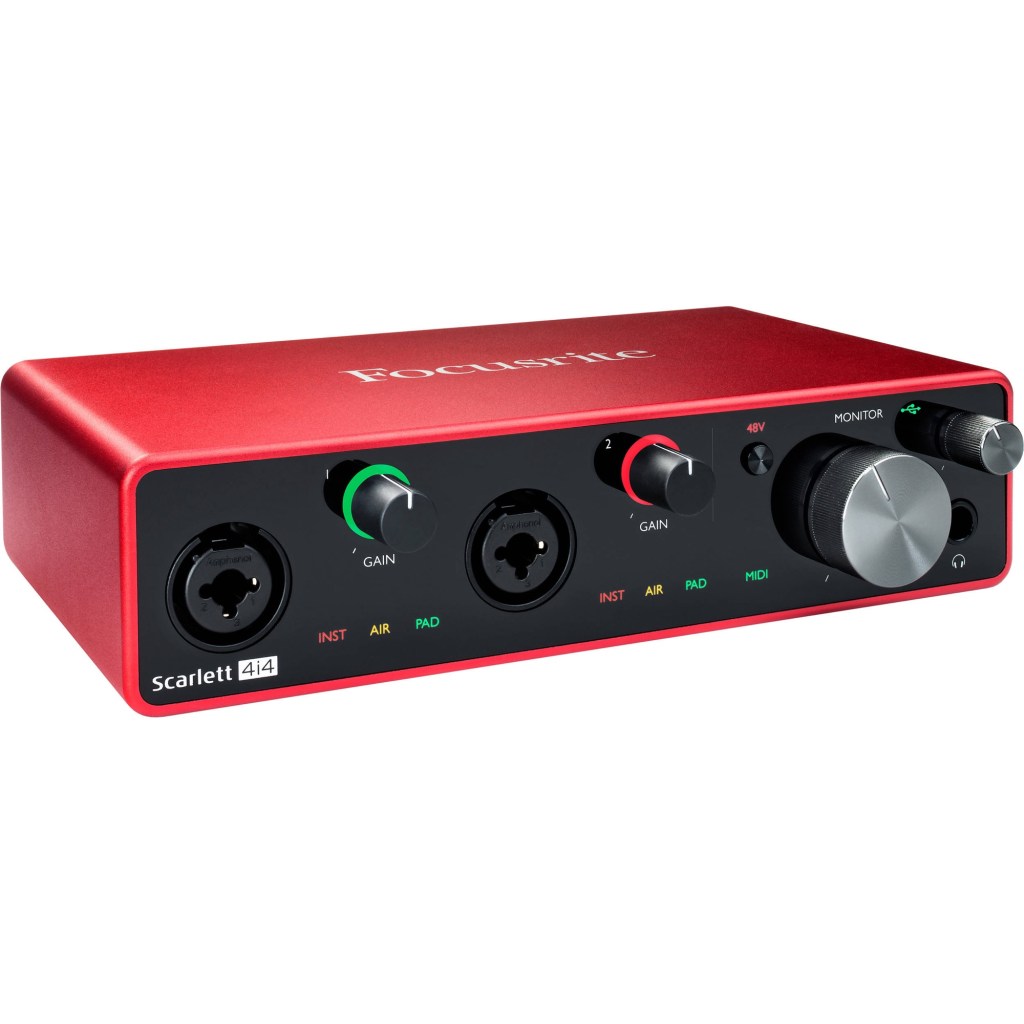
I’d break out my laptop, load up the DAW, and my friends would hover over me excitedly as I cooked up silly little beats for them to mess around with. None of us are actually rappers, but we like to write raps about stuff and pretend we are. I think the first song in what would eventually become The Kalamazooligans project happened at Luke’s place. He’s a writer, one of my closest friends, and a frequent collaborator of mine. He wrote a really heartfelt verse about finally finding companionship in the karaoke scene, and our mutual friend Willy made up a chorus inspired by a “live laugh love” sign (featuring Kim Jong Un — don’t ask) Luke had hanging up in his living room. Then David (who’s one of my Fairale bandmates, actually) rounded out the second verse, and I took the last. Suddenly, we had an entire song we literally pieced together with nothing but Logic, some Apple Loops, and that Focusrite Scarlett audio interface every fucko with a podcast owns (myself included).

They make them bright red to match the flags that come with having a podcast.

Was the finished product “good” by the standards of the music industry? Absolutely not even close. This is not Top 40 radio. Max Martin (my Swedish pop hero) would not touch these songs with a 39-and-a-half foot pole. The average listener would probably be surprised to learn that anyone involved in the making of this music was actually a professional-ish musician. But something special happens when people who have no business creating art say “fuck the rules” and do it anyways.

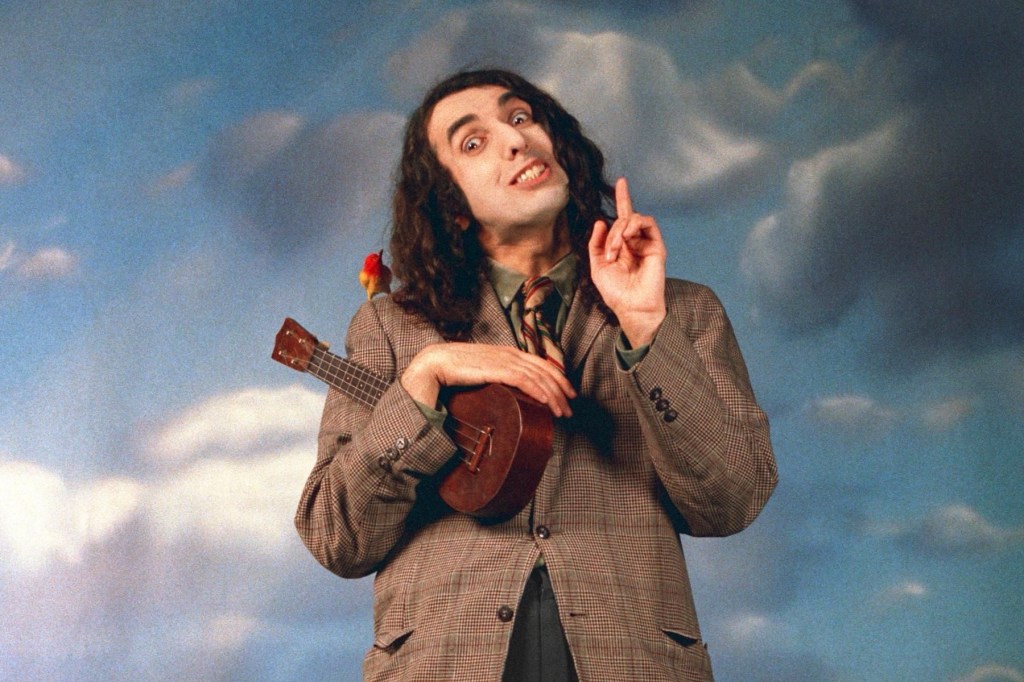
Outsider art is art made by folks with no connection to the “legitimate” scene, aren’t properly trained in their field, and/or often have stuff like mental illnesses and other disabilities working against them. In other words, not your glamorous ideal of an artist. Outsider art includes visual art as well (an infamous example being controversial cartoonist Christine “Chris-Chan” Weston Chandler), but on the music side of the loosely defined genre, you have guys like Tiny Tim, who somehow broke into the industry as a niche act armed with nothing but a ukulele and a wild falsetto. There’s the elusive proto-singer-songwriter Connie Converse, whose tragic life I actually immortalized in this very blog. Even Brian Wilson, the legendary freaking Beach Boy, was considered an “outsider” by some metrics, although this is debated. These are all characters I find infinitely more fascinating than the manufactured pop star image being pushed by the mainstream music machine.

Wouldn’t you rather read about this dude?

I’d like to think the future of music rests with the outsiders. Whether they realize it or not, people tend to gravitate toward artists who have a fascinating backstory. It’s why Taylor Swift managed to captivate so many people despite being born rich and pretty — she was still able to sell herself as the girl-next-door underdog with a guitar and a dream. Fans have been revisiting the drama between bands like the Beatles and Fleetwood Mac for generations now. I feel like artists today are too sanitized and “professional.” We need musicians with personality. We need musicians who take chances. We need freaks, geeks, and weirdos making the music no one else would dream of. We need outsiders.

When I was studying music therapy, my eventual dream was to help everyday folks make music they could be proud of. I knew firsthand how healing the process of music creation could be, and I wanted to share that with my clients. Obviously, that dream died a horrible deathbut maybe it didn’t. Maybe this is what I was meant to be doing this whole time. My friend group has been alight with ideas, and my phone has been blowing up with requests for new songs and beats to work with. Everyone is so excited to cook up fresh material, and it’s revitalized my love of creating music like nothing else. The crew even dubbed me the “Mother of Beats,” and I gotta say, after everything I’ve been through with music, it feels good.

I think our culture needs to rethink its relationship with music. Music isn’t only for attractive people, rich people, or able-bodied/neurotypical people. It’s the birthright of every human. Kids are always humming little songs to themselves — until society beats it out of them and says they’re not “good enough” to be singers. I’m fucking sick of that mentality. In a world where you can literally just beep-boop a “perfect” song, get dirty and create something yourself. Make it messy. Get your imperfections all over it. Who cares if it doesn’t sound radio-ready? The grit and grime are what makes it special.

I’m excited to see where The Kalamazooligans ends up. I hope it inspires more “outsiders” to get their hands dirty and create. Perhaps it’s a lofty goal, but I want to start a creative revolution, even if it never leaves this Midwestern college town with a silly name. If I can make my own corner of the world brighter, more whimsical, and more musical, I know I’ve succeeded.

The Sincerest Form of Flattery (And Why Taylor — Or Anyone Else — Shouldn’t Have to Apologize For “Stealing” Songs)

Ah, Taylor. I don’t even have to write her last name and you already know who I’m referring to.

It’s me, hi!

Unless you’re just getting back from a year-long sabbatical during which you traversed the steppes of Uzbekistan with nothing but a backpack and no phone, you probably well aware that Ms. Swift just dropped a new album. And it’s…just okay. It’s nothing to write home about, especially when compared to her masterful previous works, and the lyricism seems to have regressed significantly. I’ll probably write a full review of the album in the next week or so, but I wanted to touch on one of the biggest talking points that’s come up during this album cycle. And it’s probably the talking point that’s been driving me the most bananapants.

Which is just how hilariously clueless the general public is when it comes to music.

Okay, that might have sounded a bit mean coming from a bitch with a music degree and decades of experience, so let me reword it a little nicer — the vast majority of the population has no idea how music theory actually works, especially in the context of copyright law. Now I’m not a lawyer, but I do know a little bit about what can be copyrighted and what can’t. Still, I want to focus more on the music side of things rather than the law side, because that’s the more fun side, right?

I guess you could count this thing as a percussion instrument.

Anyways, let’s start here — you got these songs. There’s the questionable Charli XCX diss track, “Actually Romantic.” Among the many complaints about the song, particularly that it’s disproportionately mean-spirited, is the observation that it sounds suspiciously like the 1988 Pixies single “Where Is My Mind?” Then you have “Wood,” Tay’s tacky ode to her man’s…manhood, which people have said sounds suspiciously like the legendary Jackson 5 hit “I Want You Back.” And the song I consider lyrically the strongest of this batch, her title track collab with my current celebrity girl-crush, Sabrina Carpenter, shares a similar feeling to “Cool” by the Jonas Brothers, who were famously her associates early in her career. So what the fuck, Taylor? Are we blatantly ripping off other artists now?

And here’s the part where I get to say “Well, ACKSHUALLY” and defend Taylor’s compositional choices (even if some of the lyrical choices are much harder to defend — looking at you again, “Wood”).

Thank you SO MUCH for making me picture Travis Kelce’s rock hard redwood tree…

In the Western music tradition, you’ve got 12 notes: A through G, plus the sharps/flats in between. It’s important to note that out of these 12 notes, only a handful sound good together. Those notes that sound good together form the “key” of any given song. The key is essentially the artist’s palette of colors. Those are the notes you can put in your song that will actually sound like they fit in the song. Anything outside of the key will sound off and even unsettling at times. That being said, you can use notes that don’t fit into the key, but it takes a certain degree of finesse and theory knowledge to pull off nicely. But for the most part, you’ve got maybe seven notes to work with, which, ya know, ain’t a lot.

Let’s get to chord progressions. What is a chord progression? Well, have you ever listened to “Poker Face” by Lady Gaga and Luis Fonsi’s “Despacito” back to back? Even though the genres of the songs are completely different, the “vibe” is still eerily similar. And that is because they share the same chord progression. There are many, many more examples. “Africa” by Toto. “One of Us” by Joan Osborne. “Peace of Mind” by Boston. “Fuckin’ Problems” by A$AP Rocky. “Alone” by my freaking favorite band of all time, Heart. And that’s just one famous chord progression. The progression the Beatles used in “Twist and Shout” was practically ubiquitous in the 50s and 60s, and the blues as a genre likely wouldn’t even exist without the 12-bar progression we know and love. And — this is important — you cannot copyright a chord progression. If I wanted to write a song that uses the exact same chord progression as Taylor’s “Love Story,” I could — and I have. Heck, she has even plagiarized herself in this regard. Go listen to “Shake It Off” and “Eldest Daughter” one after the other and tell me the latter doesn’t sound like a more somber, slowed down version of the first. That’s because they use the same three-chord progression.

Did Tay lift the chord progressions for her new songs from preexisting songs? There’s a chance, but even if she did, you have to remember that musicians have been gleaning ideas from each other for time immemorial. Everyone is influenced by someone. But there’s also a decent chance she just sat down at her piano or with a guitar and those are the chords that naturally came out. Because, like I mentioned earlier, they just sound good together. Our ears are conditioned since birth to listen for patterns in music, and you’re so used to hearing a V chord resolve into a I chord (that’s historically the most common way to end a musical phrase — the authentic cadence). So when you go to write a song, that’s what you naturally gravitate toward.

There is a great deal of discourse around the supposed lack of originality on this album, but I don’t think that’s a fair critique. I think there are plenty of valid critiques when it comes to this album, but I don’t think this is one of them. You could argue that Taylor opened herself up to more scrutiny in this area when she went after Olivia Rodrigo for rights on a song that only marginally sounded like hers (and like, only if you squint). At the same time, I don’t like any criticism of “copying” in songwriting unless it’s a particularly egregious example. Music, at the end of the day, is a social art, and musicians are going to keep borrowing from each other like they always have. As one of my favorite writers, Austin Kleon, says, it’s okay to “steal like an artist.” I’m allowed to have influences. You’re allowed to have influences.

And so is Taylor.

How Ephemeral Love Becomes Eternal Through Music

Brace yourselves, kids. In this post, I mention both Heart and Taylor Swift.

A few days ago, Heart’s original manager, Michael Fisher, passed away. Actually, calling him just their manager is kind of an understatement. In the autobiography of Heart frontwomen Ann and Nancy Wilson, Kicking & Dreaming, Ann tells the story of how Michael was her first love. Their whirlwind relationship inspired one of the band’s earliest and most iconic songs, “Magic Man.”

Why do I mention this? Obviously, Ann and Michael didn’t work out. Michael ended up marrying someone else and having like eleven freakin’ kids, and Ann went on to become a rock star. But their stories are forever intertwined because of that one song. And that’s what this post is about, because when you write a song for someone — or create any art in their honor — you’re preserving a piece of that relationship forever.

I’m a lifelong songwriter. I’m also fascinated by interpersonal dynamics. If you took every song I’ve ever written throughout my life, they would tell countless stories of people who have come and gone and somehow left a mark on me. The songs almost act as containers for the emotions left behind by those old relationships. Each song is a museum of memories. That’s why I have this theory when it comes to songwriting. Well, maybe it’s more of a maxim than a theory. And the maxim is this: If you get even one beautiful creation out of a relationship, it was not a waste of time.

People enter into relationships usually expecting — or at least hoping — to spend forever with someone. The point of dating is to find “your person” (or people, if you’re polyamorous like myself). So when relationships go south, it’s easy to write off the entire experience as meaningless. That’s where art comes in, though. With the magic of creativity, even the shortest-lived tryst can be fuel for a song or a film or a poem or painting.

Taylor Swift is a songwriter I admire deeply, and she’s a great example of this maxim in action. People have given her so much shit throughout the years for writing about her relationships, but honestly, that’s one of the things I like about her writing style. Not because I’m one of those parasocial weirdos who obsess over her dating history, but because that’s how I write songs too. I write about people. She has had many exes, as have I, but I feel like that’s what makes us better at writing. We have these lived experiences we can churn into music, and nothing can take that away from us. Like, she’s not with Taylor Lautner anymore and she hasn’t been with him for over a decade. But “Back to December” is still a beautiful song all these years later, and a song that millions of people still listen to and relate to.

I think of my own songwriting similarly. I think back to Jacob, whom I had a short-lived fling with my freshman year of college that led to the writing of “Smiles & Anchors” and “Tsvi.” I think about Dylan, my high school crush, who inspired “Off the Deep End” and the unreleased track “Outta My System” off my upcoming album Lore. There’s TJ, the muse behind “Song of the Sea,” and Phil, who never reciprocated my feelings but nonetheless influenced the writing of “Oceanography.” There are even songs I’ve squeezed out my non-romantic relationships and the ones that really went south, like the falling out with a former bandmate that led to the writing of “Ladies Don’t Start Fights (But They Can Finish Them).” I can find closure for relationships I wasn’t ready to leave just yet, and peace in relationships I’m happy are over, all because I’ve been able to transmute the pain into something I’m proud of.

I know I write about songwriting pretty frequently, but it is something I’m deeply passionate about. It’s what has gotten me through many breakups and heartaches and unrequited loves. But none of those situations were in vain, all because I could make something beautiful out of them. Relationships — romantic and otherwise — are the backbone of songwriting. We write about human beings and the way they relate to each other. Maybe those relationships don’t last forever, and sometimes, they shouldn’t last forever. Michael Fisher may have been absolutely miserable had he ended up with Ann Wilson, and vice versa, but the love they shared briefly inspired music that people will treasure for generations to come. And to me, that’s the beauty of songwriting.

If you enjoyed the writing in this post and elsewhere on the site, please consider donating to Jessa’s tuition fund! Any help is appreciated!

CashApp: $TheJessaJoyce

Venmo: @TheJessaJoyce

The Life of a Showgirl: Why the Arts Matter in a World on Fire

So Taylor Swift announced a new album.

And I am announcing that I am very gay for this woman.

The world came to a crashing halt, all because the biggest pop star on the planet teased some new music. Fans, celebrities, corporations, and motherfucking Elmo paid homage to Swift in their own ways. Even one of my personal heroes, Nancy Wilson of Heart, got in on the Tay love, posting this picture with the caption “life of a showgirl.”

To be clear, Nancy is the woman in the mirror, not the tiny adorable pupper.

With the announcement of the new album casting an orange glow over the world, it’s easy to miss the fires that have been raging the entire time. Trump’s Big Bonkers Bill is gutting healthcare for millions of Americans who rely on it. Public radio and television, one of the last bastions of true journalism and free speech, is also being gutted. And you have that quadruple-divorced fucko who swears she knows so much about the “sanctity of marriage” trying to take away my right to have a wife and family, so I mean, it’s fucking personal now. Then you throw on everything happening in Ukraine and Palestine and it’s fucking exhausting. The world’s on fire. Innocent folks are dying, and everyone’s freaking out over a Taylor Swift album?!

But — and hear me out, here — that might not be a bad thing.

I’ve written on this site about the concept of “glimmers,” which are functionally the opposite of triggers. While a trigger is an event that causes you to feel uncomfortable or afraid, a glimmer is an event that brings intense joy. They’re the tiny moments that make life worth living. A lot of glimmers come through art. Think about the last time a song gave you chills or the plot of a film or book moved you. Those are glimmers in action.

It’s easy to write off the creative and performing arts as vapid and unimportant, but art is a rebellion against a world that tries to quash any anti-conformity and critical thinking. Art is an invitation to think deeper — something the oligarchs don’t want us to be doing. Even mainstream art like Taylor’s is punk as hell in times like these, as it unites folks together. Music gives people hope. It inspires. It galvanizes. I think that’s part of why the elites are keen on eliminating things like arts education and pushing AI to make things instead of training up human artists. Art is dangerous. Creativity is dangerous. Hope is dangerous.

I don’t think it’s a coincidence that this image popped up on my feed while I was doing research for this post:

This is a simple but true statement, and I’d apply it to both your own work and other people’s works. If an artist’s music helped you in any capacity to enjoy your time on this planet, if even one song paints the planet just a little brighter for a moment, it served its purpose. And that purpose is to be a sort of analgesic to the pain of everyday life. That’s what I believe Taylor understands so deeply, and that’s what I hope to embody in my own creative endeavors. The life of a showgirl is to serve glimmers and bring hope.

In a world that is intent on snuffing out anything whimsical, beautiful, or different, embrace that spark that makes life worth living.

If you enjoyed the writing in this post and elsewhere on the site, please consider donating to Jessa’s tuition fund! Any help is appreciated!

CashApp: $TheJessaJoyce

Venmo: @TheJessaJoyce

Don’t Quit Your Day Job: How to Avoid Selling Out and Make Art You Actually Like

I like to read books on the intersection of creativity and productivity. It’s kind of my way of sharpening my mind for writing and creating music. Reading has always been a form of escapism for me, but these diving into these books of practical tips and hard-earned advice have really helped me develop my own philosophy toward art and work. One book I’m working through at the moment is Make Your Art No Matter What by Beth Pickens, which is crammed full of helpful information and philosophical approaches guided by everything from modern psychology to ancient Jewish wisdom. It’s a great book so far, but the second chapter was what prompted me to write this post. It’s a chapter simply titled “Work,” and it delves into all the ways our hectic capitalistic work schedule fucks with our abilities to create.

Here’s a hard truth I’m learning: if you want to create good art, get a day job. I’m not kidding.

If you want to create unadulterated, pure art, free from the expectations of corporations and The Man™, you need to get a day job. Because the second you rely on your art for your income, it’s not yours anymore.

My wife is an artist. I talk about her quite a bit on here. One thing she does for work is commissions. She specializes in doing quick unhinged portraits of people’s fursonas (furry art is a lucrative field, yo). Imagine if you paid $5 of your hard-earned money for a sketch of your character and you got back a lovely sketch of Shrek. You wouldn’t exactly be pleased, would you?

I don’t think I could be mad at this, to be fair.

The second people start giving you money for your work, you owe it to them to give the people what they want.

But if you can make a living independently of your art, you can do whatever the fuck you want with it.

And it’s freeing as hell.

When I was younger, I wished I was Taylor Swift famous. And the truth is, when you’re Taylor Swift famous, you have a little more wiggle room. She has enough leverage to do what she wants creatively. If she wanted to pull a Poppy and go full on metal, she totally could.

And here is proof that it would be absolutely badass.

Here’s the thing: most artists don’t have that privilege. No, not even many artists who are now considered legendary. Take Heart, for example, because y’all already know I’ll take advantage of any opportunity I get to fangirl over them.

Jessa Shuts Up About Heart for Five Minutes Challenge (IMPOSSIBLE!)

Back in the 70s, Heart took over the rock world with timeless songs like “Magic Man,” “Crazy On You,” and the classic musical middle finger to creeps and sleazebags known as “Barracuda” (which I channeled recently at karaoke when approached by a fucko). But by the 80s, they were reaching a nadir in their career. The industry had changed around them, and suddenly, music was less about realness and artistry and more about manufactured image. The frontwomen of Heart, the Wilson sisters, faced with the very real threat of irrelevancy and the impending death of their music career, decided to roll the dice with what I call the Liz Phair gambit. Suddenly, the band went from looking like this:

To this:

In order to survive, the band had to sell out. And with great success! They scored their first ever number ones during their bombastic, hairspray-fueled ‘80s run. Everyone knows and loves their output during this era. Who can forget the epic power ballad “Alone,” with a music video that was so influential to me growing up that it shaped my entire aesthetic?

But despite all the earthly riches MTV could offer, it really wasn’t the music they wanted to make.

I’ll let Ann Wilson herself do the heavy lifting of explaining the situation in her own words:

“What made me the most uncomfortable in the 1980s when Heart was doing everybody else’s songs was that the songs seemed like the empty fishbowls that you could pour anybody into and it would be a hit,” she said in an interview. “That’s the ultimate example of me biting the hand that fed me. But, at the same time, I’m a creative artist and I want to be authentic and I made this Faustian bargain to do other people’s songs and get No. 1s.”

Sure, she did what she had to do to achieve the rock star life. But sometimes I wonder if she would have been happier tackling the music industry the way I am in the 21st century, working overnight as a caregiver while laboring over her MacBook during the day to make the music she wanted to make. I wonder if I’d be as miserable as she was in the ‘80s, having to sell my artistic soul to have a viable career.

The truth is, I may never see more than the measly excuse for royalties Spotify pays out. I’ll likely never be more than Kalamazoo famous. But at least I can make the music I want to make. I’m not beholden to anyone. If I wanted to scrap my upcoming project, LORE, in favor of a Weird Al-style parody album, I could get away with it. And that’s all because I have financial stability outside my creative work.

I won’t say it’s an easy life to live. Balancing a full time job on top of any passion projects is not a task for the weak. But if you want to make the stuff you wanna make, it’s the best road to travel. It’s okay to work a dumb job you don’t like for the paycheck if it means not letting your art become that dumb job you don’t like.

Selling out just ain’t worth it.

Creativity Overdose: What It Is and How to Fight It

So my wife and a good mutual friend of ours recently staged an intervention in my living room over a glaring problem that’s been worrying them for a while.

(Okay, it wasn’t an intervention, but it sure felt like it, dammit.)

You see, I suffer from something I’ve dubbed Creativity Overdose.

It’s an insidious beast that comes at the intersection of bipolar and ADHD. Creativity Overdose is when your ideas start to come at the expense of people around you. Another good name would be “Eddy from Ed, Edd, & Eddy syndrome,” since it’s basically what he has. Every three seconds, you come up with some hairbrained get-rich-quick scheme or the newest version of The Best Idea Ever™ that consumes your entire being. And that would be fine if you a. followed through on these ideas and b. they weren’t coming at the detriment of your loved ones.

My poor wife has had to deal with approximately 6,348 new ideas since January, and getting back into academia and becoming a specialist on the way AI affects the brain on a psychological level was the straw that broke the camel’s back (I’m shocked it wasn’t my short-lived oil painting business). I don’t envy her for having to deal with my manic ass on a daily basis, and I want to be a better, more reliable partner for her. She deserves that much from me. So here are four ideas I’m putting into practice to negate my struggles with Creativity Overdose and keep the mental and interpersonal peace:

1. Write down your ideas (instead of burdening people with them)

This is hard if you’re an autistic extrovert like me. Sometimes, the neurospiciness kisses the extroversion just right and you feel the need to infodump about every grandiose idea you’ve ever had to your loved ones. I can assure you, they don’t want to hear about it. I know it hurts, but for the most part, it’s true. This is tough love. Nobody wants to hear about your Parakeet Circus idea, especially when the last time you tried to start a Cirque du Soleil featuring parakeets, you blew up three parakeets. Unless the project is cued to be finished or released, absolutely shut up about it. Not everything is about you. (I’m talking especially to myself here.)

2. Write down all of your current projects

Okay, now that we’re not telling everyone all the shit we’re up to, let’s figure out what we’re actually up to anyways. Write down every single thing you’re currently working on, no matter how small or insignificant. My current list has all the musical projects I’m working on, my two jobs, school stuff, my podcast, and even getting my passport. Write down some steps you’ll have to take for each one, too. Putting it all down on paper will help you see how busy you really are and maybe give you a little more perspective on how much you actually need to fill your plate. When you’re excited about stuff, it’s easy to underestimate how much it really takes to get things done.

3. Pick one thing to hyperfocus on for a month

Here is the tricky part. You’ve gotta prioritize. Label the projects on your list from most to least important. Like, “you’ll die if you don’t do this” to “this can wait a few months or even years.” Shelf the stuff that can wait. If writing the book that’s been on your heart for years can wait a few more years, that’s perfectly fine. Like, I’m probably gonna end up releasing Venona at an absolute snail’s pace, but I’m not worried about getting the story out there at this point. Unless something goes terribly wrong, we’ve still got a lot of time on this planet. Don’t worry if you can’t get to everything in the next year or so. Pick one thing (maybe two, since you’ll probably need to pick whatever your main job is for survival reasons) and really buckle down and get it done before moving on. It feels good to get something done for once, trust me.

4. Help someone else create something instead

Here’s something I’m really learning — it’s better to collaborate than work alone, and sometimes it can be just as rewarding helping your loved ones meet their goals as it is meeting your own. My wife wants to be a professional artist and merchandiser, so I’m going to step aside a while and let her work on that. I’m going to take a year off school so she can save for the equipment she needs, and I’m going to support her any way I can. See what your friends need for their endeavors and ask how you can help them. Assisting someone else in reaching their dreams can be a good feeling in and of itself, and it can further inspire you in your own dreams as well. The best part of having creative, ambitious people in your circle is that you can all help each other up.

So what do you think of Creativity Overdose? Have you experienced this in your life? Let me know your thoughts in the comments.

If you enjoyed the writing in this post and elsewhere on the site, please consider donating to Jessa’s tuition fund! Any help is appreciated!

CashApp: $TheJessaJoyce

Venmo: @TheJessaJoyce