Confessions of a Failed Music Therapist

Some nights are harder than others.

I feel like everyone has their “one that got away,” be it a love interest or a lost friend or missed opportunity. For me, it’s music therapy.

I’ve written extensively on here about my journey through the music therapy program at Eastern Michigan University and the subsequent disaster that was my internship in Fort Wayne. The internship was traumatic in a lot of ways and really disillusioned me to the world of music therapy. It’s still a raw wound, if I’m honest.

Tonight, I broke down. I don’t know what my direction in life is anymore. I found myself excited at the prospect of working in a factory. Just like my dad before me. I know he wanted better for me. He wanted me to get that master’s, get that doctorate, and never have to set foot in a factory. He envisioned an easier life for me. He wanted me to break out of the blue-collar trap my family has been stuck in for generations. He believed in me so hard, he stayed alive to see me graduate.

Now, it’s hard to believe I’ll ever be cut out for anything aside from menial physical labor. I feel like this is my destiny. I’ve perished any dreams of becoming a music therapist, or a professor, or anything else to be honest. I’ll be lucky if I make enough money to have a family of my own someday.

I feel like the title of “failed music therapist” will haunt me forever, like a scarlet letter. I have this vision of me on my death bed, awaiting the end, and some well-intentioned nurse who knows I was a musician in a past life sends in a music therapist to comfort me. But I won’t be comforted. Instead, it’ll rip open the same wound that pains me now. I hate this for me. I don’t want to live with regrets, but I feel like I have no other choice. Music therapy has been ruined forever for me.

I’m tearing up at the gym writing this. That’s where I work now, and while it’s not a glamorous or esteemed position (and the pay is abysmal), there are perks. Just now, one of my regulars snuck up on me to startle me, and we had a good chat. I think talking to me makes her day — she takes care of her dad all day and seems lonely. Maybe that’s the best I can do, just try to bring a little light to wherever I end up working. Maybe someday I’ll bring in my guitar and serenade people as they come in, I don’t know. Maybe music therapy didn’t work out because something else will, and this entire thing will no longer eat at me. Maybe my cover of Chappell Roan’s “Good Luck, Babe!” will take off and catapult me to rock stardom, or at least allow me to make enough money from my music to have a decent enough life.

I have nothing left but this reckless optimism that won’t fucking die. And that’s gotta count for something.

Back in My Body

I never thought it would happen to me, but I should have expected it. I barely know any women it hasn’t happened to in some form or another. I always assumed if it ever did happen to me, it would be easy enough to get over. The moment ended, after all; you gotta move on sometime.

But when I was raped back in 2019, it stole so much from me. I remember falling into a deep depression that eventually led to the beginning stages of alcoholism. I stopped trusting people and started assuming everyone had bad intentions. And worst of all, it directly led to me dropping out of the music therapy program.

I still remember driving back from that music therapy conference with tears in my eyes, unable to wash the feeling of my assailant from myself. The aftermath left me feeling even more detached from my own body. I tried my best to poison it, and my drinking left it bloated and unrecognizable. I was a wreck, mentally and physically.

But as of writing this, I’m two years sober. I’m in the final stages of my music therapy degree. And perhaps most importantly, I feel at home in my own body again.

I was driving back to Michigan a few days ago for a brief visit when “Back in My Body” by Maggie Rogers came on Spotify. I’d heard the song before, but it never felt relevant to me until that very moment.

I don’t think Rogers intended the song to be a sexual assault recovery anthem (it’s actually about her time overseas), but to me, that’s absolutely what it has become. “This time I know I’m fighting, this time I know I’m back in my body.” I found myself screaming those words as I drove, finally feeling free from that moment that seemingly stole my future.

It’s oddly poetic that I ended up in Fort Wayne of all places. That’s where the last music therapy conference was held, where I finally overwrote the memory of sitting in a hotel rooftop bar next to the man who’d go on to defile me in such an vile way. This time, I went up to the hotel rooftop bar with a girl I love with my whole heart, who I trust with my life. That night when we made love, it was because I wanted it. And I felt safe.

My music therapy degree will be hard-won, and it’s almost finished. I have so much love in my life, between my partners and my parents and my closest friends. The damage that was done has been mostly reversed. The memories still creep in now and then, but I know I’m stronger now. He’ll never hurt me again.

I’m back in my body, and I’ve never been happier.

Dear Cadence, Part Eleven: You Will Get Hurt, and You Will Hurt Others

This is the latest installment in my memoir project, written as a series of letters to my future daughter. Here are the previous entries: Part One, Part Two, Part Three, Part Four, Part Five, Part Six, Part Seven, Part Eight, Part Nine, and Part Ten

Ever since I was little, I wanted to be in a band.

It wasn’t enough to play music. I wanted a band.

I wanted the family, the ups and downs, the VH1 Behind the Music where we all talk about how much we love each other even after struggling through five overdoses and the guitarist cheating on his wife with the drummer’s wife. I wanted the full experience.

And what I got was Dethklok.

Dethklok was not the real name of this band, but to protect the identities of the innocent (and the guilty), I’ve changed all the names to the members of the protagonists of the show Metalocalypse. In fact, for this chapter and this chapter only, I am Toki Wartooth. You can imagine me with a mustache if it helps.

I met the band when I opened for them at their album release party. It was the biggest show I’d played to date, and even with just me and my acoustic guitar. I got the crowd going, rather impressing the Dethklok guys (I say guys, but there were female members. But for the sake of consistency, we were all guys.)

I played for them a second time at another venue, this one with a private green room. After my performance, they cornered me in the green room bathroom.

“We want you to join Dethklok as our second guitarist and go on tour with us,” they said — no, demanded. And who was I to refuse such an offer!

It was all rainbows and roses at the start. I befriended the other members of the band pretty quickly. There was Nathan Explosion and Skisgaar Skwigelf, the lead vocalist and guitarist, respectively, who were dating. William Murderface was the bassist, a certifiable weirdo, but a charming one. And Pickles the Drummer was just kind of…there. He had red hair.

Learning the songs was easy for me, so much so that the rest of the band was beyond impressed. To be fair, they were basic four chord pop-punk songs for the most part, save for one relatively heavy post-hardcore number where Nathan Explosion would scream and Skwisgaar and I would “chug chugga chug” on the guitar. One of these days I’ll show you one of our old songs. They were definitely songs.

The band was becoming something of a family to me. We’d eat together, play games together, and just generally do life together. And what’s more, people liked us! We had a ton of fans, something I wasn’t used to. There were fanfictions written about us, even. It was surreal.

The fall tour would be the true test of our bonds, though. And as we got ready for the first of our two regional tours, I found myself daydreaming about Murderface more and more. We were the two carnivores of the group — the rest of the band was vegan — and we both dealt with a lot of mental health issues (that we actually acknowledged, since the entire band was incredibly mentally ill and incredibly unmedicated). Was I falling for him? Fans were already shipping Toki and Murderface. Were we a match made in pop-punk heaven? We spent several nights together just hanging out and listening to John Frusciante’s solo material, and after some time, he gave me his grandmother’s ruby ring and asked if someday, I’d marry him. Lost in the fantasy, the rock and roll fairytale I was living in, I accepted.

But that first tour was an absolute whirlwind. We traveled much of the East Coast and Midwest playing tiny clubs and bars. Most of the shows weren’t that big — just a couple of local bands and us — but it was exhilarating to be able to play to new faces every night. I felt like a true rock star, even if we were sleeping in our drummer’s mom van and random people’s houses and not a luxurious tour bus. Even if we all smelled horrible by the end of the tour and we had to mask our natural musks with copious amounts of perfume and cologne. It was an adventure unlike anything I’d ever experienced.

There were arguments now and then, mostly between Nathan Explosion and Skwisgaar. A few times, I was dragged into a conflict, such as the time Skwisgaar and Pickles made me and Murderface cry for not being vegans. (They were all like “What if someone ate your dog?” And I cried, being the damn Pisces I am.) We were a tight knit group, but the threads began to unravel as the fights became more and more frequent. Suddenly, I was seeing how mentally unstable we all were, myself included. Still, these people were becoming my best friends, even more so than your mom and Aunt Mel. I trusted them with my life. It was a toxic, codependent five-way relationship.

By the time our winter tour rolled around, things came to a head. The arguments were so frequent, we were bickering more than we were talking music, or anything else for that matter. Nathan Explosion and Skwisgaar broke up, and Murderface and I were on the rocks too, as I’d recently reconnected with Jacob from earlier and I wanted things to finally go somewhere with him (spoiler alert: it went nowhere). So I was far away from home surrounded by people who all hated each other, and at our homecoming show, Skwisgaar slammed his guitar on the ground in a fit of rage. The next day, we unanimously decided to split up. It was an ugly breakup, uglier than all of my romantic breakups combined. Harsh words were spoken. Threats were made. I finally made the decision to cut them all out of my life, once and for all. And I’m so glad I did.

Healing was rough, but I managed. Your mom and Aunt Mel were the rocks I needed to lean on, and they gave me all the support I needed as I found my way again. I learned my lesson not to trust just anyone, and not to get swept off my feet by whatever shiny opportunity presents itself, because the truth is, it’s not all it’s cracked up to be. People will hurt you, but the right people will own up to it. And you will hurt people too, and it’s your responsibility to own up to it as well. I got stabbed in the back by folks I considered friends, but I wasn’t innocent either. In the end, we were all very mentally ill and very unmedicated.

I’m sure you’re wondering whatever happened to Dethklok. I wondered myself, after several years had passed. So I reached out to my old bandmates to apologize for how things ended and make peace with the pas. Murderface and I became friends again through the local art scene, and Pickles went off on his own and never really spoke to me again. Nathan Explosion didn’t want anything to do with me, and in fact blocked me on all social media. I guess I don’t blame him. The funniest thing happened when I cold-messaged Skwisgaar, though.

“I wanted to apologize if I ever did anything to hurt you,” I wrote. “You were like a big brother to me.”

“You mean sister — I’m trans. And there’s no hard feelings. I know I was an ass too.”

And that, my child, is how I became friends with your Aunt Tegan. Funny how life works itself out.

Small Towns Are Great! (If You Fit In)

So today’s Thing That Everyone’s Mad About is the Jason Aldean song “Try That in a Small Town.” It’s nothing special to be honest. The lyrics hit on every right-wing talking point that’s popular right now save for the tired (and deeply offensive) “all queers are child molesters” trope. You got gun lovin’, cop lovin’, flag lovin’, all that good stuff. Basically, it’s obvious MAGA-bait. Musically, it’s…a standard issue pop country song. You could rewrite every line as “Bernie Sanders rules!” and I still wouldn’t listen to it willingly. Hell, all politics aside, changing every word to “watermelon” wouldn’t save this song from being an absolute snoozefest. Why do people give this guy attention when like, Jason Isbell exists?

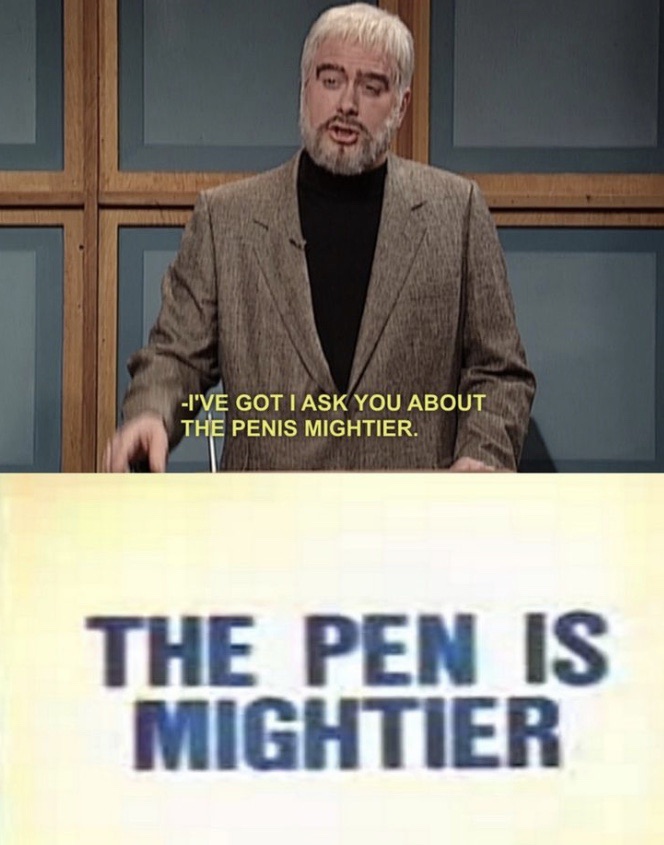
Behold, the superior Jason.

I’m not here to talk music or politics, though, as if anyone gives any weight to my opinions on either. I’m here to talk about the romanticization of small towns.

I grew up in Huron Charter Township, which consists of three small villages: New Boston, Waltz, and the smallest one, where I lived, Willow. Most people just called the whole township New Boston, after the largest village, but I knew the difference, dammit. We were about as far into the country as you could get and still call yourself a suburb of Detroit — most people consider the area part of the larger Downriver region. Still, for all intents and purposes, the area was rural as heck. I’m talking farms, barns, horses, and the like.

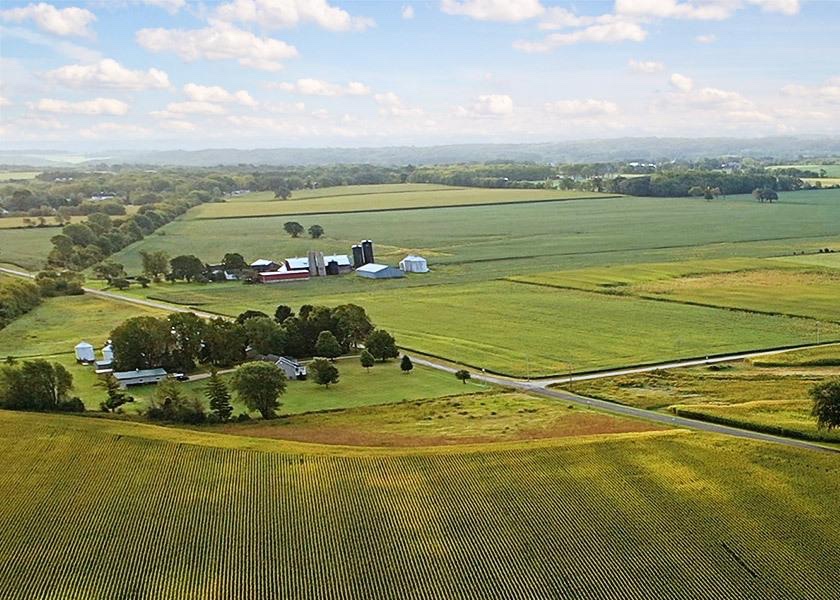
Not my hometown, but might as well be.

I liked some aspects of living there. I liked running rampant through the open fields, going muddin’ with my childhood friend, walking with my dad to the little party store by the train tracks and getting holographic Pokémon stickers. It was a quaint life, and it would have been perfect.

What people don’t realize is that living in a small town is hell when you’re the weird kid.

Small towns are tight knit and insular, and that works out well for people who are in the “in-group,” but things get real squirrelly when you break the norms of that in-group. I remember getting teased for everything from not being Catholic to hating ranch dressing to being supposed lesbians with my best friend, back when “lesbian” was an insult and not, well, just an accurate descriptor for me. I didn’t dress like the other kids either, or talk like them, or act like them, which I now realize was an autism thing, but this was also a time when girls were seldom considered autistic. You were just “the weird kid,” and if you were a small town weird kid, news travelled fast that you were to be avoided.

As I got older, the bullying escalated into sexual harassment — girls grabbing my ass and guys pretending to rub their boners on me, all because they knew it made me uncomfy and they thought my reaction was funny. I didn’t tell my parents the nature of the bullying, but they knew something was up. I was coming home from school crying and hibernating all evening. And when my dad went to the principal and the counselor? There was nothing they could do. My dad suspected their indifference to my predicament was partly due to my family being “low importance” in the small town hierarchy. We didn’t go to the local church or participate in the PTA. No one cared what happened to the Salisburys. We were outsiders.

It was so bad, the adults were bullies too. I still remember my Girl Scout troop leader, Mrs. Marsack, who resented me for making her troop look bad. She was so desperate to push me out of her gaggle of otherwise perfect little girls, she barred me from participating in the group camping trip because I wasn’t “mature” enough, despite getting good grades, staying out of trouble, and being more of an “old soul” than was probably healthy for me. I remember locking myself in the bathroom and crying inconsolably. It had never been more clear to me that I wasn’t wanted.

My saving grace was leaving my hometown. Moving to my college town was the best decision I could have made. The thing about larger cities is that more people equals more differences, and suddenly, I was running into weirdos like myself and befriending folks who weren’t like me, but still appreciated my quirks for what they were. Everyone was from somewhere else, and we were all just trying to find our place in the world. It was kind of a beautiful thing. Growing up in a small town, I had no idea there were places like this. It felt utopian.

Cities have their issues too — more people does tend to equate to more crime — but that’s just the nature of humanity. Nowhere is perfect as long as the people there are not perfect. I just know I’d rather live someplace where I can be myself and not have to hide pieces of who I am just to fit in. I’m glad I left my hometown for bigger and better things, and I hope all the other small town weirdos like me get a chance to as well.

Even If It Kills Me

TW: sexual assault

I write this from my hotel room at GLR, the annual music therapy conference for the Midwest-based students, practitioners, and academics. It’s hard to believe the last time I was at GLR, I was still legally married to my ex and COVID hadn’t yet happened.

So much has changed.

The last GLR I attended was in Cincinnati. I remember all too well. You might remember too, if you remember this post (HUGE FUCKING TRIGGER WARNING ON THAT ONE). That was the year my dream of becoming a music therapist was stolen from me, when the aftermath of the rape I experienced on that trip tainted the very field I longed to be part of. Suddenly, everything related to music therapy reminded me of the person who violated me. My mental health got worse. I started drinking heavily. Soon, I wasn’t able to keep up with the coursework, and I dropped all my classes.

I’d already left the music therapy program once, due to my mental health, but this seemed insurmountable. And reentering the program after that felt like pushing a boulder up a mountain with a toothpick. I’d already given up twice. Surely I was too damaged to ever be a real music therapist.

But I’m here. I’m still here.

As of writing this, I’m not only at the conference, but I’m gearing up for the prestigious Undergraduate Symposium, where I’ll be giving a presentation on music therapy and autism. All of my current grades are, by some miracle of God, in the A range. I’m meeting with my professor to discuss internships in a week, and I won a research fellowship that paid for my entire senior year, and then some.

It doesn’t seem real. I shouldn’t be here, but I am. And I owe it all to the people who have helped me through recovery — my wife, my family, my professors. And to myself. I fought like hell to get to a place where I’m staring down graduation at last, where I’m finally on the cusp of claiming the title of MT-BC for myself.

This GLR feels almost poetic. I’m back at a hotel not unlike the one I was assaulted at, but I feel safe. I feel whole. Everything has come full circle, and my dream of becoming a music therapist feels not only within reach, but no longer tainted by the hands that hurt me. I’m not going to let trauma steal the very reason I was put on this planet — to heal through music. I am not too damaged.

On my 30th birthday a few weeks back, dad said something that made me tear up a little. When he briefly died on the operating table after a massive heart attack, he said my then-very-young niece appeared to him and said he couldn’t die yet. But he finally told me the rest of the story.

She said he couldn’t die because he had to see me graduate.

I’m not turning back because this time, it’s personal. I love my dad — and myself — more than I hate my rapist. I’m going to get this degree and this certification in spite of everything. In the words of Motion City Soundtrack, I so wanna get back on track. I’ll do whatever it takes.

Even if it kills me.