
Small Towns Are Great! (If You Fit In)

So today’s Thing That Everyone’s Mad About is the Jason Aldean song “Try That in a Small Town.” It’s nothing special to be honest. The lyrics hit on every right-wing talking point that’s popular right now save for the tired (and deeply offensive) “all queers are child molesters” trope. You got gun lovin’, cop lovin’, flag lovin’, all that good stuff. Basically, it’s obvious MAGA-bait. Musically, it’s…a standard issue pop country song. You could rewrite every line as “Bernie Sanders rules!” and I still wouldn’t listen to it willingly. Hell, all politics aside, changing every word to “watermelon” wouldn’t save this song from being an absolute snoozefest. Why do people give this guy attention when like, Jason Isbell exists?

Behold, the superior Jason.

I’m not here to talk music or politics, though, as if anyone gives any weight to my opinions on either. I’m here to talk about the romanticization of small towns.

I grew up in Huron Charter Township, which consists of three small villages: New Boston, Waltz, and the smallest one, where I lived, Willow. Most people just called the whole township New Boston, after the largest village, but I knew the difference, dammit. We were about as far into the country as you could get and still call yourself a suburb of Detroit — most people consider the area part of the larger Downriver region. Still, for all intents and purposes, the area was rural as heck. I’m talking farms, barns, horses, and the like.

Not my hometown, but might as well be.

I liked some aspects of living there. I liked running rampant through the open fields, going muddin’ with my childhood friend, walking with my dad to the little party store by the train tracks and getting holographic Pokémon stickers. It was a quaint life, and it would have been perfect.

What people don’t realize is that living in a small town is hell when you’re the weird kid.

Small towns are tight knit and insular, and that works out well for people who are in the “in-group,” but things get real squirrelly when you break the norms of that in-group. I remember getting teased for everything from not being Catholic to hating ranch dressing to being supposed lesbians with my best friend, back when “lesbian” was an insult and not, well, just an accurate descriptor for me. I didn’t dress like the other kids either, or talk like them, or act like them, which I now realize was an autism thing, but this was also a time when girls were seldom considered autistic. You were just “the weird kid,” and if you were a small town weird kid, news travelled fast that you were to be avoided.

As I got older, the bullying escalated into sexual harassment — girls grabbing my ass and guys pretending to rub their boners on me, all because they knew it made me uncomfy and they thought my reaction was funny. I didn’t tell my parents the nature of the bullying, but they knew something was up. I was coming home from school crying and hibernating all evening. And when my dad went to the principal and the counselor? There was nothing they could do. My dad suspected their indifference to my predicament was partly due to my family being “low importance” in the small town hierarchy. We didn’t go to the local church or participate in the PTA. No one cared what happened to the Salisburys. We were outsiders.

It was so bad, the adults were bullies too. I still remember my Girl Scout troop leader, Mrs. Marsack, who resented me for making her troop look bad. She was so desperate to push me out of her gaggle of otherwise perfect little girls, she barred me from participating in the group camping trip because I wasn’t “mature” enough, despite getting good grades, staying out of trouble, and being more of an “old soul” than was probably healthy for me. I remember locking myself in the bathroom and crying inconsolably. It had never been more clear to me that I wasn’t wanted.

My saving grace was leaving my hometown. Moving to my college town was the best decision I could have made. The thing about larger cities is that more people equals more differences, and suddenly, I was running into weirdos like myself and befriending folks who weren’t like me, but still appreciated my quirks for what they were. Everyone was from somewhere else, and we were all just trying to find our place in the world. It was kind of a beautiful thing. Growing up in a small town, I had no idea there were places like this. It felt utopian.

Cities have their issues too — more people does tend to equate to more crime — but that’s just the nature of humanity. Nowhere is perfect as long as the people there are not perfect. I just know I’d rather live someplace where I can be myself and not have to hide pieces of who I am just to fit in. I’m glad I left my hometown for bigger and better things, and I hope all the other small town weirdos like me get a chance to as well.
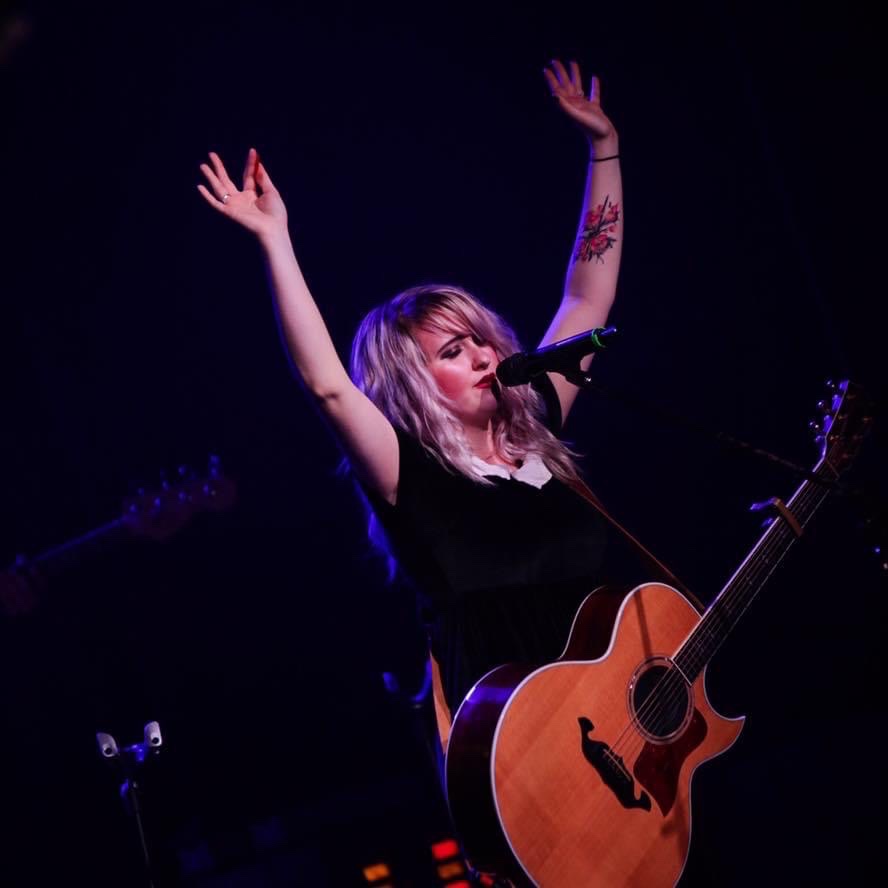
Dear Cadence, Part Six: Your Middle School Crush is Just a Guy

This is the latest installment in my memoir project, written as a series of letters to my future daughter. Here are the previous entries: Part One, Part Two, Part Three, Part Four, and Part Five

My first crush was Peter Frampton.

Peter Frampton was a British musician from the 70s, when you’re grandmother was young and hip. She’s the one who passed along her humble vinyl collection to me, including a Peter Frampton record called “I’m In You.” 

Now this album cover awakened something in me. Was it the fluffy blonde hair? Was it the tight purple pants? Was it the seductive pose? Was it the hilariously overtly sexual title? Maybe it was a combination of these things, plus my own burgeoning sexuality at the age of 12, that led me to feel weird tinglies I’m sure you don’t want to imagine your mother having. All I knew is I wanted to die and be reincarnated as this man’s talk box. Like, I’d never been so jealous of a plastic tube.

But shortly after Peter Frampton came Kyle Kelley. Kyle Kelley was not a British musician from the 70s, but a guy who was actually my age and lived in Michigan and was, you know, actually attainable. But he didn’t feel attainable to me at the time, because he was gorgeous and popular and I was still a tiny weirdo. He had floppy auburn hair with bangs that fell just above his sea-glass eyes. He was short, maybe an inch taller then me, but I could care less. To me, he was the most handsome specimen I’d ever laid eyes on.

We met at church youth group, something I’d been talked into while attending a wedding for one of my aunt’s family members. The youth pastor and his wife were in attendance, and with me being 13-ish and lonely, they figured inviting me to one of their events was the perfect antidote. And it was there that I’d find Jesus — and Kyle Kelley.

I was a little hesitant about the church thing at first, mostly because I wasn’t sure if there was anything supernatural out there at that point. But Kyle Kelley — he was supernatural, this otherworldly beautiful being to me. He looked like a literal angel. Not the terrifying Biblical five-billion-eyes-having angel, thankfully, but part of me was convinced that I’d still be madly in love with him even if he did have five billion eyes. He could be a disembodied foot for all I cared. I just wanted him — bad.

But alas, he was already spoken for. His girlfriend, Cati, was everything I wasn’t. She was a cheerleader (of course), tan and curvy, outgoing and likeable, and generally the antithesis of teenage me. I remember them joking about getting married someday, because doesn’t everyone marry their middle school sweetheart?

I had to do something to win him over, to make him notice me. Like, I did do a pretty mean performance at the youth group air guitar contest to Relient K’s “Sadie Hawkins Dance,” one of Kyle’s favorite songs, which got him to talk to me to congratulate me. It also won me a four-pack of Monster, which everyone joked I did not need after that. But it wasn’t enough. I wanted more.

We went on a couple of trips to the quintessential Midwest amusement parks, Cedar Point and it’s little sister, King’s Island. On the King’s Island trip, his parents were chaperoning, funnily enough, and Chelsea and I got to ride down with them. Kyle was too cool to hang out with his parents and us plebs, so he rode with the cool kids in the cool kid van.

When we finally got there, though, Chelsea and I found ourselves sucked into the cool kids group, somehow, as we all went to ride the biggest roller coaster in the park. Nothing of interest happened here, except that Cati insisted we pray before getting on the ride, and crazily enough, the ride malfunctioned the very next day and I think people died or something. I’d like to think Cati’s prayers spared us.

Cati was turning out to be a literal saint, somehow, which was not the plot twist I was expecting from the pretty, popular cheerleader. When we went to bed that night, she noticed I didn’t have a place to sleep, so she went out of her way to build me a comfy little nest out of couch cushions and blankets. And she made it a point to talk to me, the loser, whenever she saw me by myself (which was a lot). Suddenly, I felt a little guilty for daydreaming about ways to steal her man. She was so…good.

Thankfully, I didn’t have to steal her man, because they ended up breaking it off in eighth grade. I think Chelsea was the one who told me excitedly as soon as she got the news Kyle Kelley was back on the market. And I finally got my chance to show him how badass I was on our youth group trip to Cedar Point.

I don’t know exactly how it happened. He and his friends split, and I got separated from my friends, and somehow we ended up in line for the Millenium Force together. That warm late September night, we stood in the crowded line, so close our hands brushed several times, and he regaled me with stories of hockey and…well, whatever else he was into. This was middle school — not exactly a deep relationship, you know? He was Into sports, though, so I let him yammer on about that, hanging on his every word because he was Kyle Kelley and I was madly in love. When we finally got to the front of the line, he chose the front row seats. I mustered up all the courage in my body to sit down next to him in the front row. We tightened our seatbelts, the car began to move, and he leaned over and whispered to me.

“Keep your hands up.”

And I did. And in that moment, I’d never felt more alive. I was there, with who I believed to be the love of my life, racing through the night sky at breakneck speeds, hands in the air. When we finally landed back on solid ground, we traversed the park to meet up with the others, running through the arcade and laughing the whole time. It was like a movie, and if it had ended at that very moment, that would have been the “good” ending.

Unfortunately, happy endings are just stories that haven’t ended yet. (Isn’t that a Mayday Parade song?)

We didn’t get together immediately after that. It took a few more years of playful flirting and banter for him to finally ask me to be his girlfriend. And when he finally did, I guess it was a little more anticlimactic than I was expecting. Sure, we went through the motions of high school sweethearts, him picking me up for movie dates in his white Grand Prix and all that, but there something was missing. And we never kissed, not until one night at the end of youth group. It was our first kiss, and I had a gut feeling that it was also our last. His lips were like sandpaper. There were no sparks. We had nothing in common. Why was I even dating this guy?

I thought back to the countless nights I cried over at Chelsea’s because I was so scared I’d never end up with him. I remembered all the times I’d fantasized about that moment, our first kiss, and how badly my entire body ached to be close to him. And somehow, now that I had everything I wanted, I could see how shallow this puppy love really was. We were the gender-flipped Avril Lavigne “Sk8r Boi” couple, me the musically-inclined emo kid and him, well…his favorite back was Nickelback. I’d built my entire life around a dude whose favorite band was Nickelback.

My relationship with Kyle Kelley fizzled out with little fanfare, and to be honest, I wasn’t even hurt. Sometimes you need to get what you want to realize you never really wanted it. Sometimes, you just wanted the idea of it. I held onto this idealized version of him for so long, I couldn’t see what he really was — just some guy. And not even a guy I really connected with. In the end, he was just a guy.

If you enjoy my writing and want to help support me and this site, you can donate via Venmo (@jessjsalisbury) or CashApp ($TheJessaJoyce). Every little bit is greatly appreciated! Thanks for taking the time to read my work, and don’t forget to check back every few days for new content!

Dear Cadence, Part Four: Never Take Friendship For Granted

This is the latest installment in my memoir project, written as a series of letters to my future daughter. Here are the previous entries: Part One, Part Two, and Part Three

These stories are going to jump around a lot. I promise it’ll all make sense in the end. Probably.

I mentioned in the last chapter that I wasn’t exactly popular in grade school. I could count all the friends I had on one finger, and she didn’t even go to my school. That changed when I met Chelsea, though.

I don’t even remember how I met Chelsea. I’m pretty sure she was the cousin of one of the few girls in my grade who didn’t run away out of fear of catching the Unpopular when I approached them. Her name was Natalie, I think. It doesn’t matter. Anyways, I’m pretty sure Natalie and I got called lesbians by the other girls in our class, which is hilarious in hindsight, but I was one hundred percent not attracted to her. In fact, my big gay crush at that time in my life was my classmate Shelby Cox, who had the same dark hair with bangs and cute perky lips as Ann Wilson from Heat. It would be another fifteen years or so before I’d ever admit it was a big gay crush, though.

But I digress. I don’t recall our first interaction, but I’m pretty sure Chelsea stood up for me when another kid was committing an unspeakable act like calling me a lesbian (which is totally not true, obviously). And she was so. Freakin. Cool. She was younger than me by a year but already quite taller than me, and incredibly svelte, like a dancer. She had a splash of freckles across her pale face and dark hair cut into a stereotypical emo style. If you don’t know what that looks like, Cadence, just look at any pictures of me between the ages of fourteen and twenty-four. Chelsea was the one to inspire me to get that haircut, actually. This girl was unnaturally beautiful, like a punk-rock Snow White. And even better, she liked me! Not in a gay way, although in retrospect some of my burgeoning sapphic feelings were definitely directed toward her. Girls that don’t have baby queer fee-fees toward their middle school best friend don’t scream “All the Things She Said” by t.A.T.u. with them in the car on the way to Thursday night youth group. But for the most part, she was just this ridiculously cool girl who took a bizarre interest in being friends with the most unpopular girl in school.

I could list a bazillion memories with her, but I don’t think I could do any of them justice with words alone. We were inseparable. We were — dare I say — BFFs (best friends forever, if that term is antiquated by the time you read this). We had the quintessential teenage girl friendship. We went to the mall together. We went to the beach together (and freaked out because we thought we saw a jellyfish — in Michigan, mind you). We played in the mud on New Years Eve like absolute hooligans, and trick or treated like we weren’t too old. I remember we’d go to the aforementioned youth group and giggle together about the boys we liked there. One time, she tried to give me “cool” lessons.

“You don’t say ‘hi’ to a guy,” she said. “You have to do it all suave, like ‘heeeey.’” She immediately went up and demonstrated on her crush, this older hipster kid named Robert I think.

He never dated her, but she liked to think he liked her back.

Despite being younger than me, she was almost a big sister figure, the less-naive of the two of us. Another time, we were alone in her dad’s apartment watching Degrassi on her TV or music videos on a Stone Age version of YouTube or whatever it was we were into at the time. That’s when she discovered I’d never been kissed.

“Don’t you want to know how to impress Kyle Kelley when you finally get to make out with him?” she asked.

“It’s not like you’ve ever been kissed either,” I said.

“Watch this.” She grabbed a can of Coca Cola and placed her lips to the rim. “You just do it like this. Like, pretend the can is Kyle’s lips.” After her not-so-subtle demonstration, she handed me the can, which I clumsily fake-made out with.

“Oh Jessie, you’ll get there eventually,” she sighed.

Some of my favorite moments with her include the many times we dressed up like Bon Jovi and danced around the living room. She was always Richie Sambora because she had the darker hair, and I was Jon Bon Jovi. In reality though, she was the Jon of the friendship, the charismatic frontman, the natural leader, and I was her Richie, her trusty guitar-slinging sidekick.

The summer of my eighth grade year, we traveled up north with my parents and a mutual friend. If my memory serves me correctly, it was a pretty good trip. We stayed in a condo my brother’s family owned — I think it eventually got flooded and torn down, but it was beautiful at the time. We were right off the lake, just down the road from downtown Traverse City, and I savored every minute I got to spend with my dear friends. And I’m glad I did, because it all came crashing down when I got home and noticed the sunscreen we’d bought was missing. I sent Chelsea a simple message asking if she’d accidentally taken it home.

Her response knocked me backward.

“Why would you accuse me of stealing it, you lying (insert catty teen girl insult here)?”

My worst fears were realized. She’d fallen into the wrong crowd and was suddenly “too cool” for me. By this time, I’d switched schools, but it still hurt to lose her for such a petty reason. I’d go on to make a myriad more friends, believe it or not, and became quite the social butterfly over the course of several years. Still, I always held a tiny bit of a grudge against my childhood best friend for leaving me the way she did.

I wish this chapter had a happy ending. She reached out to me in adulthood after turning her life around, joining the military, marrying, and having a kid of her own. She was beyond apologetic for abandoning our friendship, but we never became as close as we were back in those halcyon days of youth. By that time, I’d moved on too, going off to college and touring with a band and eventually getting married myself. I never bothered to rekindle a meaningful relationship again, because I had my own life now.

And I’m kicking myself for it.

On the warmest Christmas morning, I got a message from a mutual friend that shook me to my core.

“Jessie, I’m so sorry about Chelsea.”

Turns out, she’d developed a rare cancer that eventually took her life. She was 27.

I wish I had a chance to get to know her as an adult. She’d grown up so much from the girl I knew and, by every account, was an amazing mother. She was an aspiring writer. She made art. She wanted to go into ministry. She absolutely deserved the sweetest, longest life. She deserved to watch her son grow up. And she deserved better from me. I wish I could have told her how much she meant to me before it was too late.

Cadence, you will have a revolving door of people coming in and out of your life every second you’re on this planet. Relationships don’t last forever, but love does. So while those people who mean the most to you are still around, shower them with all the love you have to give. Love so hard it hurts. Because someday, they’ll leave, or you’ll leave, or you’ll simply grow apart, or, like me and Chelsea, the grim reality of death will separate you until the next life, whatever that happens to be. You’ll regret a lot of things, but you’ll never regret love.

As the Red Hot Chili Peppers said in their song “Dosed,” show love with no remorse.

If you enjoy my writing and want to help support me and this site, you can donate via Venmo (@jessjsalisbury) or CashApp ($TheJessaJoyce). Every little bit is greatly appreciated! Thanks for taking the time to read my work, and don’t forget to check back every few days for new content!

Silent in the Face of Oppression: What I Would Have Done Differently

Write about a time when you didn’t take action but wish you had. What would you do differently?

The platform I use to publish this website gives me little daily writing prompts as inspiration. Sometimes I use them immediately, sometimes I save them to write about later (and in all actuality, leave them to languish in my “drafts” for eternity). When this one popped up on my screen, I knew exactly what I needed to write about, because as much as I try to live without regrets, this is one of the few that I still cling to for some reason.

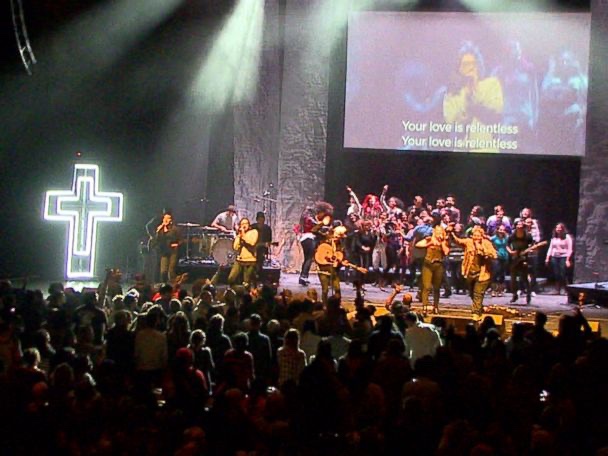
I cut my teeth as a musician and performer in the worship team of the church of my youth. Normally I’d leave it unnamed, but honestly, Metro City Church doesn’t deserve that dignity. Not after the events of this story, at least. I will be honest — my time on the team was an amazing once-in-a-lifetime experience. I had the honor of playing with some of the best musicians I’ve ever met, and on the largest stage I’ve ever played. Imagine a slightly scaled-down version of whatever comes to mind when I say “megachurch,” and that’s basically what we were. A mini Hillsong in the heart of Downriver, with one of the largest congregations in the entire area.

OPEN UP THAT PIT

Every week or so, I’d stand up on that stage and play my heart out for the Lord, which is still one of my favorite ways to connect with the divine. Giving credit where credit is due, I think Metro lit a fire for music and worship in me that still burns to this day. In fact, I still play in my current church’s worship band every now and then. But playing on Metro’s stage was nothing short of amazing. We had all the lights, fog machines, a state-of-the-art audio system, we had in-ear monitors for Christ’s sake (literally!). My point is, for all the smack I’m about to talk when it comes to this church, they did do something right, and that something was music.

The downside was that the church’s politics leaned a bit further right than I would have liked, but in the pre-Trump days, this was easy enough to ignore. Like, I’d get the occasional unprompted “ew, you like Bernie Sanders?” from the pastor or his kid, along with a lecture on why Bernie Sanders sucks. Again, this was entirely unprompted — it’s not like I was wearing a Bernie Sanders shirt, or had a Bernie Sanders sticker on my guitar case, or even brought up Bernie Sanders in conversation, ever. They just knew I was one of the small tribe of progressives, mostly fellow musicians who’d giggle irreverently at the post-worship breakfast about sappy “pro-life” messages or whatever subtle jab the lead pastor decided to throw at the libs that day.

For the most part, though, I could look past it. Sure, the church supported anti-choice measures and preached the dreaded “love the sinner, hate the sin” message when it came to the queer community, but these topics came up so rarely that I didn’t mind. Metro was one of those insidious religious institutions that disguised itself as a “come as you are” church, welcoming everyone and trying to cast as broad a net as possible, as to not alienate anyone. But beneath the surface, those ideologies still lurked. I know way too many gay/trans folks who were duped into feeling safe at Metro, only to get hit with a nonchalant homophobic or transphobic quip from a member of the congregation.

“Adam and Eve, not Adam and Steve!”

I wasn’t out at the time, and I was married to a male member of the church, so I was marked safe from most of these comments. As far as anyone knew, I was a regular, God-fearing, heterosexual woman. But I knew in my heart I wasn’t straight, not entirely, or even mostly. I had to push down a lot of my gay fee-fees to fit in with the rest of the church, which is why I came out as late in life as I did.

Everything changed in one moment, though.

I still remember the burn of the stage lights and the eyes of the congregation as I stood on the stage, guitar in hand, while the pastor rattled off a list of upcoming events. It wasn’t unusual for him to come up and make announcements between songs like this. But one of the upcoming events he named this time shook me to the core: a conversion therapy class for young women.

Here’s where I should have done everything differently. I should have thrown my guitar down and walked off that stage. Screw subtlety — I absolutely should have made a scene. Instead, I froze. I stood there complacent in my own oppression and complicit in the abuse of these girls.

Thankfully, this was the beginning of the end of my time at Metro. As controversy swept over the church throughout the local (and even national) queer community, I found myself torn between the church I loved, who I thought loved me, and my own gut instinct that this was not fucking okay. I even posted a tone-deaf defense of the church, claiming not all of us were raging homophobes, and my ally friends (rightfully) called me out for trying to defend them at all. I knew I had to do something.

So I came out. In front of everyone. I’m queer. I’m one of those girls. I’m on your side. And I’m so glad I did, because the act of finally admitting it to myself led me to leave a marriage my heart wasn’t in and marry my best friend instead. I left the Metro and never looked back, settling on a truly inclusive Methodist church that practiced what Christ actually taught, instead of the Americanized evangelical crap propagated by hipster megachurches.

But I still wonder what would have happened if I’d walked off the stage that morning. It still eats at me that I was silent in the face of oppression and hate. What does that say about my integrity? I’d like to think I’ve grown exponentially since then. I’d like to think that should I be placed in that situation now, I’d stand up for myself and for those girls. The Bible teaches that real love is laying down one’s life for their friends; the least I could do is lay down my pride (and probably get excommunicated, but as they say, que será será).

I don’t hate Metro, at least not the people there. They’re lost in the sauce just like I was. Love the sinner, hate the sin, as those circles always say, and while I hate what Metro stands for, I know there’s still some decent people there fighting the good fight to make it the loving, affirming safe haven it could be.

Well, maybe if the lead pastor would stop doing this.

Yeah, I’m being too optimistic.

If you enjoy my writing and want to help support me and this site, you can donate via Venmo (@jessjsalisbury) or CashApp ($TheJessaJoyce). Every little bit is greatly appreciated! Thanks for taking the time to read my work, and don’t forget to check back every few days for new content!

Dear Cadence, Part Three: Embrace What Makes You Weird

This is the latest installment in my memoir project, written as a series of letters to my future daughter. Here are the previous entries: Part One and Part Two

My earliest memory was waking up from a nap on top of a stack of rugs inside a sketchy flea market. But my second earliest memory was watching Wheel of Fortune.

I didn’t know what it was – the colors, perhaps. That’s the only reason I can think of why a toddler would enjoy a words-based game show. I got a little older, and I found myself scared of cartoons because they were so loud and bright compared to my beloved Wheel of Fortune. And CNN. My dad always had our boxy TV on CNN, and it became such a thing to me, I’d freak out if anything else was on. And I needed the History Channel on my bedroom TV to sleep. I wouldn’t accept anything else.

I was really sensitive to noises. If my mom was vacuuming, I’d hide behind the recliner and cower for my life. There were some sounds I liked a lot, like the sound of the bath filling. I’d curl up in the corner of the bathroom and just listen to the sound of the water until my mom would inevitably pick me up and put me in the tub. Sometimes, I’d make little sounds just because it felt right, usually bird noises. And music. I always say music was my first language. Growing up, I didn’t talk a lot to people who were my age. I could and would give my entire life story to the cashier at Kmart, but I had a hard time socializing with peers. But I loved singing for absolutely anyone who would listen. My classmates would even throw coins at me for singing songs at recess.

What I didn’t realize, though, was that they were making fun of me.

I was 17 or 18 before my mom said the “a” word to me. As in autism. It’s a scary-sounding word to a lot of parents, and when I was a child, there was an even steeper stigma attached to it. No mom wanted their kid to get diagnosed with autism. So she never got me diagnosed, not even when my childhood psychologist had mentioned it. And my teachers didn’t bother to check up on me either. So little Jessie spins around in the back of the classroom during lectures, obsesses over 8-track tapes, and has no friends? Well, she gets good grades and doesn’t start problems, so we’ll just pretend there’s nothing weird about this child.

But I knew there was something wrong with me. There had to be. I had an encyclopedic knowledge of vintage music, but I couldn’t make eye contact or even speak a coherent sentence to someone my own age without feeling wildly uncomfy. And my ever-present weirdness made me an easy target for the innocent cruelty of schoolchildren. I remember how sensitive I was to the smell of ranch dressing. As soon as the other kids found out the stench alone made me gag, I had to start eating lunch in the library, lest I be pelted with ranch dressing packets.

Two memories stick out in particular. One was of my “frenemy” Carissa and her crony, another Jessica, framing me for hitting Other Jessica, simply because they didn’t like me. Because I didn’t “fit in.”Jessica had made a red mark on her face and claimed I’d hit her, and Carissa corroborated her story. It was my word against both of theirs, so I ended up getting sent to the principal’s office over it. I lost my trip to McDonald’s over that, actually.

Another time, I got punched in the stomach by some guy. Ouch.

My point is, if you’re anything like me — and I’m guessing you’re a lot more like me than you’d like to admit — you’re gonna be weird, and that’s going to make you a target for unsavory people. They’ll hurt you because they think it’s funny. They’ll take advantage of you because they know they can get away with it. And a younger, less-wisened version of myself would have said your best course of action would be to change yourself, to fit in. 

Because that’s exactly what I did.

I meticulously studied what the “cool girls” were doing and started copying their mannerisms and adopting their interests. I learned to shut my big dumb face when I wanted to obsess over Bon Jovi or Pokémon. I ditched my 70s rocker style for a more conventional preppy look, and my beloved red lipstick got thrown in the trash. I stopped talking about my special interests and “smart kid things” and put on a bimbo facade because it made people tease me less. Everything that made me unique got watered down to something more palatable.

I broke my own bones to fit in someone else’s box.

Sure, I made friends, but inside I was miserable. It took so much out of me to hide parts of myself. And I knew deep down I still didn’t fit in entirely. I was last to be picked in literally everything. I remember going to on a trip to Chicago with the marching band and my “friend” group chose to room together without me. I did manage to get voted senior class president — because no one else ran.

My saving grace was that around the time I became an adult, the “manic pixie dream girl” stereotype became the hottest thing, and suddenly everything that made me eccentric and weird made me desirable. In college, I started dropping the act and grew into what I was all along — a confidently autistic woman, quirks and all. And it won me way more genuine friends, people who have stuck around in the long run, who would never ditch me or pick me last. My college years were filled with so many experiences of legitimate joy, the kind that only comes when you’re living as your authentic self.

So if your thing is trains, be the biggest freaking ferroequinologist out there. If you like dressing like a pirate in everyday life, tighten up that corset and straighten that eyepatch. If you love music like I do, sing and dance your heart out and don’t give a damn who throws coins at you and laughs. History forgets normal people like them, but weird people like us live on forever. Being yourself is one of the hardest things you’ll ever have to do, but it’s worth it.

Confessions of the Family Dud

I have a cute little decorative plaque hanging above my household altar to Christ/Hildegard von Bingen/Freddie Mercury. It was a Christmas gift from my brother, and it reads “Family is your anchor.” Which is correct — I’ve always been very close to my family, and they are the anchor that keeps my feet on the ground when I’m feeling too big for my britches, or whatever the saying is. We’re a blue-collar working class family of hillbillies, after all, and I’ve learned from them to never forget where I came from.

Strong work ethic runs in my family, going back to the farmers and miners who left Appalachia to find a better life working in Michigan’s many factories. That same blood runs through my father’s veins, having retired after many years as a union steelworker, and continues through my generation. In fact, both of my siblings managed to break out of our income bracket and probably make enough to be considered upper middle class at this point. My sister is a successful businesswoman, while my brother does…powerwashing I think? All I know is he makes beaucoup cash from it. The point is, they’re the American dream, a couple of the rare folks who actually did manage to pull themselves up by their bootstraps. Which probably explains why they’re Republican while the rest of my family are staunch Democrats, but this isn’t a political post.

Nope, it’s about me, the family dud.

Pictured: me

I’ll be honest — sometimes I look at my brother and sister and wonder how I’ll ever stack up to them. My brother has the perfect white picket fence life with a wife, four kids, and a dog. My sister doesn’t have any children, but she gets to jetset around the world at the drop of a hat and mingle with powerful people. And then there’s the baby of the family, me, the artsy weirdo with a cat.

I had a lot of hopes placed on me as a kid. When my brother was a teenager, he was a bit of a troublemaker, and my sister didn’t have much of a direction throughout her younger years. But I was a responsible kid who finished at the top of her class and never got in trouble and had a ton of talent in a variety of fields. I was on track to become a doctor, in fact! And on top of that, I was conventionally attractive — the skinny doe-eyed blonde with big boobs. I was basically Barbie.

Proof!

I know I compare myself to my brother and sister a lot, but the problem is me. I’m the former gifted kid burnout everyone talks about. In these cases, I think it’s important to remember that we’re in different stages of life. There’s a sixteen year age gap between me and my siblings, after all. They didn’t have it all together yet when they were my age. You’re not supposed to compare the beginning of your story to the middle of someone else’s, and I haven’t even been an adult for the majority of my life.

Maybe if I’m in the same place as I am right now in another ten years, I’ll have reason to worry, but I honestly shouldn’t be. All things considered, my trajectory is pretty great. I’m an internship and a certification exam away from finishing my degree, and after that, we’re planning on kids and a masters degree. Maybe I won’t have the financial success of my siblings — or maybe I will. Maybe my band will take off. But I’m not going to stress about it.

Something funny happened when I told my sister about my insecurities. She said she was jealous of me. She’d tried to take up guitar as a teenager and wimped out because her fingers hurt too much. She wished she was creative and musically talented as much as I wished I was business savvy and smart like her. She thought I was silly for comparing myself to her! My brother-in-law, the like, regional director of freakin’ Quicken Loans, said something similar when my artist wife mentioned feeling like her family’s dud. He wished he could create art like she could!

We think of creatives as duds, but in reality, so many wildly successful people wish they were creative. Maybe instead of wallowing in the fact that we’re not successful by the world’s standards, we just keep creating and doing what gives us life. We’re just wired differently, and that’s okay. You wouldn’t judge an eagle for its ability to run, nor would you judge a cheetah for its ability to fly.

I’d like to think I’m carving out my own niche in my family, using that same work ethic that got the farmers and steelworkers and powerwashers and businesswomen who came before me through life. I’d like to think I’m making them proud in my own way, even if it’s just writing and playing music. The world needs that sometimes.

“Your Biggest Fan, This is Stan” (A Humble Critique of Obsessive Fandom)

It’s fitting that I write this as one of Taylor Swift’s songs plays on the radio at work. Not like I write this stuff on the clock or anything.

Certainly not!

You see, Tay’s the catalyst for the events of this story. Or rather, her loyal army of stans.

My band had a show on Friday, hilariously enough competing with Taylor Swift’s show in Detroit. So I made this infographic as a joke to convince people to see us, a dinky ass local band, instead of her.

I know in humor you’re supposed to punch up, but in this case the punch was more of a playful nose-flick. Everyone in the band is a Swiftie, after all — we just thought it would be a funny way to drum up attention for the band and our show.

At first, we got a pretty hearty positive response, people saying we “won them over” and wishing us a good time at the show.

Then the stans came.

Suddenly, we were inundated with accusations of misogyny (hilarious in hindsight because we’re mostly women), homophobic (also hilarious because we’re mostly queer), and even mocking her mom’s cancer (I sure hope that stan warmed up before making that stretch). One of the “nicer” commenters asserted she’d seen her “three times on this tour” for less than her paycheck and has met her many times. The ones that hurt the most were accusations of us belittling a fellow artist — we would never attack another creator maliciously. Like, we made it clear in the caption that we were actually huge fans and meant no harm to Taylor.

But when you’re a stan, there’s no gray area. Make one perceived slight against their object of adoration, and you become public enemy number one.

Why do people do this?

I think it all comes back to the parasocial relationship people have with musicians. The beauty of music is that it’s a deeply personal medium that brings people together. That’s what drew me to music as a little autistic kid who had trouble socially. Music — and the people behind it — felt like friends to me. There’s a reason I’d make believe I was Bon Jovi and methodically watch anything related to them. In the end, music is what helped me connect to other people and build relationships that have lasted years.

But like nearly everything, there’s a flip side to that phenomenon. Take, for example, the song that gave stans their name — “Stan” by Eminem.

In my personal opinion, “Stan” is easily one of the most unnerving songs ever written. In it, a man describes his obsession with Eminem through a series of letters, culminating in him committing a murder-suicide after being let down by his idol. It’s absolutely chilling and worth listening to. In fact, I’ll link it here:

Another musical episode!

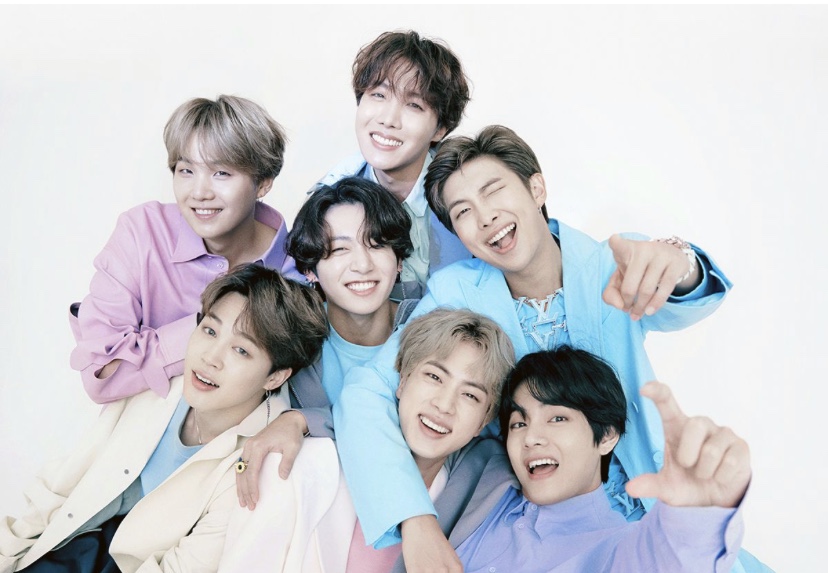
It’s almost funny how watered down the term “stan” has become — or has it? If it came down to it, would Swifties die for their queen? Would the BTS army kill for a bunch of cute guys from the other side of the world?

I mean, they are cute.

I’m almost afraid they would, and that’s because it’s happened before.

If you look at my YouTube subscriptions, you’ll find my two biggest interests to be music and true crime. Don’t worry — I’m not one of those weird Jeffrey Dahmer lovers or hybristophiliacs. I like the thrill of being scared, but fictional monsters don’t do it for me because my brain doesn’t register them as a threat. What does scare me is the fact that real life monsters exist, and are absolutely a threat. And every now and then, the stars align and I find something to watch that’s both music and true crime related.

Ever hear of the Bjork stalker? No?

Ricardo López was your average incel before the term even existed. He was a social recluse who retreated into the world of celebrities to dull the pain of not having many friends, let alone a girlfriend. His main fixation was the Icelandic singer Bjork, to whom he wrote many fan letters and considered her his muse. The obsession wasn’t sexual — he couldn’t envision her as anything but this pure, innocent figure.

So when she finally did get a boyfriend, and a black boyfriend at that (yup, he was kind of a racist too), Ricardo was furious. He wanted to send her straight to hell for her perceived slight against him. So, viewing the process as a sort of sick art project, he began filming a series of video diaries chronicling his plan to kill Bjork with bomb hidden within a book. Ultimately, he’d kill himself too, and he and his love interest/victim would be united in the afterlife.

In the conclusion of his series of “art films,” Ricardo shaves his head and paints his face green and red before shooting himself in the face, dedicating his suicide to Bjork as one of her songs drones on in the background. His bloated corpse and the video tapes would later be found by police, who immediately recognized what was happening to be a threat. They managed to intervene just before the package reached Bjork, narrowly sparing her life.

This is what fandom looks like at its worst, and it still happens. Even our girl Taylor has had to deal with it. And this is why I’m scared to death of becoming anything more than a local act, even though my band is slowly making its way toward greater things. Because with more attention comes more obsession, and people are fucking crazy. Maybe Taylor’s stans will come for me, or I’ll say something to piss off the BTS Army. Or worse, Wake Up Jamie will accumulate its own obsessive fans, and there will be that one bad apple who decides to Selena me.

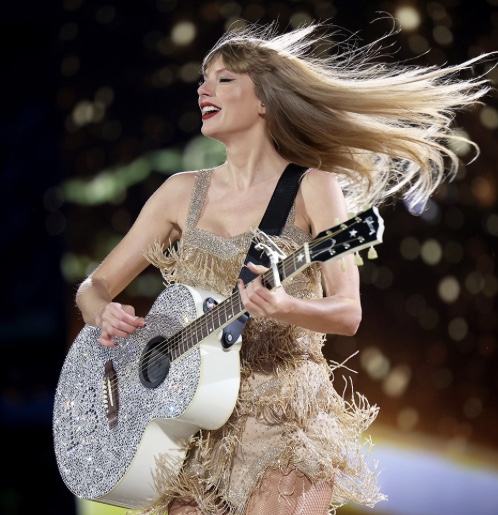
People need to realize musicians and other performers are literally just people. We make art, we make mistakes, and we have dreams and fears like everyone else. Standom tends to raise people to a godlike level, but at the end of the day, we’re all a bunch of stinky, pulsating meat living on a giant rock. Even Taylor.

Pictured: a stinky meat girl

Dear Cadence, Part Two: The Furnace Man Can’t Hurt You

I promise this will make sense. But first, we need some exposition.

I was born in the middle of a snowstorm on March 5th, 1993. Two other very important people were born on March 5th as well — John Frusciante, the greatest guitarist ever, and your grandmother, my mom. I was indeed a birthday present. In the immortal words of Kanye West, who may or may not still be a Nazi sympathizer by the time you read this (hopefully not), my presence is a present, kiss my ass.

This was planned, kind of. You see, I had the cord wrapped around my neck in utero. I was a suicidal fetus. Instead of letting me abort myself, the doctors decided to cut me out. My mom planned the surgery for her birthday, since my original due date was about a week afterwards anyways. There are a lot of other unusual circumstances behind my birth and how exactly I came to exist, which I will get into later on. (Don’t worry, I’m not gonna explain the birds and the bees in the context of your grandmother, uh… making me.)

Our family moved frequently when I was very young, or as your grandmother would say, we were a bunch of gypsies, which is a word that American baby boomers could get away with saying but is actually pretty offensive to actual Romani people. To be clear, we are not actually Romani, or anything exciting for that matter. I’m literally 95 percent British, which means you are approximately half-British. But most of our immediate ancestors came from Kentucky.

Your great-grandparents all moved up to Michigan to take part in the industrial boom that was happening in the 1950s, as did many other Kentuckians, settling in the working class southern suburbs of Detroit. This region, called the Downriver area, is not to be confused with the affluent WASP-y northern suburbs where your other mom came from. No, Downriver was hillbilly heaven. Trailer parks as far as the eye can see, confederate flags, NASCAR merch, the works. And our family, we settled as far into the country as you could get and still be considered a suburb of Detroit.

Your grandfather was a steelworker, and your grandmother was a homemaker, much like her mother before her, and her mother before that. The women in our family traditionally had very little contact with the outside world. This was less because of the misogynistic worldview that was prevalent in their formative years and more because of their crippling anxiety. As in, your grandmother was too scared to drive most of the time, and your great-grandmother didn’t drive at all after crashing her car into a bank or something during her first attempt behind the wheel. 

Me, I was fearless. Or so I liked to think.

The reality was I was scared of absolutely everything. One of my earliest memories was at my grandma’s house for Christmas Eve, a tradition that persisted until her death. I still remember my brother and cousin pulling all kinds of shenanigans, like hiding jewelry inside a box inside a bigger box inside an even bigger box (and so on), then giving it to my grandma as a good-natured prank. I remember my uncle Arnie bringing weird smelly cheese and shrimp cocktails every year. The men in my family would have a few beers and play poker — that was the only time my dad ever drank around me, in fact. And then there was Furnace Man.

Furnace Man lived in my grandma’s furnace. He wore a plaid shirt and had no head, and every time the furnace made a sound, I imagined him kicking around in there, lying in wait, ready to like, eat me or something. Sometimes I would get close to the furnace, as if to test my theory that he was lurking, then got scared and ran away, terrified. 

Obviously, Furnace Man was not real. In fact, my “vision” of him came from my dad going into the utility room to try on a flannel he received one Christmas Eve and getting his head stuck in the head-hole. I was too little to know what was going on, so my brain pieced together “headless man from the utility room,” and decided he came from the creepy blue-gray furnace that always creaked and croaked menacingly when I walked past it.

Looking back, this was when my OCD first manifested, and it took on a lot of forms throughout my life. As I got a little older, I was scared of my precious irreplaceable  adult teeth falling out, so I’d wiggle them a little every day to make sure they weren’t loose. In kindergarten, we had a fire drill, and that sparked a fear that our house would catch on fire and I’d lose all of my stuff. A watched pot doesn’t boil, or something like that, so I thought if I never left the house, nothing would catch on fire.

Keep in mind this was how my brain worked in kindergarten.

It evolved into even scarier things as I got into my teenage years, like a fear of death or of hurting people I love. I was even afraid to have you for years because I was scared I’d lose my sanity somehow and hurt you. I wish I could say some inspirational “oh, I just prayed and God miraculously cured me” spiel, but the truth is, my saving grace was getting the help I needed from psychiatrists and therapists. Although, to give credit where credit is due, perhaps God put those people in my life to save me from myself and my crippling anxiety. There’s a lot of things I don’t know about this universe and how it works, and while that’s another source of anxiety for me at times, in a way, it’s almost reassuring that I’ll never have all the answers.

I don’t know why He chose to pass along the generational curse of anxiety and mental illness to me, but I’d like to think it was to better prepare me for taking care of whatever mental health needs arise for you. I pray you never have to deal with the severe mental health issues that have plagued our family for so many years, but if you do, just know that I’m on your side. I’ve been to hell and back again — I could get there with my eyes closed. But now I know the way back home, and if I ever find you there, I’m ready to fight alongside you.

No matter how real he seems, the Furnace Man can’t hurt you.

Dear Cadence, Part One

This is the first in a series of posts I’ll hopefully turn into a book someday. It’s a story that’s particularly close to my heart, because it’s my story. I wanted to write down all my experiences and advice for my theoretical future daughter, so that she can read it someday when she’s not theoretical. I don’t know how regularly I’ll post from this series, mostly because I want to put my heart and soul into it to make sure it’s JUST RIGHT, but I wanted to share my progress on this project for you all to read and enjoy as well. If any part of my story resonates with you, feel free to leave a comment. I hope you love this project as much as I do.

Dear Cadence,

If you’re reading this, I’m dead.

Kidding! Well, maybe not. It depends on if I die before you get this little book of wisdom. When will I give it to you? Who knows! Maybe when you go to college. Maybe when the red peony blooms, if you know what I mean. Maybe I’ll read it to you on my deathbed. Maybe I’ll even publish it as a memoir-type thing, and we’ll both be famous someday, me as an author, and you as the recipient of my 30-ish years of knowledge.

As of writing this, you are not alive yet. You’re just a lil egg floating around in my ovary, probably. That, or you’re adopted. I’ll probably break that news to you before I give you this book, though. Or—more disappointingly, I die before I can birth/adopt you, in which case, I give full permission to my surviving family to publish whatever is written here. Seriously, it’s okay! The saddest stories are the ones that get irretrievably forgotten, and the least I can do is immortalize my crazy life in writing.

I’m not a celebrity or anyone of note, at least not yet. By the time you read this, I could be the frontwoman of a celebrated, beloved rock band, or an esteemed professor of music therapy, or a Folgers jar of ashes on your mantle (and I swear to God you better put me in a more respectable urn than that or I will haunt you). But I’m your mom (or maybe dad—your other mom and I didn’t want you to get us confused). I don’t even know you yet, but as my firstborn/possibly only daughter, you mean the absolute world to me. This little collection of anecdotes is more than just a bunch of autobiographical stories I want to preserve and share with you and the generations to come. It’s a book of hard-earned advice I’ve gained from three decades on this giant rock we call home.

So, with that in mind, here’s the life story of yours truly, the greatest woman to ever walk this planet (well, at least until you arrive!).

Here’s to the Future

I’m usually good at coming up with things to write about myself, but every now and then, I like answering the little prompts on here. Just for funsies, ya know? And this one felt fitting, considering the fact that at the time of writing, I recently turned 30 and have literally just finished coursework for my music therapy degree that took more than a decade to complete.

Where do you see yourself in 10 years?

I want to start this off with a song — “I Want It All” by one of my all-time favorite bands, Queen.

This song has been my mantra throughout the past few years, ever since I decided I was done sucking at life. Like, I was stuck in a marriage I rushed into for the wrong reasons, I had a burgeoning drinking problem, my mental health was in the toilet (as if it had ever been anywhere else), my music career was DOA, and I couldn’t even finish my damn degree, having dropped out of the program twice. I thank God for my brother. As complicated as our relationship is at times (for reasons that would take a whole other blog post), he’s the one who intervened when I was thisclose to driving my car into the fucking river.

I have a band that I really should talk about more on here called Wake Up Jamie, and one of our songs is called “I Hate My 20s.” It’s exactly what it says on the tin — a song about how much it sucks to be in your twenties. I didn’t write it, and I don’t sing it (my bandmate Hailey does), but I relate to as if I wrote it myself. Sometimes I feel like I wasted my youth being a crap sack of a person, but I think everyone feels that way to an extent. As much as we idolize being young, it’s kind of a struggle to figure things out, and most people take a minute to get it together.

That being said, I’m excited for these next ten years. I feel like I’m finally confident in who I am as a person and have some sort of direction in life. I don’t have it all figured out yet, but I’m a hell of a lot closer than I was ten years ago, when I was still wide-eyed and optimistic about everything. I’m still optimistic, just in a different way. I’ve seen how low life can get, and yet there’s always been a way out of it. There will always been rain, but it doesn’t last. The sun will rise in the morning.

I realize I still haven’t answered the actual question, but in ten years, I imagine myself finally living the dreams of my youth, with a life full of love and music. I want to have a family of sorts, with children of my own. I can already imagine a little curly-haired Cadence Amirah singing along to the songs written by me and my friends, her own mixtape of music from people who love her. My wife will stay home with the kids while I go to work at some prestigious university, performing research that shapes the world of music therapy. In addition, I’d like to have a private practice and recording studio where clients can work through their struggles while recording an album. I want to work with clients of all diagnoses and walks of life, but of course, there’s a special place in my heart for neurodivergent folks like myself. Maybe I’ll have an autistic client who gets to write music about his special interest in a world that wants him to shut up about it. Or maybe I’ll have an ADHD client who can revel in producing a song, the first thing she’s ever accomplished on her own after a lifetime of hopping from project to project without finishing anything. It will be rigorous work, but so rewarding. Aside from music therapy, I want to write songs and either perform them myself or send them off to Nashville or LA to be recorded by people more famous than me. I want to pen that one hit song that secures my legacy as a songwriter and a livelihood for my family.

I don’t know where I’ll live. I’d like to stay in the Midwest so I can remain close to my girlfriend, who I have every intention of building a life with as well, but the details are up in the air. Saugatuck is the goal, as a gay little vacation town in western Michigan, where we can have our idealistic lake house filled to the brim with oddities of every sort, from vintage Pokémon merchandise to colorful crystals of every size to a dinosaur skeleton. I’d commute to Western Michigan University every other day or so in order to teach or perform research, and have a humble studio in Saugatuck where I’ll spend most of my days. At night, I’ll go home and watch the moon on the water from my back porch and enjoy the life I’ve built for myself, sipping some Red Bull margaritas or nonalcoholic wine and playing guitar for my wife and kids.

I’m getting goosebumps writing this all out, and the crazy thing is, this can actually happen. I think back to when I just turned 20, how different my life looked from now. I imagined a day when I’d have my own little apartment and a significant other and a cat to share it with. I dreamed of having a band I considered family, just like the ones I saw on Behind the Music as a kid. I remember when I’d never set foot on a stage bigger than the corner of a coffeeshop, and we just played Arts Beats and Eats last summer! I’m exactly where I hoped I’d be ten years ago, and while not everything is perfect, I’m content with the way things are going. I think 20-year-old me would be pleased.

And ten years from now, I hope I feel the exact same way.

Let’s connect! Follow me @TheJessaJoyce on Instagram and don’t be a stranger! If you want to support the blog, feel free to donate whatever you can via CashApp (@TheJessaJoyce) or just share my content if it speaks to you. I appreciate it a lot!