3 Going On 30: The Loss of Childhood in the Media

I got into a fight with a guy on social media this morning.

Well, it was more “me picking on a prude on a Sabrina Carpenter post.” They make it very easy to do on Sabrina Carpenter posts because whenever there’s a post about Sabrina Carpenter, the prudes love to get on their high horses about how they would never stoop to taking off their pants to sell records.
As if anyone would pay to see your hairy gams, Greg.

Of course, I said something inane about pants being a crutch anyways and how nobody should wear pants, because I love creating awkward moments for folks who comment slut-shamey things about girls’ bodies. Then, the guy I was talking to said something that I’ve heard many, many times before. The classic line. You know the one.

Think of the children!

As if that’s a valid argument when the artist in question is a few short years from thirty and has no interest in making music for children anymore. God forbid a grown woman make songs about things that interest grown women instead of pandering to the same base she had as a 14-year-old. I’d be losing my shit if I had to essentially stay artistically 14 forever. Maybe, I argued, parents need to be parents and monitor what their kids are listening to.

But, I realized, you can’t just say “Well, put on something else for your kids!” and not have a dang clue what that alternative even is.

All this to say that children’s programming is pretty abysmal as of late. We don’t have “cool” adults like Bill Nye, Steve Irwin, or LeVar Burton teaching our kids basic subjects anymore, save for like, Ms. Rachel maybe. Nobody even knows the main players in children’s entertainment anymore. I make a living as a trivia host and a few nights ago, a question was asked about Cocomelon, one of the top three YouTube channels by subscriber count and the premier platform for videos for kids. Nobody got it right. And by the way, how did Disney’s latest movie do?
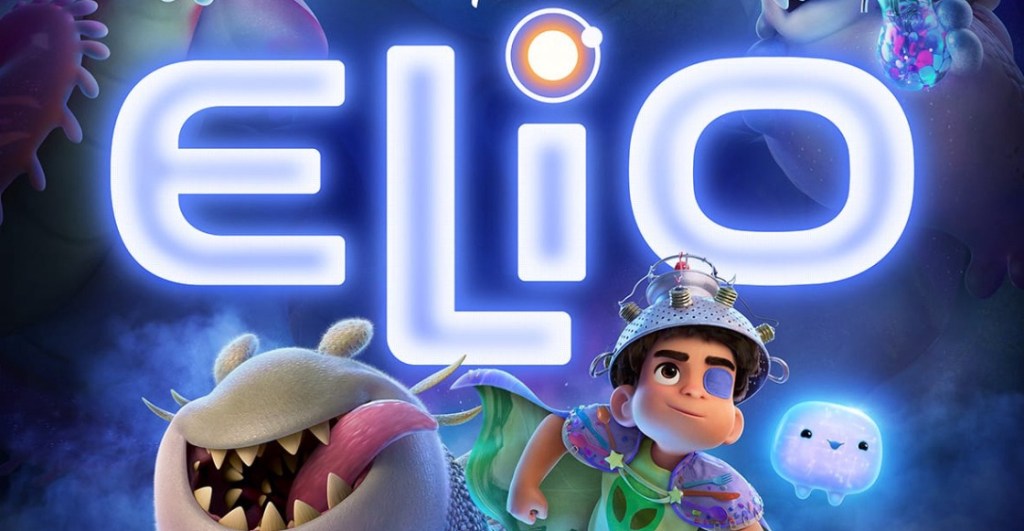
At least it’s not a remake.

I might not be the most qualified person to write this blog post. I’m not a parent, at least not yet. But I plan to start looking into avenues into motherhood in the next few years, and I want my future kids to have entertainment that actually allows them a childhood. I love Sabrina Carpenter, but I’m not letting them listen to her until they’re able to comprehend that “House Tour” (my new favorite song of hers, by the way) is not literally about showing off your new home.
“And I promise none of this is a metaphor.”

They say to be the change you want to see in the world, and I have a feeling that when I do pop out a baby of my own, I’ll likely try my hand at creating children’s music myself. I’ve toyed with the idea already, but I feel out of my element trying to make content for kids when I don’t really have a child of my own yet. Still, I know when Cadence is here, I need to make sure she has music to enjoy without me worrying she’ll pick up impolite language. Because if she’s anything like I was when I was little, that girl is gonna have some echolalia going on.

The world is a fast-moving place and kids are growing up quicker in a lot of ways. We need to make sure the next generation is getting positive messages. It’s not just about keeping kids from seeing or hearing about sex and violence, but also about encouraging the good stuff. That’s why the recent cuts to funding for PBS are so disheartening. I’m cynical enough to believe the shift is deliberate. Kids are more useful to corporate interests when they’re essentially little adults buying products. Look at the trend of literal children buying anti-aging skincare and showing it off on TikTok. You can’t convince me Big Cosmetics isn’t partly to blame. But at the end of the day, everything rests on dear old mom and dad.
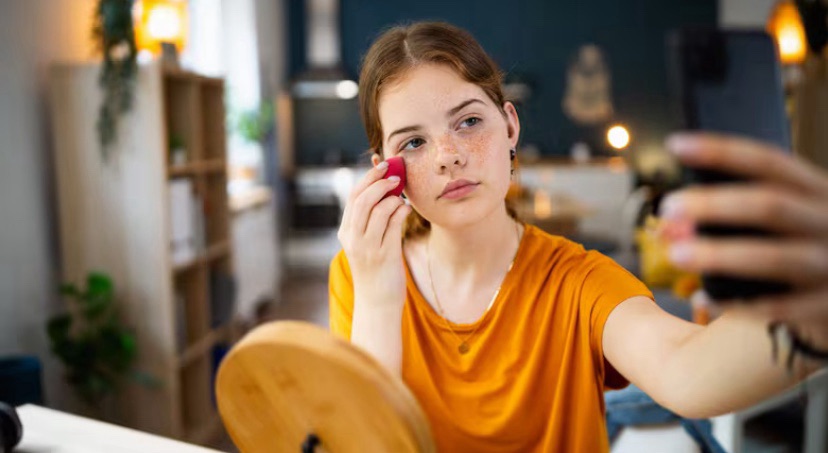
Maybe she’s born with it, maybe it’s questionable parenting choices.

It breaks my heart to think that kids these days don’t have the same kind of warm, wholesome childhood I had. We’ve abandoned car rides with Barney cassette tapes for iPads loaded with click bait and rage bait. And that, my friends, is no way to grow up.
How Ephemeral Love Becomes Eternal Through Music

Brace yourselves, kids. In this post, I mention both Heart and Taylor Swift.

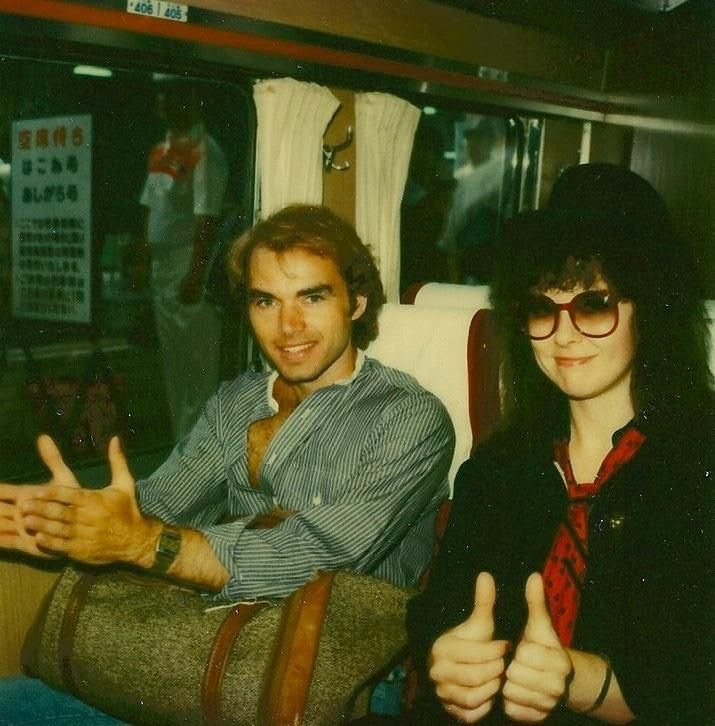
A few days ago, Heart’s original manager, Michael Fisher, passed away. Actually, calling him just their manager is kind of an understatement. In the autobiography of Heart frontwomen Ann and Nancy Wilson, Kicking & Dreaming, Ann tells the story of how Michael was her first love. Their whirlwind relationship inspired one of the band’s earliest and most iconic songs, “Magic Man.”

Why do I mention this? Obviously, Ann and Michael didn’t work out. Michael ended up marrying someone else and having like eleven freakin’ kids, and Ann went on to become a rock star. But their stories are forever intertwined because of that one song. And that’s what this post is about, because when you write a song for someone — or create any art in their honor — you’re preserving a piece of that relationship forever.

I’m a lifelong songwriter. I’m also fascinated by interpersonal dynamics. If you took every song I’ve ever written throughout my life, they would tell countless stories of people who have come and gone and somehow left a mark on me. The songs almost act as containers for the emotions left behind by those old relationships. Each song is a museum of memories. That’s why I have this theory when it comes to songwriting. Well, maybe it’s more of a maxim than a theory. And the maxim is this: If you get even one beautiful creation out of a relationship, it was not a waste of time.

People enter into relationships usually expecting — or at least hoping — to spend forever with someone. The point of dating is to find “your person” (or people, if you’re polyamorous like myself). So when relationships go south, it’s easy to write off the entire experience as meaningless. That’s where art comes in, though. With the magic of creativity, even the shortest-lived tryst can be fuel for a song or a film or a poem or painting.

Taylor Swift is a songwriter I admire deeply, and she’s a great example of this maxim in action. People have given her so much shit throughout the years for writing about her relationships, but honestly, that’s one of the things I like about her writing style. Not because I’m one of those parasocial weirdos who obsess over her dating history, but because that’s how I write songs too. I write about people. She has had many exes, as have I, but I feel like that’s what makes us better at writing. We have these lived experiences we can churn into music, and nothing can take that away from us. Like, she’s not with Taylor Lautner anymore and she hasn’t been with him for over a decade. But “Back to December” is still a beautiful song all these years later, and a song that millions of people still listen to and relate to.

I think of my own songwriting similarly. I think back to Jacob, whom I had a short-lived fling with my freshman year of college that led to the writing of “Smiles & Anchors” and “Tsvi.” I think about Dylan, my high school crush, who inspired “Off the Deep End” and the unreleased track “Outta My System” off my upcoming album Lore. There’s TJ, the muse behind “Song of the Sea,” and Phil, who never reciprocated my feelings but nonetheless influenced the writing of “Oceanography.” There are even songs I’ve squeezed out my non-romantic relationships and the ones that really went south, like the falling out with a former bandmate that led to the writing of “Ladies Don’t Start Fights (But They Can Finish Them).” I can find closure for relationships I wasn’t ready to leave just yet, and peace in relationships I’m happy are over, all because I’ve been able to transmute the pain into something I’m proud of.

I know I write about songwriting pretty frequently, but it is something I’m deeply passionate about. It’s what has gotten me through many breakups and heartaches and unrequited loves. But none of those situations were in vain, all because I could make something beautiful out of them. Relationships — romantic and otherwise — are the backbone of songwriting. We write about human beings and the way they relate to each other. Maybe those relationships don’t last forever, and sometimes, they shouldn’t last forever. Michael Fisher may have been absolutely miserable had he ended up with Ann Wilson, and vice versa, but the love they shared briefly inspired music that people will treasure for generations to come. And to me, that’s the beauty of songwriting.

If you enjoyed the writing in this post and elsewhere on the site, please consider donating to Jessa’s tuition fund! Any help is appreciated!

CashApp: $TheJessaJoyce

Venmo: @TheJessaJoyce

The Librarian’s Daughter: A Look Back

It’s been half a year since the release of my double EP, The Librarian’s Daughter.

These EPs were a unique endeavor for me because they started life as Christmas presents for my partners. The Sun version was dedicated to my wife Crass and filled with songs inspired by her, and the Stars version was written and recorded in honor of my girlfriend, Olivia. I always describe my form of polyamory to folks like that — Crass is my sun, and Olivia is my stars, and I love them both in different but equal ways. Although this project began as a private gift, I almost immediately realized the rest of the world needed to hear these songs too. So I quickly but carefully put together what would become the full project, and the rest is history.

The title was chosen because of my partners’ shared backgrounds as daughters of librarians, with Crass’s mother having served as head honcho of her public library and Olivia’s father having worked his entire life in service of his city’s library. I thought it was a whimsical, memorable title that fit the theme of the EPs. I wanted a title that made people wonder — who is the librarian’s daughter? The album art was inspired by tarot and designed by me. I really liked the pretty gold and jewel tones I chose for both versions of the album as well as the “compilation” playlist.

This album was recorded over several weeks in the summer of 2024, primarily in the town of Niles, Michigan, in a small Airbnb my wife and I rented after the fallout of my failed internship. I knew that if I wanted to get this thing finished, it was going to have to be produced quite a bit ahead of schedule. At the time, we were in the process of regrouping and trying to find a place in Kalamazoo, so I wasn’t sure how much energy I’d have to work on it when it was actually the holiday season. So I labored many hours in the steamy living room of that place and set up my entire mobile studio to capture what I wanted.

Since the release of the EPs, not a lot has changed — yet it has. I didn’t do much promo on the album because I was pretty exhausted by the time it came out, and I felt like the people who needed to hear the music the most got to hear it. It wasn’t a breakthrough album. And yet in a way, it was. Barring the Oceanography EP, I’ve never had an album or EP release. Releasing The Librarian’s Daughter showed me I was still capable of doing amazing things in music after what felt like my entire career crashed down in the wake of the internship. It gave me renewed sense of hope.

So if you haven’t heard these songs, here’s a little track-by-track breakdown of everything that’s on the EPs.

“One Way Train”

This song began life as one I actually wrote years ago about an ex, but I didn’t really have any connection to him or the lyrics anymore, so I completely rewrote the words from scratch to be about my wife instead. The title changed between “Wishing Well” (from the opening lyrics, “Made it down the wishing well”) and “One Way Train” more times than I can remember, but everyone seemed to like “One Way Train” best when I asked them. The colors mentioned in the second verse refer to our favorite colors as well as the color of a map, which almost aludes back to “I Can See the Rest of Our Lives From Here,” an unreleased Wake Up Jamie track with the lines “Throw a dart at the map and let’s take flight.” I also threw in a kazoo solo because I thought it would make my wife laugh. (It did.)

“Taco Bell”

Musically, I wrote this song as a challenge to see how many times I could change the key without it getting weird. (I call it the “I Walk the Line” gambit.) Lyrically, it’s a testament to mine and my wife’s strange, unique, beautiful dynamic. We’ve never been romantic in the traditional sense of the word. Our idea of intimacy is eating Taco Bell and watching bad movies together, and I honestly prefer that for us! I mention how she hated me at first, which is not a lie, and in the bridge, I actually sneakily incorporate my wife’s name into the words. The “big fat…grin” was inspired by The Maine’s “Into Your Arms” — “She had the most amazing…smile.” I thought that was a real fun, cheeky line, and I love The Maine, so that was a kind of my small homage to them.

“Chicago”

This is my take on the “run away with your lover” song trope. At the time of writing, we were plotting our next move, and it was looking like either Chicago or Kalamazoo. Kalamazoo won out in the end, but I couldn’t find a way to fit the word “Kalamazoo” into a song for another half a year. So “Chicago” was the end result. I’m particularly proud of the guitar work in the finished product. I literally drenched my tone in reverb for the opening bit and it gives my guitar a very characteristic and unsettling sound. The solo is one of my favorites I’ve written. I’m not much of a lead player and I’m sure one of my buddies who can really shred would have elevated it to the next level, but I did the best with the resources I had, which was literally just me.

“Olivia”

Onto the Stars version! “Olivia” was my attempt at channelling my inner Paul McCartney, who is one of Olivia’s musical idols. The piano features heavily throughout the song, although it’s not a real piano but entirely painstakingly MIDI-programmed. This one also features several key changes, both flipping between parallel major and minor keys (between the verses and choruses), and jumping up for the solo and once again for the last chorus. Overall, it’s a real short but sweet tune about the night I met Olivia at a Valentine’s Day-themed show we both were performers at (and yes, there was a real kissing booth!).

“When You Tell Me Goodnight”

The origins of this song are murky at best, because it actually wasn’t originally about Olivia. I’d penned a very primitive draft probably way back in 2012 at the earliest, although at the time I couldn’t think of a good enough muse to truly dedicate it to, so it languished in my drafts. But Olivia gave me the missing piece, and the song came to fruition with her inspiration. It’s a very barebones song, with nothing more than my voice and my Stratocaster with a nice twinkly setting on it. It’s stripped, and I wanted it to be that way on purpose. I feel like so many of my songs are big and over-the-top, and this is a simple love song. It means a lot to me though, and soon, Olivia and I will be releasing on a new version together that incorporates her chiptune work. I’m excited to share that with you too.

“I Wanna Fall in Love With You”

Finally, the song that was the biggest nightmare to produce, but it was absolutely worth it because it turned out breathtaking. I used a lot of synth for this track, so it took a while to piece all of those sounds together. The guitar solo was inspired by “Without Love” by Bon Jovi, from their timeless album Slippery When Wet. Ifyou listen closely, the guitar and synths are playing in unison, and I wanted to achieve a similar effect here. This song contains some of my favorite imagery and one of the best lines I’ve written: “Someday when I am gray and old, I’ll look back at this night at know / For a moment, life was beautiful.” I think that’s the overarching theme of these EPs — the love in my life make all the struggles worth it.

If you enjoyed the writing in this post and elsewhere on the site, please consider donating to Jessa’s tuition fund! Any help is appreciated!

CashApp: $TheJessaJoyce

Venmo: @TheJessaJoyce

Creativity Overdose: What It Is and How to Fight It

So my wife and a good mutual friend of ours recently staged an intervention in my living room over a glaring problem that’s been worrying them for a while.

(Okay, it wasn’t an intervention, but it sure felt like it, dammit.)

You see, I suffer from something I’ve dubbed Creativity Overdose.

It’s an insidious beast that comes at the intersection of bipolar and ADHD. Creativity Overdose is when your ideas start to come at the expense of people around you. Another good name would be “Eddy from Ed, Edd, & Eddy syndrome,” since it’s basically what he has. Every three seconds, you come up with some hairbrained get-rich-quick scheme or the newest version of The Best Idea Ever™ that consumes your entire being. And that would be fine if you a. followed through on these ideas and b. they weren’t coming at the detriment of your loved ones.

My poor wife has had to deal with approximately 6,348 new ideas since January, and getting back into academia and becoming a specialist on the way AI affects the brain on a psychological level was the straw that broke the camel’s back (I’m shocked it wasn’t my short-lived oil painting business). I don’t envy her for having to deal with my manic ass on a daily basis, and I want to be a better, more reliable partner for her. She deserves that much from me. So here are four ideas I’m putting into practice to negate my struggles with Creativity Overdose and keep the mental and interpersonal peace:

1. Write down your ideas (instead of burdening people with them)

This is hard if you’re an autistic extrovert like me. Sometimes, the neurospiciness kisses the extroversion just right and you feel the need to infodump about every grandiose idea you’ve ever had to your loved ones. I can assure you, they don’t want to hear about it. I know it hurts, but for the most part, it’s true. This is tough love. Nobody wants to hear about your Parakeet Circus idea, especially when the last time you tried to start a Cirque du Soleil featuring parakeets, you blew up three parakeets. Unless the project is cued to be finished or released, absolutely shut up about it. Not everything is about you. (I’m talking especially to myself here.)

2. Write down all of your current projects

Okay, now that we’re not telling everyone all the shit we’re up to, let’s figure out what we’re actually up to anyways. Write down every single thing you’re currently working on, no matter how small or insignificant. My current list has all the musical projects I’m working on, my two jobs, school stuff, my podcast, and even getting my passport. Write down some steps you’ll have to take for each one, too. Putting it all down on paper will help you see how busy you really are and maybe give you a little more perspective on how much you actually need to fill your plate. When you’re excited about stuff, it’s easy to underestimate how much it really takes to get things done.

3. Pick one thing to hyperfocus on for a month

Here is the tricky part. You’ve gotta prioritize. Label the projects on your list from most to least important. Like, “you’ll die if you don’t do this” to “this can wait a few months or even years.” Shelf the stuff that can wait. If writing the book that’s been on your heart for years can wait a few more years, that’s perfectly fine. Like, I’m probably gonna end up releasing Venona at an absolute snail’s pace, but I’m not worried about getting the story out there at this point. Unless something goes terribly wrong, we’ve still got a lot of time on this planet. Don’t worry if you can’t get to everything in the next year or so. Pick one thing (maybe two, since you’ll probably need to pick whatever your main job is for survival reasons) and really buckle down and get it done before moving on. It feels good to get something done for once, trust me.

4. Help someone else create something instead

Here’s something I’m really learning — it’s better to collaborate than work alone, and sometimes it can be just as rewarding helping your loved ones meet their goals as it is meeting your own. My wife wants to be a professional artist and merchandiser, so I’m going to step aside a while and let her work on that. I’m going to take a year off school so she can save for the equipment she needs, and I’m going to support her any way I can. See what your friends need for their endeavors and ask how you can help them. Assisting someone else in reaching their dreams can be a good feeling in and of itself, and it can further inspire you in your own dreams as well. The best part of having creative, ambitious people in your circle is that you can all help each other up.

So what do you think of Creativity Overdose? Have you experienced this in your life? Let me know your thoughts in the comments.

If you enjoyed the writing in this post and elsewhere on the site, please consider donating to Jessa’s tuition fund! Any help is appreciated!

CashApp: $TheJessaJoyce

Venmo: @TheJessaJoyce

Remembering Dad: A Eulogy of Sorts

It’s been a week.

I’ve been dreading this moment for my entire life, ever since I learned the concept of death. I knew that when it finally came for my father, I would be beyond devastated. I distinctly remember curling up under my parents’ bed as a toddler as if hiding from death would stall it somehow.

But last Wednesday, my mom called me and told me to say goodbye to Dad. I was dumbfounded and didn’t know what was happening, but I uttered a weak goodbye through tears. He took his last breath with me on the phone.

It’s been a week. I’m still catching myself crying here and there. It’s getting better. But it’ll never be okay. I miss my Daddy, and I’ll never stop missing him. There’s a piece of my heart that’s forever gone now.

I try to think of the good things when I feel down, which is partially why I decided to immortalize him via this blog post. He didn’t receive a proper funeral, which was his and my mom’s wish, as he was never into formalities. But apart from the Woodstock story, which I told in my last post, there are so many tales of my dad I would have wanted to tell as part of his eulogy.

Like, I’ll never forget the time we were all driving around — him, my mom, and me — and we passed by an old building that we’d passed by many times. Only the signage had changed, and it was now a taxidermy shop. Except my dad had no idea what taxidermy actually was, so he kept insisting it had become a tax place. Meanwhile, my mom and I were like “It’s taxidermy! They stuff animals there!”

(He eventually listened, but I’m pretty sure I had to point out the deer painting on the sign for him to get there!)

Another time, I get this call, and he says he’s driving up from Downriver to where my wife and I were living in Ypsilanti to bring us six pounds of cheese — in a snowstorm. I told him he didn’t have to, but he insisted. It took him an hour, and I bet he was white-knuckling the whole time, but he made it. And he gave me the biggest hug when he got there.

That’s always how he was. His love language was finding out what I liked to eat or needed in my everyday and buying it in bulk. I can’t tell you how many times I’d be going throughout my day and I’d get a call from him at Sam’s Club or Costco or BJ’s or wherever the hell he was shopping. He’d always ask me if I needed anything, and every time I visited home, he’d load up my car with toilet paper, jugs of Arnold Palmer, huge bags of popcorn, and more. He loved being a provider.

I got a good chunk of my love for music from him. He always hummed little mindless tunes to himself as he did things, a habit I still have to this day. He never went out of his way to listen to music, but he loved the stuff that I played for him. He had good taste — he did go to Woodstock, after all. And he was my biggest cheerleader when it came to my own music career. He bought me my nylon-string guitar when I went off to study classical in college. He’s part of the reason I went to school for music — I was going to go into pre-med, but he knew music was my passion. He’s the reason I went to university at all, actually. He always pushed the importance of education and hard work.

I’ll miss his speech patterns. I’ll miss how he’d say “warsh” instead of “wash,” going as far as to talk about “Warshington” or “warshing machines.” I’ll miss how he’d mix up words like the time he called my older siblings “Kay and Jelly” instead of “Jay and Kelly.” Or how he’d call my cat Krubby “Scrubby” and always ask how his grandkitten is doing. I think what I’ll miss most is when he’d call me silly nicknames. Meatballs was one. I was especially fond of Sweet Pea. That was the name my grandfather called me when I was in the womb, I believe. He died shortly before I was born. My dad made sure it lived on.

The story that stands out to me the most, though, is the story of when my wife and I first got together. I’d never been in an openly queer relationship and I wasn’t quite sure how my parents would react. I’d “soft” come-out to my mom as a teenager, but she’d initially brushed it off. I had no idea what my dad would say. So when he found out my now-wife and I were dating, he called me up all serious-like, saying “We need to talk.” So he scoops us both up, takes us to the local Coney Island, sits us down, and basically says screw what anyone else says, he loves and supports us unconditionally. That is what real fatherly love looks like. And I’m so glad I got to experience it, even if only for 32 years on this planet. Some folks never get to have a love like that in their lifetime. I know I was greatly blessed.

My greatest regret is he won’t be there for my symbolic wedding to Olivia, whom he also adored. In the last few weeks of his life, all three of us visited him, and it almost felt like getting his blessing. I never outright told him that we were polyamorous, but I feel he knew, and he just wanted me to be happy. He entrusted them with making sure I’m taken care of, and they promised him they’d give me the best life possible. He died knowing I have a strong support system.

My father was my rock, and it’s a little scary to realize I’ll never be able to run to him again. But he’s still there with me, somehow. I’ve been seeing him everywhere. The stupid William Hung cover of “Circle of Life” was playing at the bar when I went with my closest friends the night my dad’s death. At first it felt insulting, but then it felt weirdly poetic. We used to love watching American Idol together when I was little, especially the “bad” auditions. And it made me smile a little. I think he’s watching out for me. He’s got a sense of humor. I know, because I’ve got that same sense of humor. We gave each other dad joke and silly cat calendars for Christmas every year. (He’d send me the best dad jokes when he sent me my mail from home.)

I knew the song had to end eventually, as every song has to end someday. But I’m glad I got to experience the music that was my father’s life. I’m glad I had him to teach me to dance. And now that I can stand on my own two feet, it’s up to me to keep his song and spirit alive.

Here’s to the greatest dad who ever lived.

Reflections on Music, My Late Father, and a Phish Pilgrimage

I write this as my Chicago trip draws to a close. And man, am I glad I won’t have to type “I’m in Chicago” to people every five minutes, as I suck at typing the word “Chicago.” I swear I always write “chichi” or “chacha.”

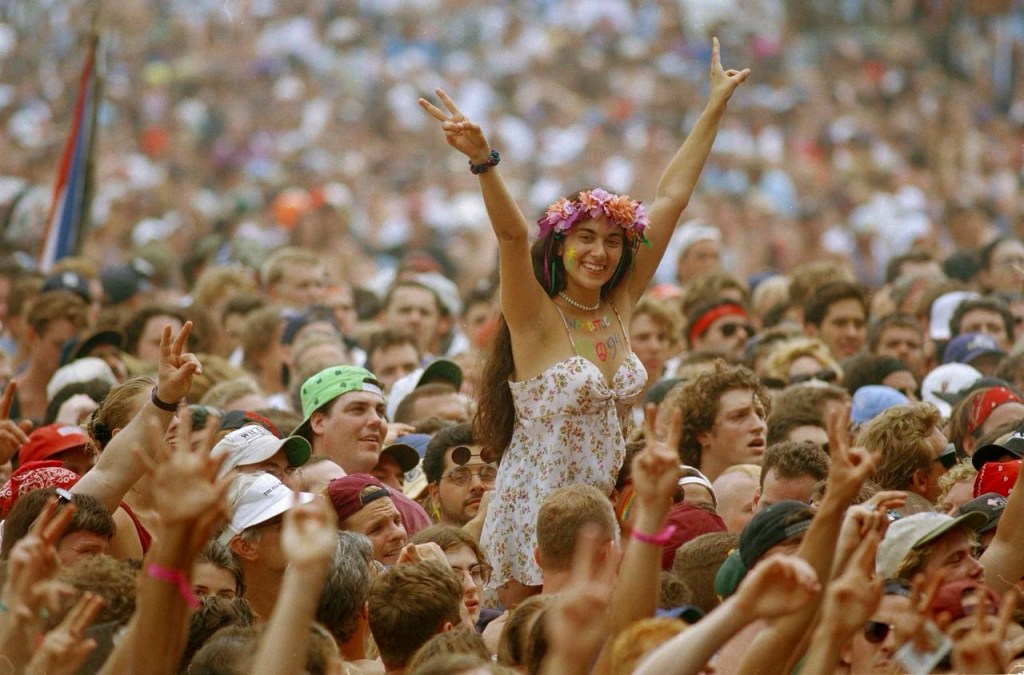
Anyways, Chicago isn’t exactly a place people go to for spiritual enlightenment, but this trip was different. This trip came on the heels of my father’s death a few days prior. I’d had this trip with my bandmate planned for a little while, and I’d contemplated cancelling it, but sometime told me to go anyways. This trip was to see Phish, and, ya know, my dad had gone to Woodstock. The OG hippie music event.

You know I would have been this bitch had I gone myself.

I got the invitation from my bandmate and one of my best bros, Chris, who’s always buying tickets to see someone. Me, I very seldom buy tickets to see mainstream or larger artists. Most of the times I’ve gone to see someone bigger than Warped Tour-level, it’s been because a friend thought “Hey, Jessa likes music” and had no one else to go with. Which, I mean, I will never turn down a free show. It’s how I’ve seen Muse, KC & the Sunshine Band, Kiss, Motley Crue, Van Halen (WITH Eddie!), and so many more awesome as hell artists live. If you put out into the world that music is your entire life and just be nice to people, you will manifest concert tickets. At least I do, somehow.

Anyways, we get to Chris’s cool vegan sister’s studio apartment and I’m already high as balls because this is a Phish concert and if I’m going to see a jam band, I’m gonna do it right. That is to say, with a copious amount of a certain herb that is legal in the great state of Michigan. And Illinois, albeit way more expensive.

There is a speakeasy that has THC shots, to be fair.

And we get there and I’m just full of this nervous energy. I can’t explain it, but something’s in the air as we’re standing outside waiting to go in the stadium. At one point I eulogized Chris’s beloved signature hat that he’d worn during his stint with Wake Up Jamie by singing “Angel” by Sarah McLachlan, and some lady thought it sounded nice, even though I was just being silly. Then we got inside, and the munchies hit all at once. Cue me buying not one but two ice cream cones.

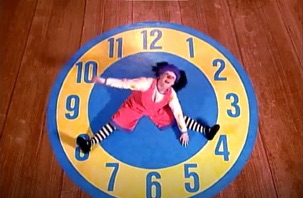
Then the show itself started and it was not at all the vibe I was expecting. I’d never listened to Phish but I knew their reputation as a stoner band, so I was expecting something a little more subdued and shoegazey. Instead, the first song was fun party music! I found myself actually dancing a little, although not as intensely as the old men around me, especially the one who literally spun around in a little clockwise circle the entire time.

Sometimes you just gotta spin around like a clock.

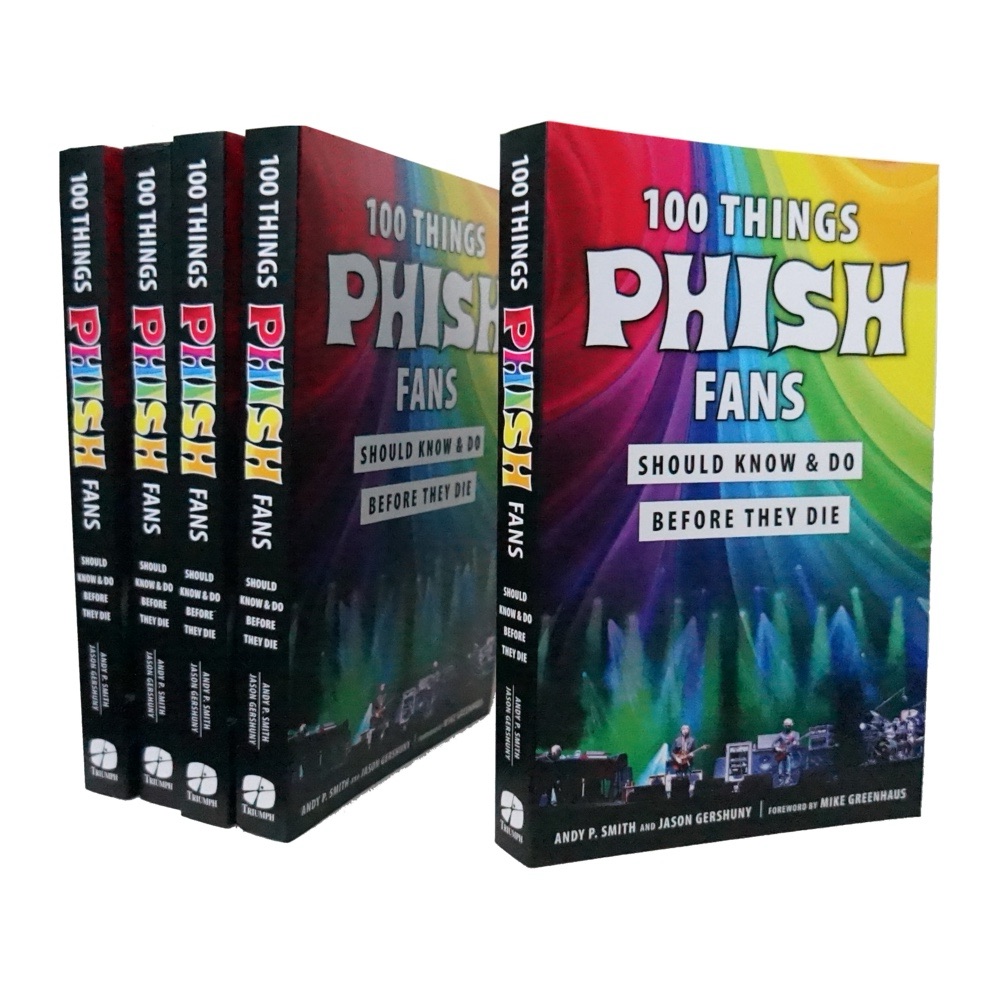
As I stood there with my little ice cream cone listening to these guys play, I studied the music in my head. At one point, there was a musical phrase that just didn’t resolve, and led into an explosive jam. It was uncomfortable and different, and I realized I haven’t been listening to music that challenges me lately. I haven’t been listening to music that makes me get tingles because of some weird cadence I’ve never heard before. Really, I think I’m just intimidated by new music in general. It’s part of why I never checked out Phish before — the archive panic. After all, my first awareness of Phish came after I discovered a compendium of their music and lore years ago at a Borders (really dating myself). All I remember aside from it being rainbow and really pretty was how it rivaled the actual Bible in length.

Someday several millennia from now, Phish will be revered as gods.

And that’s the thing about being at a Phish concert. I was aware that I wasn’t a native Phishhead (DuckDuckGo tells me the correct term is “Phan”). This was not my territory, and I wanted to be as respectful as I would want someone else to be at a Heart show. I don’t know shit about fuck when it comes to Phish, and I won’t pretend I do, but as a tourist in their world, I felt strangely welcome and at home. Some of the guitar solos brought a tear to my eye, and it was a reminder of how spiritual of an experience music can be.

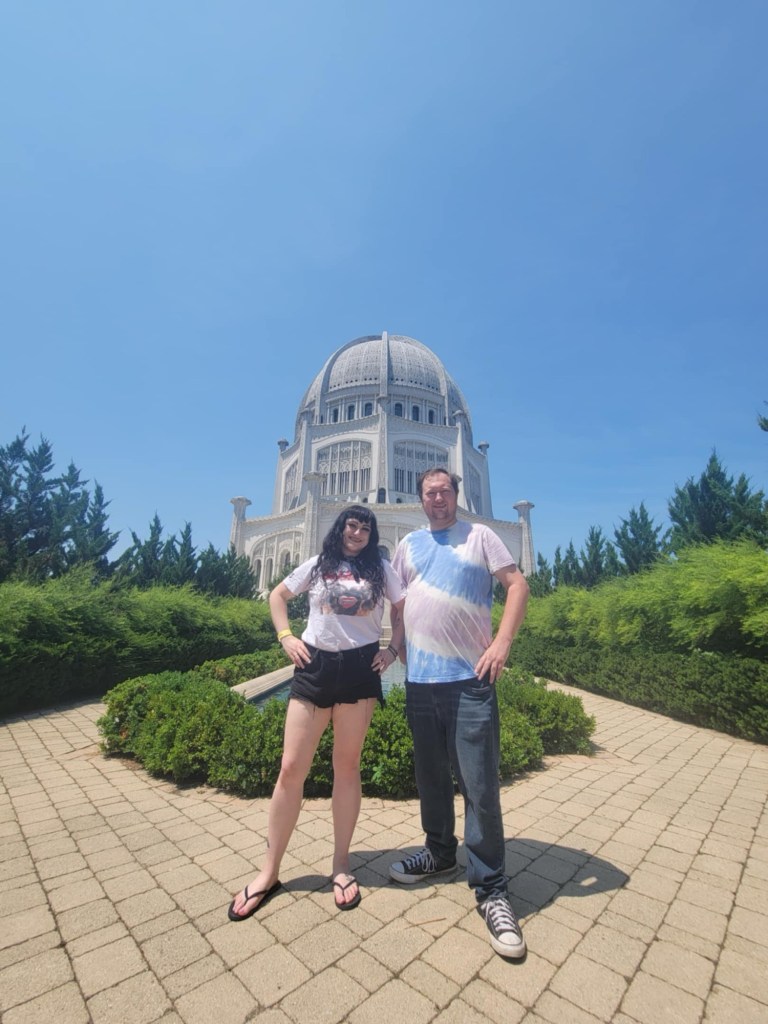
The next day (as in today, the day that I’m writing this), Chris and I went to a Baha’i temple in the Chicago area.

Photographic evidence!

This picture doesn’t do it justice. It’s a beautiful work of architecture. That’s not what made me tear up, though. When we went inside, we were greeted by a beautiful a cappella chant led by a single man. It was absolutely soul-invigorating. This trip ultimately made me re-appreciate the way music has been there for me spiritually throughout the years, even in non-spiritual contexts. Like karaoke, or a Phish concert. It truly is a divine gift. As one of the founders of the Baha’i faith wrote:

“Music is one of the important arts. It has great effect upon human spirit … music is a material affair, yet its tremendous effect is spiritual, and its greatest attachment is to the realm of the spirit.”

I’ll never forget one of the last conversations I had with my dad. He was the extrovert. If you’re ever wondering where I get my outgoing nature from, it’s him. The man never met a stranger. You could be standing next to him in line at Meijer’s and he’d strike up a conversation with you about sports or the news or what-have-you. Anyways, I’d heard him mention Woodstock, but he’s been known to embellish stuff here and there, so I wasn’t sure if this story had actually even happened. But when I went to visit him last, I decided it was time to ask him.

He said he saved for two months to go because he knew it would be a big deal. All his coworkers made fun of him for it, but he didn’t care. He drove up there with some folks and stayed in little hotels along the way. At the site of the festival, they slept in a 20-man tent, and music went all throughout the night. He said he came to the festival with six friends and left with 28.

And that’s the power of music. It brought him together with those folks, many of whom he said were his best friends for years after the event. It brought me closer to him as he shared that story with me. And as I watched that Phish concert, I felt a sort of kinship to my dad and to everyone who’s ever been moved by music.

The thing about music is it’s not forever. Every song has to end sometime. But I’m glad I got to experience the song that was my dad’s life, even if it did have to end.

Autistic Joy: Little Things That Make Neurospicy Brains Happy

It’s rather unfortunate that autism has the less-than-favorable reputation it does. Sure, it’s more accepted than ever, to the point where it’s trendy on TikTok to claim neurodivergence (a trend I have mixed feelings about if I’m honest). But many on the spectrum still feel misunderstood by the public, with only 16 percent of autistic folks and their families feeling people actually “get” them and many choosing not to interact with the world because of it. It’s a big reason I’m self-diagnosed — when my childhood psychologist suggested the “A” word back in the early 2000s, my well-meaning parents ran the opposite direction, afraid their beloved daughter would get saddled with a label that would get her further ostracized by her peers. My girlfriend had a similar experience growing up. And then you have people like RFK Jr. who say — and I quote:

“[Autistic people will] never pay taxes, they’ll never hold a job, they’ll never play baseball, they’ll never write a poem, they’ll never go out on a date.”

So yeah, it’s pretty clear the world looks down on us for being different, which, to be fair, has always been the case. It’s never been “cool” to be autistic, right? Why would anyone want to be on the autism spectrum?

Here’s where I’d say “Wrongo, partner!”

Definitely read that in her voice, by the way.

There are lots of special kinds of joy that come with being autistic, or even ADHD and similar kinds of neurospicy. There’s been quite a bit written on the neurodivergent love languages, many of which I feel are closely connected to the kinds of neurodivergent joy. That neurodivergent joy is what I want to write about, because I saw it at work amongst me, my ADHD wife, and my AuDHD girlfriend this past weekend when I took them to my hometown. That brings me to my first joy:

1. Sharing Lore

Taking my partners back home was such a cool experience. I got to share so many parts of my backstory with them, parts I couldn’t show them without taking them to the exact place in time where my story unfolded. I could point out my high school, the Dairy Queen I went to as a kid, all my favorite plushies in my childhood bedroom, and so much more. It’s all part of my lore, as I’ve started to say. Sharing parts of your past with your loved ones scratches the same itch as infodumping, except in this case, you’re infodumping about yourself!

Hearing other people’s lore helps us connect to them as well. This past weekend, my dad regaled us with the story of how he saved for two months to go to Woodstock, despite his coworkers making fun of him, because he knew it was going to be a big deal. He ended up going with six friends and left with 28. I knew music was a big part of my family’s lore, but I never truly knew the extent to which my own father was present for a huge moment in music history. Just taking that time to talk to him gave me a lot of joy.

2. Sharing Media

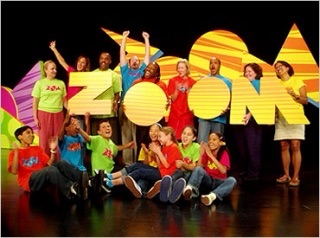
During the trip, I allowed my girlfriend, Livvy, to take control of the hotel television, since she has some sensory stuff regarding talking and background noise. Most of the time, she left the TV off and the three of us, ya know, engaged with the outside world. But when we got back to the room every night, Livvy would search for one of her childhood favorite shows, Zoom. She loved that show so much that her grandparents taped it and sent it to her so she could still watch it after it went off the air. And now, she wanted to share it with us!

I can’t express how happy she was that we not only took the time to watch what she wanted to show us, but actively participated in it as well. We started daydreaming funny skits and science experiments we could do in our spare time, like the kids on the show. We even had our favorite cast members and tried doing the “ubby wubby” language ourselves (with little success). Livvy was so pleased we were as into the show as she was!

3. Being Around Other Neurospicy Folks

When you’re wired differently, it can be exhausting masking in order to fit in with polite society. Masking is typically associated with “higher functioning” autistic individuals, as shitty and outdated as that terminology is (we prefer people refer to our support needs instead of the “high and low functioning” labels). As someone who’s gotten so good at masking that many outsiders aren’t aware I have the ‘tism in the first place, I can tell you it’s absolutely exhausting. It’s a form of hyper-vigilance and suppressing natural urges. You basically have to water down your entire personality.

But when you’re in a group of other neurodivergent people, you can let all of that fall away and reveal your true self. I don’t have to pretend to be interested in mundane things. I don’t have to make eye contact (which is scary as hell to me if I’m honest). I don’t even have to say words. I can communicate in noises if I want to, and oftentimes, that’s exactly what my partners and I do! It’s freeing to not be restricted by social norms and expectations.

4. Researching What You Love

I (probably rightfully) get a lot of crap from my loved ones for being too glued to my phone, but I’m going to let you all in on a little secret. If you see me on my phone, there’s a very small chance I’m texting a friend. More likely than not, I’m reading!

I’ve always been like this, and I’d be the first to admit that had smartphones not been invented, I’d have to carry a huge bag of books around with me everywhere I go. I’m always reading something or other, usually nonfiction, and usually about one of my special interests. I love reading about creativity, spirituality, or whatever library book has captured my attention most recently. When I was a kid, I’d hide in the nook between the kitchen and the bathroom in my grandma’s house, right where she kept a complete set of Encyclopedia Britannicas on a bookcase, and just study them for hours. I kind of miss physical books, if I’m honest, but I love having the ability to read about anything and everything at a whim nowadays. It’s a kind of special joy.

5. Being Respected

Obviously we love researching things, but we also love getting recognized for our research too! We love the thought of being an expert in our field of interest, even if it’s not a formal area of study. For me, music theory is a big area of interest. I do have a degree in music, which does make me feel good about myself, but even more than that, I love when people tell me that I’m knowledgeable. Even more than that, I love when I get a chance to demonstrate my knowledge. When someone asks me why a song works, I’m always happy to explain things like chord progressions and the circle of fifths and why those concepts are important in popular music.

I think that’s why it almost feels like a personal slight when we don’t get the respect we require as it involves a particular special interest. I still remember the one of the only times a non-music professor made me feel like shit about my abilities and know-how. It took me years to recover and get back to a place where I felt confident about myself in music again. We autistic and ADHD folks are so sensitive to the slightest criticism — we’re prone to rejection sensitive dysphoria for a reason — but the flip side is that we get an even stronger sense of pride from positive feedback.

Which of these “joys” do you relate to the most? Leave a comment below! And as always, if you enjoyed the writing in this post and elsewhere on the site, please consider donating to Jessa’s tuition fund! Any help is appreciated!

CashApp: $TheJessaJoyce

Venmo: @TheJessaJoyce

Stepping Into My Own “Barracuda” Moment

Let’s talk about Friday night.

I’ve been sitting on this blog post for a few days now as I process what happened at karaoke on Friday. Here’s the SparkNotes version of the events.

Basically, I was already riding high from a very successful music bingo night that I’d just hosted at a different bar. That part is important because had I not been in such a powerful mood already, I probably wouldn’t have been able to do what I did. I got to Old Dog Tavern (shout out to one of my two favorite bars in Kalamazoo!) around 10 I think and met up with one of my bandmates and best friends, Ellie. We were just outside on the deck probably sharing a joint with a few friends or something when we both headed inside for some reason. Not ten seconds after we stepped inside, some crusty short old white dude with a Colonel Sanders goatee in a green hat came up to us. He reached his shriveled hands within an inch of our titties and made a honking motion, remarking “Eh, isn’t this how you greet women?” and shyly begging “Can I?”

I saw red. It was enough that this fucko disrespected me, but also poor little Ellie, who is for all intents and purposes a little sister figure to me. I pushed back through the doors to where my wife, Crass, was sitting outside, and all I had to say was “creep,” “tried,” and “grope” and she was equally livid. We both bursted back inside, her to find the pervert and me to make a fucking statement.

I ran up to the stage and grabbed the microphone. Fuck whatever else was going on. This man had to be stopped. I screamed to stop the music, took the mic, and with all of the pent-up rage of 32 years worth of creeps thinking they can test me, I declared:

“Nobody is allowed to sexualize me and my friend without our consent.”

The bar bursted into a frenzy of confused looks and claps, save for one asshat heckler in the front who yelled “Too late!” like a goddamn Reddit troll in real life. This made me even more angry, and I lunged toward him, grabbed him by the collar to make him look me in the eye, and said “What the fuck did you say?” At that point, Crass had turned her attention to the heckler, and she literally chased the whole man out of the bar. The original pervert got tracked down and kicked out as well, and the whole time, I was shaking and crying and in shock at what I had just done.

I — the bullied little girl who had to eat lunch in the library to avoid being pelted with ranch dressing packets — finally stood up for myself.

Then, the most amazing moment happened. The whole bar rallied around me, encircling me physically with their bodies and figuratively with their love. I sunk into my friends’ arms and let out all of the emotions that had built up.

Because I was no longer scared. I felt like I had become something new. I stepped into who I was supposed to be this whole time. Like, there was something deeply spiritual about what happened that night. My good friend’s girlfriend said it’s a Leo moon thing. I keep drawing powerful feminine cards like The Empress and the Queen of Wands, the latter of which is a card that’s always resonated with me, though I couldn’t place why at first. I always thought I was more of a Cups girl — soft and emotional — not a fiery, passionate Queen of Wands.

I’ve mentioned my ridiculous admiration for Ann Wilson, frontwoman of the classic rock band Heart, on here many times, and it’s fitting that this particular night was the day after her 75th birthday. I wanted to be her so bad growing up, to the point where I’d study her singing and her performances and her fashion sense and even her personal life, as stan-ly as that sounds now (give me a break, I was an autistic child). One thing I learned when reading about her childhood was the fact that she was bullied extensively too, like me. She was overweight; I was underweight. She had a stutter; I had undiagnosed ADHD and autism. But I saw myself in her. Hell, I created a cringey wish-fulfillment OC based on her! She gave me hope that I could someday be the badass rocker chick I desperately wished to become.

That night at karaoke, that’s exactly what I did. I became that woman. The take-no-shit rock and roll queen who isn’t afraid to call a fucker out.

After the creeps were exiled from the bar and karaoke resumed as normal, the DJ (who may just be the best cishet white man this side of Steve Irwin) asked me if I was okay and if there was anything he could do. I had one request, because I knew exactly what my last song of the night would be.

Back in the 1970s, Ann and her own (actual) little sister, Nancy, were frequent victims of slimy men in music venues, especially since rock was very much considered a man’s world back then. The iconic “Barracuda” was written as a response to some guy backstage who made a creepy joke toward Ann at her sister’s expense, insinuating their relationship was incestuous. Absolutely filled with unbridled rage, she wrote the scathing lyrics that would eventually become the now-legendary song.

And that night was my “Barracuda moment.”

I got on stage to a roar of applause. It’s funny because a while ago I wrote a song half-joking about wanting to be “Kalamazoo famous” instead of actual famous. In that moment, I really did feel like a small town celebrity. With what little was left of my voice after cussing out the pervs, I sang my musical heroine’s battle cry, dedicating it to her for helping me find my voice — and to every man who ever intentionally made a woman feel unsafe in a bar.

I left the best part out. After everything was said and done, a young woman came up to me and quietly thanked me for what I did. She’d been victimized by the creep too. It made me realize how much power we have as women to lift each other up and protect one another.

I want to carry this night with me whenever I feel like I’m not strong enough to stand up for myself. Because now I know I have what it takes. I’ve seen it. My friends have seen it. The entire city of Kalamazoo has seen it.

I have more power than I thought.

Grandkids and the GOP: How the Drive to Live Forever Fuels Conservativism

I think I cracked the code.

Like, I know why the other half of the population just doesn’t seem to get it.

It’s babies. It’s always been babies.

Of course, just look at that shit-eating grin.

Well, and death. Just follow me for a second.

I was recently reading about a fellow named Ernest Becker, who won a Pulitzer Prize for his 1974 book on death. In this book, he asserts that humans are driven by their primal fear of death and no longer existing in the mortal realm. Because of this, we unknowingly take on “immortality projects” meant to carve our name into history in some fashion. For some, including myself, this looks like creating art or music or stories that will last long after we’re gone. For others, this may look like accumulating lots of wealth, then dumping it into a cool institution or organization you believe in to get something named after you. And for many, many folks, their immortality projects are their progeny.

And that’s where things get sticky — because a lot of older folks are realizing their children and grandchildren don’t want kids of their own.

And if your kids don’t have kids, your bloodline is essentially over, you’ll be forgotten, and nothing you ever did amounted to anything.

Seriously, this fear explains so much about the psyche of older conservatives. It explains the anti-gay stance, as one could traditionally only reproduce with someone of the opposite birth sex. It explains the anti-trans stance, as HRT typically borks your reproductive system (and a lot of people don’t know about options like sperm banks for preserving fertility after transition). It explains the anti-abortion stance, since you don’t want your daughter to go off and abort your grandchild. I’d argue much of the conservative worldview stems from just three little words — “I want grandkids.”

And the wild thing here is that I actually get it.

I mean, I wanted to be a grandma someday. But mostly so I could nap and watch game shows all day.

That ever-present fear that I’ll just die and eventually be forgotten without accomplishing anything great is one of my biggest fears too. I’ve actually written about it extensively on this blog. I understand where these people are coming from, even if our ways of handling that fear lead us to vastly different belief systems.

A while back, I had this conversation with one of my coworkers at the caregiving gig I picked up recently. We got on the ill-advised topic of politics, and she told me she voted for our current administration “because of her family.” And I told her I had voted against it for my family. My wife is black. My girlfriend is trans. Our future children will likely be neurodivergent. This isn’t the world I want for them. I don’t want them to live in fear.

And so I keep finding myself going back to the same question — what makes my coworker’s family more important than mine? The fact that she’s straight and white and neurotypical? And yet, we’re really not all that different. She, like me, just wants to leave a legacy. Maybe her legacy will look different than mine, but that’s the beauty of the human experience. We each get to choose what our legacy will be.

That’s why these pushes to put as many babies as possible in as many wombs as possible will inevitably fall flat. People usually have a good idea of what they want out of life, and if that’s not children, that should be the end of the story. Family planning, birth control, and issues relating to fertility are personal and private. It’s no one’s place to tell anyone they should bring kids into this world. And that includes parents pestering their own children for grandkids.

But I do get it. I hate the thought that I might someday be forgotten. That’s part of the reason I write this blog — so there’s some record I actually existed one day after I’ve left this mortal realm. I always think back to that scene in Coco, a film I absolutely adore but can only watch very seldom due to the heavy themes. Like, a whole man evaporates as the last person alive who remembers him dies. And that fucked me up.

Sweet dreams!

I write this because I feel in order to defeat the rise of fascism in this country, we need to understand why people voted the way they did. We need to know how we got in this position. Burying our heads in the sand and pretending the opposition are all irredeemable monsters is not how we win people to our side. Seeing people as fully human and acknowledging their dreams and fears is.

Because at the end of the day, when you set aside all of our differences, every person just wants to carve out a permanent place in the story of humanity.

Putting on the Straight Jacket: Choosing Between Safety and Your Own Identity

Alright everyone, today we’re talkin’ trauma. But first, the daily prompt WordPress gave me tonight:

What sacrifices have you made in life?

It’s serendipitous that this was today’s prompt, because while this wasn’t necessarily the direction I was planning to go in with this topic, I feel there is another important angle to consider.

Living and being in the world authentically requires sacrifice. And it absolutely can cause trauma.

Up until a certain age, the trauma I experienced never really left the school hallways, so once I was done for the day, I could compartmentalize all that BS and, I don’t know, play Sims all day. My bullies didn’t really live rent-free in my mind since I was too busy thinking about all the stories I wanted to write, and to be entirely honest, I didn’t have much else to worry about as a child. You know, aside from my terrifying OCD-driven intrusive thoughts.

No brain, I don’t actually want to stab my mother, I literally just want to play dolls.

Here’s something I came to realize: things were so easy because I actually had a pretty privileged life growing up. I was white, relatively well-off (well, blue collar, but my family never hurt for food), and straight…right?

Oh.

In the immortal words of NSYNC, bi bi bi.

I think I always knew in my heart of hearts that I was bisexual. You see, speaking of Heart, I came to realize I was staring just as longingly at old photos of Ann Wilson as I was at Peter Frampton. Yes, I am a millennial. My mom gave me some of her vinyl collection when I was around 12, and the cover of Dreamboat Annie just like, awakened something in me.

HELP I’M GAY.

Then, I went to the church I grew up in and that got beat out of me pretty quick. I learned what it was called when a girl thinks another girl is hot. It was called being a homosexual and it was bad because…they never really said aside from a couple of Bible verses that I’ve since discovered meant something else entirely. But the message was clear. If being gay was bad, then I was not gay, simply because I did not want to be bad.

And then I met my best friend in college. She was a lesbian. The closer we got, the more I realized I preferred being around her to any of the guys I dated. I even realized I preferred her company to that of the man I eventually married. No one made me laugh like her. No one understood me like her. And like, she was way cuter than most of the dudes too.

If you haven’t caught on yet, she’s my wife now.

For better or worse.

But something changed when I just said “fuck it” and started living openly queer. Suddenly, religious and political discussions were a minefield and I’d be taken aback by how freely people would say the most dehumanizing bullshit about folks like me — especially if the person I was talking to didn’t immediately register that I wasn’t straight like them. I had to watch how I word things around strangers, as dropping a phrase containing the words “my wife” could potentially put me in danger. Driving through smaller towns felt especially unsettling now. I wasn’t sure if I was surrounded by people who’d want me dead if they knew the truth. I’m originally from a small town; I know how it is. These folks don’t often meet people who aren’t like them, and when you’re that insulated from the full range of human diversity, exposure to that diversity can feel threatening. And when people are threatened, all sense of reason falls to the wayside and it’s fight mode.

I don’t want to fight with these people. But they want to attack me. All for something I never chose for myself. All because I thought girls were pretty.

In the last few months since the current administration took over, I’ve been considering what I’d even do in the case that homosexuality is outlawed. I am bisexual, and I could put on the straight jacket if I really needed to. I had for all those years I exclusively dated men. But I realized I wasn’t truly happy in that arrangement. I wasn’t fully, openly myself.

That’s why the topic of sacrifice kind of hit me. I’m sacrificing a lot of comfort and privilege just by being who I really am for the first time. There’s a term for that constant sense of looking over your shoulder that comes with being a marginalized person. It’s called minority stress, and refers to the chronic stress that we experience from constant discrimination and not knowing if the next person we run into will be a crazed bigot who wants to murder us. The thing is, I never had to experience that as a kid. My wife may have, since she’s black and race is a lot harder to conceal than sexuality. But remember, I was a white kid in a white family in a 99 percent white town. The only source of trauma for me, like I mentioned at the start, was being bullied.

All of that being said, would I go back in the closet if it meant freeing myself from the stress and potential threats? Would I willingly live out the rest of my years playing the role of the traditional wife in a heterosexual marriage? Would I sacrifice my own identity for my safety? Honestly, I don’t think I would. It is hard adjusting to being a marginalized person when it’s not something I grew up experiencing, but after spending years running from myself, I’m not about to backtrack on work I’ve done to be who I really am. Because who I really am is finally here, and she’s ready to take on the world.