Think of the Children! (An Easter Manifesto)

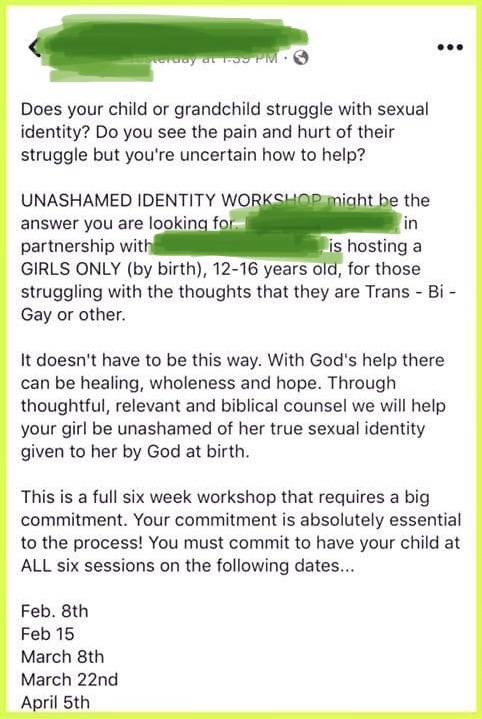
I originally posted this on my Facebook and Instagram pages (@thejessajoyce, if you’re curious), but I wanted to share this brief little write-up here as well. It’s so important to get this message out there since more often than not, the theoretical future of society and the fight to better it is co-opted by straight, cis, white, non-disabled people in an effort to tear down people who are not like them. I want to present a counter-argument. If all lives truly matter, as many on the political right say, and we must “think of the children,” my future children should be considered as well. There is room for everyone at the table of life, and we need to remember that this Easter.
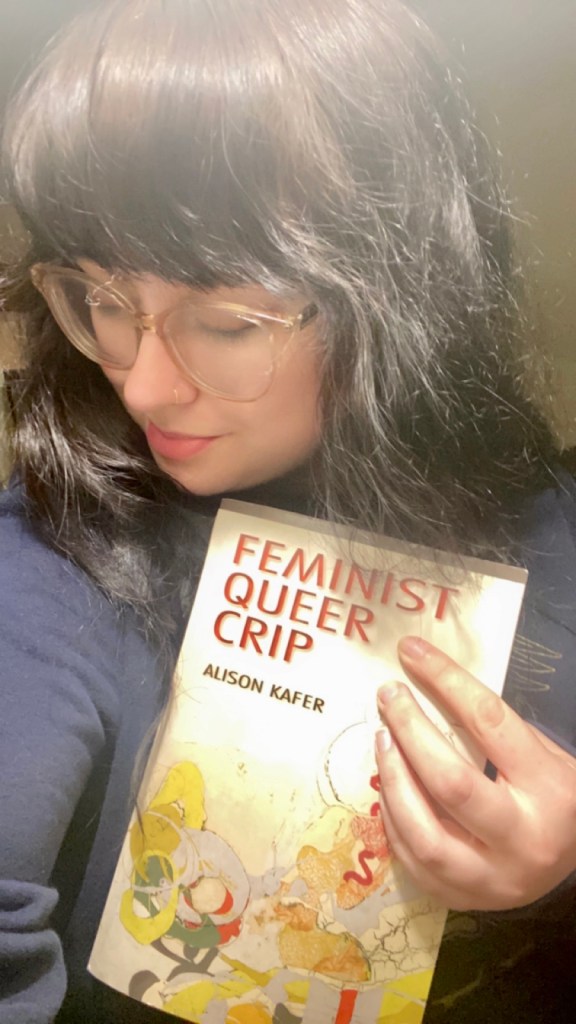
Reading this book (Feminist Queer Crip by Alison Kafer) at the suggestion of one of my favorite professors for my capstone project on autism, and it feels especially poignant in the days of #blacklivesmatter and #SaveTheChildren and #autismawarenessmonth and the recent fight against drag and transgender rights. The first chapter talks a lot about the Child — the personification of the future of society — who is often politicized and weaponized. Think of the children, people say. The image of the Child is more often than not a white cishet non-disabled child born to white cishet non-disabled parents. This Child absolutely matters. But I’m not interested in fighting for him, not because I don’t care about him, but because he already has enough people fighting for his right to exist in peace. Instead, I want to fight for my children.

In a few short years, I’ll likely have a child of my own. That child will likely have a disability of some sort, or rather, a difference that makes it harder to exist in a world that isn’t built for her. Considering my family history, she’ll likely be autistic or ADHD. Depending on our donor, she will likely be at least part black, and she’ll have queer parents who will support her should she eventually come to terms with her own queerness. And guess what? Her life will matter too. She should have a right to exist in peace alongside the theoretical Child described above. I want her to have a future too.

That’s why it’s so important to keep fighting for equality. I feel like it’s important to note that it’s Easter Sunday as I post this. I am a Christian through and through, despite the fact that I don’t “fit” the American Evangelical mold, and I firmly believe that Christ died for EVERYONE. Not just white Americans or straight people or cisgender people or able-bodied and able-minded people. We are all wonderfully made and we all should have a right to inhabit this beautiful planet. This post is a call to prayer and more importantly, a call to action. We need to be a light to this sometimes dark and scary world. We need to keep fighting the good fight.


In Search of the “Genesis Week” and the Innately Human Act of Creation

If you didn’t grow up in the church, the idea of a “Genesis week” is probably foreign to you. If you did grow up in the church, you probably heard it told a zillion times in Sunday school, but maybe never heard it phrased that way. Basically, it’s the creation story of the Abrahamic faiths — God spoke, and in seven days, the universe was formed.

These days, in my post-evangelical philosophy, I don’t believe the world was formed in seven 24-hour days, but over several eras, in accordance to what we now know from scientific discoveries. This ideology is known as old-earth creationism, and seeks to reconcile the concepts of evolution and the text of the holy scriptures. In fact, the Hebrew word for “day,” yom, can mean a period of time, not just 24-hours, which implies the creation “week” was actually millions upon billions of years.

This is tangentially related to the topic at hand, kind of (I hope).

I’ve been a little creatively stifled as of late, mostly owing to my own dumb brain. I’ve been meaning to post the entire first part of my story (not just the intro), but I keep chickening out and not doing it. At the same time, my band is in the midst of recording its debut album, and of course, that’s progressing at a snail’s pace too. I want to write and play music and draw and dance and do all of the things that have been on my heart, but I just can’t seem to shake this mental block.

I revisited Psalm 51, the emo poetry King David wrote after being called out by the prophet Nathan for thinking with his dick. (I need to be a biblical scholar with these descriptions, I swear.) I’ve always related to this passage as someone who’s also slutted too close to the sun and ended up hurting people I care about (although I never, you know, had a dude killed in war so I could sleep with his wife). A lot of the time, when reading through this psalm, I’d reflect on the whole “I suck and need God’s grace” aspect of it, but there’s a sneaky little part that I’ve always overlooked. I discovered it when I switched over to The Message version of the Bible, which is basically the translated scripture disguised as John Mayer lyrics.

God, make a fresh start in me,
shape a Genesis week from the chaos of my life.

-Psalm 51 (MSG)

There it is! The Genesis week!

The intention of this verse, I’m assuming, is that we need God to take a Genesis week to work on us, but my first instinct was to apply this to my own life as well. Do I need a Genesis week — a week (or an entire era) of intense creation?

Humans are innately creative, but I feel like sometimes we suppress that part of ourselves. As children, we were always playing make-believe and acting out stories we made up. The fact that we’re born like this is no accident — we were made in the image of God, and so the power and desire to create is rooted in the very depths of the human spirit. It’s the one thing that makes us different from the rest of Animalia. Even if my cat had opposable thumbs, he still wouldn’t be able to paint a picture, or write a story, or dance in a ballet production (as hilarious as that would be). That’s a uniquely human characteristic.

Basically, when God created humans, He gifted us with His own special ability to imagine, to create. Think about it — the power that created the entire universe is inside you! And yet, we take that for granted. Our society tries to beat the imagination out of you before you have the change to do something revolutionary with it, and sadly, it often succeeds. It reduces us to little more than lazy housecats content to eat, sleep, and poop all day. We were built to be like God, but spend most of our time being like Garfield.

I think we all need a Genesis week. Imagine what would happen if we all stepped back for a while and did what made our hearts happy. What would happen if we threw ourselves into our creations and stopped caring what other people think? What if we wrote, sang, danced with abandon? What if instead of being so divided, we united over music and art and storytelling, the way we were intended to be? I think that would spark more than just a revolution. It would create a new Eden, a place of peace and contentment.

There’s a reason I study music therapy, and it’s because I feel there’s nothing closer to God than the act of creation. Nothing heals and changes people quite like creating music — or creating anything for that matter! Throw yourself into your creative endeavours, and if you don’t have one yet, find your passion. Maybe it’s baking. Maybe it’s knitting cat sweaters. It doesn’t matter.

Just create.

Why Anchors?

It’s a question I get asked a lot, especially during sandal season, when my little anchor tattoo is clearly visible on my left foot. It’s the symbol I chose to represent my blog, my business, and my spirituality as a whole. But where did my obsession with anchors originate, and why are they so special — dare I say, sacred — to me?

It helps to know a little about the traditional symbolism. In sailor culture, tattoos were popular long before they made their way onto the lower backs of even the most demure housewife. To these seafarers, the anchor represented stability. A sailor often got an anchor tattoo for a special lady, typically a lover or his mother, to remind him of the love and security he has waiting for him back home.

Additionally, the anchor is associated with bodies of water, to which I’ve always felt a connection to. I’ve lived near the same river for a majority of my life, and being a Pisces, the element holds a spiritual importance to me. The shape of the anchor resembles a cross, which is significant to me as well, as my Christian-rooted beliefs play no small part in my personal spiritual practices.

But believe it or not, it goes even deeper than that.

I remember briefly dating a fellow musician my freshman year of college. He was someone I admired greatly, and still do, for his musicianship as well as his humility. He would tell me about how he made music for other people, simply because he loved the way it made them happy. Music was more than just his hobby or his job. It was the way he connected with others, and he viewed it as something of a sacred duty to use his talents to spread joy. His band used a lot of anchors in their symbolism as well, representing humility and groundedness. He never wanted to lose sight of why he did what he did. He never wanted music to become a selfish act.

That philosophy really resonated with me, especially as a music therapist-in-training, and despite the relationship ending, I held fast to the wisdom he had shared. Music — and all my creative endeavours for that matter — now held a deeper meaning to me, and I adopted the anchor as a symbol of staying humble and remembering why I do what I do. Getting that tattoo, my first tattoo for that matter, was my way of making sure I always had that reminder to put others first in all things. Music and life in general shouldn’t be about getting famous or hitting it big. It should be about leaving the world a brighter place than how you found it.

No matter how far I sail in this life, I won’t forget or forsake the people and places I hold dear. May everything I do reflect a heart of humility and love.

Toxic Nostalgia

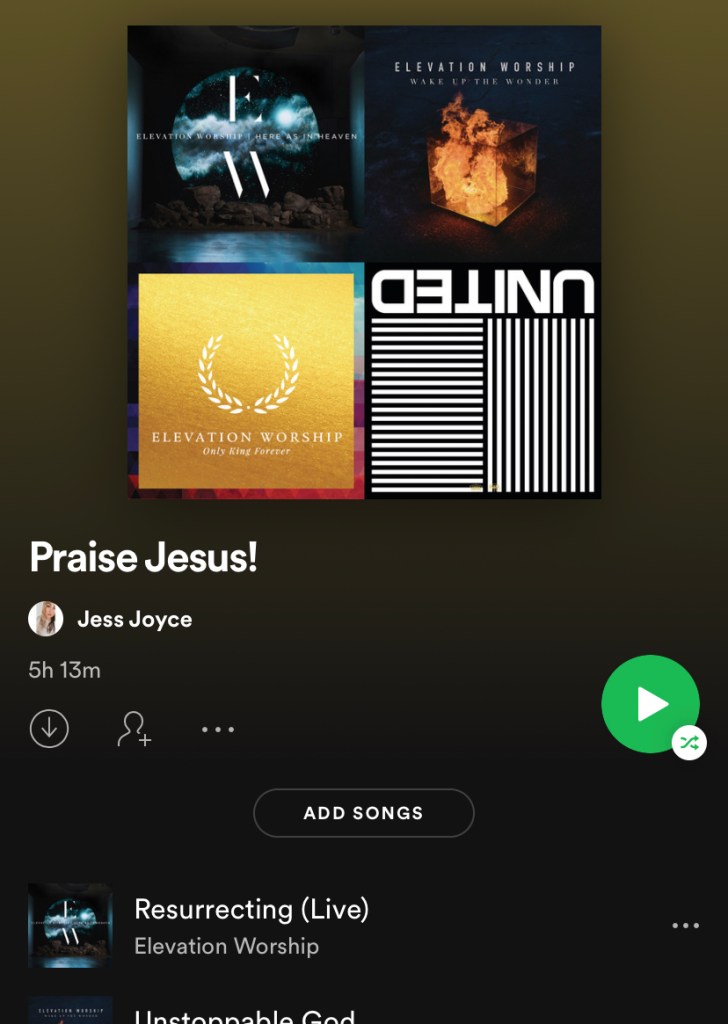
So today at work, I was scrolling through my playlists when I found THAT playlist. The one I haven’t dusted off in ages, the one I used to consult regularly in preparation for the event of the week — Sunday morning church. 

And if Elevation’s “Resurrecting” WASN’T in that playlist, were you really a worship guitarist?

I was a fixture on the main stage of the megachurch I attended at the time. I’d drag my gear to the backstage area, banter with the production guys, and once the lights in the auditorium went down and the spotlights flashed on, I’d throw myself into the music, into worship. The music itself was never especially complex — same few chord progressions, same delay-infused chimey licks that wouldn’t sound out of place in a U2 song. In fact, if you’ve been to a modern church within the last 20 years, you know exactly what I’m talking about. But the emotion, that feeling of being part of something bigger than yourself for just a moment. Like a drug, you spend the rest of your life chasing that high.

Sometimes I wonder why I left it all behind.

Oh right, that’s why.

I felt like a rock star at my old church, but I knew it would come crashing down. I was bisexual, and I was slowly realizing the person I truly wanted to spend my life with was my best friend, another woman. There was no way I could have both. Leaving the evangelical church allowed me to finally live authentically, but at what cost? Chances are, I’ll never set foot on a stage of that size again. I’ll never hear the ring of my guitar through a room that could easily fit three houses inside. I’ll never have people tell me how much of an inspiration I am to their kid. I’ll never have that euphoria that only comes with leading worship at such a massive level.

It’s easy to get nostalgic for things that are toxic. You look back at a past friendship or relationship with these rose-tinted glasses that erase all of the pain it caused you. Hindsight may be 20/20, but it’s also biased as heck. You don’t want to remember the shitty parts, just the parts that made you happy. And you forget that in order to grow into who you are now, you needed to shed that old shell.

I don’t mean to throw any shade at my old church (which will remain unnamed), as they’ve helped me in times of need, and to be honest, I met a lot of very rad people because of my involvement there, many of whom I still speak to today. But I couldn’t live with the cognitive dissonance any longer. In order to grow as a person in Christ, I needed to not only leave the church, but leave behind the harmful lie that God will send me to Hell for the crime of loving another human who sits down to pee. But leaving the church also meant leaving behind the life I’d grown accustomed to, standing in the spotlight before crammed auditoriums week after week. 1 Corinthians 13:11 talks of putting away childish things. Maybe my need to be admired — my need to leave church guitar case in hand every Sunday feeling like a rock star — was the childish thing I needed to put on the shelf.

I won’t deny myself the chance to mourn the loss of my previous church community. I do miss my time there every now and then, but it was important to leave that season behind in order to grow in my faith journey. In order for a plant to flourish, one must cut off the parts that are diseased or damaged, even if the process hurts. Never make the mistake of romanticizing that which was harming you.

There was a time a few short years ago where I couldn’t imagine worship without the lights and fog machines and crowds with raised arms. Worship looks a lot different to me now. Whether it’s meditating on the living room floor, gazing in wonder at the blessings around me, listening to a dusty old playlist at work, or even just sitting in a quiet dark corner of my apartment with the same Sunday morning songs my hands have, for better or worse, committed to memory. To God — not me — be the glory.

Amen, I think.