My Life as a “Should’ve Been”

Everyone’s familiar with the term “has-been.” It’s a label we give one-hit wonders and washed-up celebs. But the thing about has-beens is that they have at least, well, been. There are so many more people out there who never will reach those heights at all, who had potential and squandered it somehow. I think those are the cases that fascinate me even more. Maybe that’s because I relate.

Are you holding a grudge? About?

I think my biggest grudge is against myself for not going all-in as a musician when I was younger. I feel like I could have actually taken my music somewhere had I started sooner, had I thrown my entire existence into it. It’s hard to accept that it may be too late. There are artists half my age who are making it in the business now. Thirty is grandma-age by industry standards.

It’s not entirely my fault that I didn’t devote myself fully to the dream. I think back to my struggles with mental health, which were debilitatingly severe in my teens and twenties, to the point where I could barely keep up in school and work. Much of the music industry, now and back then, happened on the internet, which I was scared of using for many years. And who could blame me? There are a lot of things to be afraid of on the world wide web.

I had a presence on YouTube, but I remember being nearly paralyzed every time I went to post a new song. I couldn’t help but fear what kind of reactions I would get. I remember some of the mean comments I’d receive about my appearance and worse, my musical abilities. Even in a sea of positive comments, it was the negative ones that haunted me and made me not want to share my music anymore. I had a lot of anxiety about putting myself out there, and I’m beating myself up for it to this day.

I feel like I could have been something greater. I could have been the next Taylor Swift, or even Christina Grimmie (RIP), had I actually kept an online presence back then. Now I feel it’s too late. In a post-TikTok world, I don’t even know where to begin when it comes to sharing my music. I feel like everything I do will be hilariously irrelevant now that I’m past the peak age for “making it.”

I wish I could go back and tell younger me not to be scared of internet assholes. People are gonna suck, and there’s nothing you can do about that except shine in spite of everything. I wish I hadn’t hidden myself away in the darkest corners because of my anxiety. I feel like a massive “should’ve been,” and it sucks to think about. Maybe it just wasn’t meant to be, and I need to accept that. But a tiny part of me still wonders what could have been had I just put myself out there more.

I guess I’ll never know.

Dear Cadence, Part Thirteen: Stand Up For What You Believe In

This is the latest installment in my memoir project, written as a series of letters to my future daughter. Here are the previous entries: Part One, Part Two, Part Three, Part Four, Part Five, Part Six, Part Seven, Part Eight, Part Nine, Part Ten, Part Eleven, and Part Twelve

While I was still married to Josh, the church we attended was a huge part of our daily lives. We were so immersed in the life of that church, we didn’t do much outside of it. I cut out most of my friends who didn’t attend, not intentionally for what it’s worth, but I felt I didn’t relate to those friends anymore. I even stopped talking to your mom as much, despite her being my best friend. She never as much as saw the inside of our condo.

But the church wasn’t perfect. I knew about its political leanings before I jumped back in, having been Facebook friends with many of its attendees. Many were diehard conservatives who’d eventually drink the Trump Kool-aid, some even progressing to QAnon conspiracies and the like. And most mourned the day gay marriage was legalized, which rubbed me the wrong way. But Jesus was bigger than petty politics, right? He didn’t care if I voted for Bernie Sanders, even if the pastor’s kid gave me the side-eye for it. This church was where I felt the most connected to Him, and that was what mattered most, I thought.

There was a small collective of progressive folks, mostly other musicians in the worship team. After playing, we’d sit in the break room and eat our breakfast, discussing whatever off-color joke about “those libruls” was said during service that morning. We were renegades in the sense that we didn’t adhere to absolutely everything the pastor taught, which was scandalous for a church that emphasized that their way was the “right” way and no other path was valid. We did wild things like have gay friends and believe in universal healthcare. Josh was a fringe part of this group — I think he had trouble letting go of the teachings of his family, which were even more reactionary than that of the church, if that can be believed. At least the church played rock music.

But for the most part, there wasn’t any tension between us and the rest of the church. We were able to coexist peacefully. In fact, politics and social issues were seldom brought up. There’s an insidious kind of evangelical church that preaches acceptance for all, that puts on a pair of hipster skinny jeans and plays guitar and pretends to be young and relevant, but as soon as you’re comfortable within the culture of the congregation, smacks you over the head with the classic line —“love the sinner, hate the sin.” Which is almost always directed at queer folks, mind you. But as long as no one brought up gay and trans rights, it was never addressed.

Until one Saturday evening service, that is.

I still remember the burn of the stage lights beating down on my face, the way my guitar felt in my hands, and the sound of the pastor’s voice as he announced it. 

A conversion therapy class for teenage girls.

I thought I was going to be sick. I should have stormed off the stage. I should have made a scene. I should have stood up and told him, in front of the entire congregation, that what he was doing was fucked up. But I didn’t. I stood there like a good little sheep and did jack shit about it. But I knew the storm was coming. 

And as expected, word got out that my church was hosting such a class. And people were rightfully furious. Like, “protesting in front of the church” furious. Here I was caught between these two worlds, the church I’d dedicated my life to serving and what I knew in my heart was right. I didn’t know what to do. I didn’t think these people I was serving alongside were evil, but they were doing something that was unequivocally evil. Love the sinner, hate the sin, as they always said, right? But I wanted to make a stand somehow. I had to show these girls I was on their side. That I was one of them.

So I came out. Publicly. For the first time ever.

Reactions were mixed. Most people weren’t surprised to hear I was pansexual — I’d already had a pretty homoerotic relationship with your mom. There was some pushback from the church elders, and the pastor cornered me to tell me how I was so wrong. I didn’t care. The blatant homophobia of the church should have pushed me further into the closet, but instead, it emboldened me to live more authentically.

I stayed at that church for a few more weeks, praying I could change it from the inside, but you gotta know when you’re fighting a losing battle. These people were stuck in their ways. As much as I hated to admit it, as much as I hoped their so-called love of Christ would soften their hearts, there was no saving them. So I left. I found a church out where I worked that accepted me — all of me. Most of the other secret progressives trickled out as well, finding affirming churches or abandoning religion altogether. I couldn’t blame them, for if my faith was any weaker than it was, I probably would have done the same. But I stayed strong in my belief that there is a God, and that He loves wildly, without conditions, and without prejudice.

In a weird way, I’m glad my old church showed its true colors the way it did, because it gave me the push I needed to stop lying to myself and everyone else about my sexuality. Had things continued the way they were, I would have never left, and I would have never come out, and I would have never married your mom or fallen in love with Olivia (I’m not sure what parental title she has yet, but she likely helped me create you, which is really cool!). I am where I am now because I took a stand. My only regret is not walking off that damn stage when I had a chance. I hope when you’re faced with prejudice, you’ll be even stronger than I was. Walk off the stage. Throw a fit. Make a scene. Let the world know that shit doesn’t fly. I pray you have courage where I didn’t.

Dear Cadence, Part Twelve: Don’t Rush Growing Up

This is the latest installment in my memoir project, written as a series of letters to my future daughter. Here are the previous entries: Part One, Part Two, Part Three, Part Four, Part Five, Part Six, Part Seven, Part Eight, Part Nine, Part Ten, and Part Eleven

By 2016 I was still reeling from the band breakup, Jacob Liepshutz breaking my heart again, and the crushing weight of not immediately becoming a roaring success of a writer after graduation, as I had planned, among a multitude of other things that were heavy on my mind. I fled to Florida for a few months, then reconvened back in Michigan, where I decided I needed something different.

I needed Jesus. 

I figured where better to find Him than at the church of my youth? So I went back to the church I’d attended as a teenager and weaseled my way into the young adult group. And that’s where I met Josh.

Josh was a scrawny kid no taller than me, with large brown eyes and a big nose that suited his face surprisingly well. He had longish hair that brushed his shoulders and dressed in skinny jeans and band tees like I liked on a man at the time. We’d known each other in high school, but we became close friends after I joined the worship team, where he played bass. We gravitate toward each other because we were the odd ones out — everyone on the team was stereotypically attractive and “cool,” and we were kind of the dweebs of the group.

I quickly learned that Josh had never had a girlfriend before, and something about that was oddly refreshing to me. A man with no baggage. No expectations. I was growing disillusioned with the dating scene, and Josh was a breath of fresh air. So when he meekly asked me to be his girlfriend, I had to accept.

Dating Josh was a whole different world. You see, his family was very strict and conservative, something I was not used to. They prayed before meals and didn’t listen to rock music and voted Republican because they were against abortion. Josh was a little less uppity, but he was a virgin and was waiting until marriage. I couldn’t live with him or even sleep in the same bed until we were married. It was charming at first, but it got grating quickly. I really did like Josh, a lot, but I wanted an adult relationship with him. I was sick of dating like a teenager while I was well into my 20s. So when he asked me to marry him a mere six months into our relationship, I said yes.

The wedding itself was far from my dream wedding. It was rushed, just like everything else in the relationship. I hastily chose decor and cakes and all that, and my dress was a pastry-shaped hand-me-down from Josh’s sister, who was way too skinny for it to fit her well. The reception was less than ideal — I couldn’t even dance at my own party because we held it at Josh’s family’s church, and they were the villains from Footloose and prohibited such sinful acts. So I bawled my eyes out and definitely came off as a bridezilla. 

(I think I was justified.)

We bought a little condo in my hometown, a relatively nice two-story home with wood paneling like I liked, and plenty of storage space. That’s when I fell into a nice little routine. Go to work at the pharmacy I’d found a job at, maybe attend a church event, come home and clean (usually while sneaking a bottle of wine that Josh didn’t approve of), and go to bed, only to do it all again the next day. 

I put on my shiniest, happiest face, like I was actually enjoying the life I’d made for myself, but I wasn’t actually happy. Even the kitten Josh bought me didn’t bring me enough joy to justify my sad existence. Every day I’d go to work and drive across the Detroit River, and every day I’d be half-tempted to drive my car off the damn bridge. It wasn’t anything Josh was doing wrong, to be fair. It was me. The problem was always me. I was making myself miserable by forcing myself into a box I didn’t feel comfortable in. I wasn’t a good little church wife, and I knew it.

I felt like I was stagnating, so I fought my depression the only way I knew how — by throwing myself into academics. I signed up for music therapy classes for the second time. What was the other option, have a baby? All my friends were getting married and making babies, but I couldn’t see myself having a family with Josh. As much as I loved him, I didn’t like him like that. And I finally admitted that to myself one day while I was walking across campus. I called my mom, who encouraged me to call my brother, who immediately swept me up and took me for a ride, just to talk.

Your Uncle Jason is not a saint. We don’t even talk any more. But I have to credit him for saving my life that day, because he’s the one who talked me down from throwing myself into that river.

I didn’t have a plan. I wasn’t even sure how people get divorced. But I wrote a letter to Josh, a painful one that hurt me to write. I knew I’d made a mistake in rushing into marriage with him, though. I left it for him, and went to stay with my parents for the night.

The divorce process was somber, as expected, and way more drawn out than it should have been. He chased me down and tried his hardest to win me back, which only made things hurt more in the long run, both for him and for me. He even recorded a CD full of him playing songs for me, a desperate serenade in hopes I’d stop the process and come back to him. But my heart was never in the marriage in the first place. I was in a hurry to grow up and have that adult relationship I wanted, and he happened to be in the crosshairs of my own recklessness.

Finally, the dust settled and I moved out to Ypsilanti to be closer to my school and job. I’d thankfully started working in Ann Arbor a little bit before everything went down. I think I started planning my escape long before I consciously decided to divorce Josh. My heart wasn’t with Josh, or in that church, or in my hometown. I left my heart behind in the music therapy program at Eastern, and that’s where I needed to be.

I guess the moral of this story is to not be in such a hurry to grow up. When you try to rush things, you hurt people and lose sight of what you really want out of life. I regret marrying Josh, not because I never loved him, but because I did love him, and I hated having to hurt him the way I did. I’m big enough to admit I was the bad guy, and he didn’t deserve what I did to him. But I had to do what was right for me. You only live one time, and life’s too short to be stuck somewhere you don’t truly want to be.

As of writing, I never did get that dream wedding to someone I actually want to be with forever, but I’m praying that changes. And if that time ever comes, I’m going to dance my damn heart out.

Whoever “She” Is, You Don’t Have to Worry

I write this from the absolute depths. Like, the only way things could get worse is if a meteor struck my apartment or something. I got passed over for the internship of my dreams, which was enough of a blow. Then, my tire goes flat. Oh wait, all my tires are bad. There goes $800. And my boss seems to think everything I touch turns to suck, so work hasn’t exactly been a bed of roses, or even cheap carnations.

All this to say I’m not exactly having a great time.

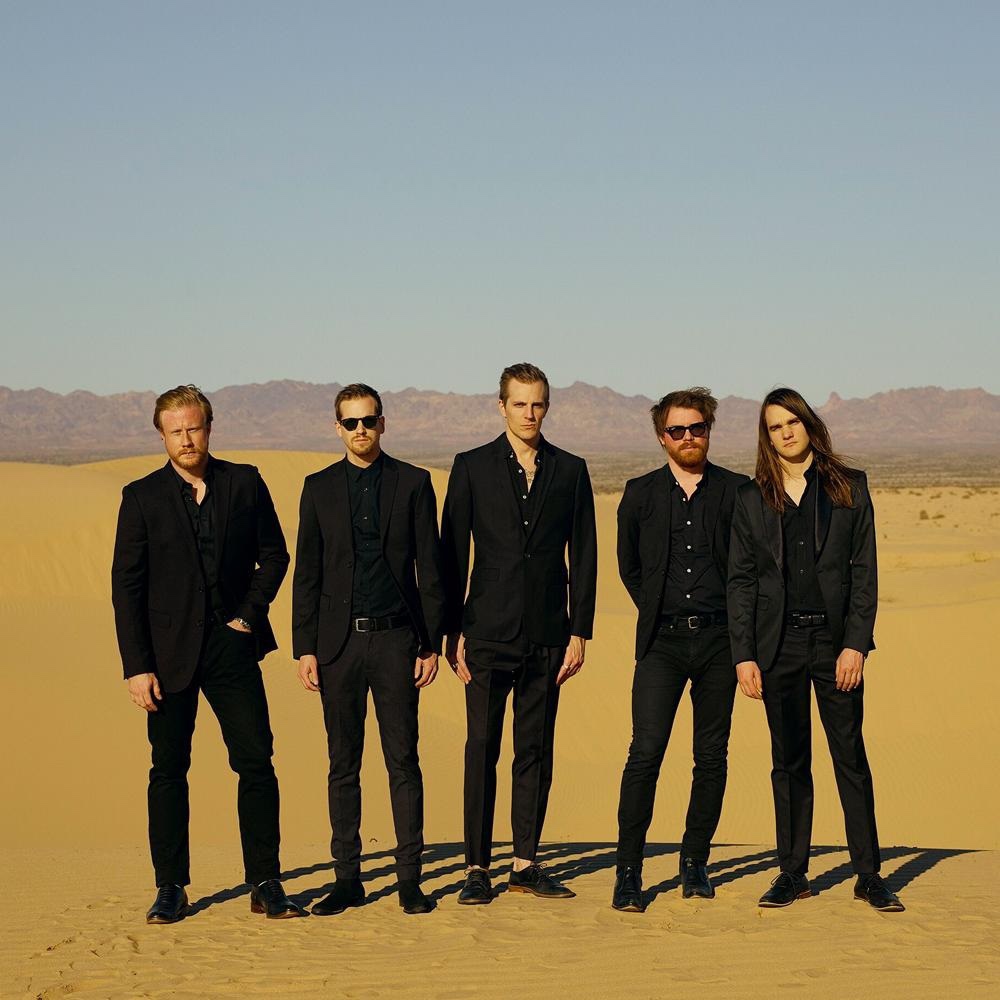
In my times of trouble, I tend to turn to music to comfort me. I’ll never know why it’s so reassuring to know that at one point in time, some dude with a guitar felt exactly the way you feel. But then, The Maine’s “Whoever She Is” came on.

And I cried. Like a freakin’ baby.

It’s not a sad song, nor is it a love song, as one might be led to believe by the title and the soft acoustic arrangement. Rather, it’s a song about standing strong in the face of adversity. “She” isn’t a woman but a personification of whatever is troubling you. And it’s oddly relatable. She could be “rainy days, minimum wage, a book that ends with no last page” or a whole slew of mundane issues. But the chorus ends with “whoever she is, you don’t have to worry.”

Things will be okay.

I imagine John O’Callaghan writing this song from his own personal hell. I imagine he went through shit like I’m going through now. Everyone does. That’s the beauty of music. It reminds us that we’re not alone in this struggle called life. No one’s above it all, and even the rock stars and pop princesses and that cool singer-songwriter who busks on the streets have their own problems. We live in a broken world, and we’re never going to be completely free of heartbreak and disappointment this side of heaven.

That’s why we have music to comfort us. And as I bawled my eyes out, I realized this is exactly why I do music in the first place. And I’m not going to let a few setbacks keep me from doing what I was made to do.

And neither should you. If you’re reading this and you know how I feel, put on your favorite song, have a good cry, and get back on your feet, because things can and will get better. The world will still turn, and so will the tides of fortune. Bad things happen, but so do good things. And I still believe the good in this world outweighs the bad.

Just remember, whoever “she” is, you don’t have to worry.

Giving Yourself Space to Grieve

I wish I had good news to report.

The internship didn’t work out. I’d be lying if I said I’m okay. A lot was riding on me getting that internship. If everything had gone according to plan, I would have finished that internship by the end of next year, moved to Kalamazoo to start my career and family, and everything would be peachy.

But life has its way of throwing wrenches into the best-woven plans.

It was a technicality that I even got passed over for the internship — the supervisor said she just picked the first person who applied. I would have almost rather she just told me I sucked. And because of that little technicality, I’m either going to have to leave the state (along with my wife, who will have to leave her sick mother behind), or get a local internship in hospice, which I really, really, really did not want to do. You know, with that whole “unshakeable fear of death” thing I have going on.

I know things are going to turn out for the best, that God works everything together for the good of those who love Him and all that, but right now, I just need to grieve. I need space to have emotions about all of this. I need to scream and throw things and write whiny blog posts and eat chocolate tarts about it. There’s no fault in that, right?

When I first went up to the university to sign up for my classes, I originally signed up for premed, with every intention of going to med school and becoming a doctor. It was my parents who convinced me to go to school for music therapy instead. I want to make them proud. I need to finish this degree even if it damn well kills me, and it honestly might at this point.

Maybe I should have been a cardiologist, I don’t know. All I know is that music therapy has been chasing me down my entire adult life and even if I don’t get the internship of my dreams, something else will come along. It has to. In the words of Eminem, success is my only motherfuckin’ option, failure’s not. I know I was put on this planet to heal people with my music, and I’m going to do it, one way or another. I don’t care what I have to do. I’ll fight until I physically can’t anymore.

But for now, I’m going to allow myself to be upset.

The Downfall of Dreaming

I love, love, love making vision boards. Probably too much. I wasn’t allowed to tear up my mom’s magazines, and I didn’t want to ruin mine, so I never made collages as a kid. Now that I have a digital journal and all of the internet for inspiration, with a simple copy and paste, I can make all the collages I want out of anything I want. If I can dream it, I can slap it on my vision board. I’ve even talked about the merits of making a vision board in a past post.

My 2023 vision board, for example.

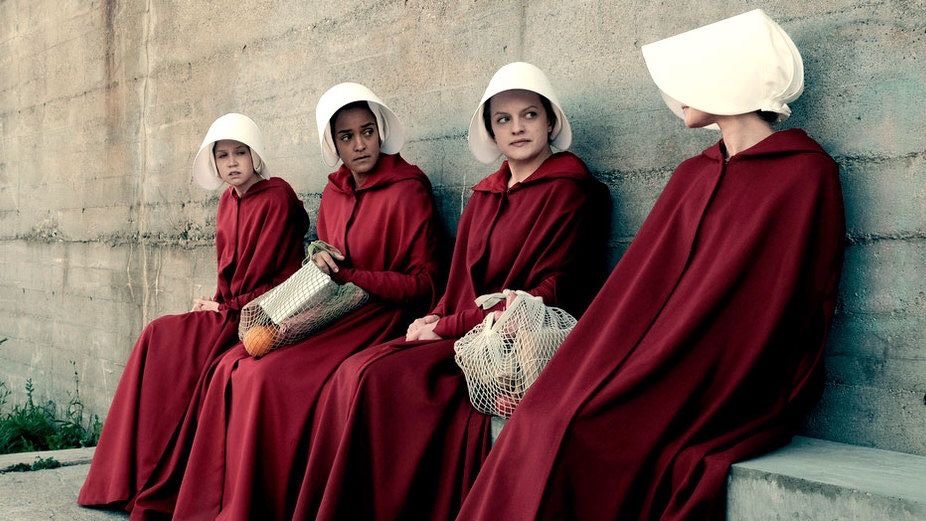
I think my love for vision boards stems from my love of dreaming. As an ADHD-haver, daydreaming about the future comes naturally to me. But lately, my daydreams have become day-nightmares. All I can think about is how things are probably going to go wrong eventually, no matter how hard I try to avert disaster. These anxieties range from small in the grand scheme of things (like me not getting my internship) to really fucking enormous (like “The Handmaid’s Tale” coming true and me and all my queer friends get lynched).

And I’d look funny in a bonnet.

It’s hard for me to see a light at the end of the tunnel that isn’t a racing freight train. I want so badly to control the future, but I know it’s simply not possible. I just wish I could fast-forward and know that everything turns out the way I want it to. That I will have my successful music therapy career and happy life with my two soulmates and our child, and we will be safe from all the evils of the world.

Maybe the trick isn’t to stop dreaming altogether, but to dream a little more loosely. Instead of planning everything out meticulously, as I tend to do, maybe leave a little wiggle room for when things don’t go my way. I might not get the internship I want, but I can always apply for different ones. Perhaps I’ll have to move out of state temporarily, but I’m blessed with a wife who’s willing to travel with me and the means to do so. And even if the very worst does happen—

—well, I haven’t thought that far ahead. I guess I have to come to terms with the fact that when it’s my time to go, it’s my time to go. It’s a reality everyone has to face at some point. I don’t want to live all my life afraid what comes next, but I don’t think I’ll ever be free of the nagging fear of death until it finally comes to take me.

But as much as I want to quit ruminating on the future, I don’t ever want to quit dreaming. Because when you quit dreaming, that’s when you really start dying. I always want to strive for something more, even when I’m at a place of contentment. I never want to settle. There’s always a new mountain to climb or a new sea to sail, and I think that’s what makes the future exciting.

Dear Cadence, Part Eleven: You Will Get Hurt, and You Will Hurt Others

This is the latest installment in my memoir project, written as a series of letters to my future daughter. Here are the previous entries: Part One, Part Two, Part Three, Part Four, Part Five, Part Six, Part Seven, Part Eight, Part Nine, and Part Ten

Ever since I was little, I wanted to be in a band.

It wasn’t enough to play music. I wanted a band.

I wanted the family, the ups and downs, the VH1 Behind the Music where we all talk about how much we love each other even after struggling through five overdoses and the guitarist cheating on his wife with the drummer’s wife. I wanted the full experience.

And what I got was Dethklok.

Dethklok was not the real name of this band, but to protect the identities of the innocent (and the guilty), I’ve changed all the names to the members of the protagonists of the show Metalocalypse. In fact, for this chapter and this chapter only, I am Toki Wartooth. You can imagine me with a mustache if it helps.

I met the band when I opened for them at their album release party. It was the biggest show I’d played to date, and even with just me and my acoustic guitar. I got the crowd going, rather impressing the Dethklok guys (I say guys, but there were female members. But for the sake of consistency, we were all guys.)

I played for them a second time at another venue, this one with a private green room. After my performance, they cornered me in the green room bathroom.

“We want you to join Dethklok as our second guitarist and go on tour with us,” they said — no, demanded. And who was I to refuse such an offer!

It was all rainbows and roses at the start. I befriended the other members of the band pretty quickly. There was Nathan Explosion and Skisgaar Skwigelf, the lead vocalist and guitarist, respectively, who were dating. William Murderface was the bassist, a certifiable weirdo, but a charming one. And Pickles the Drummer was just kind of…there. He had red hair.

Learning the songs was easy for me, so much so that the rest of the band was beyond impressed. To be fair, they were basic four chord pop-punk songs for the most part, save for one relatively heavy post-hardcore number where Nathan Explosion would scream and Skwisgaar and I would “chug chugga chug” on the guitar. One of these days I’ll show you one of our old songs. They were definitely songs.

The band was becoming something of a family to me. We’d eat together, play games together, and just generally do life together. And what’s more, people liked us! We had a ton of fans, something I wasn’t used to. There were fanfictions written about us, even. It was surreal.

The fall tour would be the true test of our bonds, though. And as we got ready for the first of our two regional tours, I found myself daydreaming about Murderface more and more. We were the two carnivores of the group — the rest of the band was vegan — and we both dealt with a lot of mental health issues (that we actually acknowledged, since the entire band was incredibly mentally ill and incredibly unmedicated). Was I falling for him? Fans were already shipping Toki and Murderface. Were we a match made in pop-punk heaven? We spent several nights together just hanging out and listening to John Frusciante’s solo material, and after some time, he gave me his grandmother’s ruby ring and asked if someday, I’d marry him. Lost in the fantasy, the rock and roll fairytale I was living in, I accepted.

But that first tour was an absolute whirlwind. We traveled much of the East Coast and Midwest playing tiny clubs and bars. Most of the shows weren’t that big — just a couple of local bands and us — but it was exhilarating to be able to play to new faces every night. I felt like a true rock star, even if we were sleeping in our drummer’s mom van and random people’s houses and not a luxurious tour bus. Even if we all smelled horrible by the end of the tour and we had to mask our natural musks with copious amounts of perfume and cologne. It was an adventure unlike anything I’d ever experienced.

There were arguments now and then, mostly between Nathan Explosion and Skwisgaar. A few times, I was dragged into a conflict, such as the time Skwisgaar and Pickles made me and Murderface cry for not being vegans. (They were all like “What if someone ate your dog?” And I cried, being the damn Pisces I am.) We were a tight knit group, but the threads began to unravel as the fights became more and more frequent. Suddenly, I was seeing how mentally unstable we all were, myself included. Still, these people were becoming my best friends, even more so than your mom and Aunt Mel. I trusted them with my life. It was a toxic, codependent five-way relationship.

By the time our winter tour rolled around, things came to a head. The arguments were so frequent, we were bickering more than we were talking music, or anything else for that matter. Nathan Explosion and Skwisgaar broke up, and Murderface and I were on the rocks too, as I’d recently reconnected with Jacob from earlier and I wanted things to finally go somewhere with him (spoiler alert: it went nowhere). So I was far away from home surrounded by people who all hated each other, and at our homecoming show, Skwisgaar slammed his guitar on the ground in a fit of rage. The next day, we unanimously decided to split up. It was an ugly breakup, uglier than all of my romantic breakups combined. Harsh words were spoken. Threats were made. I finally made the decision to cut them all out of my life, once and for all. And I’m so glad I did.

Healing was rough, but I managed. Your mom and Aunt Mel were the rocks I needed to lean on, and they gave me all the support I needed as I found my way again. I learned my lesson not to trust just anyone, and not to get swept off my feet by whatever shiny opportunity presents itself, because the truth is, it’s not all it’s cracked up to be. People will hurt you, but the right people will own up to it. And you will hurt people too, and it’s your responsibility to own up to it as well. I got stabbed in the back by folks I considered friends, but I wasn’t innocent either. In the end, we were all very mentally ill and very unmedicated.

I’m sure you’re wondering whatever happened to Dethklok. I wondered myself, after several years had passed. So I reached out to my old bandmates to apologize for how things ended and make peace with the pas. Murderface and I became friends again through the local art scene, and Pickles went off on his own and never really spoke to me again. Nathan Explosion didn’t want anything to do with me, and in fact blocked me on all social media. I guess I don’t blame him. The funniest thing happened when I cold-messaged Skwisgaar, though.

“I wanted to apologize if I ever did anything to hurt you,” I wrote. “You were like a big brother to me.”

“You mean sister — I’m trans. And there’s no hard feelings. I know I was an ass too.”

And that, my child, is how I became friends with your Aunt Tegan. Funny how life works itself out.

Sunday Morning Coffee: Love and Fear

It’s been three days since my last argument with a Facebook asshole about LGBTQ stuff, and I’m still simmering from it. I think I let things like that affect me way more than I should. Maybe I really am a bleeding heart hippie.

Can’t we all just sing “Kum-Ba-Yah” together?

It’s not easy for me to sit back and just take it when randos are slinging homophobic/transphobic slurs, suicide jokes, and even pedophilia accusations against you and your favorite people. Why are some folks so eager to say disgusting, slanderous things about entire groups of people they don’t even know? It literally baffles me — I can’t wrap my mind around it. I wouldn’t say things remotely as heinous against strangers I simply don’t agree with. My momma raised me better than that.

I’m tempted to call these people evil, but I won’t. I will call it as I see it — their actions are evil —-but to borrow a phrase so often weaponized against the queer community, “love the sinner, hate the sin.” You see, the opposite of love isn’t hate. It’s fear. And these people are lashing out like scared dogs at things they don’t understand.

The Bible itself says “There is no fear in love, but perfect love casts out fear” (1 John 4:18). When you don’t understand something, the human tendency is to fear it. And often, that fear becomes hate. When I was a kid, I was afraid of the dark because I didn’t know what was hiding in it. I hated being in the dark for that reason. But the dark was never bad — I just didn’t understand it.

I think these people who blindly hate those who are unlike them simply don’t know love. I understand that many people didn’t have a lot of love growing up — maybe their families were abusive, or perhaps they were bullied. That will lead to a life of fear, and a life of fear is a life of hate. The antidote is love.

Whenever I see transphobic memes online, I think of my girlfriend Olivia. I can’t wrap my mind around how anyone could possibly hate her. But they don’t know her like I know her, because to know her is to love her. I wish everyone had an Olivia to show them what love means.

So instead of letting fear win, let love in. Show love wildly, recklessly, with no remorse. Love your enemies. Love the people who persecute you. Love the people who call you names or make nasty accusations or tell you to kill yourself.

Love like Jesus did.

Dear Cadence, Part Ten: There’s No Shame in Trying

This is the latest installment in my memoir project, written as a series of letters to my future daughter. Here are the previous entries: Part One, Part Two, Part Three, Part Four, Part Five, Part Six, Part Seven, Part Eight, and Part Nine

So I glossed over one pretty important facet of my college experience — the newspaper.

By the time you read this, “newspaper” will be an obsolete term and the news as you know it will be a bunch of angry guys writing think pieces about whatever their party is upset about at the moment. That is, if the art of news writing hasn’t entirely been overtaken by AI. But back when I was in the journalism world, objective journalism, real journalism, was still gasping for air on its deathbed.

Enter The Eastern Echo.

The Echo was the student-run paper at Eastern Michigan University, and it beckoned to me around the same time I was frustrated with music therapy. I wanted to find something — anything — I was actually good at, and writing was that thing. Even my boss, the assholiest of assholes, couldn’t deny my talent at it. And what a life I’d have as a journalist! Perhaps I’d be the intrepid reporter you see in movies, or a glamorous blogger living in a high-rise apartment in NYC. I allowed myself to dream as I grew to be the best writer on the team, and in less than a year, I was bumped up to arts and entertainment editor.

Life was good as an editor. I had my own office in a creepy, half-abandoned building we shared with the student radio station, and the authorities made the mistake of giving me an access key I could use at any given time. Your mothers and Aunt Mel used to smoke a certain herb in that office at odd hours of the night (back when it was still illegal, mind you). We’d put on some random crap Aunt Mel was into at the time, or The Room, a truly terrible film by a guy named Tommy Wiseau who we currently have as a cardboard cutout (which hopefully will be passed along to you as a family heirloom). It was a halcyon time of reckless youthfulness.

But we still had work to do.

I won the position of editor-in-chief over a much older woman. The heads of the student media board wanted a fresh perspective from a younger person, and I, who was not even old enough to drink at the time, was the perfect candidate. I moved myself into the big office and got to work revamping the paper for a new generation of students. It wouldn’t be easy — we were used to our paper being used as kitty litter for the university students’ cats. It was going to take something wild to get people to actually pay attention to what we were putting out there.

And so, I wrote the poop article.

It’s still one of my proudest moments, this little article I penned about the best places on campus to poop. It went a little viral. Other college papers followed our lead and wrote their own. I was a minor celebrity! Everyone loved my poop article, and the campus was abuzz for days over it.

Yet, there were less savory aspects of the job I would’ve rather done without. The long hours in the office for little pay, having to make a staff of mostly older students listen to me, staying up late to edit every single article that came my way. And I was starting to see the cracks form in my journalistic dream. I was getting so stressed, I was sleeping most of the work day away, letting the assistant editors carry the brunt of the work. I recognize a lot of my problems as then-undiagnosed ADHD and anxiety issues now, but even if I had been mentally well, there were parts of the journalism life I really did not like. At all.

I remember the first time I had to cover a murder. It was difficult for me to talk to the parents of the slain student. I didn’t know what to even say in that situation. It wasn’t like music therapy, where I could sit in somber silence with them and support them in whichever way they needed. Instead, I had to pry for quotes. It felt so dirty, and I hated every second of it. Another time, a stray bullet injured another student. I found myself asking “How did it feel when you were shot?” And that was the moment I realized I couldn’t do this. I finished up my journalism degree and never, ever pursued anything related to journalism ever again.

As much as being editor-in-chief wore me down and left a bad taste in my mouth, I’m glad I had the opportunity to do it, since I learned a lot about myself from it. Sometimes you have to try something once to be able to admit it’s not for you. There’s no shame in that. And hey, I met your mom at that paper!

(Okay, I didn’t meet her there, per se, but it’s where I made her not hate me. Yeah, she hated me at first. Can you believe that?! That’s for another chapter, though. Hold on, we still got a couple more to go!)

Dear Cadence, Part Nine: The Path to Your Dreams is Not Always Linear

This is the latest installment in my memoir project, written as a series of letters to my future daughter. Here are the previous entries: Part One, Part Two, Part Three, Part Four, Part Five, Part Six, Part Seven, and Part Eight

I found out what music therapy was from one of my grandma’s nurses when she was dying. She found out I played music and encouraged me to bring in my guitar to play for my grandma and the other old folks at the nursing home. She told me there were people who get paid to do this kind of thing, and that they actually go to school to study the ways music can be used to help people.

I wasn’t sold entirely. My long term plan was to attend Eastern as a pre-med student and eventually go to the more prestigious (and expensive) University of Michigan for medical school. I’d minor in music, but it wouldn’t be my main thing. I wanted to be a cardiologist or a pediatrician or even a neurosurgeon, something that could legitimately help people, instead of wasting my time selfishly playing music for my own ego (this was before the “Jacob”’arc).

I’d already signed up for all of my freshman year bio classes when my parents overheard me singing and playing in my room.

“Remember what that nurse said about music therapy?” they said, implying that they wanted to become the first parents in human history to encourage their child to go to music school instead of becoming a doctor.

So I went back up to the university right away and auditioned for the music therapy program. I already knew my way around a guitar and I could sing circles around most of the other freshmen trying out, so I was a shoo-in.

Despite being less than a half hour from my hometown, life at the university seemed a world away from life in high school. Not only was I living in an artsy fartsy college town, it was also the point in time when the “quirky weird girl” trope was at its most popular. The days when no one wanted to associate with me seemed like another life. Everyone wanted a piece of the guitar-slingin’ manic pixie dream girl, and I was happy to oblige. I started playing house shows and cafe gigs, and I made a name for myself as the Taylor Swift of Ypsilanti, Michigan.

But the cracks began to show as I struggled to stay awake and focused during my classes, to the point where I’d gotten referred to the university counselors by my professors. To top it off, the anxieties that had plagued me my entire life were coming to a head, to a near debilitating degree, and I had no choice but to consult with a psychiatrist at a local clinic for young adults. It was there that I was prescribed Prozac, which I do credit with saving my life, but it wasn’t nearly enough to save my academic attempts. Music therapy school was brutal, and I found myself fighting hard just to stay on top of my coursework.

I’d signed up for the school newspaper on a whim, and that seemed to be working well for me, at least. I was a naturally skilled writer. I didn’t even have to try to crank out article after article for the paper — I would sit down at my laptop and the words would just flow through my fingertips. I even got awarded the title of editor for the arts and culture section of the paper less than a year into me working there (we’ll revisit that in the next chapter). I did some research on the journalism major and it seemed significantly easier than music therapy, which was becoming increasingly difficult to even find the motivation to study for. As my mental health declined, I wondered how I’d ever be a therapist when I couldn’t even help myself. At least newspaper editors didn’t have to help other people figure their shit out. I could just do my thing and pretend I was okay.

So I made the decision to switch my major to journalism and forego music therapy altogether.

Still, even after I graduated, it felt like something was missing from my life. I tried finding writing jobs but nothing ever stuck. This was around the time I was still reeling from the breakup of my first real band (which we’ll get to) and the crumbling of my first marriage (which we’ll also get to). Nothing was working out, and I needed to regroup and figure something else out. That’s when Coco happened.

Coco was a Disney movie about a little Mexican boy who plays guitar against his family’s wishes. I won’t spoil it, although I’m certain I’ve played it for you at some point in your childhood. (What kind of a mother would I be if I didn’t make you watch all my favorite Disney movies?) But the climax of the movie, where music helps the protagonist’s grandmother momentarily regain her precious memories, made me realize I’d made the wrong decision when I switched majors. I was meant to — destined to — use music to heal people. No, I wasn’t too messed up to be a music therapist. That was a damn lie I told myself and believed to the point it became the truth. I drove straight up to that university myself and told the professors I’d be joining them once again that fall.

And…I failed once more. This time, it wasn’t my choice. I had a strong start. That school year began with me trying my very best. I was doing everything in my power to succeed this time, taking notes and staying alert and keeping organized. Then, something happened at that year’s music therapy conference that derailed all my plans.

I was raped.

The assailant was a total stranger, and I should have known better than to trust him when I met him at the rooftop bar at my hotel. But I was lonely, and it was my first time traveling alone, no friends, no parents, no husband. And he was charming. He said he loved how I was using music to help people.

All before everything went dark, in the absolute worst way possible.

After the incident, my mental health took a nosedive. I couldn’t concentrate for shit. I started drinking myself sick every night. I was making rash decisions and doing everything I could to drown out the ever-present feeling of disgust. I eventually snapped and found myself crying in the office of one of my professors. I couldn’t do this anymore.

And so I dropped out of the music therapy program for a second time. 

This is a depressing chapter, right? I promise it has a happy ending.

Another few years passed and I found myself drifting aimlessly once again. I was in a slightly better place — I was married to someone I actually wanted to be married to, and my mental health was finally on the up-and-up. I even got a proper ADHD diagnosis, which explained some of the inattentiveness that made my previous attempts at the degree more difficult. But I didn’t have a job I actually liked. I knew I was meant for more than wiping people’s butts or slinging prescription pills. (Legally. As a pharmacy technician. Your mother was never a drug dealer.)

So, tail tucked between my legs, I whimpered pathetically at the professors one last time, begging for one last shot at that music therapy degree.

And this time, it worked! While finishing those last two years of schooling, I managed to earn a prestigious scholarship and even presented on autism for the university’s undergraduate research symposium. In 2023, I completed the coursework necessary to become a music therapist. As of writing, I’m waiting to hear back from my internship site. After completing the internship, I have to take a test, and then I’ll be certified. In other words, I still have a long road ahead of me, but the worst is over.

Sometimes I wonder where I’d be if I’d just stayed the course and finished my music therapy degree years ago. The truth is, I probably would have crashed and burned. I needed to learn to take care of myself first; otherwise, I probably wouldn’t have been focused and motivated enough to earn that scholarship or present in that symposium. I would have gotten meh grades and probably would have landed a meh job I would have given up on as soon as things got hard. But my place in music therapy is now fire-forged. I’ve been through the worst, and now I’m better equipped and prepared to face whatever comes next. The twelve years it took me to get this far weren’t a waste of time. Rather, it was time spent figuring out for sure that this is where I belong. I don’t think I would have made it this far had I not taken all the time I needed to reevaluate my core values and recover from, well, everything.

Often, the path to your dreams isn’t linear. It’s a road with many forks, pitfalls, and distractions. If you ever lose your way, though, just remember this chapter. When you discover what it is you’re meant to be in this world, it will chase you down, and no amount of obstacles will keep you from what it is you need to do. You are stronger than everything that will ever try to hold you back. You’re a force of nature unlike anything anyone’s ever seen, and I’m so excited to see where life takes you.