Autism and 8-Track Tapes: How I Made My Inner Child Happy

Here’s a fun fact about my childhood. When I was around 8 years old, I was obsessed with 8-track cassette tapes.
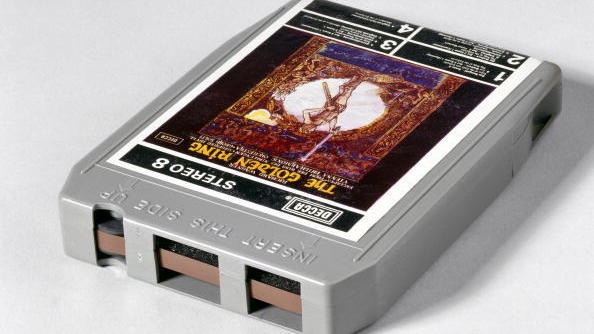
The bane of everyone’s existence in the 70s, apparently.

I distinctly remember how fascinated I was by them, ever since my mom gave me her old tapes as a kid. I recall riding around in my grandma’s old Oldsmobile listening to her Beach Boys album on 8-track. At one point, I went to the library asking for books on them, and the librarian on site was absolutely dumbfounded that this tiny girl was so preoccupied with these ugly bulky-ass tapes. I wanted to collect more and more, even though collecting vintage media wouldn’t be “cool” for another decade or so.

There’s the issue. None of this was cool, especially not to my peers. I’d already cycled through obsessions with Bon Jovi and parakeets. I didn’t need something else making me even weirder to my classmates. So I made the decision to hide my excitement about 8-track tapes and quietly let my obsession fade.

In other words, I masked.
“I may look normal, but I’m thinking about 8-track tapes.”

I’ve talked a little about masking in past blog posts, but it bears repeating. Many autistic folks feel the need to hide parts of themselves to fit in with the rest of society, and if I’m honest, it’s exhausting. It’s especially prevalent among autistic women, who often experience burnout from having to mask so much. For me, it was meticulously studying the way other people interacted with each other and mimicking that to the best of my ability.

So imagine how secretly tickled I was when, during my last audio engineering class, the entire lecture was about magnetic tape. In other words, the technology behind 8-track tapes! This was the exact information I was seeking when I went to the library all those years ago!
THE SECRET KNOWLEDGE IS MINE!

People ask me all the time, “Hey Jessa, how do you heal your inner child?” Okay, I lied, no one has ever asked me that. But if they did, I’d tell them to explore the interests they had as a kid. Remember your dinosaur phase? Get to the library and get a fuckin’ book on velociraptors! Did you want to be a mermaid? Study mermaid mythology and invest in some nautical decor! Were you a horse girl? It’s high time you get some ridin’ lessons! Throw yourself into the thing you loved most as a kid. That’s the purest joy you can achieve — making the part of you that never grew up happy.

I think there’s a reason why so many people my age collect Funko Pops and play video games or watch cartoons for fun. We’re constantly trying to make our inner child happy in some way or another. I’m learning how to care for mine the same way I would care for the child version of me if I met her. Little-Jessa had to hide her fascination with vintage audio equipment to be accepted, but Adult-Jessa is picking up where she left off. It feels like I’m coming home to a hobby I long left abandoned. It feels good, man.
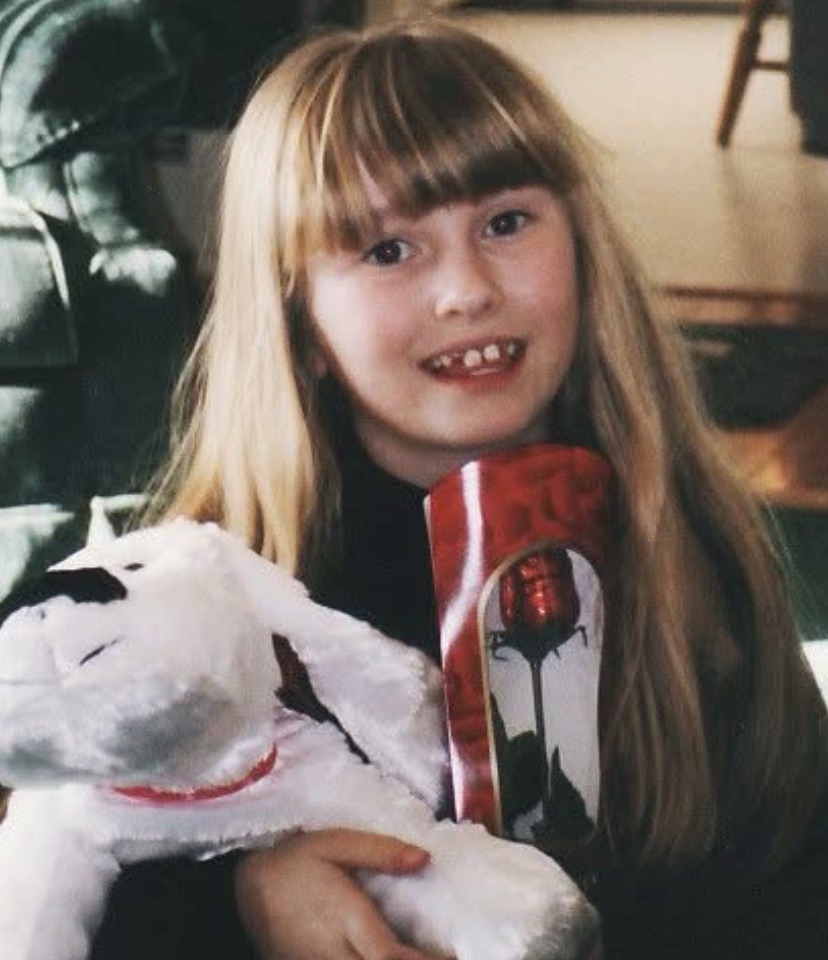
She’s happy, and that’s what matters.

The Autistic Bimbo: My Former Life as a Dumb Blonde

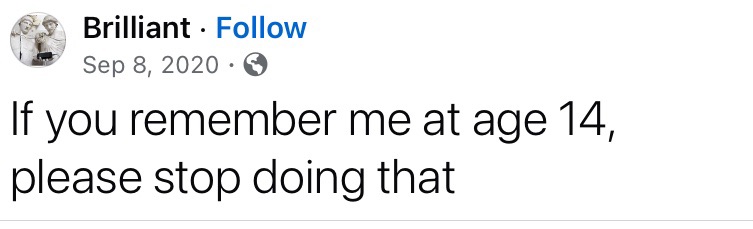
I was on That God-Forsaken Platform That Shall Not Be Named when I saw someone share this status:

Everyone is cringy at 14, but I was a special kind of cringe. You see, at age 14, I was a very different Jessa (or shall I say, Jessie, as I was going by back then). I was in a sort of state of transition, as most people are at that age. For me personally, that transition was between shy, awkward me and cool, confident me.

I remember the catalyst for that transition being my seventh grade obsession with this cool guy named Kyle Kelley, who I was definitely going to marry someday. Suddenly, I wasn’t content to stay in the corner doodling pictures of Richie Sambora and imagining what Pokémon I wanted to add to my team when I got home. I desperately wanted to be one of the popular girls, like Kyle Kelley’s cheerleader girlfriend.

But that would involve me — gasp — talking to other kids!

Nightmare fuel.

I’ve touched on my autism before. I will admit I’m not officially diagnosed yet — it’s damn near impossible to get a proper diagnosis as an adult AFAB person. Because of the sheer amount of gatekeeping when it comes to diagnosis, most autistic folks accept self-diagnosis as valid. And believe me, the signs were all there. I was sensitive to loud sounds, hiding whenever I heard the neighbor girl’s loud bass from her car or the sound of the vacuum cleaner. I’d hyperfocus on things like Bon Jovi and parakeets, learning everything I possibly could about them and talking incessantly about them to anyone who’d humor me. I’d stim by making bird sounds and running around randomly. I would finish my homework quickly so I could spin around in the back of the classroom (okay, that one might be on you, ADHD). And I was garbage at socializing. Talk to people? You might as well have asked me to build a rocket to the moon, because that was not happening.

Then, of course, I met Kyle Kelley and suddenly, I had this burning passion to become “cool,” whatever that even meant. I studied meticulously the mannerisms and interests and the clothing of the girls I thought were cooler than me. It was almost like a science project, observing the “cool girls” in their natural habitats and trying to emulate them. Looking back, it was just baby-me learning how to mask, and I was absolutely terrible at it at first.

Somebody stop me, indeed.

Which led to me being labeled something of a bimbo, despite me being one of the smartest kids in my class.

I didn’t know how to speak to people properly, and I’d often clam up when confronted with an actual conversation. And so I’d say the first dumb thing that came to my head in my desperate attempt to say anything. I honestly didn’t know how to interact with other folks my age. I figured it was better to be considered dumb than be an outcast, and the kids in my grade thought I was funny and silly because of it. So I went along with the “dumb blonde” label, because at least it wasn’t “weird kid.” It was such a pervasive label, I even got typecast in the school play as the stereotypical bimbo. Like, this character was soap-eating levels of dumb. At least I didn’t have to actually eat soap for the bit (it was white chocolate).

And thankfully their chocolate tastes much better than their soap.

At some point between high school and university, socializing became more natural to me and I was able to shed the “dumb blonde” label. I certainly shed the “blonde” label when I dyed my hair dark (bleaching was starting to take a toll on my hair, and I wanted to emulate my hero, Ann Wilson). But I still have some empathy for the little girl who thought popularity was more important than being viewed as smart or deep. It wasn’t her fault people didn’t take the time to get to know her as anything else.

And I’d like to think she had a lot to offer.

Knowing When to Quit

I always said I’d be a music therapist even if it killed me.

To be honest, it almost did.

And I’m still not a music therapist. But I’m okay.

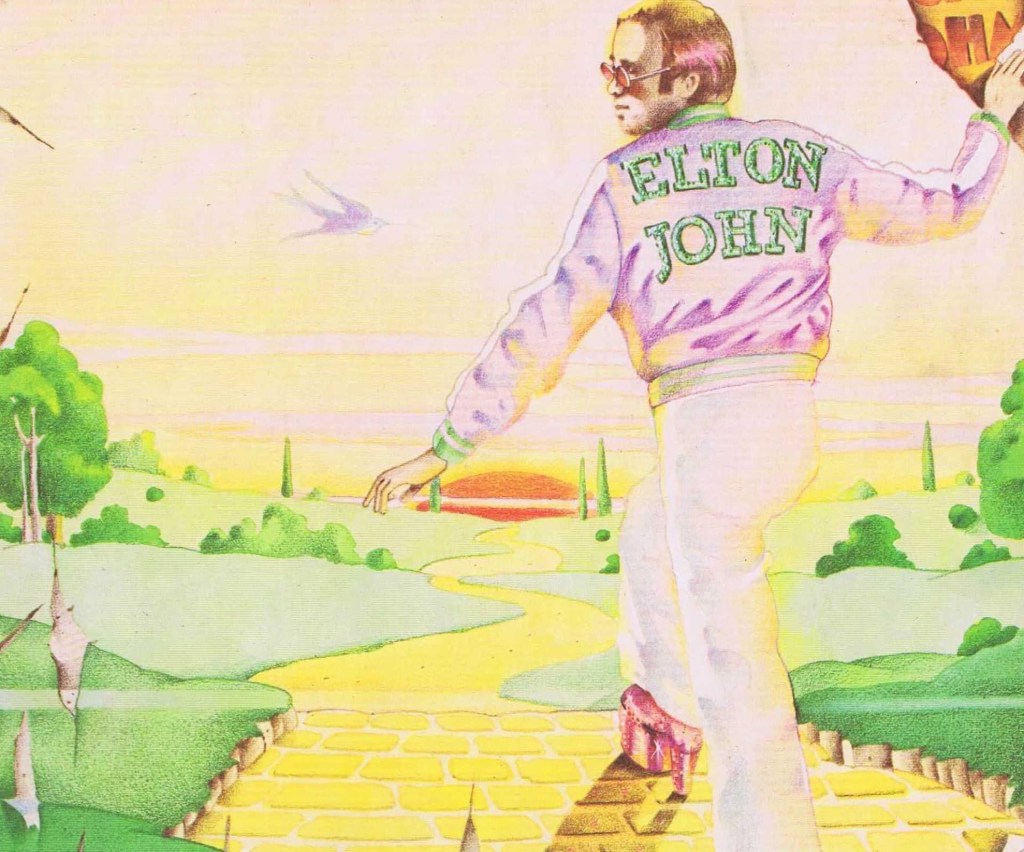
It’s been about a week and a half since I put in my two weeks at my internship. It feels surreal. It still is hitting me that the future I planned so carefully for myself isn’t coming to fruition. I had no backup plan. Being a music therapist was the only path I saw for myself, and the yellow brick road to the MT-BC title was ripped out from under my feet.

There’s an Elton John song for that.

I was going to be a music therapist if it killed me. But what good is a dead music therapist?

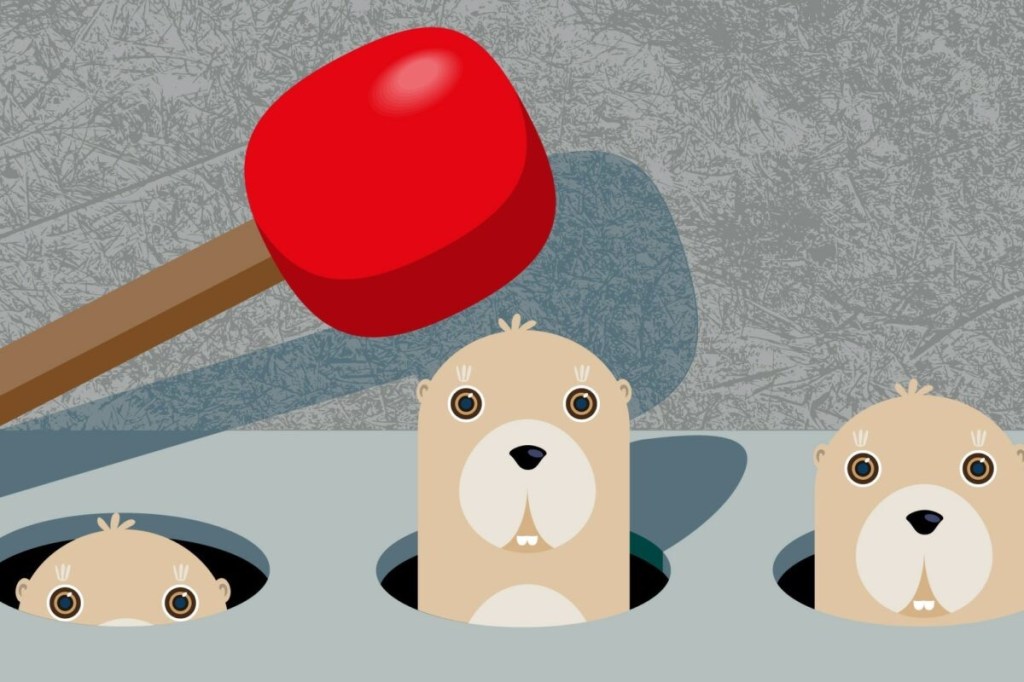
I came home from work every day crying because I felt like I wasn’t good enough. It was like playing whack-a-mole with my weaknesses — I’d knock one out only to have three more pop up in its place. “You’re not empathetic enough.” “You can’t read people well enough to be a therapist.” “Feedback goes over your head — or maybe you’re too stubborn to listen to it.” “Oops, you shouldn’t have said that in a session.“ And the one that caused me to drop everything and leave:

“You’re causing more harm than you’re helping.”

Suddenly, I felt like the mole getting whacked.

Not a great feeling.

I was so distraught, for a moment I considered driving my car off the bridge and into the fucking river. Don’t call the psych ward on me — I’m too scared of death to actually act on anything. But the fact that the thought even occurred was my signal that maybe this wasn’t right for me.

I blame a lot of my failings on my particular brand of neurospiciness. A lot of times it felt like my supervisors were speaking another language, and my clients were speaking a completely different language, and I was just this alien being trying to simultaneously decode the feedback I was getting and figure out how to react to what was happening in session in real time without a guidebook or translator. It became very draining for me, to the point where I couldn’t give it my all anymore and I was flailing.

There are neurodivergent music therapists — I’m friends with a handful I could name right here. But my brain just isn’t wired in a way that works well with the clinical mindset you need to be a music therapist, and I’m coming to terms with that. All of the academic papers I’ve written and scholarship-winning presentations I’ve put together and wordy books I’ve read couldn’t have prepared me for the work I had to do.

And that’s okay. Maybe I’m meant for something else.

I wish I hadn’t wasted all of my adult life (and thousands of dollars) on a career that ultimately ended up not being a good fit for me, but they say nothing that leads you to the path you should be on is a waste of time. Perhaps this twist in my story will take me to exactly where I need to be, and if that’s the case, I don’t regret a thing.

As of writing, I’m figuring out my next steps. My dream was to open a recording studio for people of all ages and abilities, but I don’t need some lofty certification to do that. I could start that studio without the MT-BC title, damn it, and just not call it music therapy. It’ll be my own thing. Sometimes when the path to what you want crumbles, you carve out your own path. And that’s exactly what I plan to do in my own time. In the meantime, I’ll fine tune my music production skills and probably teach guitar lessons for a living, at least for a while.

It’s funny, I’m writing this in a little artsy coffeeshop in South Bend, Indiana that has a piano for anyone to play. I sat down at the bench and just played my heart out for the first time in a long time, and it was freeing. There were no expectations, no degree to earn, no supervisors to impress. It was just me and the music (and the room full of coffee-drinking patrons minding their own business). After a while, a little girl came up to me and told me she liked my playing. I invited her to sit with me and I showed her how to play a basic chord, and her face just lit up. As she left, I smiled to myself. That special little moment didn’t need a degree or a certification to happen. It just needed the genuine human connection only music can create, and nothing can take that away from me.