The Glories and Pitfalls of Being the “Rocker Chick”

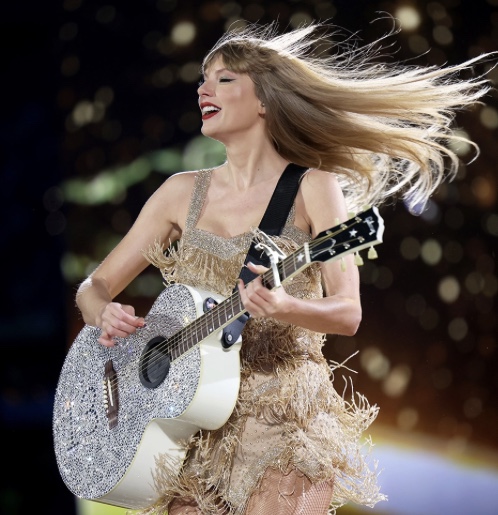
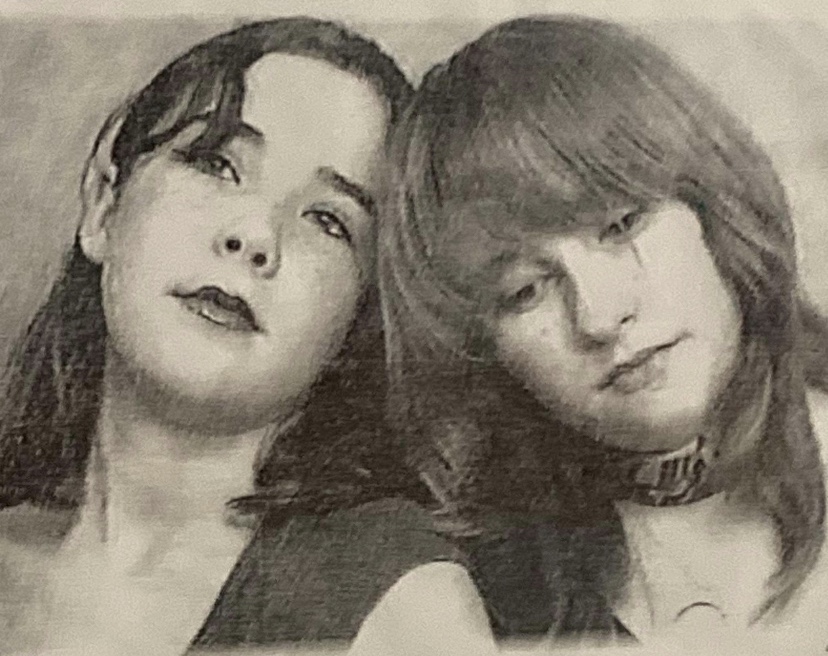
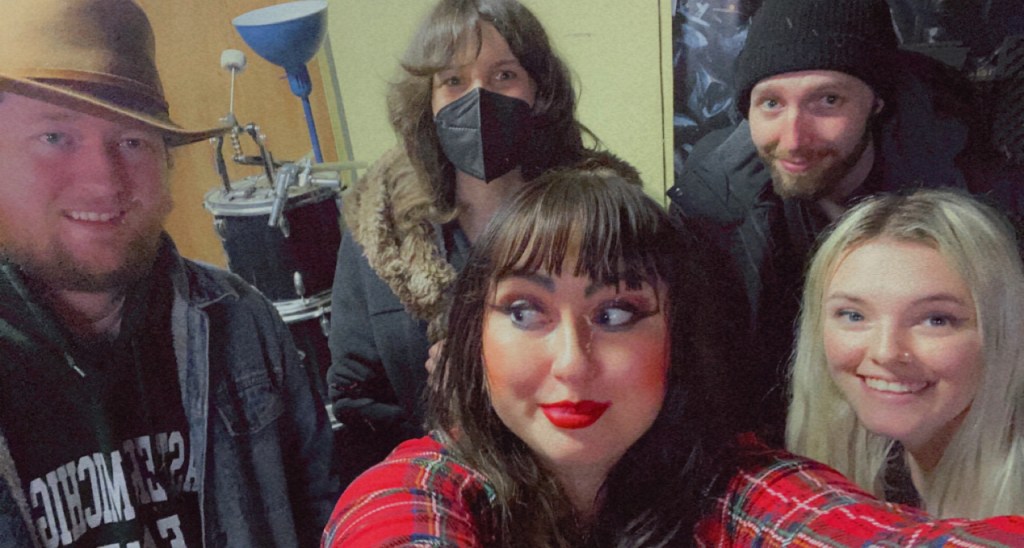
Last night, I posted a picture of my band, Wake Up Jamie, on our band’s Instagram page. This one, to be precise.

Almost immediately, we got an influx of picture “likes,” many from a new fan who just started following us! I was freakin’ over the moon excited. Any time someone new gives my little band a chance, it feels like the first time I ever played guitar or sang for my parents in the living room of our old house. You really like my music?! I get a taste of what it must be like to be my personal idol, Ann Wilson from the band Heart.

I have posted this exact picture on my social media and people thought it was me.

I received a message from the new fan, which I was excited to read, but didn’t quite have the metaphorical spoons to deal with at midnight on Christmas Eve Eve. So I left it for tomorrow-me to open in the morning. A little Christmas present to myself, you know? There’s no gift like waking up to see someone tell you how cool your band is.

So I open up this message and it’s…uh…I’ll just say this much-older guy wasn’t shy about confessing how he wanted to make me his sugar baby.

Not a damn thing about our music. Just that I was “beautiful” and he wanted a (presumably sexual) relationship with me in exchange for his money and attention.

Never mind the countless Saturdays at guitar lessons in my childhood and the hours teaching myself to sing in the shower and the hundreds of shows I’ve played in my lifetime. To this guy, I’m basically a singing hooker.

Which is a great business idea that hasn’t been done before, to be fair.

I have to admit my feelings of rage for being objectified were soft-serve swirled with a different, more positive feeling. Was I actually flattered this dude came onto me like that? On my band’s page, no less?

Surely Ann Wilson never had to deal with this?

Or did she?

I feel like I’ve written about the subject before, but I’m too lazy to find the exact post about it. But it’s not like Ann hasn’t dealt with being judged for her looks rather than her talent. Like how she was hidden behind layers of clothing and her skinny little sister, Nancy (who is equally talented, in all fairness), back in the MTV days because Ann was a little too thicc for the era’s liking. As if she wouldn’t have been revered at a Kardashian level had she been young today.

You know she was hiding a Kim K donk.

And the funny thing is, had she been young today, you know her Instagram inbox would be full of guys just like the one who messaged me. Even today, go to any Heart music video on YouTube and just read through all the thirsty comments from dudes (and probably a few chicks) who would kill for a ride on Dreamboat Annie. (And for the love of God, I hope Ann Wilson never reads this blog post, for that sentence alone. I feel so dirty.) They’re interspersed with comments about her voice at least, but you can’t deny that many of the “Wow, the best voice in rock and roll”-type comments are followed by “and also smokin’ hot!”

Would Heart have made it if Ann and her sister weren’t a certifiable 11 out of 10? How intertwined are music and appearance anyways? Male musicians are judged for their appearance too (see: every boyband ever), but you can’t deny that the pressure is more intense for female musicians. Even the least-attractive female musicians who have “made it” are still conventionally pretty, while guys get more of a pass to look like a foot. Bob Dylan is revered as one of the greatest musicians of the 20th century, and no one’s thirsting for him, right?

I mean, I’d go for it, but not everyone’s type is “dorky Jewish guy who plays guitar better than me.”

As annoying as it is to have to be a “hot girl” to make it in music, there’s a certain power in embracing your looks and sexuality to get ahead. You know the saying — “if you got it, flaunt it.” As a band with three female members, we’re going to be judged for our looks, we might as well use it to our advantage. The end goal is to get our music heard, and if it takes luring people in with our hotness, so be it.

Pictured: the hotness

I don’t think there’s any shame in using everything in your disposal to get to where you want to be, as long as you’re not hurting anyone else. If guys drooling over mine and my bandmates’ pictures will get them to pay attention to us and ultimately listen to our music, that’s what matters. We don’t write songs to play in our drummer’s studio every week and never see the light of day. We want to make a living doing what we love. We want to spread a message. We want to be heard.

Being objectified sucks — I can’t argue with that — but taking control of the narrative and the way you’re seen is strangely empowering. Maybe being a woman in music isn’t so bad after all.

How Sad, How Lovely (Or, The Tragic Tale of Connie Converse)

It’s not uncommon for me to feel a kinship to a person I’ve never met — and never will meet. From Freddie Mercury to Zelda Fitzgerald to a number of murder victims from the scores of true crime podcasts I binge, I have a tendency to see myself in various figures. I think everyone does this to an extent. Whether it’s a fictional character or a real human who walked this earth, we all want to find someone to relate to in the things we consume.

I was listening to a podcast on unsolved mysteries when I learned her name. Elizabeth “Connie” Converse, a fledgling but pioneering singer-songwriter who gave up and ran away to places unknown, never to be heard from again.

The listening experience was eerie as hell, as the narrators rattled off various facts about her life. She worked as a writer and editor. She was also into visual art in addition to music and writing. She lived in Ann Arbor and likely walked the same streets I do today. And like me, she was plagued with depression, or as she worded it, a “blue funk.”

Connie, born in 1924, would throw herself into the local music scene in the 1950s, playing living room shows and doing home recordings with artist and animator Gene Deitch of Tom & Jerry fame. Her songs are often described as ahead of their time — think a proto-Joni Mitchell. She wrote about subversive themes for the time, things like sexuality and racism. In fact, many consider her the earliest example of the singer-songwriter genre in the US. So why has no one heard of her? Simply put, she never managed to make an impact on wider audiences. Disheartened, she gave up on music and eventually would pack her bags and disappear forever, not even telling her own family her whereabouts. Her fate remains unknown.

But her music survived. In an interview, Gene Deitch shared some of the music he’d recorded in his younger days, including Connie’s music. This sparked a renewed interest in the forgotten artist, and in 2009, an album of her music was released to the public. She finally gained the recognition she’d always wanted. And yet, no one knows if she was even alive to see her half-century-old project see the attention it deserved.

Considering she’d be closing in on 100 years old now, the chances she’s still alive somewhere is incredibly slim. But I wish she was. I wish I could meet with her in some quiet cafe and just talk about music, art, life, anything. I know we’d be kindred spirits. I’d tell her my own frustrations about trying to make it in music, about my struggles with mental illness, how I’ve fantasized about simply disappearing sometimes.

But I can’t have those conversations, so I’ll settle for continuing her legacy. I’ll take her life and learn from it, glean inspiration from it. I’ll be the best songwriter I can be. I’ll be the best writer I can be. I’ll live a life that would make her proud and kick depression’s ass.

Do it for Connie.

Like life, like a smile
Like the fall of a leaf
How sad, how lovely
How brief

Music Reviews No One Asked For: Bon Jovi’s “New Jersey” Bonus Tracks

I’ve been itching to get back into “journalism,” or something resembling it. I enjoy writing about music (obviously), but my taste in music isn’t exactly current. Or good. So, welcome to the new series, Music Reviews No One Asked For, where I write about whatever I’m listening to at the moment, no matter how old or irrelevant or weird. Anyways, what better to start this series with than the object of my lifelong obsession, Bon Jovi.

Bon Jovi is admittedly not a critical darling. In fact, I’ve heard them described as “the Nickelback of the ’80s.” And to be honest, I don’t entirely disagree. Some of their music can err into cliche territory, especially more recent releases. That being said, they were the band that shaped my entire perspective on music and — let’s be real for a minute — have some catchy-ass songs in their extensive catalogue. In other words, I love this band to death, both for the music itself and for sentimental reasons, but I’m not so much of a stan that I can’t acknowledge their glaring weaknesses.

Anyways, back in 2014, Bon Jovi’s fourth studio album, New Jersey, was rereleased in honor of the band’s 30th anniversary, tacking on almost an entire second album’s worth of demos and outtakes. New Jersey is easily one of my favorite albums in Bon Jovi’s discography, so I couldn’t imagine what could possibly be added to improve upon it, but surprisingly, some of the new tracks were so good, I wasn’t sure why they were ever scrapped. Then again, Jon Bon Jovi didn’t want to release “Livin’ on a Prayer.”

The Ballad of Jon Bon Jovi | My Accidental Muse

Maybe he’s not the best judge of those kinds of things.

Here’s a track-by-track breakdown of the bonus tracks. I’m not going to review the main album, as that’s probably been done to death by music critics with much better taste than me. This isn’t the Rolling Stone. This is the blog of a random dumbass with a journalism degree and nothing better to do.

“The Boys Are Back in Town”: This is Thin Lizzy’s “The Boys Are Back in Town,” recorded by Bon Jovi. There’s not much else to say about this track, but it kind of slaps.

“Love is War”: Written by Jon Bon Jovi and Richie Sambora as an obvious attempt to write another “You Give Love a Bad Name.” Scrapped because it sounds too much like “You Give Love a Bad Name.” This is one of the best songs in this list, but that’s to be expected, as it’s basically just “You Give Love a Bad Name.” Still not a bad song in its own right, in all fairness.

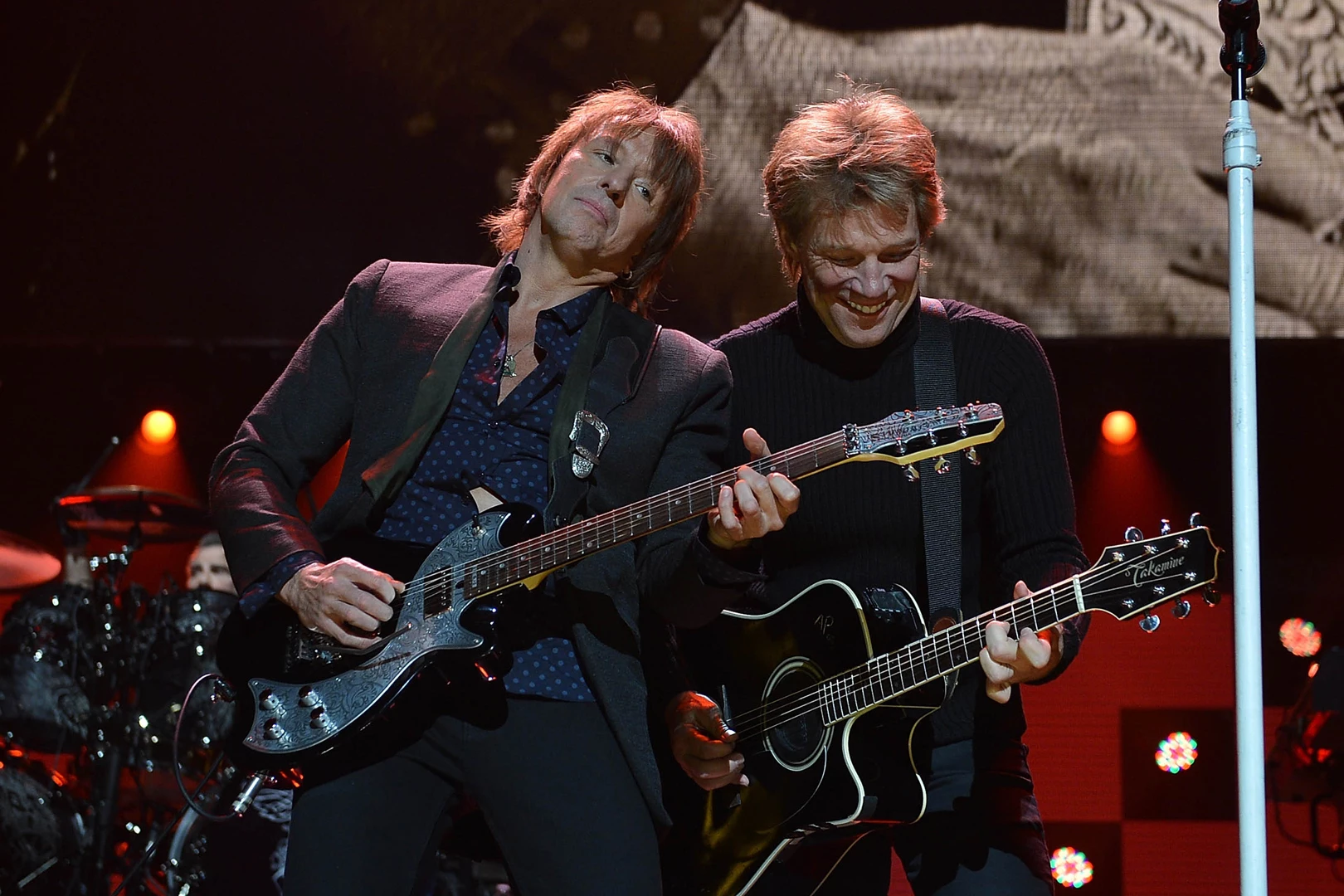
“Born to Be My Baby” (acoustic): Apparently, Jon believed this song would have hit number one if this version had been released, and I don’t disagree. This version benefits from a Spanish-influenced solo and more prominent backing vocals from Richie. Then again, there aren’t many Bon Jovi songs that wouldn’t be improved with more backing vocals from Richie.

“Homebound Train” (demo): The official version of this song was one of my favorites as a child, although I don’t know why. It’s a little forgettable next to all the other songs on New Jersey. The demo is okay. Some harmonica, some weak “woo-woos” from Jon that are sort of amusing, but overall nothing special.

“Judgement Day”: The lyrics of the band’s ’90s era utilized quite a bit of religious imagery, so this feels almost like a precursor to that. Like a lot of Bon Jovi songs, nothing especially profound is espoused, but it’s a certifiable earworm.

“Full Moon High”: The opening line “penny for your thoughts now, baby,” was recycled in Jon’s solo release “Miracle,” but I can’t give him too much grief for self-plagiarizing, as I’ve used lyrics from scrapped material in new songs. Also quite glaring is how the prechorus has aged like absolute milk in the same way as “Baby It’s Cold Outside.” “You say stop, I say go, I say yeah, you say no” comes across as a little skeevy in a post-#metoo culture. Otherwise, it’s one of the stronger songs in this list, lyrically.

“Growing Up the Hard Way”: They really wanted those “na na nas” on the album, because I swear I’ve heard it on at least three different songs already.

As a songwriter, JBJ’s strength lies in character building. You want to cheer for Tommy and Gina. You want to chill with Captain Crash and the Beauty Queen from Mars. You want Joey Keys to find a better life and for the protagonists from “Someday I’ll Be Saturday Night” get out of their funk. This song hits a lot of those same notes. The young groupie escaping from an abusive father, the would-be golden child whose drunk driving derailed his otherwise charmed life. Bon Jovi loves to create characters and subsequently break your heart for them.

“Let’s Make It Baby”: Ah yes, the triumphant return of the talkbox, first introduced in “Livin’ on a Prayer.” I have to admit I have a soft spot for this particular guitar effect. Maybe I have a Freudian excuse for this, as Peter Frampton was certainly the catalyst of my sexual awakening.

I'm A) Road Runner by Peter Frampton on Amazon Music - Amazon.com

DO YOU BLAME ME?

Anyways, speaking of things that are sexual, Bon Jovi was, for the most part, not. Sexy, perhaps, but compared to their contemporaries, Jonny and the boys look like nuns, so much so that my mom didn’t even bat an eye when I got interested in them as a youngin’. This song, though? This is the song I’m certain she’s happy I didn’t discover as a child. If, by the end of the song, there’s any doubt as to what it’s about, the ever-cheeky Richie makes it absolutely clear in the last five seconds.

“Love Hurts”: Not a cover of the song made famous by Nazareth but a good song nonetheless. Out of all of these tracks, this one is probably the most likely to get stuck in my head. Not a whole lot more to add, except that it’s a classic Bon Jovi bop.

“Backdoor to Heaven”: A classic mid-tempo ’80s ballad that may or may not be about butt stuff. This might actually be my favorite on here, if I’m honest. The desperation in Jon’s voice, coupled with those soaring harmonies from Richie, it’s just … ugh, chef’s kiss. This one should absolutely have made it to New Jersey. What the heck, guys?

“Now and Forever”: I’m sure if I heard this at any other time in Bon Jovi’s history, I’d write this off as just another vaguely cliche song. Having heard it after Richie’s departure, I just …

Richie Sambora Wanted Bon Jovi to Be Less of a Solo Vehicle

I’m not at all emotional about this.

Anyways, “a heart’s just a heart and songs have to end, dreams will be dreams but friends will be friends now and forever” just hits differently.

Come back Richie. We need you.

“Wild is the Wind” and “Stick to Your Guns” (demos): My two favorites from the album proper, but the demos don’t really add much. They’re literally just the songs we know and love, but less polished and not as inspired. I didn’t even feel the need to cover them separately. If you’re at all curious about these, don’t be. Just listen to the official versions. Take my word on this.

“House of Fire”: If you hadn’t told me, I wouldn’t have guessed that this was written by Alice Cooper and Joan Jett. This feels like a Bon Jovi song. That’s really the only thing I have to say about this.

“Does Anybody Really Fall In Love Anymore?”: Repeat after me, Jon: It’s okay to lower the key. If you can’t reach the high notes, it’s okay to drop it down a half-step or so. It’s not a big deal. Richie and David are big boys. They’ll figure out how to play it.

As an aside, this song was also recorded by Cher, because there was a weird time during the late ’80s when Bon Jovi and Cher collaborated. Anyways, Cher is an absolute queen, and even when recorded by her, this song is kind of boring. “Love is War” would have been a better choice for her. In fact, I’d gladly saw off my own toe with a nail file to hear her cover it. Seriously.

Cher - Age, Songs & Movies - Biography

Cher if you agree.

“Diamond Ring” (demo): I almost skipped over this song. The official version was released with These Days years later, and it was the only song I didn’t really like off that album as a child. After all, it was slow and boring, and it was about getting married and boring stuff, unlike “My Guitar Lies Bleeding in My Arms,” which was about more kid-friendly problems like, uh, contemplating suicide.

I’m glad I didn’t pass this one up, though, as the demo is a thousand times more badass than the version that actually saw a proper release. Even without being explicitly about sex, this song manages to feel almost as horny as “Let’s Make It Baby.” Those guitars. That bass. Jon’s rasp. Good Lord.

Wait, was Bon Jovi actually the thirstiest band of the 1980s?