As of writing, it is day two of the fourth annual Emo’s Not Dead cruise, and ya girl is having the time of her life. Like, you have not lived until you’ve watched Hawthorne Heights from a hot tub in the middle of the ocean. I can’t believe I almost elected to not do this cruise, and while it’s set me back financially waaaaaaaay more than I’d like to admit, I don’t regret this trip at all. Knock on wood, the voyage has been quite literally smooth sailing.
There are activities at practically all hours on this boat, but one particular event caught my attention — a panel on the history of emo, hosted by the guys from the aforementioned Hawthorne Heights. I wasn’t super familiar with the band before the panel, but I am a bonafide music history buff, so I’d be remiss if I missed out on the discussion. So I set my alarm alarmingly early for someone who’s supposed to be on vacation and hauled my ass up to the deck to catch it. And I’m so glad I did, because it was a reminder of how much this genre and this music scene has meant to me throughout the years.
Prior to high school, all I listened to was classic rock. I never even entertained the idea of seeking out music that had been made after I was born. To younger me, the best stuff had been already made and all new music was garbage and inferior to my heroes. But something unusual happened around tenth grade. My good friend at the time was dating her now-ex-husband, who turned out to be a total fucko, but he had great taste in music. So I was over at his place one time and, knowing I was a music lover, he offloaded all his old CDs on me. Among them was Jimmy Eat World’s follow up to their breakthrough album, Bleed American. It was titled Futures and it had a dark, ominous cover featuring a telephone booth. Something about it drew me in. So on a band field trip to Chicago, I put on my headphones and loaded it into my portable CD player.
And I’d never be the same.
Everything about their sound captivated me in that moment. I was playing cinematic movies in my head to the moody melodies and desperate lyrics. Every word and every twinkly guitar riff was soaked in pure emotion. The music sounded like what feelings sound like. It was a strange sort of synesthesia. And it made me realize that there were still bands out there making great music. In a way, JEW (which is a hella awkward abbreviation for a band name) was my conduit to the emo genre as well as the 21st century of music as a whole.
Funnily enough, Hawthorne Heights cited JEW as their conduit to the scene as well, and they talked in great detail about how they had similar journeys to mine. They were Midwesterners too, Ohioans to be specific, and they didn’t have much in the way of record stores or places to discover new music. But a friend had gifted one of them Clarity, the precursor to Bleed American, and that was that. Like me, the guys were drawn in by the music and the deeply emotional lyrics.
And that’s why they call it emo — it’s literally just emotions set to melodic punk rock. The guys from HH (a much better band abbreviation, by the way) brought up the fact that the word “emo” has a lot of baggage. In the beginning, it was almost an insult to be called emo. Bands didn’t want to be known as emo. Hell, I remember the slight moral panic in the MySpace era where authority figures assumed emo was shorthand for self-injury and other self-destructive habits. In schools, guys in the scene were often called f*gs and other cruel slurs, and girls in the scene were characterized as sluts or posers. But as the years have progressed, the “emo” label has since been reclaimed. Millennials like myself proudly wear the title “elder emo,” and younger folks are adopting the name and subculture as well.
I think fondly about the emo and emo-adjacent music I listened to as a young woman. I’ve had a lot of memories in the music scene, going to multiple Warped Tours and other festivals and making connections with the other attendees and artists. Live music is so important, and I’m glad I got to experience so much of it throughout the years (although I’m sure my ears aren’t so glad). I’ve written quite extensively on here about my fears regarding AI and the future of music, and those fears definitely still stand. But you can’t engineer away live shows. You can’t beep-boop an experience like the one I’m having on this cruise. That’s something the robots can’t replicate — the real, authentic human connection that comes with screaming along to your favorite songs with your 100 new best friends.
When the panel wrapped, the guys opened up the floor for guests to share their “coming to emo” moments. I hesistantly raised my hand and introduced myself as a fellow Midwesterner, albeit a Michigander (they forgave me). I shared my story of discovering JEW as well and how their music spoke to me like nothing else did. I also told them I appreciated how HH had come up out of Ohio of all places, because I get it. When you grow up around nothing but cornfields, finding beauty in the everyday isn’t easy. You have to make your own beauty, and that’s something else I love about music. I love the way folks can alchemize pain and hardship and even boredom into something lovely, something other people can appreciate too.
As an elder emo and a musician myself, this cruise has been a reminder of why I am in this game. It’s why I find guitar picks in my washing machine. It’s why I have callouses on my fingertips and can’t get baddie nails. It’s why I chose classical guitar over pre-med in college. It’s why I agonize over every word in every song I write. And it’s why I still believe in beauty in this world, even though I’ve seen so much of its ugliness as well. Music truly is what emotions sound like, and there is so much power in channeling those feelings into song. It’s a form of emotional bloodletting. It shows you that you’re not alone in this world. It saves lives.
That’s what emo is about. That’s what music is about.
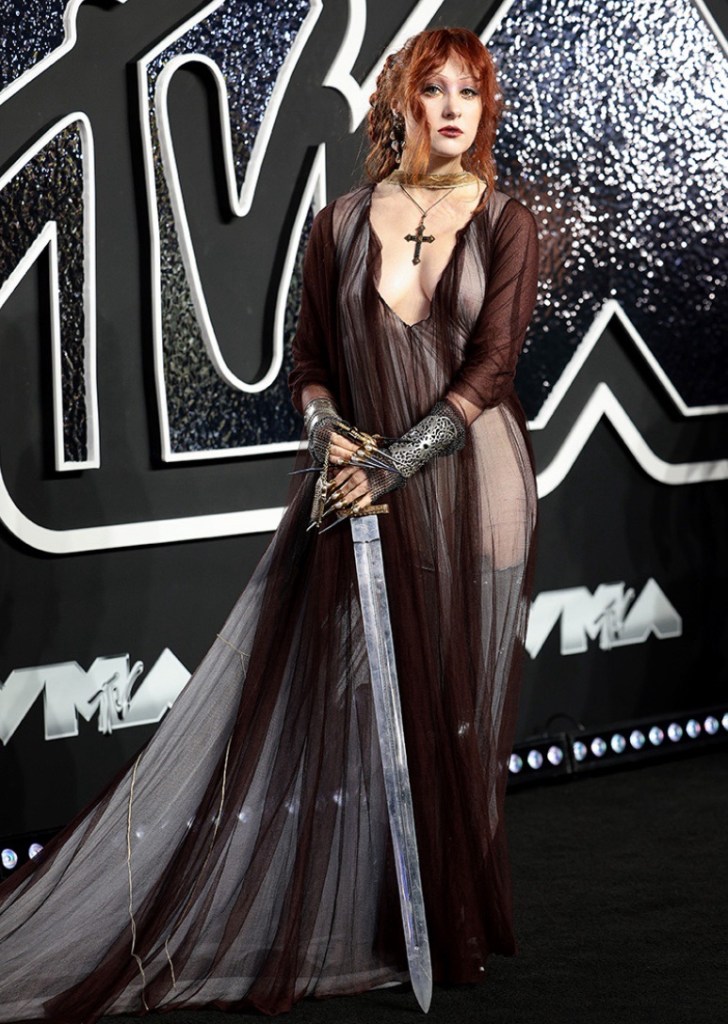
Chappell Roan is simultaneously living my dream and my nightmare. Imagine being some random ass girl from the Midwest one minute, and in the next, the eyes of the entire world are on you as if you’re Lesbian Jesus. On paper, she has the exact life I’ve fantasized about for decades. She wrote that one hit song (or two…or three) that will immortalize her for generations to come. She gets to wear some of the most extravagant outfits I’ve ever seen on a performer, stuff I’d die for a chance to wear.
Imagine getting to wear this in public.
And her infinite coolness has even been acknowledged by my own childhood heroes, the Wilson sisters of Heart. Nancy Wilson accompanied her onstage for a cover of “Barracuda,” and she even got to sit down and talk with Ann Wilson on her podcast. Needless to say, when I wished upon a star all those years ago, I’m pretty sure the wires got crossed somewhere and my wish went to Chappell instead. And let’s be real, the girl deserves it. She does have talent. She’s an incredible performer, and her songs are catchier than anything anyone’s else has been doing in this boring-ass pop music landscape. But there’s one aspect of Chappell’s life I’m so glad I don’t have going for me:
The scrutiny. God, the scrutiny.
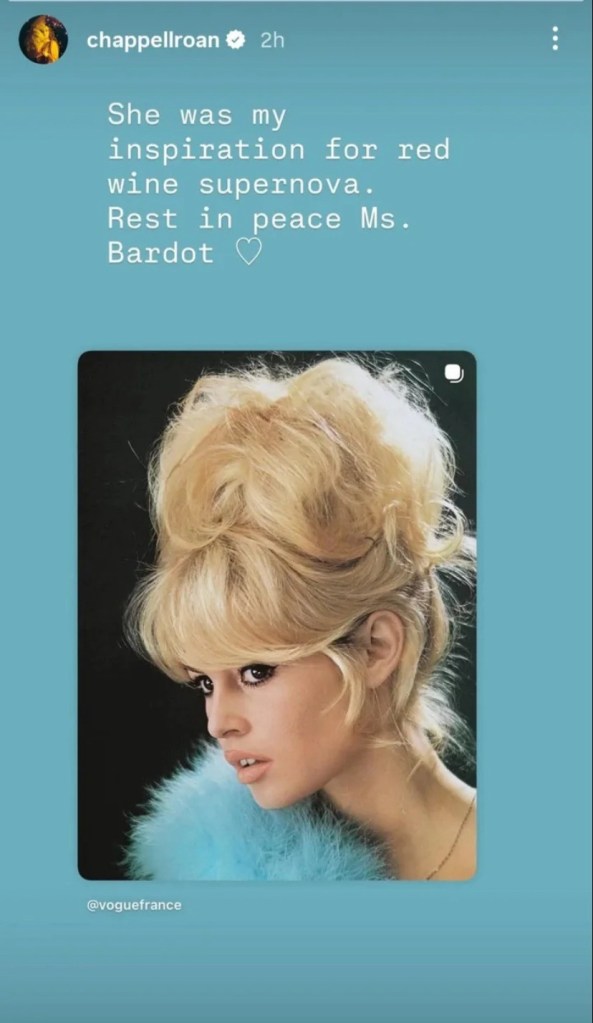
So Brigitte Bardot died recently. Don’t reach for your tissues just yet, because she wasn’t really someone worth mourning. She actually kind of sucked. Like, a lot. She was literally so racist that the government of France fined her over it. She basically called the entire #MeToo movement bullshit. She called queer folks “fairground freaks” and blamed the destruction of French culture on the gays (as if French culture isn’t already, by definition, pretty gay). That last point is probably the most important to note, as Ms. Bardot has become something of an unwilling lesbian icon thanks to the aforementioned Chappell Roan.
In the opening lines of her song “Red Wine Supernova,” Chappell croons “She was a playboy, Brigitte Bardot,” paying homage to the cinema legend’s exquisite looks. Obviously, it’s a shallow reference that doesn’t address the fact that Brigitte would flick her nose at the kind of fairground freakiness Chappell gets up to. Nobody really took issue with the throwaway line initially — it was understood that Brigitte’s name was simply used as shorthand for the kind of glamour that only existed in a bygone era. She could easily have used Marilyn Monroe, or Greta Garbo, or Jayne Mansfield, or even Elizabeth Taylor, as a certain other frequently sequined starlet recently did. But “Brigitte Bardot” just fit the rhyme scheme better, and as a bonus, Chappell gets to put on a sexy lil French accent when she says it. Everybody wins!
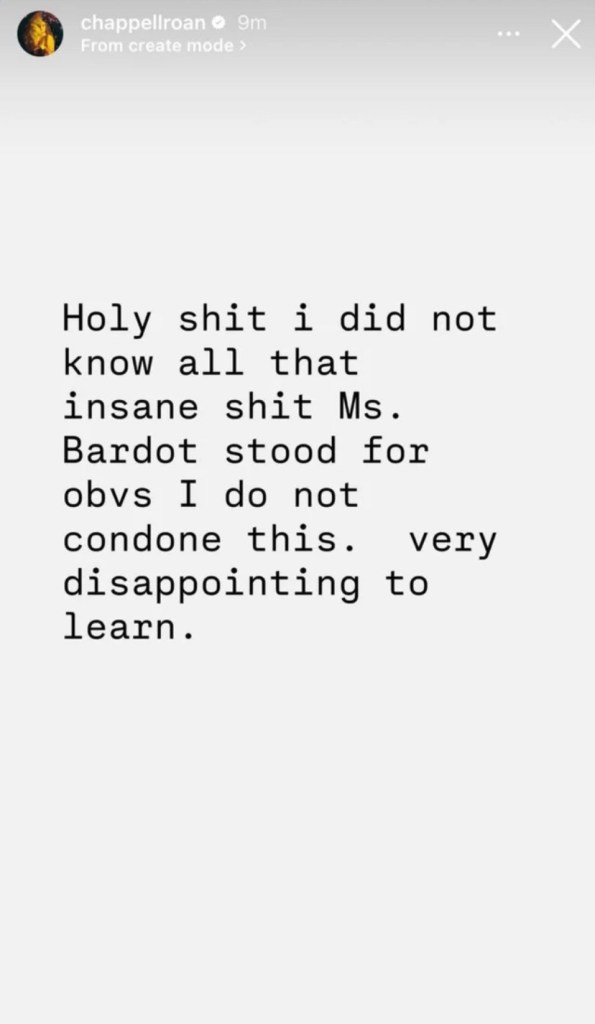
But then, this happened.
To be fair, Brigitte would hate this for herself.
If my Threads and Reddit feeds were anything to judge by, the Pink Ponies (Is that what we’re calling Chappell Roan fans?) were livid at the sight of the tribute, which entirely glossed over Brigitte Bardot’s checkered legacy. To be fair, a little while later, she’d post this:
To a lot of folks I encountered online, though, the damage had been done. Her reputation had already recently taken a hit from partnering with MAC Cosmetics, a company that notably supports Israel, after she famously passed on a White House performance over Palestine. But eulogizing a certifiable asshole was a step too far, and Chappell had been officially…cancelled.
We cancel a lot of people. Taylor Swift, who I alluded to earlier, even wrote a catchy ass villain song about it. Sometimes, the cancellation is justified. For example, Bill Cosby? Pretty fucking justified if you ask me — I can’t see a situation in which it would ever be acceptable to name-drop him as anything other than a predator and creep. Same with guys like Diddy and the absolute monster from Lostprophets. As the intro to that one Law and Order spinoff says, sexually charged crimes are especially heinous and should be weighed as such when considering uncancelling someone. But take, for example, Snoop Dogg, who recently came under fire for some questionable remarks regarding same-sex relationships in media. Is it time we retire “Gin and Juice” as a feel-good anthem forever?
We still got this bluegrass cover!
But here’s the thing — Snoop apologized. And he acknowledged he is still learning. In fact, I’d say his apology was damn near spot-on: “Teach me how to learn,” he said in his statement. “I’m not perfect.”
There’s the difference. That’s what separates the rightfully cancelled from the flawed human beings who sincerely want to do better. It’s right there — that self-awareness that you are imperfect, and that willingness to improve. That the secret. It’s completely understandable to want to hold people accountable. That’s the only way advancements will happen in society. But we can’t keep pushing away potential allies for every transgression. We’ll always stay divided.
I think very few people are beyond redemption. Honestly, if Kanye and Nicki wanted to have a massive heel-face turn and walk away from the right-wing grift, I’d welcome them back with open arms, and not just because I want to listen to the indisputable banger that is “Monster” guilt-free again. But they’d need to show some remorse. Grace should be given freely and abundantly, but the person receiving that grace needs to be legitimately sorry for what they did too. It’s a two-way street.
I think the folks trying to cancel Chappell for her Bardot post don’t realize they’re shooting us in the foot by dividing us further. We already don’t trust each other as a society and we’re falling deeper and deeper into isolation. Community is scarce, and there really is an epidemic of loneliness wreaking havoc on our society. What we need now isn’t some puritanical litmus test. We don’t need a “perfect ally” — we just need folks who are willing to stand up for us, and sometimes those folks aren’t perfect.
It’s funny, just this evening I got into a verbal tussle on that godforsaken social media site we all know and hate over whether or not “rest in power” was an appropriate phrase to say in remembrance of a white person. Never mind that said white person, Renee Good, was oppressed in other ways (being queer and a woman, for example) and was literally killed by her oppressor. This person, who I imagine had good intentions, maintained that the phrase can only be used for people of color. That is the kind of over-the-top policing that hardens hearts. How does that black-and-white mentality make us any different from the conservative evangelicals who dictate that we have to do x, y, and z to be saved?
I’m not saying we shouldn’t call people out for egregious screw-ups, or even smaller transgressions that maybe came across wrong (Chappell’s memorial post is a great example), but there needs to be some grace delivered alongside the message. Otherwise, we’re going to cancel each other into the fucking ground. We need to begin viewing each other as people again — beautiful, deeply flawed, and capable of change.
Alright, let me tell y’all a little story about how I found my voice in a little bar in the heart of Kalamazoo.
We’d just moved to the city not long after my ill-fated music therapy internship crashed and burned. At the time, I was feeling real down and out about my place in the world of music. My lovely wife, knowing I’m so extroverted I will literally die if I don’t get attention for thirty minutes every hour on the hour, suggested karaoke as a solution. And well, it certainly was the solution. We found friends here that are going to last a lifetime. We found a whole ass village out here, all thanks to the wildly supportive karaoke scene. It revitalized my love of music and even gave me some killer collaborators. And ground zero for this karaoke revolution was a little dive bar called Old Dog Tavern.
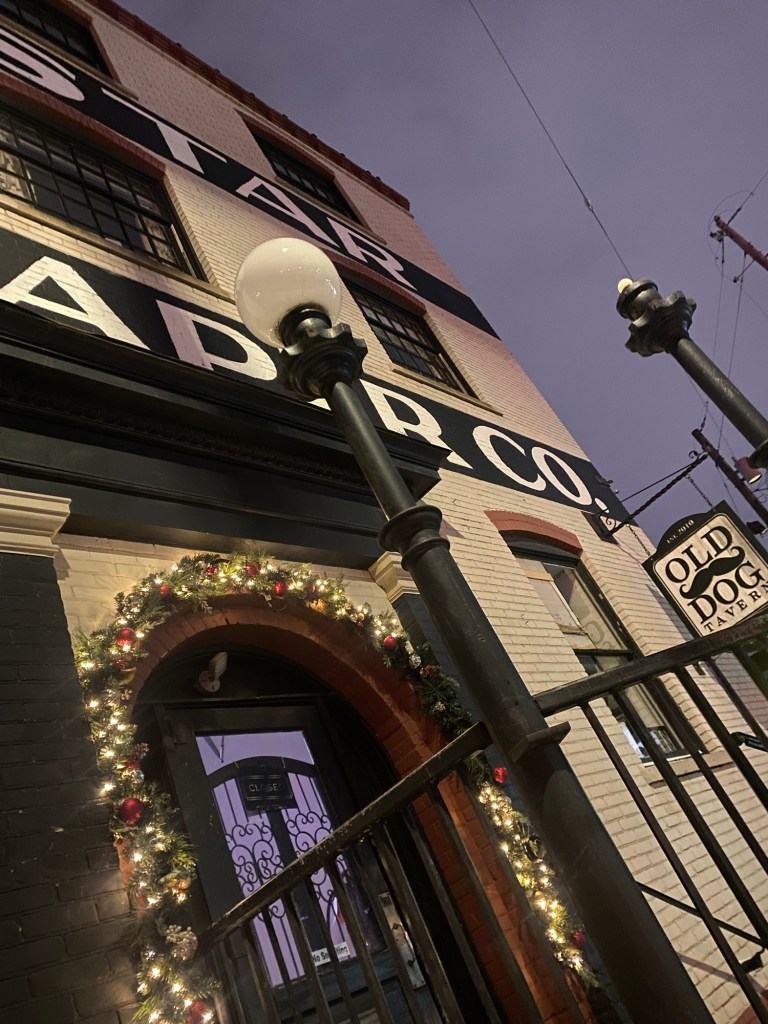
I don’t know a lot about the lore of the building, except that it definitely used to be something else. Just taking a cursory glance outside (because part of this was written on location, because I’m a weirdo who writes at the bar), it was once part of a paper company. The interior is dark and dingy, but in the way that gives a comforting old dive bar its signature vibe, with largely wooden decor and plenty of mirrors for ambiance. The main entrance opens up into a corridor with an adjacent room set aside for ping pong table shenanigans. But once you enter the main room, that’s where the magic happens. On that stage, everyday civilians transform into rock stars every week.
Where else could I take a picture this cool?
On any given Friday night, Finn will be manning the karaoke machine (well, laptop — it is the 21st century). Ask him for a song and he’ll put you up in his next round. Outside, the regulars are passing around joints and anecdotes, ranging from the heartfelt to the raunchy. A few of us are showing off our newest creations. One occasional regular is a visual artist who brings his materials to work with. Another frequents the open mics as a singer-songwriter and will regale you with stories from the best nights. Under the stars and fairy lights, you can see downtown Kalamazoo bursting with life. The merriment only lasts for a while, because once your name is called, someone yells for you to get your ass to the stage. And that’s when you come alive.
The Old Dog karaoke crowd is the most ridiculously supportive community I’ve ever been a part of, to the point where I often characterize karaoke night as my sort of surrogate “church.” As a recovering evangelical, I yearn for long nights of fellowship and music like I had in the church of my youth, only without the toxicity, nepotism, and homophobia. I feel like I finally found my “spiritual community,” and it’s not even a spiritual community in the traditional sense at all. But we live and love like Jesus did. And let me tell you, I bet Jesus would rather hang out with us than that weird-ass pastor who’d chastise me for voting for Bernie Sanders (when I like, never brought that shit up, yo).
I never even showed him the crocheted Bernie I have displayed on my living room shelf!
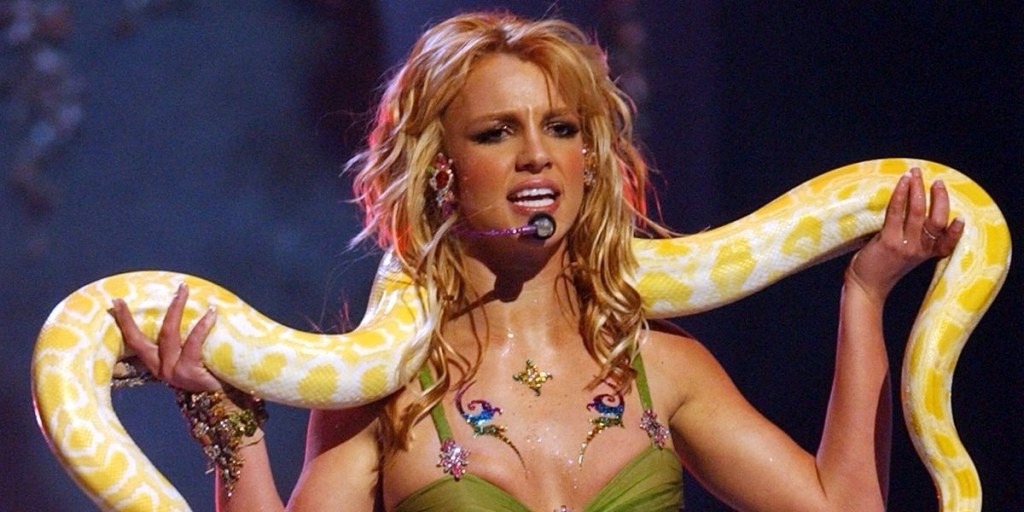
This is the kind of community that will cheer you on even if you attempt “You Shook Me All Night Long” and are panting for breath by the end. It’s the kind of community that will shake their asses off while you sing “El tiburón” and make you feel like a freakin’ king. We’ll clap and sing and dance and probably cry if you sing Billie Eilish. We’ll put in requests for our favorites from our friends. Everyone’s got a favorite song they wanna hear from someone else, and everyone’s got their song or artist. David “Karaoke Dad” Parent is known for his Elvis renditions. David “my boyfriend as of last week” Bannon sings the hell out of AC/DC. Mary Emma kills “Never Enough” from The Greatest Showman, and when Steve performs “Minnie the Moocher,” shut it the fuck down. Me, I’m known for Heart and Britney Spears, which probably makes me the only person on the planet who can pull off both Heart and Britney Spears.
You know, I bet Ann Wilson could totally make the snake thing work too.
My point is this place is something magical, and ever since we started going regularly, our lives have improved tenfold. It’s not a secret that we have a loneliness epidemic, to the point where I’m literally seeing the Michigan government putting up billboards that beg folks to just go outside and talk to people. This is the solution, guys. We need more spaces like Old Dog where you can simply go and drop the armor. The bar actually has a little sign up that I managed to snag a picture of, and I really love the sentiment.
It truly is a place where all the misfits and outcasts can be vulnerable and at peace. Every town needs a place like that. I’m glad I’ve found mine.
Here’s a confession: I was originally planning to spend this month locked in my apartment with nothing but my laptop and recording equipment in order to bully myself into making an entire EP in a month’s time. I had a whole plan of action and everything. I was going to do a collection of covers of my favorite recent Chappell Roan and Taylor Swift songs and name it The Rise and Fall of the Life of a Midwest Showgirl Princess because I’m already extra as hell so why not lean into it? And I figured with how relevant both artists are right now, at least someone important would hear my project and like, give me a bunch of money to make music forever.
That’s how record deals work, right? They didn’t teach me that stuff in music school.
But here’s the eternal problem I run into — I’m an extrovert through and through. I’m actually stupidly extroverted at times. I envy the cute quirky introverts that just need like, a book and a cup of coffee to go, because I need at least thirty solid minutes of conversation every hour on the hour or I die. So I decided I’d try to appease both the part of me that wanted to record music and the part of me that wants to hang out with folks by throwing my gear into a sack and schlepping it over to my friends’ places.
And that’s when the real magic started happening.
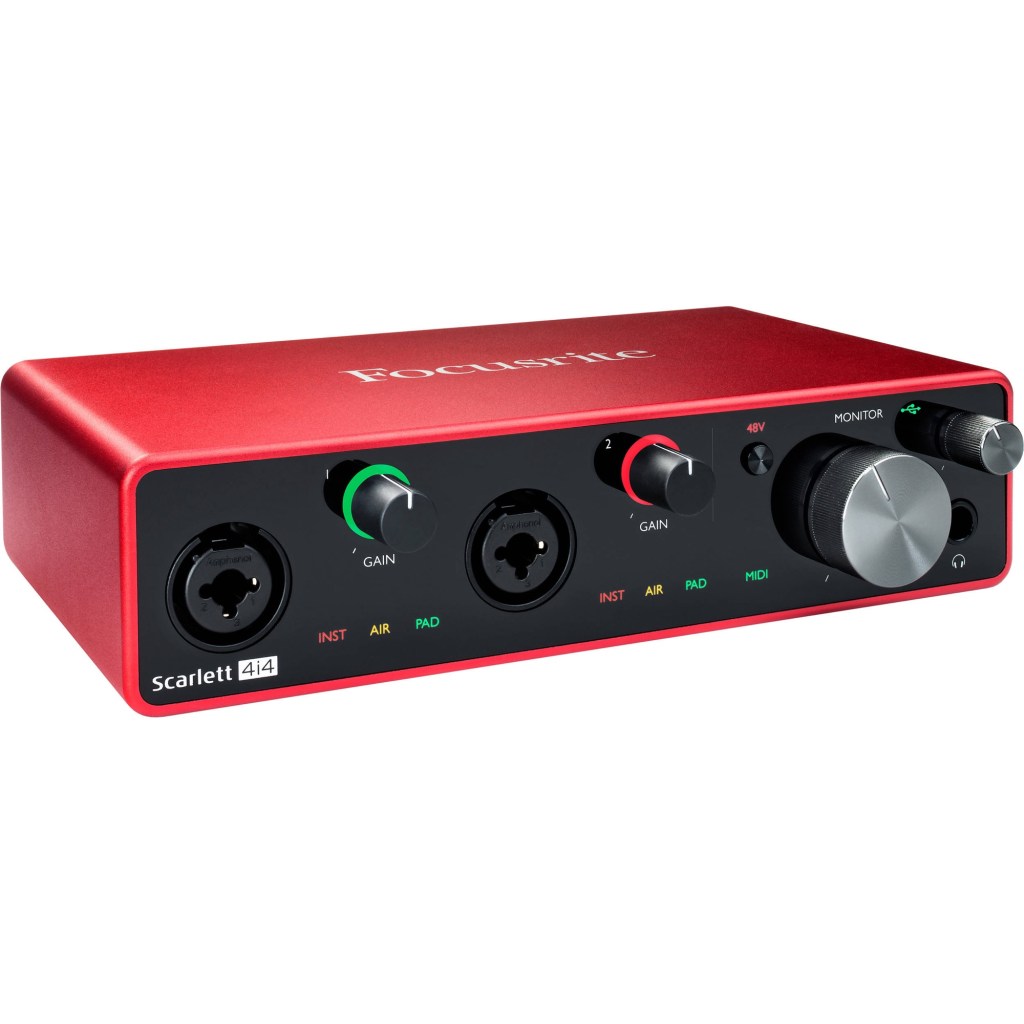
I’d break out my laptop, load up the DAW, and my friends would hover over me excitedly as I cooked up silly little beats for them to mess around with. None of us are actually rappers, but we like to write raps about stuff and pretend we are. I think the first song in what would eventually become The Kalamazooligans project happened at Luke’s place. He’s a writer, one of my closest friends, and a frequent collaborator of mine. He wrote a really heartfelt verse about finally finding companionship in the karaoke scene, and our mutual friend Willy made up a chorus inspired by a “live laugh love” sign (featuring Kim Jong Un — don’t ask) Luke had hanging up in his living room. Then David (who’s one of my Fairale bandmates, actually) rounded out the second verse, and I took the last. Suddenly, we had an entire song we literally pieced together with nothing but Logic, some Apple Loops, and that Focusrite Scarlett audio interface every fucko with a podcast owns (myself included).
They make them bright red to match the flags that come with having a podcast.
Was the finished product “good” by the standards of the music industry? Absolutely not even close. This is not Top 40 radio. Max Martin (my Swedish pop hero) would not touch these songs with a 39-and-a-half foot pole. The average listener would probably be surprised to learn that anyone involved in the making of this music was actually a professional-ish musician. But something special happens when people who have no business creating art say “fuck the rules” and do it anyways.
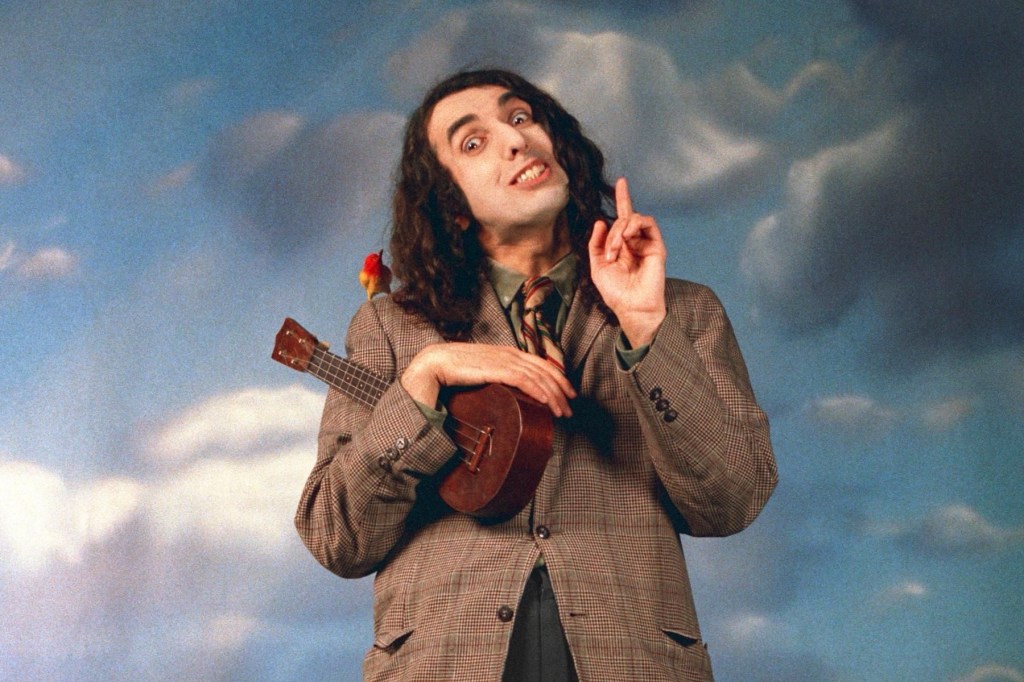
Outsider art is art made by folks with no connection to the “legitimate” scene, aren’t properly trained in their field, and/or often have stuff like mental illnesses and other disabilities working against them. In other words, not your glamorous ideal of an artist. Outsider art includes visual art as well (an infamous example being controversial cartoonist Christine “Chris-Chan” Weston Chandler), but on the music side of the loosely defined genre, you have guys like Tiny Tim, who somehow broke into the industry as a niche act armed with nothing but a ukulele and a wild falsetto. There’s the elusive proto-singer-songwriter Connie Converse, whose tragic life I actually immortalized in this very blog. Even Brian Wilson, the legendary freaking Beach Boy, was considered an “outsider” by some metrics, although this is debated. These are all characters I find infinitely more fascinating than the manufactured pop star image being pushed by the mainstream music machine.
Wouldn’t you rather read about thisdude?
I’d like to think the future of music rests with the outsiders. Whether they realize it or not, people tend to gravitate toward artists who have a fascinating backstory. It’s why Taylor Swift managed to captivate so many people despite being born rich and pretty — she was still able to sell herself as the girl-next-door underdog with a guitar and a dream. Fans have been revisiting the drama between bands like the Beatles and Fleetwood Mac for generations now. I feel like artists today are too sanitized and “professional.” We need musicians with personality. We need musicians who take chances. We need freaks, geeks, and weirdos making the music no one else would dream of. We need outsiders.
When I was studying music therapy, my eventual dream was to help everyday folks make music they could be proud of. I knew firsthand how healing the process of music creation could be, and I wanted to share that with my clients. Obviously, that dream died a horrible death — but maybe it didn’t. Maybe this is what I was meant to be doing this whole time. My friend group has been alight with ideas, and my phone has been blowing up with requests for new songs and beats to work with. Everyone is so excited to cook up fresh material, and it’s revitalized my love of creating music like nothing else. The crew even dubbed me the “Mother of Beats,” and I gotta say, after everything I’ve been through with music, it feels good.
I think our culture needs to rethink its relationship with music. Music isn’t only for attractive people, rich people, or able-bodied/neurotypical people. It’s the birthright of every human. Kids are always humming little songs to themselves — until society beats it out of them and says they’re not “good enough” to be singers. I’m fucking sick of that mentality. In a world where you can literally just beep-boop a “perfect” song, get dirty and create something yourself. Make it messy. Get your imperfections all over it. Who cares if it doesn’t sound radio-ready? The grit and grime are what makes it special.
I’m excited to see where The Kalamazooligans ends up. I hope it inspires more “outsiders” to get their hands dirty and create. Perhaps it’s a lofty goal, but I want to start a creative revolution, even if it never leaves this Midwestern college town with a silly name. If I can make my own corner of the world brighter, more whimsical, and more musical, I know I’ve succeeded.
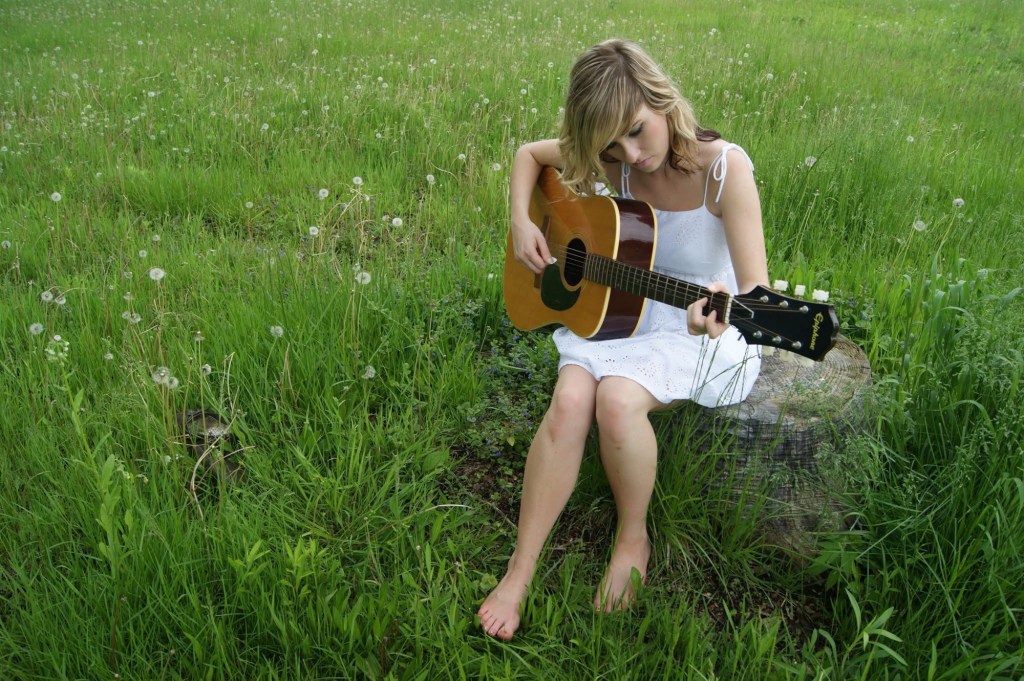
For literally over half of my life now, Taylor Swift has been an integral part of the soundtrack. Like, I did the math and everything — she’s been around for 19 of my 32 years on Earth. I’ll admit my relationship to her and her music has evolved significantly over the almost two decades I’ve been listening to her. At first, she wasn’t really on my radar because I was in my “too cool for country” phase every young rock fan gets at some point, but other girls my age liked her music, so she would soon enough osmosis her way onto my little yellow iPod. Even though I wasn’t a Swiftie at that point, I felt like I got her. After all, I, too, was a cute little blonde girl with an acoustic guitar who liked to make up songs.
Me at my Swiftiest.
As I got older, I started to truly appreciate her songwriting for what it was, and I found myself mimicking a lot of her stylistic signatures in my own songs. At one point, I played an open mic and someone complimented me on the “fantastic Taylor Swift cover” that was in fact an original song of mine. Taylor’s writing was deeply personal in a way nothing else I’d heard at the time was and I loved that. I loved the idea of writing something of an autobiography with every song and every album. I loved how she wove pieces of her lore into her music and almost gamified the art of dissecting it, introducing new generations to the crafts of lyric analysis and songwriting. And I loved that suddenly, it was cool to be a cute little blonde girl with an acoustic guitar, because it was never cool to be anything like me growing up. I was an outcast, but I saw myself in Taylor the way I’d also seen myself in one of my other musical heroes, Ann Wilson from Heart. And just like Ann gave me permission to be a badass rocker chick, Taylor gave me permission to be this quirky, confident, guitar-slingin’ poetess.
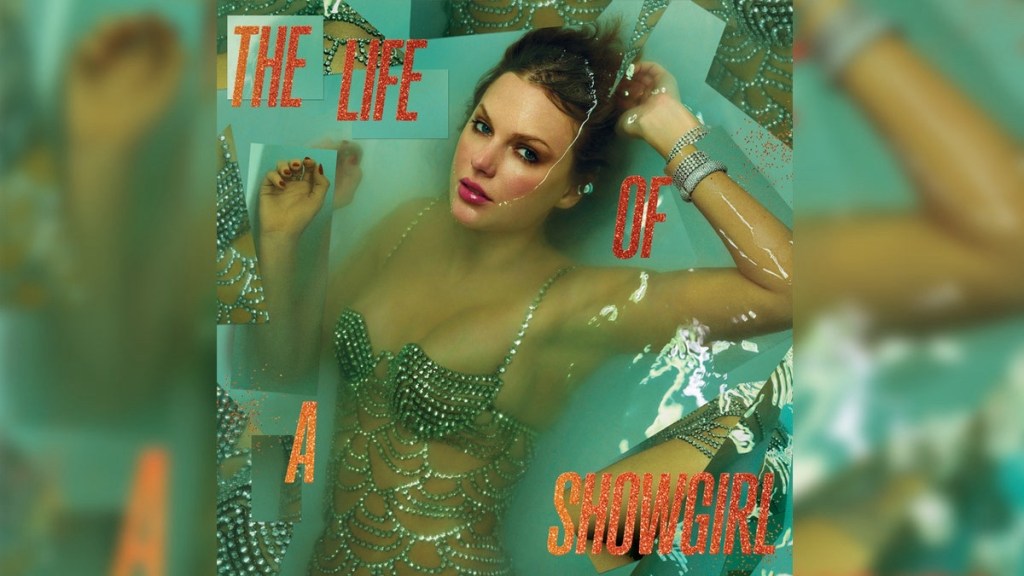
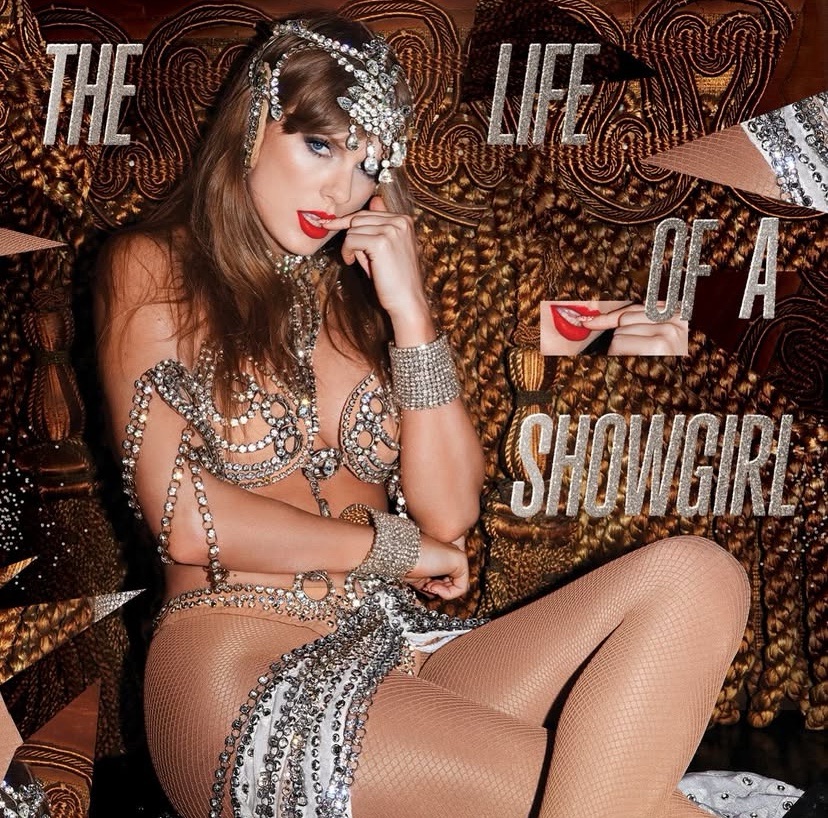
I guess that’s why I’m kind of mourning the Taylor I used to see myself in, because I’m finding it increasingly difficult to relate to the Taylor on The Life of a Showgirl. The album was released earlier this month to much fanfare and a strangely lukewarm reception from the fanbase. A lot of Swifties ate it up, which is to be expected. But some were entirely put-off by the controversies surrounding the album, such as the excessive limited edition merch, which many fans viewed as a shameless cash grab, or the lyricism, which some fans saw as an artistic regression at best and an indication that maybe she was a sucky songwriter the whole time at worst. There are literally listeners wondering if ex-boyfriend and former co-writer Joe Alwyn had ghostwritten the entirety of the widely beloved folk-tinged sister albums folklore and evermore. And then you’ve got the sociopolitical elephant in the room.
That’s the elephant.
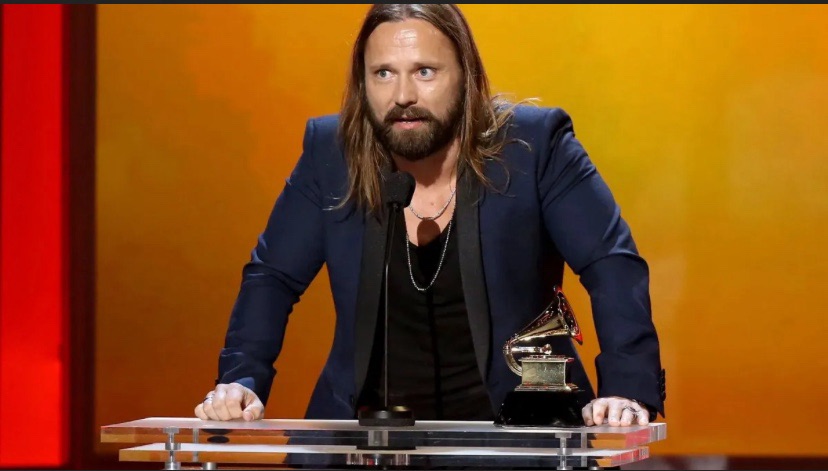
Yes, there are even Swifties convinced that Taylor had defected to the right-wing grift, citing some suspiciously tradwifey-sounding lyrics in a few songs. Don’t get me wrong, we’re going to delve into all of these controversies in this review, and I will say that some of the criticism is unfounded, while some is definitely valid. Because of the divisive nature of this album, I also want to divide my review into “music” and “lyrics,” as I feel the lyrics really need to be digested on their own. This is a strange Taylor album in that I feel the music is actually stronger than the words this time, thanks to the contributions of the man who essentially codified popular music for the 21st century, a certain Swede by the name of Max Martin.
The most famous man you’ve never heard of (unless you’re a fellow r/popheads weirdo).
Taylor going back to work with Max was already a shift for her, as her previous handful of albums had been handled by Jack Antonoff, former Fun guitarist turned pop producer extraordinaire. Because of Max’s involvement with 1989, an album many Swifties regard very highly, myself included (as it was the first album of hers I bought), expectations were beyond high for this album. It was supposed Taylor’s triumphant return to the effervescent pop the fans were craving after the 31-song sobfest that was The Tortured Poets Department. What we got, well, it’s complicated…
1. The Fate of Ophelia
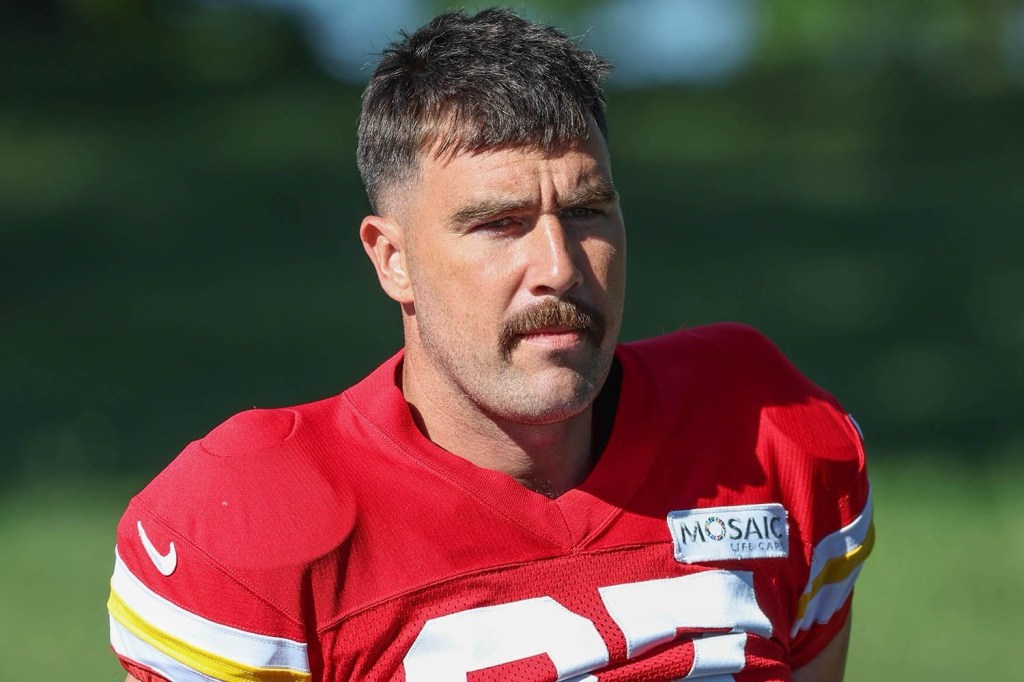
Our opener is fun, if a little underwhelming. It’s got a fun groove, although I was hoping for something a little more uptempo and major key. It feels somber for what’s supposed to be the big hit from the album. Some interesting music theory stuff — she adds an extra four-beat measure to each musical phrase, creating a sort of disorienting feeling. It’s not a bad thing by any means, and I enjoy when she plays around with the rhythm in an unusual way. Like, it’s easy to forget she has more thanonesong in 5/4 time. Lyrically, the song claims her man had rescued her from “the fate of Ophelia,” which, if you’ve experienced the classic Shakespeare play, is suicide by drowning after her man accidentally kills her dad and tells to fuck off to “a nunnery,” which was old-timey slang for a brothel. (At least that’s what my high school English teacher said.) This is obviously very dark material, but Taylor doesn’t get too into the nitty-gritty details, which keeps this song enjoyable as a fun pop song. My only gripes with the lyrics are the lines “Pledge allegiance to your hands, your team, your vibes,” which takes me out of the song entirely and reminds me I’m listening to Taylor wax poetic over this guy:
Like no offense, he seems like a nice enough dude. But I think I like her songs more when I can’t put a face to it. It allows me to insert my own story into the narrative and connect to it more. Which is why I’m thankful I’m polyamorous and recently starting seeing an athlete myself (and one of his sports is football), so at least I have somebody to dedicate all these “football man songs” to in my head. Someone in a Reddit thread suggested changing the “your team” line to “Pledge allegiance to your hand between my thighs,” which is a much sexier image than anything “Wood” conjures up (don’t worry, we’re getting there) and fits the rhyme and rhythm perfectly. I think that’s the direction I would have gone in had I written this myself.
Music: 5
Lyrics: 5
2. Elizabeth Taylor
This one starts off pretty soft, which is why the beat dropping in the chorus is almost a jumpscare, but I’d argue it’s in a good way. The music is lined with twinkly piano and cinematic strings, evoking the glamour of a bygone Hollywood era, apropos of its inspiration, the illustrious Elizabeth Taylor. I definitely give Taylor (Swift, that is) credit for introducing her young audiences to older media, and it’s actually pretty neat that Liz’s legendary film performances are getting a bit of a boost from this track. Like how cool is it that some Gen Z kid might check out Who’s Afraid of Virginia Woolf? and fall in love with the art of acting or filmmaking all because of some song?
I’m not in love with this one, but it’s solid as one of Liz’s White Diamonds. It’s one I would go out of my way to listen to again, just not on repeat.
Music: 6
Lyrics: 5
3. Opalite
Ooohah oh oh oh…Ophelia’s outta the water and springing to life in this one. There is no word to describe the vibe of this song besides euphoric. It is pure sonic bubblegum. It almost has the cadence of a joyous Christmas song. This is the effervescent pop the people were asking for. I can almost hear a little Abba in her delivery at times. The intro guitar is soaked in a dreamy delay and the rhythm is a little “Circles” by Post Malone, which isn’t a bad thing. The musical climax has a quartet of Taylors stacking harmonies a la The Beatles. I sincerely believe that this woman has the potential to go down in history as the millennial Paul McCartney. (Lord knows he has some “glitter gel pen” songs.)
The lyrics talk about lifting up a lover after a dark time. This song made me think of my girlfriend, Olivia, who suffered a series of unfortunate events prior to meeting me, of which the climax was her girlfriend abandoning her in time of need. I always loved how relatable Taylor’s songwriting is, and this is one of her most relatable songs on the album. I know there’s some discourse online about the unfortunate implications of the onyx vs. opalite metaphors in the chorus, essentially claiming the lines are gloating about stealing a white man from a black woman (since Travis’s last few love interests have been black). I don’t think those lines are an indication that Taylor is racist, although maybe she needs more non-white friends in her life to point out when something like this might come across icky. There are more glaring lyrical issues on this album than a line that was likely not racially motivated at all. Also interesting is the fact that opalite is an artificially made stone, which some folks online have analyzed to mean who the hell knows. All in all, though, this is a lovely little tune, one that lives up to its name as a gem.
Music: 8
Lyrics: 8
4. Father Figure
This one seems to be a fan favorite, but it was pretty forgettable in my opinion. Let’s be real, it’s probably about her fighting for her masters, but it’s framed as an older Svengali-type figure speaking to a young protege. He offers her protection and success in exchange for loyalty, but the partnership sours by the end. It’s told from the perspective of the “Father Figure,” interestingly enough, not the protege, and it’s lined with mafia references (“You’ll be sleeping with the fishes before you know you’re drowning”). Nothing about this track really stands out to me except the key change toward the end as the protagonist threatens the protege for her betrayal. The shift reminds me of how the key changes in “Getaway Car” as the narrative flips. These songs could almost be considered sister songs with the crime metaphors, but it lacks the sparkle “Getaway Car” had.
One of the overarching themes I keep bumping into, in addition to the fact that Taylor is no longer relatable, is the fact that this album is chock full of missed opportunities. “Father Figure” is one of the saddest wasted moments on the album because Taylor had gotten explicit permission to interpolate George Michael’s song of the same name, but squandered it. I would have loved for her to lean into the 80s vibe and more directly reference the original song, which feels absent aside from the one shared line at the start of the chorus. Overall, this had the potential to be so much cooler than it ended up being.
Music: 3
Lyrics: 4
5. Eldest Daughter
Even if you’re only a tiny bit versed in Tay-lore, you know about Song 5. (Not to be confused with “My Song 5” by her besties in HAIM — a great song in its own right.) Song 5 on any given Taylor album is often regarded as her most personal song of the batch. The tune widely considered to be her magnum opus, “All Too Well,” was Song 5 on Red. Introspective ballads “The Archer” and “You’re on Your Own, Kid” were also Song 5 on their respective albums, as were the heartbreaking “Dear John” and “So Long, London,” both about devastating breakups. So Swifties had every reason to expect Ms. Swift to absolutely fuckin’ do it to us this time around. And what we got was “Eldest Daughter,” a track arguably soiled by “hip” lingo, a missed opportunity to address the valid struggles of a firstborn daughter, and the real life context behind the song being Taylor’s big overblown romance with Travis Kelce of all people. Needless to say, most Swifties were not satisfied.
But I am not “most Swifties,” and I hesitate to say it, but “Eldest Daughter” might not just be my new favorite Song 5, but my new favorite Swift-penned song altogether. I think the problem is a lot of Swifties aren’t in the target audience for this song. It’s not for happily single Gen Z kids who are just now making their way in the world. It’s for a jaded Millennial who finally found real, fulfilling love in a world that’s become increasingly hostile in the time since they’ve been alive. It makes me think of my own wife, an “eldest daughter” (well, technically an only daughter, but the familial pressures are still there). I’m the “youngest child” in this case, and while I know I’m not a “bad bitch” or the most exciting option out there, I’m my wife’s teammate. We’d recently overcome a lot of both interpersonal and external conflict together when I first heard this song, and the line “I’m never gonna leave you now” hit me like a truckload of frozen turkeys because my wife had said that exact sentence to me verbatim. I have plans to record a covers EP in lieu of NaNoWriMo this year, and I want to include this song on it because it literally feels like something I could have written myself. And that bridge. If you listen to this song for no other reason, listen to it for the bridge. It rivals “This Love” as my favorite Taylor-made bridge of all time.
Music: 10
Lyrics: 10
6. Ruin the Friendship
Okay, my crackpot theory is that this song — or at least parts of it — was originally penned during the Speak Now era, and was shelved until recently. I realize I have very little to back up this theory except that sonically and thematically it fits very well with Speak Now, and suspiciously enough, the friend whose death is mentioned in the song had passed back in 2010, which would have been around the time that album was being written and recorded. But this groovy little track feels nostalgic for a number of reasons, and not just the breezy instrumental that sounds like a 70s-tinged version of early Tay. This feels like a return to form for her with the confessional lyrics about an unfamous guy in a high school setting. This is the sadder older sister of “Teardrops on My Guitar” due to the cruel twist ending of the would-be love interest dying in the final verse. Taylor gives her advice, having experienced this pain — just “ruin the friendship,” rather than always wonder what could have been.
I think the reason some folks have taken issue with this song is the implication that the love interest has a girlfriend in the song, and Taylor seems to regret not making her move regardless. I guess that can seem a little insensitive coming from the woman who wrote “Girl At Home” chastising a man for trying to cheat with her, noting that he has a “girl at home” he should be with instead. I don’t see it that way, though. Humans are messy, and sometimes, the thoughts we have after a loss aren’t exactly neat or even “nice.” Maybe it’s not exactly “politically correct” to wish you’d just kissed that guy who had a girlfriend and now he’s dead so you can’t, but that’s the nature of the human experience. The beauty of music is that it can encapsulate all of those conflicting feelings.
Music: 7
Lyrics: 6
7. Actually Romantic
Taylor Swift is one of my all-time favorite songwriters and an artist I admire deeply. That being said, she doesn’t always have the best ideas. Take, for example, responding to Charli XCX’s “Sympathy is a Knife” with…this. For context, that song is about Charli’s insecurities when it comes to being around Taylor. And I mean, who wouldn’t be insecure around her? She’s tall, conventionally attractive, talented, wildly successful, and at one point was very entrenched in Charli’s world, having dated her now-husband’s bandmate in The 1976. So Charli had to be around THE Taylor Swift on the regular for quite some time, and she was understandably feeling kind of…down about that. So she wrote a song about how Taylor’s larger-than-life presence makes her feel comparatively lesser.
And Taylor’s response was basically “Yeah, you’re right, you do suck compared to me. And I bet you’ve got a big lesbian crush on me too.”
*Chappell Roan voice* And we both have a crush on Regina George!
It’s a really disproportionately mean-spirited song when Charli’s main beef with Taylor was “you’re too cool for me to be around.” But here’s the thing — if you divorce it from the real-life implications of the song, it’s actually probably the best track on the album. It has a laid-back guitar-driven instrumental and the same chill chord progression as the 1988 Pixies classic “Where is My Mind?” (Which, in Taylor’s defense, chord progressions cannot be copyrighted, so the discourse around whether or not she copied it has been driving me bonkers.) I decided to learn it on guitar myself after it came out because it was stuck in my head, and I found when I sing the song, I picture this batshit bananapants bitch from my town’s karaoke scene who screwed over all my friends and I’m not sure wants to have sex with me or murder me. It fits her way better in my opinion.
Music: 10
Lyrics: 1 (when they’re about Charli)/100 (when they’re about crazy karaoke bitch)
8. Wi$hli$t
We’re getting to the real depths of this album with this track, which I’m truly disappointed was not a Kesha feature (if she can bring back the dollar sign for “Kinky,” she can do it for a Taylor collab). My disappointment goes far beyond the lack of Kesha, though, as this song is a total snoozefest. Trite chord progressions, the same tired twinkly synth, and weak breathy vocals really work together to make this song musically forgettable, but I haven’t even touched on the lyrics yet. Other people want yachts, exotic destinations, and complex female archetypes with fat asses, Taylor croons, but she just wants a suburban white picket fence life with her man. I take issue with the entire concept of this song for two reasons. For one, the whole “I just want babies ever after with my true love” trope feels icky in a world where white women’s bodies are increasingly being viewed as nothing more than baby factories to combat the “Great Replacement,” a theory endorsed by Elon Musk and Charlie Kirk, among others. I hate the fact that the conservative movement has all but co-opted the idea of wanting children and a family — I’m as left-leaning as it gets and I want to be a mother more than anything, and it’s actually really offensive to conflate right-wing talking points with having a family. Unfortunately, though, it is a common assumption these days, and I don’t think it’s too far-fetched to believe a lot of high-ranking right-wing elites are squealing at the thought of Taylor going full tradwife. I think the more glaring lyrical issues, however, lie in the “let them eat cake” attitude of the pre-chorus coming from a literal billionaire. Like, no Taylor, most normal people don’t give two fucks, flying or otherwise, about chopper rides or Balenciaga shades. I care so little about Balenciaga, I had to look up how to spell it. Most people just wanna eat, Taylor.
Music: 1
Lyrics: 1
9. Wood
On her old song, “White Horse,” Taylor declares that she is “not a princess” (and this ain’t a fairytale). On this song, she also demonstrates that she is also not Prince. I’ve never listened to an artist sing about the birds and the bees before and finished the song wondering if they’d ever even lost their v-card, but Taylor here is delivering the unsexiest slop I’ve ever heard. I know she can do sexy, and well. We have “Dress,” of course. But this song falls flat. I wish she’d just lean into the silliness of the lyrics and deliver us an irreverent Sabrina Carpenter-esque banger, but she needs to sell it to us. You can’t half-ass camp. No more “ah-matized.” Taylor, you told us back on “Father Figure” that your “dick’s bigger.” Well, give us that big dick energy on this track. Lean into the absurdity of sexuality. Make it equal parts horny and corny.
It’s hard (heh) to focus on the musical aspects of the song when the lyrics are so egregious, but a lot of the discourse surrounding this song that isn’t about Travis Kelce’s penis is the fact that the intro sounds suspiciously like the intro of the Jackson 5 classic “I Want You Back.” It’s musically different enough that I don’t think she outright copied the Jacksons, but I definitely think she is intentionally aping that sort of sunshiny vintage 70s style. That being said, like the similarities in “Actually Romantic” to the Pixies track, these are not really things you can sue over, but then again, with how horrifically litigious the music industry has been post-“Blurred Lines,” one might actually be able to make a case against this song. I don’t believe in the concept of copying music anyways, as it’s a deeply derivative art form — everyone wants to emulate the rock stars they looked up to — and that is why I’m not going to give Taylor crap for this one. There are much worse sins happening within this song.
Music:5
Lyrics: 1 (for making me think about Travis Kelce’s penis for waaaaay longer than I wood have liked)
10. CANCELLED!
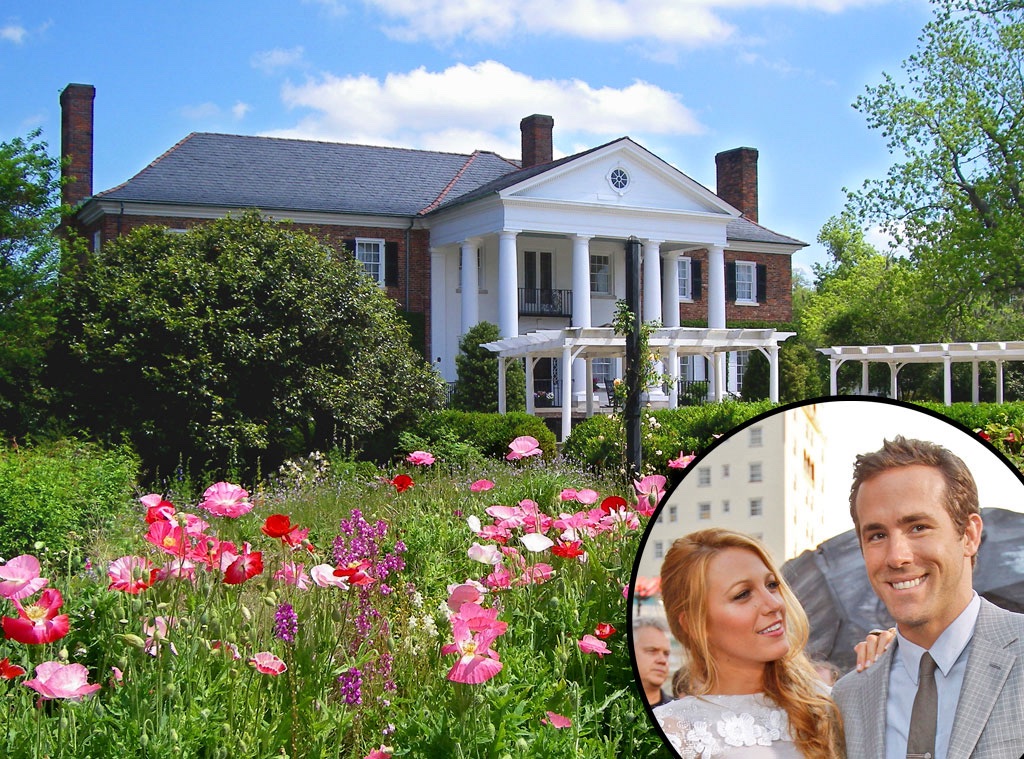
I feel like at least in the music criticism circles I frequent, this has been the most controversial song of this batch for its lyrical content. Which, depending on who you think it’s about, makes this Reputation-tinged song either kinda icky or downright sinister. Some folks think it’s about Brittany Mahomes, a noted Trump supporter, and feel it’s further indication that Swift is drifting right in her politics, or worse, that the “Miss Americana: Social Justice Warrior Princess” persona was nothing more an act (which definitely sucks if true). Personally, though, I feel it’s about Blake Lively, her fellow statuesque blonde best frenemy, whose friendship soured when…I’m not sure. Something about her recent film It Ends With Us. I haven’t been following it closely because frankly I don’t care. Blake doesn’t seem like the worst person, if you sweep that whole “getting married on the site of terrible human atrocities” thing under the rug.
Literally two seconds on Yelp could have averted this, guys.
Here’s the thing, though — Blake apologized for that transgression. Does it make it okay? Absolutely not. Was she dumb for doing it? Totally. But we live in a society where you do one stupid or insensitive thing and your entire life is ruined forever. And Taylor could have made this song about that concept and done an amazing job at it…but she didn’t. It feels like a giant missed opportunity to call out the trigger-happy ridiculousness of cancel culture. I do like the song sonically to the point where it may be my favorite on the album musically, and I actually like it more when I give it a new backstory. Like, imagine it as the backdrop to a character’s face-heel turn, like in Mean Girls when Cady goes full-on Plastic. That’sthe shit this song was meant for.
11. Honey
The most forgettable one. The concept is cute — basically talking about how words that were once used against you passive-aggressively actually sound nice from the lips of a lover — but it just falls flat both musically and lyrically for me. A nothingburger of a song, sadly.
Music: 2
Lyrics: 4
12. The Life of a Showgirl
The final song, and one I wish was a little more glitzy and schmaltzy considering the lyrical content, but I’m pretty pleased with this one as an album closer. It features Tay protege Sabrina Carpenter, best known for doing “unhinged and sexy” way better than Taylor could ever dream (as evidenced by, well, “Wood”). The ladies recount the tale of Kitty, the titular showgirl who made a comfy living by being “pretty and witty.” This is the first and only time Tay brings in an “outside character,” which is a damn shame considering some of her best work has been written about third parties as opposed to herself. Who can forget the brilliant trilogy that was “cardigan”/“august”/“betty” from her acclaimed folklore album? Taylor has a way of getting us invested in the lives of these fictional people, and I feel like her songwriting on this album could have benefitted from incorporating more characters like Kitty. Hell, I would have loved to have seen an entire concept album about Kitty and her struggles. Add that to the pile of missed opportunities for this album.
All that being said, this was a fitting finish to the album, especially the glistening outro, which feels like it opens up into one of Taylor’s widely celebrated Eras shows, complete with the crowd going wild. In a way, it feels like the older, wiser sister of Speak Now closer “Long Live,” a track that also celebrates the spotlight and the hard work it takes to become practically immortal through your art. In typical Swiftian fashion, she pulls out the plot twist in the bridge — she and Sabrina were not discouraged by Kitty’s blunt honesty about the harsh realities of showbiz, but instead chose to pursue the dream with their whole heart. It’s a bittersweet ode to the ups and downs of life as an entertainer, a calling that, while difficult at times, can be a rather fulfilling one indeed.
Music: 7
Lyrics: 8
In summary, I feel this album is a solid effort from Swift, albeit one that could have used a little more polishing and “reading the room” before seeing a proper release. These songs would have been well received from literally any other artist, but I understand how lyrics about having friends dripped in “Gucci and scandal” feels out-of-touch from a powerful billionaire when most listeners are struggling to afford groceries. I would have also loved to see Tay explore Kitty’s story more — there is an entire backstory there I’m dying to learn more about. All in all, this album is an enjoyable excursion, though maybe not one I’ll listen to all the way through again. There are some great moments, but also some very clear nadirs as well.That being said, many of the songs are on repeat for me at the moment, and “Eldest Daughter” may just be my new favorite Swift-written song ever, so this album may be one that takes a little longer to fully appreciate.
5/10
If you enjoyed the writing in this post and elsewhere on the site, please consider donating to Jessa’s tuition fund! Any help is appreciated!
Ah, Taylor. I don’t even have to write her last name and you already know who I’m referring to.
It’s me, hi!
Unless you’re just getting back from a year-long sabbatical during which you traversed the steppes of Uzbekistan with nothing but a backpack and no phone, you probably well aware that Ms. Swift just dropped a new album. And it’s…just okay. It’s nothing to write home about, especially when compared to her masterful previous works, and the lyricism seems to have regressed significantly. I’ll probably write a full review of the album in the next week or so, but I wanted to touch on one of the biggest talking points that’s come up during this album cycle. And it’s probably the talking point that’s been driving me the most bananapants.
Which is just how hilariously clueless the general public is when it comes to music.
Okay, that might have sounded a bit mean coming from a bitch with a music degree and decades of experience, so let me reword it a little nicer — the vast majority of the population has no idea how music theory actually works, especially in the context of copyright law. Now I’m not a lawyer, but I do know a little bit about what can be copyrighted and what can’t. Still, I want to focus more on the music side of things rather than the law side, because that’s the more fun side, right?
I guess you could count this thing as a percussion instrument.
Anyways, let’s start here — you got these songs. There’s the questionable Charli XCX diss track, “Actually Romantic.” Among the many complaints about the song, particularly that it’s disproportionately mean-spirited, is the observation that it sounds suspiciously like the 1988 Pixies single “Where Is My Mind?” Then you have “Wood,” Tay’s tacky ode to her man’s…manhood, which people have said sounds suspiciously like the legendary Jackson 5 hit “I Want You Back.” And the song I consider lyrically the strongest of this batch, her title track collab with my current celebrity girl-crush, Sabrina Carpenter, shares a similar feeling to “Cool” by the Jonas Brothers, who were famously her associates early in her career. So what the fuck, Taylor? Are we blatantly ripping off other artists now?
And here’s the part where I get to say “Well, ACKSHUALLY” and defend Taylor’s compositional choices (even if some of the lyrical choices are much harder to defend — looking at you again, “Wood”).
Thank you SO MUCH for making me picture Travis Kelce’s rock hard redwood tree…
In the Western music tradition, you’ve got 12 notes: A through G, plus the sharps/flats in between. It’s important to note that out of these 12 notes, only a handful sound good together. Those notes that sound good together form the “key” of any given song. The key is essentially the artist’s palette of colors. Those are the notes you can put in your song that will actually sound like they fit in the song. Anything outside of the key will sound off and even unsettling at times. That being said, you can use notes that don’t fit into the key, but it takes a certain degree of finesse and theory knowledge to pull off nicely. But for the most part, you’ve got maybe seven notes to work with, which, ya know, ain’t a lot.
Let’s get to chord progressions. What is a chord progression? Well, have you ever listened to “Poker Face” by Lady Gaga and Luis Fonsi’s “Despacito” back to back? Even though the genres of the songs are completely different, the “vibe” is still eerily similar. And that is because they share the same chord progression. There are many, many more examples. “Africa” by Toto. “One of Us” by Joan Osborne. “Peace of Mind” by Boston. “Fuckin’ Problems” by A$AP Rocky. “Alone” by my freaking favorite band of all time, Heart. And that’s just one famous chord progression. The progression the Beatles used in “Twist and Shout” was practically ubiquitous in the 50s and 60s, and the blues as a genre likely wouldn’t even exist without the 12-bar progression we know and love. And — this is important — you cannot copyright a chord progression. If I wanted to write a song that uses the exact same chord progression as Taylor’s “Love Story,” I could — and I have. Heck, she has even plagiarized herself in this regard. Go listen to “Shake It Off” and “Eldest Daughter” one after the other and tell me the latter doesn’t sound like a more somber, slowed down version of the first. That’s because they use the same three-chord progression.
Did Tay lift the chord progressions for her new songs from preexisting songs? There’s a chance, but even if she did, you have to remember that musicians have been gleaning ideas from each other for time immemorial. Everyone is influenced by someone. But there’s also a decent chance she just sat down at her piano or with a guitar and those are the chords that naturally came out. Because, like I mentioned earlier, they just sound good together. Our ears are conditioned since birth to listen for patterns in music, and you’re so used to hearing a V chord resolve into a I chord (that’s historically the most common way to end a musical phrase — the authentic cadence). So when you go to write a song, that’s what you naturally gravitate toward.
There is a great deal of discourse around the supposed lack of originality on this album, but I don’t think that’s a fair critique. I think there are plenty of valid critiques when it comes to this album, but I don’t think this is one of them. You could argue that Taylor opened herself up to more scrutiny in this area when she went after Olivia Rodrigo for rights on a song that only marginally sounded like hers (and like, only if you squint). At the same time, I don’t like any criticism of “copying” in songwriting unless it’s a particularly egregious example. Music, at the end of the day, is a social art, and musicians are going to keep borrowing from each other like they always have. As one of my favorite writers, Austin Kleon, says, it’s okay to “steal like an artist.” I’m allowed to have influences. You’re allowed to have influences.
I got into a fight with a guy on social media this morning.
Well, it was more “me picking on a prude on a Sabrina Carpenter post.” They make it very easy to do on Sabrina Carpenter posts because whenever there’s a post about Sabrina Carpenter, the prudes love to get on their high horses about how they would never stoop to taking off their pants to sell records.
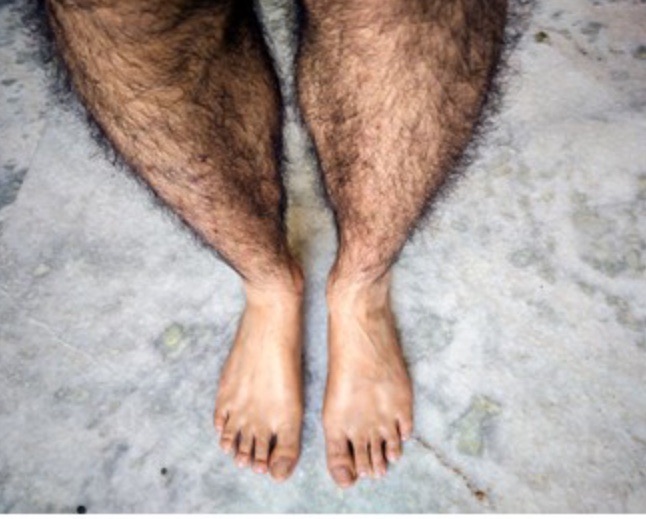
As if anyone would pay to see your hairy gams, Greg.
Of course, I said something inane about pants being a crutch anyways and how nobody should wear pants, because I love creating awkward moments for folks who comment slut-shamey things about girls’ bodies. Then, the guy I was talking to said something that I’ve heard many, many times before. The classic line. You know the one.
Think of the children!
As if that’s a valid argument when the artist in question is a few short years from thirty and has no interest in making music for children anymore. God forbid a grown woman make songs about things that interest grown women instead of pandering to the same base she had as a 14-year-old. I’d be losing my shit if I had to essentially stay artistically 14 forever. Maybe, I argued, parents need to be parents and monitor what their kids are listening to.
But, I realized, you can’t just say “Well, put on something else for your kids!” and not have a dang clue what that alternative even is.
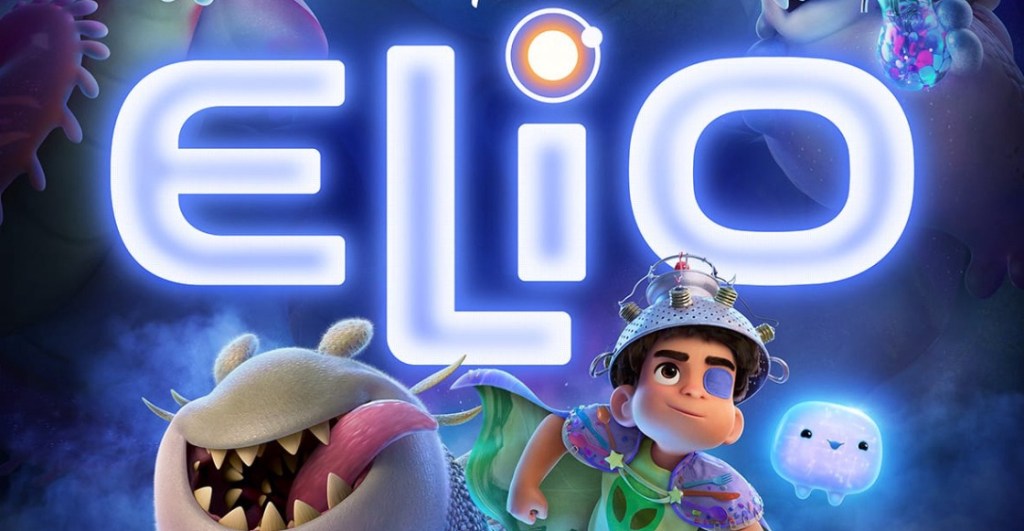
All this to say that children’s programming is pretty abysmal as of late. We don’t have “cool” adults like Bill Nye, Steve Irwin, or LeVar Burton teaching our kids basic subjects anymore, save for like, Ms. Rachel maybe. Nobody even knows the main players in children’s entertainment anymore. I make a living as a trivia host and a few nights ago, a question was asked about Cocomelon, one of the top three YouTube channels by subscriber count and the premier platform for videos for kids. Nobody got it right. And by the way, how did Disney’s latest movie do?
At least it’s not a remake.
I might not be the most qualified person to write this blog post. I’m not a parent, at least not yet. But I plan to start looking into avenues into motherhood in the next few years, and I want my future kids to have entertainment that actually allows them a childhood. I love Sabrina Carpenter, but I’m not letting them listen to her until they’re able to comprehend that “House Tour” (my new favorite song of hers, by the way) is not literally about showing off your new home.
“And I promise none of this is a metaphor.”
They say to be the change you want to see in the world, and I have a feeling that when I do pop out a baby of my own, I’ll likely try my hand at creating children’s music myself. I’ve toyed with the idea already, but I feel out of my element trying to make content for kids when I don’t really have a child of my own yet. Still, I know when Cadence is here, I need to make sure she has music to enjoy without me worrying she’ll pick up impolite language. Because if she’s anything like I was when I was little, that girl is gonna have some echolalia going on.
The world is a fast-moving place and kids are growing up quicker in a lot of ways. We need to make sure the next generation is getting positive messages. It’s not just about keeping kids from seeing or hearing about sex and violence, but also about encouraging the good stuff. That’s why the recent cuts to funding for PBS are so disheartening. I’m cynical enough to believe the shift is deliberate. Kids are more useful to corporate interests when they’re essentially little adults buying products. Look at the trend of literal children buying anti-aging skincare and showing it off on TikTok. You can’t convince me Big Cosmetics isn’t partly to blame. But at the end of the day, everything rests on dear old mom and dad.
Maybe she’s born with it, maybe it’s questionable parenting choices.
It breaks my heart to think that kids these days don’t have the same kind of warm, wholesome childhood I had. We’ve abandoned car rides with Barney cassette tapes for iPads loaded with click bait and rage bait. And that, my friends, is no way to grow up.
Brace yourselves, kids. In this post, I mention both Heart and Taylor Swift.
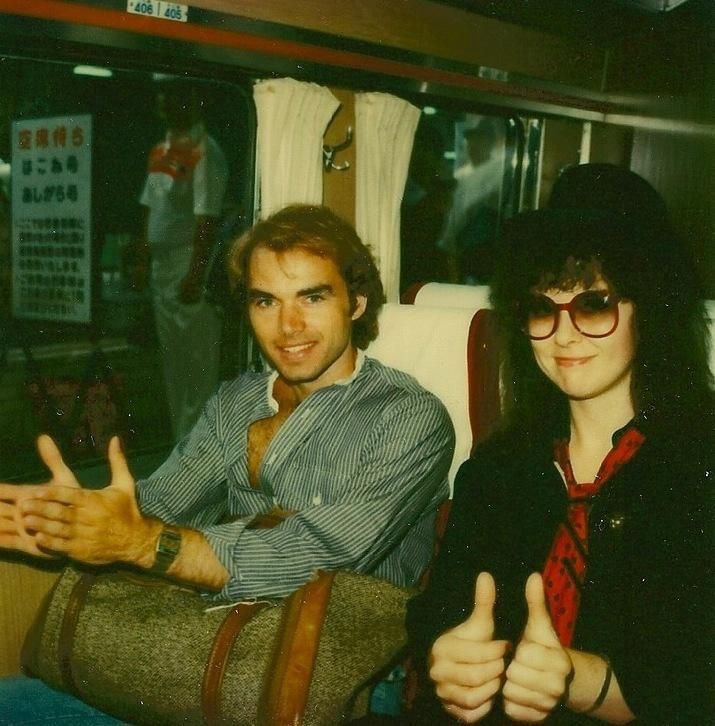
A few days ago, Heart’s original manager, Michael Fisher, passed away. Actually, calling him just their manager is kind of an understatement. In the autobiography of Heart frontwomen Ann and Nancy Wilson, Kicking & Dreaming, Ann tells the story of how Michael was her first love. Their whirlwind relationship inspired one of the band’s earliest and most iconic songs, “Magic Man.”
Why do I mention this? Obviously, Ann and Michael didn’t work out. Michael ended up marrying someone else and having like eleven freakin’ kids, and Ann went on to become a rock star. But their stories are forever intertwined because of that one song. And that’s what this post is about, because when you write a song for someone — or create any art in their honor — you’re preserving a piece of that relationship forever.
I’m a lifelong songwriter. I’m also fascinated by interpersonal dynamics. If you took every song I’ve ever written throughout my life, they would tell countless stories of people who have come and gone and somehow left a mark on me. The songs almost act as containers for the emotions left behind by those old relationships. Each song is a museum of memories. That’s why I have this theory when it comes to songwriting. Well, maybe it’s more of a maxim than a theory. And the maxim is this: If you get even one beautiful creation out of a relationship, it was not a waste of time.
People enter into relationships usually expecting — or at least hoping — to spend forever with someone. The point of dating is to find “your person” (or people, if you’re polyamorous like myself). So when relationships go south, it’s easy to write off the entire experience as meaningless. That’s where art comes in, though. With the magic of creativity, even the shortest-lived tryst can be fuel for a song or a film or a poem or painting.
Taylor Swift is a songwriter I admire deeply, and she’s a great example of this maxim in action. People have given her so much shit throughout the years for writing about her relationships, but honestly, that’s one of the things I like about her writing style. Not because I’m one of those parasocial weirdos who obsess over her dating history, but because that’s how I write songs too. I write about people. She has had many exes, as have I, but I feel like that’s what makes us better at writing. We have these lived experiences we can churn into music, and nothing can take that away from us. Like, she’s not with Taylor Lautner anymore and she hasn’t been with him for over a decade. But “Back to December” is still a beautiful song all these years later, and a song that millions of people still listen to and relate to.
I think of my own songwriting similarly. I think back to Jacob, whom I had a short-lived fling with my freshman year of college that led to the writing of “Smiles & Anchors” and “Tsvi.” I think about Dylan, my high school crush, who inspired “Off the Deep End” and the unreleased track “Outta My System” off my upcoming album Lore. There’s TJ, the muse behind “Song of the Sea,” and Phil, who never reciprocated my feelings but nonetheless influenced the writing of “Oceanography.” There are even songs I’ve squeezed out my non-romantic relationships and the ones that really went south, like the falling out with a former bandmate that led to the writing of “Ladies Don’t Start Fights (But They Can Finish Them).” I can find closure for relationships I wasn’t ready to leave just yet, and peace in relationships I’m happy are over, all because I’ve been able to transmute the pain into something I’m proud of.
I know I write about songwriting pretty frequently, but it is something I’m deeply passionate about. It’s what has gotten me through many breakups and heartaches and unrequited loves. But none of those situations were in vain, all because I could make something beautiful out of them. Relationships — romantic and otherwise — are the backbone of songwriting. We write about human beings and the way they relate to each other. Maybe those relationships don’t last forever, and sometimes, they shouldn’t last forever. Michael Fisher may have been absolutely miserable had he ended up with Ann Wilson, and vice versa, but the love they shared briefly inspired music that people will treasure for generations to come. And to me, that’s the beauty of songwriting.
If you enjoyed the writing in this post and elsewhere on the site, please consider donating to Jessa’s tuition fund! Any help is appreciated!
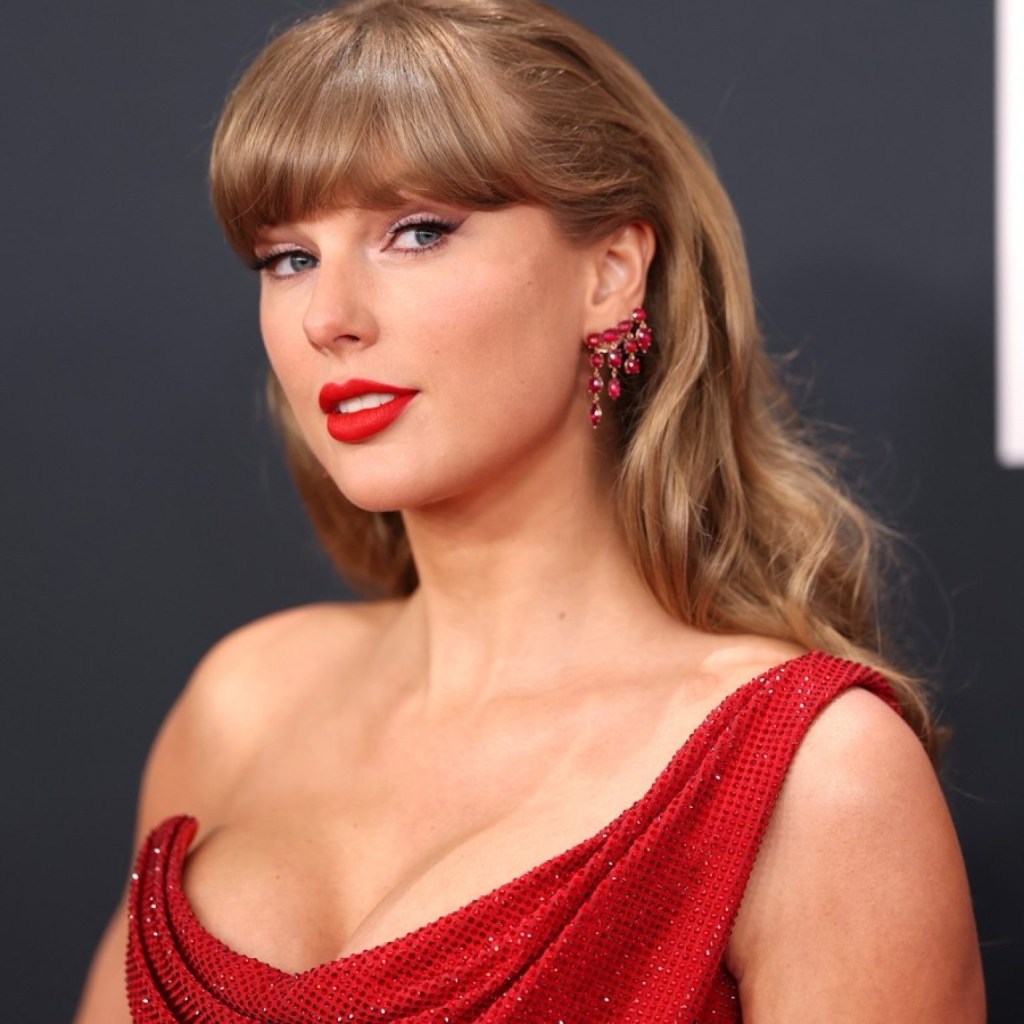
And I am announcing that I am very gay for this woman.
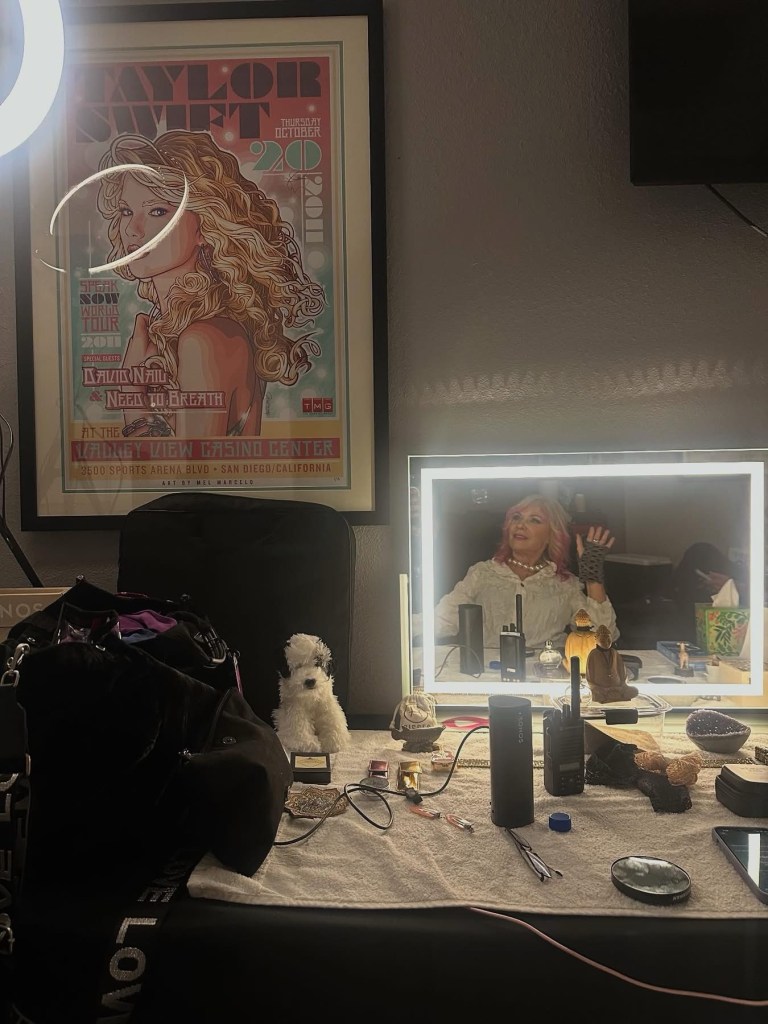
The world came to a crashing halt, all because the biggest pop star on the planet teased some new music. Fans, celebrities, corporations, and motherfucking Elmopaid homage to Swift in their own ways. Even one of my personal heroes, Nancy Wilson of Heart, got in on the Tay love, posting this picture with the caption “life of a showgirl.”
To be clear, Nancy is the woman in the mirror, not the tiny adorable pupper.
With the announcement of the new album casting an orange glow over the world, it’s easy to miss the fires that have been raging the entire time. Trump’s Big Bonkers Bill is gutting healthcare for millions of Americans who rely on it. Public radio and television, one of the last bastions of true journalism and free speech, is also being gutted. And you have that quadruple-divorced fucko who swears she knows so much about the “sanctity of marriage” trying to take away my right to have a wife and family, so I mean, it’s fucking personal now. Then you throw on everything happening in Ukraine and Palestine and it’s fucking exhausting. The world’s on fire. Innocent folks are dying, and everyone’s freaking out over a Taylor Swift album?!
But — and hear me out, here — that might not be a bad thing.
I’ve written on this site about the concept of “glimmers,” which are functionally the opposite of triggers. While a trigger is an event that causes you to feel uncomfortable or afraid, a glimmer is an event that brings intense joy. They’re the tiny moments that make life worth living. A lot of glimmers come through art. Think about the last time a song gave you chills or the plot of a film or book moved you. Those are glimmers in action.
It’s easy to write off the creative and performing arts as vapid and unimportant, but art is a rebellion against a world that tries to quash any anti-conformity and critical thinking. Art is an invitation to think deeper — something the oligarchs don’t want us to be doing. Even mainstream art like Taylor’s is punk as hell in times like these, as it unites folks together. Music gives people hope. It inspires. It galvanizes. I think that’s part of why the elites are keen on eliminating things like arts education and pushing AI to make things instead of training up human artists. Art is dangerous. Creativity is dangerous. Hope is dangerous.
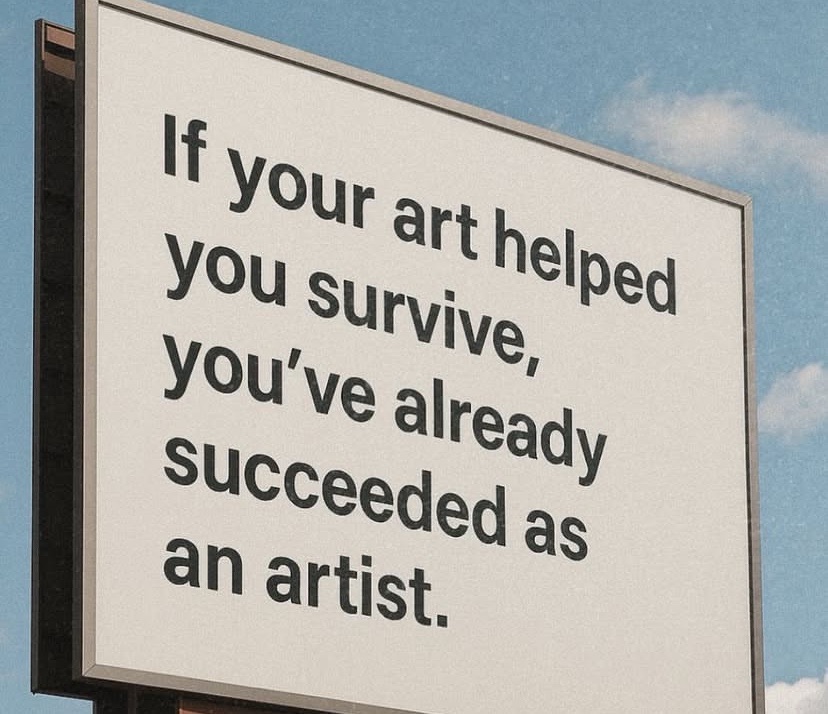
I don’t think it’s a coincidence that this image popped up on my feed while I was doing research for this post:
This is a simple but true statement, and I’d apply it to both your own work and other people’s works. If an artist’s music helped you in any capacity to enjoy your time on this planet, if even one song paints the planet just a little brighter for a moment, it served its purpose. And that purpose is to be a sort of analgesic to the pain of everyday life. That’s what I believe Taylor understands so deeply, and that’s what I hope to embody in my own creative endeavors. The life of a showgirl is to serve glimmers and bring hope.
In a world that is intent on snuffing out anything whimsical, beautiful, or different, embrace that spark that makes life worth living.
If you enjoyed the writing in this post and elsewhere on the site, please consider donating to Jessa’s tuition fund! Any help is appreciated!
Not so secret confession: Bon Jovi is my favorite band.
Well, I don’t know about absolutefavorite. That honor probably goes to Heart at the moment, who I also seldom shut up about. But Bon Jovi my “comfort band” for sure, a nostalgic auditory bowl of chicken noodle soup when I feel most torn up about adult life. They were my childhood obsession, and if there was a “Jessa Don’t Talk About Bon Jovi For One Day” Challenge, I’d lose almost immediately. Richie Sambora is half the reason I play guitar (the other half being the fact that one-on-one guitar lessons were the only activity my then-undiagnosed ADHD ass couldn’t get kicked out of).
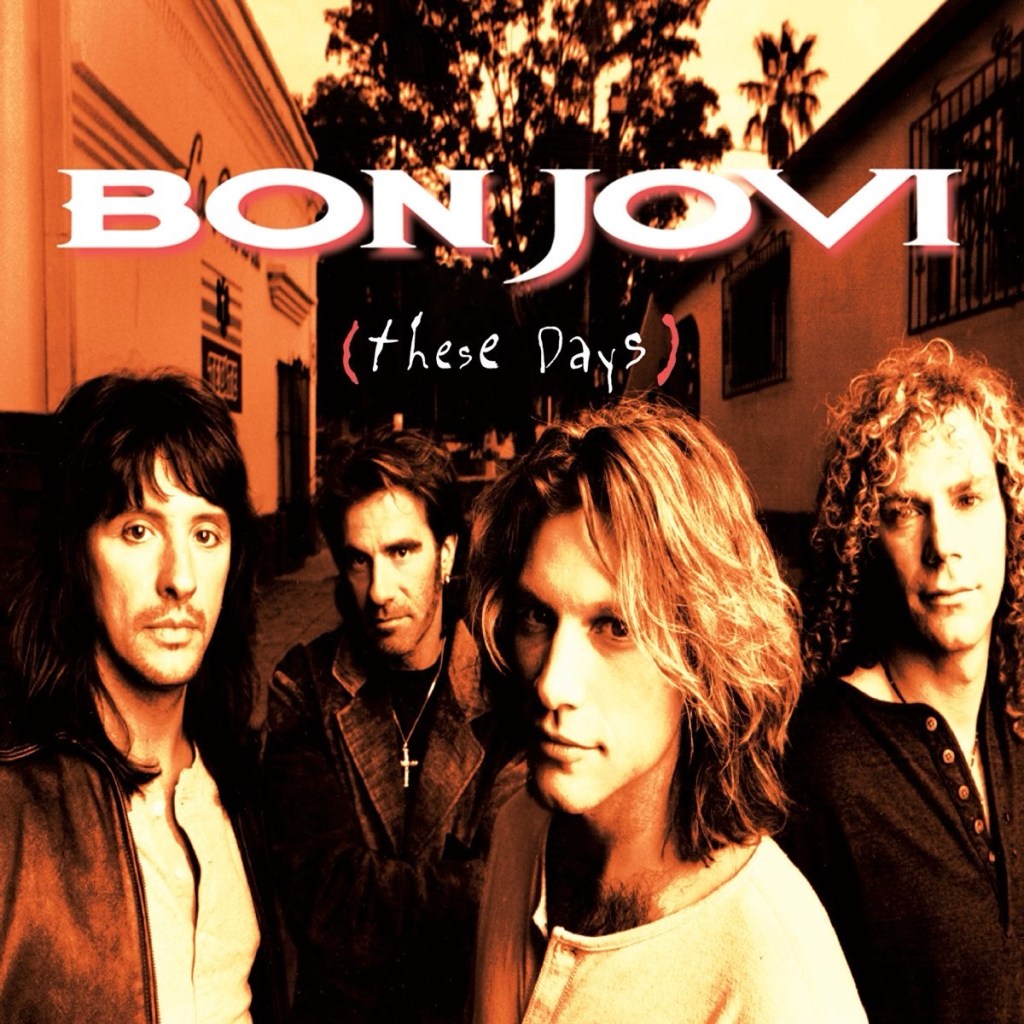
Yet despite my immense love of Bon Jovi as a youngin’, there was one single song that was always a “skip” for me. That song? “Something to Believe In,” a track from their wildly underrated 1995 flop, These Days, an album that, to Adult Jessa, has absolutely zero skips because it’s just that good.
It certainly didn’t help the song’s case to be a power ballad, as that was an art form that would take me a few more years to properly appreciate. But the lyrics were what gave me the most pause, as a good little church girl. The opening lines say it all:
I lost all faith in my God
In His religion too
I told the angels they can sing their songs to someone new
Yeah, you can kinda see why this song gave me pause. It makes me think of my first time going to youth group, right in the middle of this huge campaign to gather up “ungodly” albums and other media for a huge bonfire. I was too attached to my beloved Bon Jovi collection to send it to the flames just yet, but it did make me rethink what I was listening to. And I could not, as a good little church girl, listen to something that so blatantly questioned God.
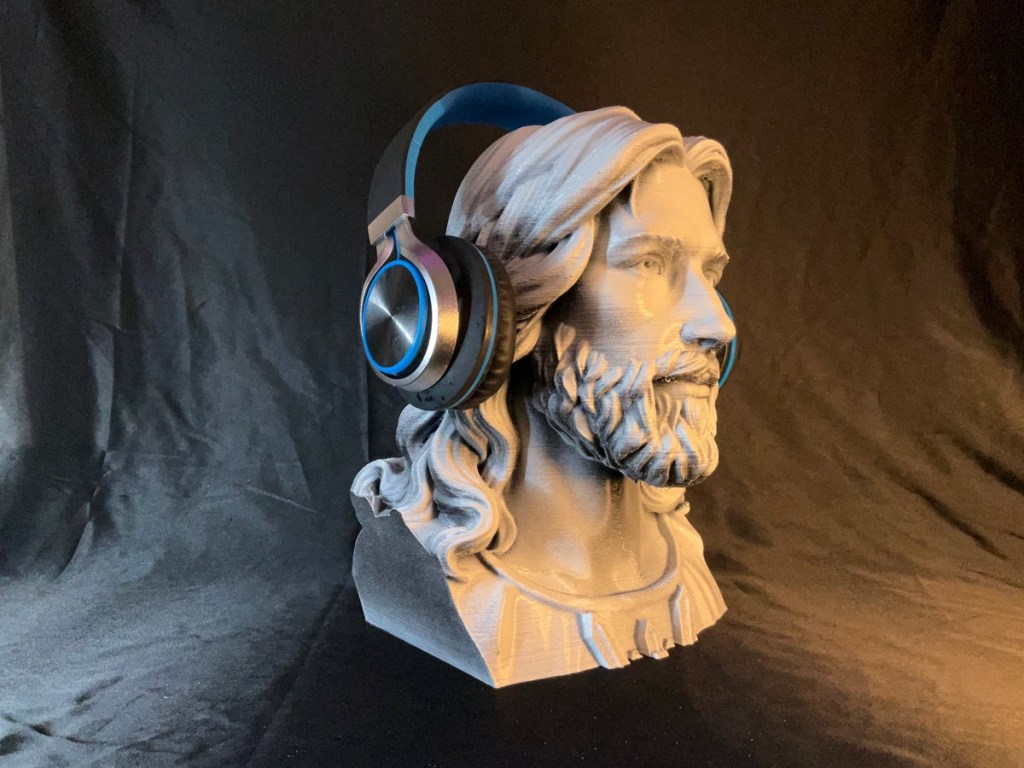
What would Jesus listen to?
I struggled with this feeling for a long time, every time I put on the full album and heard the opening drum beat begin. I wanted to love the song — something drew me to it, despite everything — but the song seemed so anti-Christian and blasphemous.
I never appreciated it for what it was — a song about deconstruction.
In exvangelical circles, deconstruction is the process in which you begin to question and unpack the beliefs the evangelical church instilled in you. Now, Bon Jovi is not from an evangelical background. In fact, much of the band was raised Catholic to the best of my knowledge, with frontman Jon admitting to being a “recovering Catholic.” But I feel the exvangelical experience and the lapsed Catholic experience are very similar in many ways.
In re-listening to “Something to Believe In” as an adult, I realized one of my lifelong musical heroes had the same wrestlings with God that I was having. It was very similar to the feeling I got when I first re-listened to “Someday I’ll Be Saturday Night” as an adult and realized Jon may have had the same mental health struggles as me, even worse at times. It really humanized this guy I’d viewed as a god growing up. Like, I used to play make-believe that I was Jon Bon Jovi as a little kid, and here I was having this entire revelation that he’s literally just a human being like me.
With his own struggles.
And his own dark, depressive thoughts.
And his own religious trauma.
That’s what “Something to Believe In” started to represent to me, that funnelling of religious trauma into something beautiful. After all, it is not a sin to have religious trauma, nor is it even a sin to have questions at times. In 1 Thessalonians 5:21, we are told to test everything and hold to what is true. That seems like a pretty big green light to, ya know, have questions.
“Ask me anything!”
The evangelical church discourages deconstruction as it can lead to the person believing in another faith, atheism, agnosticism, or perhaps scariest of all, a less oppressive, more affirming form of Christianity. That’s where I ended up falling in the end, but it wasn’t an easy road. There were definitely parts of my life where I felt exactly like how Jon describes himself feeling in the song. Sometimes, you have to reach that nadir in your relationship with God before you truly begin to unpack the toxic things the church has taught you in His name.
Listening to the song now is a reminder of where I’ve been in my spiritual journey. It’s a reminder that this feeling is universal and I’m not alone in this struggle. And most importantly, it’s a reminder that deconstruction can be beautiful.
If you enjoyed the writing in this post and elsewhere on the site, please consider donating to Jessa’s tuition fund! Any help is appreciated!