

Not so secret confession: Bon Jovi is my favorite band.
Well, I don’t know about absolute favorite. That honor probably goes to Heart at the moment, who I also seldom shut up about. But Bon Jovi my “comfort band” for sure, a nostalgic auditory bowl of chicken noodle soup when I feel most torn up about adult life. They were my childhood obsession, and if there was a “Jessa Don’t Talk About Bon Jovi For One Day” Challenge, I’d lose almost immediately. Richie Sambora is half the reason I play guitar (the other half being the fact that one-on-one guitar lessons were the only activity my then-undiagnosed ADHD ass couldn’t get kicked out of).
Yet despite my immense love of Bon Jovi as a youngin’, there was one single song that was always a “skip” for me. That song? “Something to Believe In,” a track from their wildly underrated 1995 flop, These Days, an album that, to Adult Jessa, has absolutely zero skips because it’s just that good.
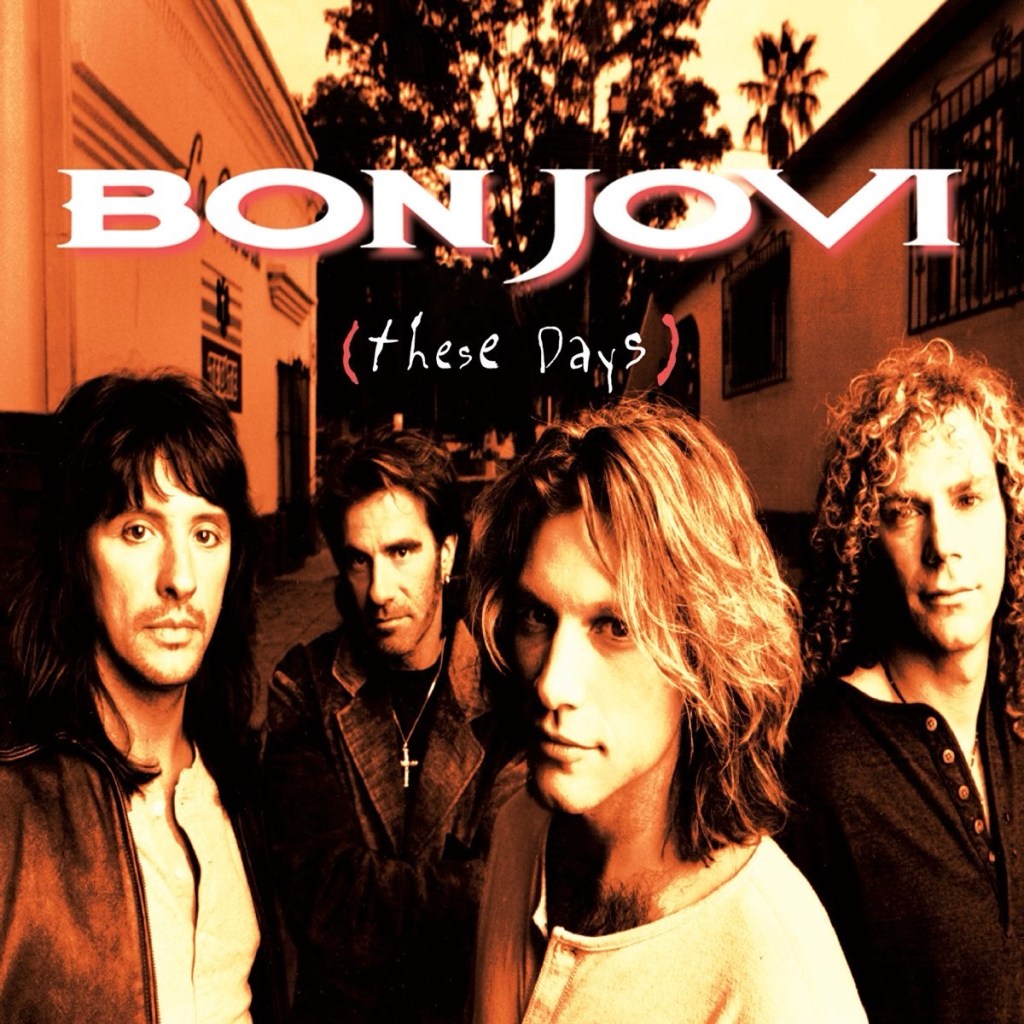
It certainly didn’t help the song’s case to be a power ballad, as that was an art form that would take me a few more years to properly appreciate. But the lyrics were what gave me the most pause, as a good little church girl. The opening lines say it all:
I lost all faith in my God
In His religion too
I told the angels they can sing their songs to someone new
Yeah, you can kinda see why this song gave me pause. It makes me think of my first time going to youth group, right in the middle of this huge campaign to gather up “ungodly” albums and other media for a huge bonfire. I was too attached to my beloved Bon Jovi collection to send it to the flames just yet, but it did make me rethink what I was listening to. And I could not, as a good little church girl, listen to something that so blatantly questioned God.
I struggled with this feeling for a long time, every time I put on the full album and heard the opening drum beat begin. I wanted to love the song — something drew me to it, despite everything — but the song seemed so anti-Christian and blasphemous.
I never appreciated it for what it was — a song about deconstruction.
In exvangelical circles, deconstruction is the process in which you begin to question and unpack the beliefs the evangelical church instilled in you. Now, Bon Jovi is not from an evangelical background. In fact, much of the band was raised Catholic to the best of my knowledge, with frontman Jon admitting to being a “recovering Catholic.” But I feel the exvangelical experience and the lapsed Catholic experience are very similar in many ways.
In re-listening to “Something to Believe In” as an adult, I realized one of my lifelong musical heroes had the same wrestlings with God that I was having. It was very similar to the feeling I got when I first re-listened to “Someday I’ll Be Saturday Night” as an adult and realized Jon may have had the same mental health struggles as me, even worse at times. It really humanized this guy I’d viewed as a god growing up. Like, I used to play make-believe that I was Jon Bon Jovi as a little kid, and here I was having this entire revelation that he’s literally just a human being like me.
With his own struggles.
And his own dark, depressive thoughts.
And his own religious trauma.
That’s what “Something to Believe In” started to represent to me, that funnelling of religious trauma into something beautiful. After all, it is not a sin to have religious trauma, nor is it even a sin to have questions at times. In 1 Thessalonians 5:21, we are told to test everything and hold to what is true. That seems like a pretty big green light to, ya know, have questions.
The evangelical church discourages deconstruction as it can lead to the person believing in another faith, atheism, agnosticism, or perhaps scariest of all, a less oppressive, more affirming form of Christianity. That’s where I ended up falling in the end, but it wasn’t an easy road. There were definitely parts of my life where I felt exactly like how Jon describes himself feeling in the song. Sometimes, you have to reach that nadir in your relationship with God before you truly begin to unpack the toxic things the church has taught you in His name.
Listening to the song now is a reminder of where I’ve been in my spiritual journey. It’s a reminder that this feeling is universal and I’m not alone in this struggle. And most importantly, it’s a reminder that deconstruction can be beautiful.
If you enjoyed the writing in this post and elsewhere on the site, please consider donating to Jessa’s tuition fund! Any help is appreciated!
CashApp: $TheJessaJoyce
Venmo: @TheJessaJoyce









 JESSA JOYCE