I’m Not Ready

Earlier this week, I made a pilgrimage to Fort Wayne, Indiana for my internship interview, and who would I be if I visited my girlfriend’s home state if I didn’t visit my girlfriend at some point?

I’m the “long distance lesbians” stereotype meets the “four hours is nothing to Midwesterners” stereotype.

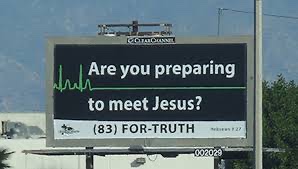
The drive from Fort Wayne to South Bend isn’t too bad, mostly passing through the endless open fields the Midwest is known for and a few odd cities. But one thing I noticed fairly often while traversing Indiana (aside from corn) was the presence of billboards like these:

I’ve been a Christian most of my life, and although I’m not much in the way of a traditional one, I believe the core tenets, including the whole “forgiveness” thing. I know the ubiquitous verse — “So God so loved the world” and all that. I know everything I could possibly ever do wrong in this lifetime has already been forgiven. I’ve never been afraid of Judgment Day, whatever that will look like.

So why am I still scared of dying?

I think about it more than I’d like to admit. It’s a dark cloud looming over my brightest days, a little nagging fear surrounding the fact that my days are numbered. I can’t wrap my mind around the fact that one day, I’ll just cease to exist, and I’ll never have the chance to do anything else. All my dreams will have remained just that — dreams. All unfulfilled, all forgotten.

There’s so much left I want to do in this life, so much so that it’s overwhelming at times. I want to be a music therapist. I want to be a songwriter. I want to be a mom. I want to be a professor. I want to publish my stories. I want to live in a little house by a lake. And it sucks to think I might not be able to get to do everything I want to do. I only have, what, 80 years or so if I’m lucky? And I’ve spent 30 of them being too mentally ill to do much of anything. Logically I know I’ve accomplished a lot in the past three decades, but I’m always scared I’m running out of time to finish everything I want to do.

So no, I’m not ready to meet Jesus.

Maybe it is a sign I need to lean more into my faith, I don’t know. God knows everything that’s ever happened and ever will happen, and His plans are greater than my own. But as much as this should be a comfort to me, it’s almost worse to acknowledge that everything is ultimately out of my hands. My future is already decided for me, and what if it’s not a future I’d want for myself? What if I’m doomed to be a pharmacy technician for the rest of my life?

Not my ideal destiny.

I guess I need to accept that I don’t have all the answers, and I never will this side of Heaven. I just wish I could live in the moment and not worry about these things so much.

My Life as a “Should’ve Been”

Everyone’s familiar with the term “has-been.” It’s a label we give one-hit wonders and washed-up celebs. But the thing about has-beens is that they have at least, well, been. There are so many more people out there who never will reach those heights at all, who had potential and squandered it somehow. I think those are the cases that fascinate me even more. Maybe that’s because I relate.

Are you holding a grudge? About?

I think my biggest grudge is against myself for not going all-in as a musician when I was younger. I feel like I could have actually taken my music somewhere had I started sooner, had I thrown my entire existence into it. It’s hard to accept that it may be too late. There are artists half my age who are making it in the business now. Thirty is grandma-age by industry standards.

It’s not entirely my fault that I didn’t devote myself fully to the dream. I think back to my struggles with mental health, which were debilitatingly severe in my teens and twenties, to the point where I could barely keep up in school and work. Much of the music industry, now and back then, happened on the internet, which I was scared of using for many years. And who could blame me? There are a lot of things to be afraid of on the world wide web.

I had a presence on YouTube, but I remember being nearly paralyzed every time I went to post a new song. I couldn’t help but fear what kind of reactions I would get. I remember some of the mean comments I’d receive about my appearance and worse, my musical abilities. Even in a sea of positive comments, it was the negative ones that haunted me and made me not want to share my music anymore. I had a lot of anxiety about putting myself out there, and I’m beating myself up for it to this day.

I feel like I could have been something greater. I could have been the next Taylor Swift, or even Christina Grimmie (RIP), had I actually kept an online presence back then. Now I feel it’s too late. In a post-TikTok world, I don’t even know where to begin when it comes to sharing my music. I feel like everything I do will be hilariously irrelevant now that I’m past the peak age for “making it.”

I wish I could go back and tell younger me not to be scared of internet assholes. People are gonna suck, and there’s nothing you can do about that except shine in spite of everything. I wish I hadn’t hidden myself away in the darkest corners because of my anxiety. I feel like a massive “should’ve been,” and it sucks to think about. Maybe it just wasn’t meant to be, and I need to accept that. But a tiny part of me still wonders what could have been had I just put myself out there more.

I guess I’ll never know.

The Downfall of Dreaming

I love, love, love making vision boards. Probably too much. I wasn’t allowed to tear up my mom’s magazines, and I didn’t want to ruin mine, so I never made collages as a kid. Now that I have a digital journal and all of the internet for inspiration, with a simple copy and paste, I can make all the collages I want out of anything I want. If I can dream it, I can slap it on my vision board. I’ve even talked about the merits of making a vision board in a past post.

My 2023 vision board, for example.

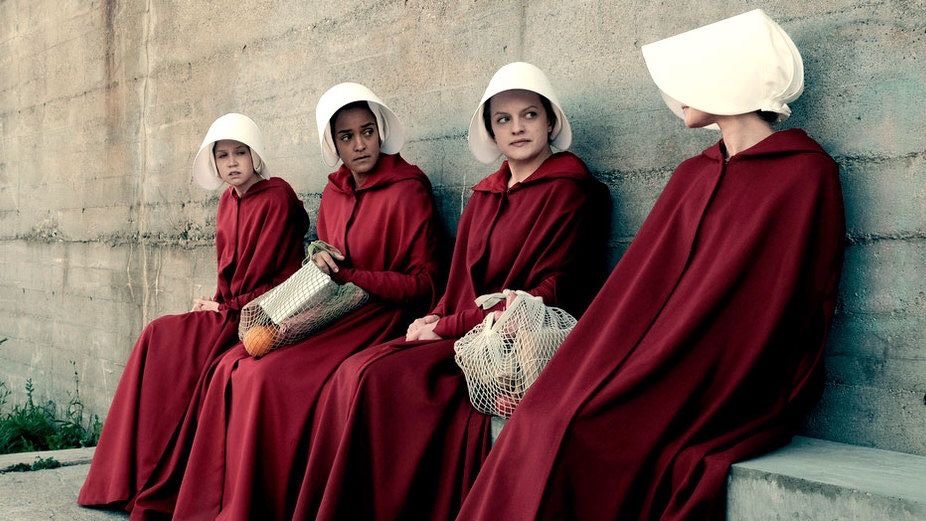
I think my love for vision boards stems from my love of dreaming. As an ADHD-haver, daydreaming about the future comes naturally to me. But lately, my daydreams have become day-nightmares. All I can think about is how things are probably going to go wrong eventually, no matter how hard I try to avert disaster. These anxieties range from small in the grand scheme of things (like me not getting my internship) to really fucking enormous (like “The Handmaid’s Tale” coming true and me and all my queer friends get lynched).

And I’d look funny in a bonnet.

It’s hard for me to see a light at the end of the tunnel that isn’t a racing freight train. I want so badly to control the future, but I know it’s simply not possible. I just wish I could fast-forward and know that everything turns out the way I want it to. That I will have my successful music therapy career and happy life with my two soulmates and our child, and we will be safe from all the evils of the world.

Maybe the trick isn’t to stop dreaming altogether, but to dream a little more loosely. Instead of planning everything out meticulously, as I tend to do, maybe leave a little wiggle room for when things don’t go my way. I might not get the internship I want, but I can always apply for different ones. Perhaps I’ll have to move out of state temporarily, but I’m blessed with a wife who’s willing to travel with me and the means to do so. And even if the very worst does happen—

—well, I haven’t thought that far ahead. I guess I have to come to terms with the fact that when it’s my time to go, it’s my time to go. It’s a reality everyone has to face at some point. I don’t want to live all my life afraid what comes next, but I don’t think I’ll ever be free of the nagging fear of death until it finally comes to take me.

But as much as I want to quit ruminating on the future, I don’t ever want to quit dreaming. Because when you quit dreaming, that’s when you really start dying. I always want to strive for something more, even when I’m at a place of contentment. I never want to settle. There’s always a new mountain to climb or a new sea to sail, and I think that’s what makes the future exciting.

Dear Cadence, Part Eleven: You Will Get Hurt, and You Will Hurt Others

This is the latest installment in my memoir project, written as a series of letters to my future daughter. Here are the previous entries: Part One, Part Two, Part Three, Part Four, Part Five, Part Six, Part Seven, Part Eight, Part Nine, and Part Ten

Ever since I was little, I wanted to be in a band.

It wasn’t enough to play music. I wanted a band.

I wanted the family, the ups and downs, the VH1 Behind the Music where we all talk about how much we love each other even after struggling through five overdoses and the guitarist cheating on his wife with the drummer’s wife. I wanted the full experience.

And what I got was Dethklok.

Dethklok was not the real name of this band, but to protect the identities of the innocent (and the guilty), I’ve changed all the names to the members of the protagonists of the show Metalocalypse. In fact, for this chapter and this chapter only, I am Toki Wartooth. You can imagine me with a mustache if it helps.

I met the band when I opened for them at their album release party. It was the biggest show I’d played to date, and even with just me and my acoustic guitar. I got the crowd going, rather impressing the Dethklok guys (I say guys, but there were female members. But for the sake of consistency, we were all guys.)

I played for them a second time at another venue, this one with a private green room. After my performance, they cornered me in the green room bathroom.

“We want you to join Dethklok as our second guitarist and go on tour with us,” they said — no, demanded. And who was I to refuse such an offer!

It was all rainbows and roses at the start. I befriended the other members of the band pretty quickly. There was Nathan Explosion and Skisgaar Skwigelf, the lead vocalist and guitarist, respectively, who were dating. William Murderface was the bassist, a certifiable weirdo, but a charming one. And Pickles the Drummer was just kind of…there. He had red hair.

Learning the songs was easy for me, so much so that the rest of the band was beyond impressed. To be fair, they were basic four chord pop-punk songs for the most part, save for one relatively heavy post-hardcore number where Nathan Explosion would scream and Skwisgaar and I would “chug chugga chug” on the guitar. One of these days I’ll show you one of our old songs. They were definitely songs.

The band was becoming something of a family to me. We’d eat together, play games together, and just generally do life together. And what’s more, people liked us! We had a ton of fans, something I wasn’t used to. There were fanfictions written about us, even. It was surreal.

The fall tour would be the true test of our bonds, though. And as we got ready for the first of our two regional tours, I found myself daydreaming about Murderface more and more. We were the two carnivores of the group — the rest of the band was vegan — and we both dealt with a lot of mental health issues (that we actually acknowledged, since the entire band was incredibly mentally ill and incredibly unmedicated). Was I falling for him? Fans were already shipping Toki and Murderface. Were we a match made in pop-punk heaven? We spent several nights together just hanging out and listening to John Frusciante’s solo material, and after some time, he gave me his grandmother’s ruby ring and asked if someday, I’d marry him. Lost in the fantasy, the rock and roll fairytale I was living in, I accepted.

But that first tour was an absolute whirlwind. We traveled much of the East Coast and Midwest playing tiny clubs and bars. Most of the shows weren’t that big — just a couple of local bands and us — but it was exhilarating to be able to play to new faces every night. I felt like a true rock star, even if we were sleeping in our drummer’s mom van and random people’s houses and not a luxurious tour bus. Even if we all smelled horrible by the end of the tour and we had to mask our natural musks with copious amounts of perfume and cologne. It was an adventure unlike anything I’d ever experienced.

There were arguments now and then, mostly between Nathan Explosion and Skwisgaar. A few times, I was dragged into a conflict, such as the time Skwisgaar and Pickles made me and Murderface cry for not being vegans. (They were all like “What if someone ate your dog?” And I cried, being the damn Pisces I am.) We were a tight knit group, but the threads began to unravel as the fights became more and more frequent. Suddenly, I was seeing how mentally unstable we all were, myself included. Still, these people were becoming my best friends, even more so than your mom and Aunt Mel. I trusted them with my life. It was a toxic, codependent five-way relationship.

By the time our winter tour rolled around, things came to a head. The arguments were so frequent, we were bickering more than we were talking music, or anything else for that matter. Nathan Explosion and Skwisgaar broke up, and Murderface and I were on the rocks too, as I’d recently reconnected with Jacob from earlier and I wanted things to finally go somewhere with him (spoiler alert: it went nowhere). So I was far away from home surrounded by people who all hated each other, and at our homecoming show, Skwisgaar slammed his guitar on the ground in a fit of rage. The next day, we unanimously decided to split up. It was an ugly breakup, uglier than all of my romantic breakups combined. Harsh words were spoken. Threats were made. I finally made the decision to cut them all out of my life, once and for all. And I’m so glad I did.

Healing was rough, but I managed. Your mom and Aunt Mel were the rocks I needed to lean on, and they gave me all the support I needed as I found my way again. I learned my lesson not to trust just anyone, and not to get swept off my feet by whatever shiny opportunity presents itself, because the truth is, it’s not all it’s cracked up to be. People will hurt you, but the right people will own up to it. And you will hurt people too, and it’s your responsibility to own up to it as well. I got stabbed in the back by folks I considered friends, but I wasn’t innocent either. In the end, we were all very mentally ill and very unmedicated.

I’m sure you’re wondering whatever happened to Dethklok. I wondered myself, after several years had passed. So I reached out to my old bandmates to apologize for how things ended and make peace with the pas. Murderface and I became friends again through the local art scene, and Pickles went off on his own and never really spoke to me again. Nathan Explosion didn’t want anything to do with me, and in fact blocked me on all social media. I guess I don’t blame him. The funniest thing happened when I cold-messaged Skwisgaar, though.

“I wanted to apologize if I ever did anything to hurt you,” I wrote. “You were like a big brother to me.”

“You mean sister — I’m trans. And there’s no hard feelings. I know I was an ass too.”

And that, my child, is how I became friends with your Aunt Tegan. Funny how life works itself out.

Dear Cadence, Part Nine: The Path to Your Dreams is Not Always Linear

This is the latest installment in my memoir project, written as a series of letters to my future daughter. Here are the previous entries: Part One, Part Two, Part Three, Part Four, Part Five, Part Six, Part Seven, and Part Eight

I found out what music therapy was from one of my grandma’s nurses when she was dying. She found out I played music and encouraged me to bring in my guitar to play for my grandma and the other old folks at the nursing home. She told me there were people who get paid to do this kind of thing, and that they actually go to school to study the ways music can be used to help people.

I wasn’t sold entirely. My long term plan was to attend Eastern as a pre-med student and eventually go to the more prestigious (and expensive) University of Michigan for medical school. I’d minor in music, but it wouldn’t be my main thing. I wanted to be a cardiologist or a pediatrician or even a neurosurgeon, something that could legitimately help people, instead of wasting my time selfishly playing music for my own ego (this was before the “Jacob”’arc).

I’d already signed up for all of my freshman year bio classes when my parents overheard me singing and playing in my room.

“Remember what that nurse said about music therapy?” they said, implying that they wanted to become the first parents in human history to encourage their child to go to music school instead of becoming a doctor.

So I went back up to the university right away and auditioned for the music therapy program. I already knew my way around a guitar and I could sing circles around most of the other freshmen trying out, so I was a shoo-in.

Despite being less than a half hour from my hometown, life at the university seemed a world away from life in high school. Not only was I living in an artsy fartsy college town, it was also the point in time when the “quirky weird girl” trope was at its most popular. The days when no one wanted to associate with me seemed like another life. Everyone wanted a piece of the guitar-slingin’ manic pixie dream girl, and I was happy to oblige. I started playing house shows and cafe gigs, and I made a name for myself as the Taylor Swift of Ypsilanti, Michigan.

But the cracks began to show as I struggled to stay awake and focused during my classes, to the point where I’d gotten referred to the university counselors by my professors. To top it off, the anxieties that had plagued me my entire life were coming to a head, to a near debilitating degree, and I had no choice but to consult with a psychiatrist at a local clinic for young adults. It was there that I was prescribed Prozac, which I do credit with saving my life, but it wasn’t nearly enough to save my academic attempts. Music therapy school was brutal, and I found myself fighting hard just to stay on top of my coursework.

I’d signed up for the school newspaper on a whim, and that seemed to be working well for me, at least. I was a naturally skilled writer. I didn’t even have to try to crank out article after article for the paper — I would sit down at my laptop and the words would just flow through my fingertips. I even got awarded the title of editor for the arts and culture section of the paper less than a year into me working there (we’ll revisit that in the next chapter). I did some research on the journalism major and it seemed significantly easier than music therapy, which was becoming increasingly difficult to even find the motivation to study for. As my mental health declined, I wondered how I’d ever be a therapist when I couldn’t even help myself. At least newspaper editors didn’t have to help other people figure their shit out. I could just do my thing and pretend I was okay.

So I made the decision to switch my major to journalism and forego music therapy altogether.

Still, even after I graduated, it felt like something was missing from my life. I tried finding writing jobs but nothing ever stuck. This was around the time I was still reeling from the breakup of my first real band (which we’ll get to) and the crumbling of my first marriage (which we’ll also get to). Nothing was working out, and I needed to regroup and figure something else out. That’s when Coco happened.

Coco was a Disney movie about a little Mexican boy who plays guitar against his family’s wishes. I won’t spoil it, although I’m certain I’ve played it for you at some point in your childhood. (What kind of a mother would I be if I didn’t make you watch all my favorite Disney movies?) But the climax of the movie, where music helps the protagonist’s grandmother momentarily regain her precious memories, made me realize I’d made the wrong decision when I switched majors. I was meant to — destined to — use music to heal people. No, I wasn’t too messed up to be a music therapist. That was a damn lie I told myself and believed to the point it became the truth. I drove straight up to that university myself and told the professors I’d be joining them once again that fall.

And…I failed once more. This time, it wasn’t my choice. I had a strong start. That school year began with me trying my very best. I was doing everything in my power to succeed this time, taking notes and staying alert and keeping organized. Then, something happened at that year’s music therapy conference that derailed all my plans.

I was raped.

The assailant was a total stranger, and I should have known better than to trust him when I met him at the rooftop bar at my hotel. But I was lonely, and it was my first time traveling alone, no friends, no parents, no husband. And he was charming. He said he loved how I was using music to help people.

All before everything went dark, in the absolute worst way possible.

After the incident, my mental health took a nosedive. I couldn’t concentrate for shit. I started drinking myself sick every night. I was making rash decisions and doing everything I could to drown out the ever-present feeling of disgust. I eventually snapped and found myself crying in the office of one of my professors. I couldn’t do this anymore.

And so I dropped out of the music therapy program for a second time. 

This is a depressing chapter, right? I promise it has a happy ending.

Another few years passed and I found myself drifting aimlessly once again. I was in a slightly better place — I was married to someone I actually wanted to be married to, and my mental health was finally on the up-and-up. I even got a proper ADHD diagnosis, which explained some of the inattentiveness that made my previous attempts at the degree more difficult. But I didn’t have a job I actually liked. I knew I was meant for more than wiping people’s butts or slinging prescription pills. (Legally. As a pharmacy technician. Your mother was never a drug dealer.)

So, tail tucked between my legs, I whimpered pathetically at the professors one last time, begging for one last shot at that music therapy degree.

And this time, it worked! While finishing those last two years of schooling, I managed to earn a prestigious scholarship and even presented on autism for the university’s undergraduate research symposium. In 2023, I completed the coursework necessary to become a music therapist. As of writing, I’m waiting to hear back from my internship site. After completing the internship, I have to take a test, and then I’ll be certified. In other words, I still have a long road ahead of me, but the worst is over.

Sometimes I wonder where I’d be if I’d just stayed the course and finished my music therapy degree years ago. The truth is, I probably would have crashed and burned. I needed to learn to take care of myself first; otherwise, I probably wouldn’t have been focused and motivated enough to earn that scholarship or present in that symposium. I would have gotten meh grades and probably would have landed a meh job I would have given up on as soon as things got hard. But my place in music therapy is now fire-forged. I’ve been through the worst, and now I’m better equipped and prepared to face whatever comes next. The twelve years it took me to get this far weren’t a waste of time. Rather, it was time spent figuring out for sure that this is where I belong. I don’t think I would have made it this far had I not taken all the time I needed to reevaluate my core values and recover from, well, everything.

Often, the path to your dreams isn’t linear. It’s a road with many forks, pitfalls, and distractions. If you ever lose your way, though, just remember this chapter. When you discover what it is you’re meant to be in this world, it will chase you down, and no amount of obstacles will keep you from what it is you need to do. You are stronger than everything that will ever try to hold you back. You’re a force of nature unlike anything anyone’s ever seen, and I’m so excited to see where life takes you.
Every Hello Ends in Goodbye (Or, My Newly Realized Abandonment Issues)

It’s probably not the best idea to start my week with therapy, because I’ll inevitably be walking back into work with my eye makeup looking like Avril Lavigne circa 2004.

“Why’d you have to go and make things so complicated?” -me to my therapist, probably

Today’s session left me a big teary mess once again, but now I think I realize why I’ve been a big sad lately.

I’ve been coming to terms with the fact that all things eventually end. Places you loved get torn down, your pets will all die, and even if something manages to stick around long after you’re dead, like a really cool sturdy rock or something, there’s still the inevitable heat death of the universe to look forward to.

But love lasts forever, right?

I’ve been through a lot of close friends, and the one thing they all had in common is that they invariably went their separate way from me. Crass is the only best friend I’ve ever had who stuck around, and I’m still paranoid she’s going to get tired of me someday and leave me. Even though we’re legally married. You know the whole “til death do us part” thing? What if she dies first? What if there’s no afterlife and all of this was for naught? What if there is an afterlife and her spirit like, divorces me? What if I get ghosted by a literal ghost?

Rest in peace!

Family lasts forever though, right? Except the only members of my family I even talk to are my parents, and I’m acutely aware of the fact that they are likely going to die before me, leaving me with exactly no blood relatives I’m actually on regular speaking terms with. There’s always my brother, but he’s been weirdly squirrelly since he got all up Trump’s butt, and he stopped talking to me altogether after I dared to not be straight. “But what about chosen family?!” Ah, yes. That brings me back to the whole “friends eventually inevitably leave me” thing.

Maybe I do have abandonment issues.

I was today years old when I realized that this was a likely problem for me. Before today, I thought abandonment issues were for people who got left on a stranger’s stoop by their parents as a baby. It’s not like I have daddy issues — my dad and I are actually really close. Maybe that is a problem, since I know deep down he’s gonna die someday and I’ll be a wreck without him.

The logical side of me, the part I’ve beaten to death with a hammer and still comes popping back up like an asshole zombie, says that if I never let anyone get close to me, I’ll never have to worry about losing anyone. That’s such a sad way to live, though. The beauty of life is in the connections we make, and by shutting other people out to protect ourselves, we’ll never know how fulfilling it is to love someone else. Maybe that’s the feely side of me talking, though.

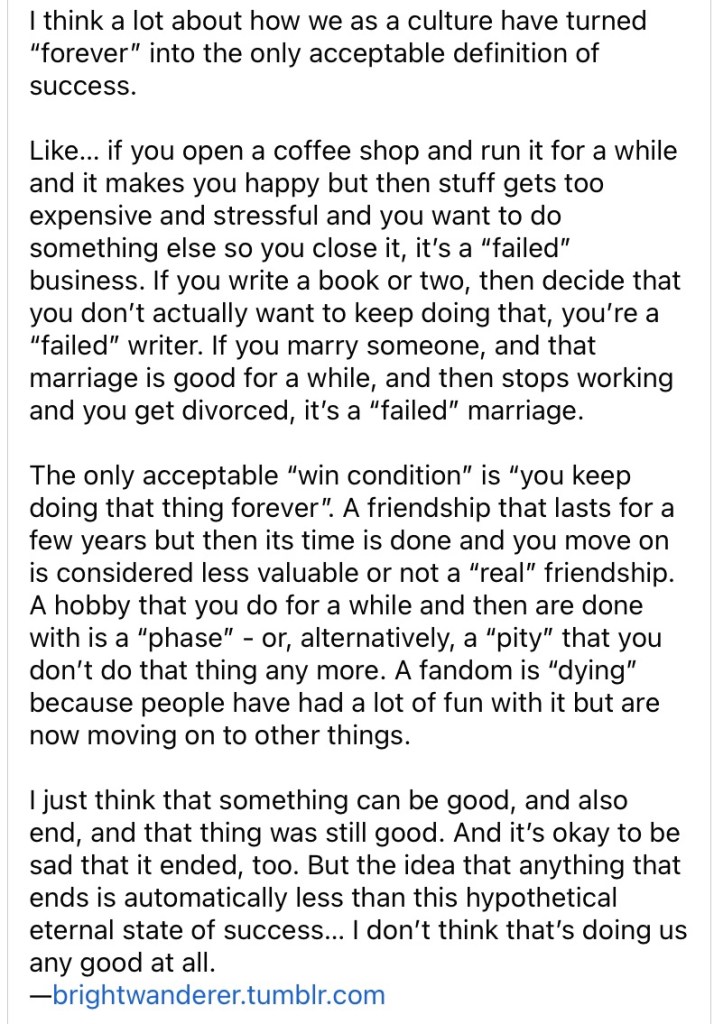
Facebook is an absolute hellscape, but I found something vaguely encouraging amidst the general dumbassery. I’ll share it here in its entirety.

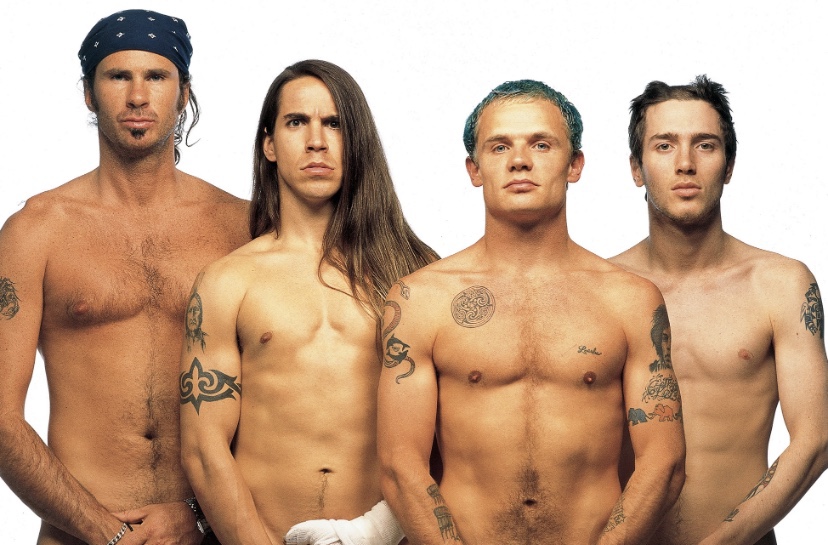
Maybe it’s unreasonable to expect every relationship in my life to remain unchanged until the day me and all my loved ones die simultaneously in our sleep of old age. The world is in a constant state of flux, and things will change and evolve over time. Perhaps it should be enough to enjoy what we have in the moment and savor every second we get to spend with the people we care about. That way, when “goodbye” inevitably comes, there are no regrets. “Show love with no remorse,” as the Red Hot Chili Peppers said in their song “Dosed.” That’s the mantra that guides my entire life, and yes, I get my most treasured wisdom from four men whose most iconic outfit is one singular sock.

And it’s not on their foot.

Your Song Saved My Life: The Motion City Soundtrack Effect

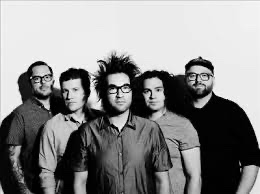
My joke is that there are two kinds of emos — Jimmy Eat World emos, and My Chemical Romance emos. Like much of nature, however, emo can’t be contained into a binary system. Where do we categorize the Taking Back Sunday emos, or the poor, poor Brand New emos who have been languishing ever since it came out that Jesse Lacey kinda sucks? Another band that doesn’t fit cleanly in the JEW/MCR dichotomy is Motion City Soundtrack.

Musically, they’re probably happier sounding than most of their peers — lots of major keys, fast tempos, and cool ass synths. But their lyrics sound as if they’d been written by every one of my mental illnesses in a trench coat. I don’t even have to dig that deep to find songs that match whichever ailment is weighing me down at the moment. Like, their signature song is textbook obsessive compulsive disorder.

I’m sick of the things, I do when I’m nervous
Like cleaning the oven or checking my tires
Or counting the number of tiles on the ceiling
Head for the hills, the kitchen’s on fire
I used to rely on self-medication
I guess I still do that from time to time

-Motion City Soundtrack, “Everything is Alright”

I remember when my dad was in the hospital for a heart attack that nearly killed him, I discovered “Time Turned Fragile,” a song about cherishing the relationship you have with your father and realizing he’s not going to be around forever. “Son of a Gun” takes me back to the drunken tiffs I had with my wife before deciding to sober up, when my stupid antics were all about “pissing you off just for fun.” And “Even If It Kills Me” was the song I played on repeat as I put in my application to music therapy school for the third time, because I too was “so sick of making lists of things I’ll never finish.”

There’s something powerful about a lyricist that can write words that relate so uncannily to one’s life. That feeling when you realize a song is unmistakably written for you — I call it the Motion City Soundtrack Effect, because I can’t think of a band that does it better than them. Taylor Swift comes close at least.

Real recognizes real.

It’s something I aspire to as a songwriter. The only feeling better than finding that song that you relate to so deeply is being the one to write that song for someone else. It’s why I write music in the first place. It’s more than just a catharsis for myself. I write everything in hopes that somebody out there will hear one of my songs and perhaps realize they’re not alone in whatever they’re going through. You know, the same way I realize I’m not alone in my struggles when I listen to MCS.

I’ve written about the power of music and its ability to affect people on a deep level before. I’ve written about discovering it in my own life. I’ve even written about the dark side of these parasocial relationships with musicians before. But it’s worth mentioning again and again — music is a powerful tool, probably the most powerful tool we as humans have, more powerful than bombs or guns or even words. I believe music has the power to change the world, which is why I chose to do it all those years ago, and why I still choose to do it after all this time. Songs can save a life.

I forgot to mention the final few lines of that verse I shared earlier.

But I’m getting better at fighting the future
Someday you’ll be fine
Yes, I’ll be just fine

-Motion City Soundtrack, “Everything is Alright”

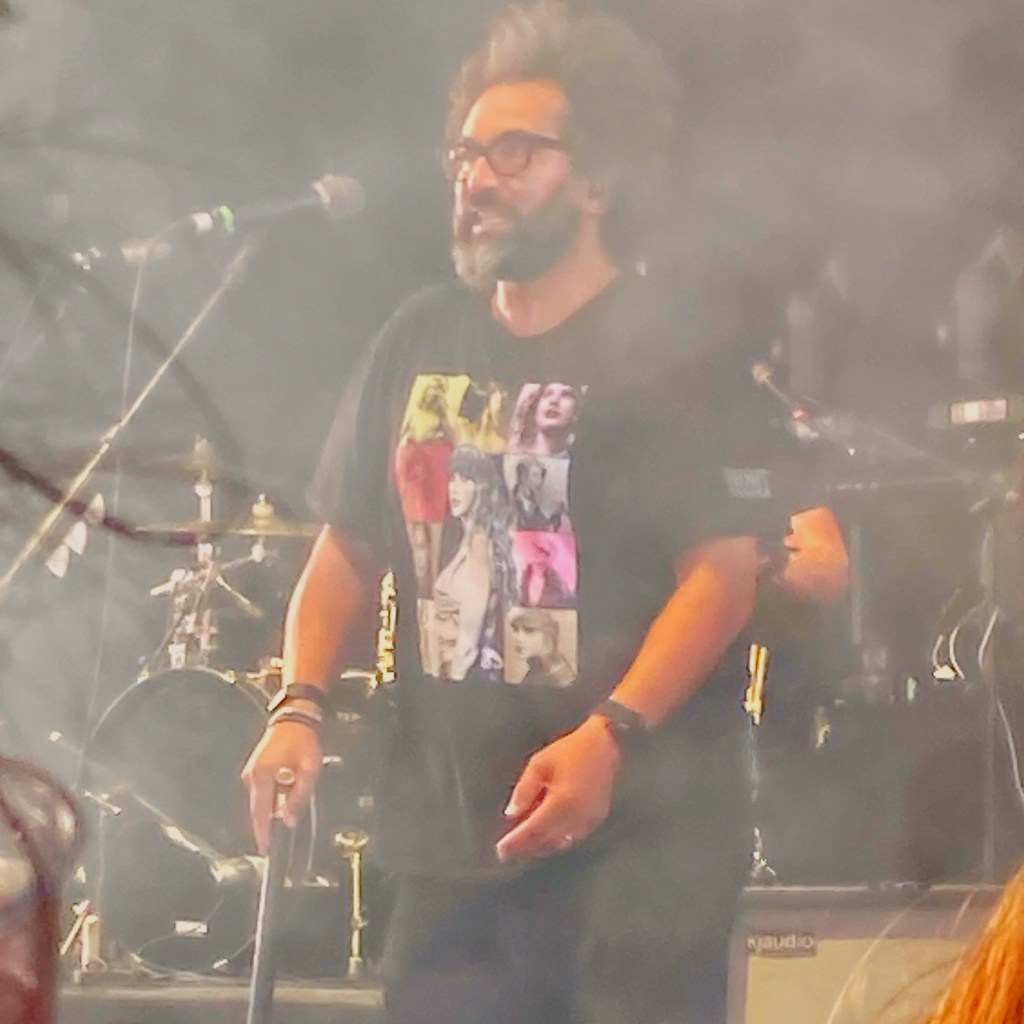
I’ll admit I teared up a little when I heard this song played live last night, despite it being one of their happy-sounding uptempo numbers, because it reminded me of how far I’ve come in my own fight with mental illness and OCD. I remembered listening to those words and wishing for a day I’d be just fine, and now I’m finally in a place where my fears are (mostly) under control.

That song and this band have been with me through it all, and I owe a lot to them.

Do you have a band or a certain song that saved your life? I’d love to hear your stories in the comments! If you like what you read here, feel free to support the blog by donating via Venmo (@jessjsalisbury) or CashApp ($TheJessaJoyce). Thanks for all your support!

Pride & Joy: How God Lead Me INTO Being Queer

Another post I originally shared as a FB status but figured it warranted its own post on here, especially since I haven’t posted on the blog in a minute. It’s been a crazy few weeks of coursework but my classes are over after this upcoming week, so expect more ramblings on here soon!

I see people posting their “I was gay but THEN I FOUND JESUS” testimonies all the time, but never any “I found Jesus but THEN I WAS GAY” testimonies. So allow me to share mine.

I used to attend an evangelical megachurch, first in my teens and again when I reached my lowest low after graduation. I was so broken and jaded I needed somewhere I could call home, and the church of my youth seemed right. I started going back, got deeply involved in the music ministry, and even married a man with an intention of starting a family, because that’s what you were “supposed” to do. But I wasn’t truly happy. I had to drink wine just to make household chores bearable. I had such a bad mental breakdown I had to go to a psychiatric emergency facility. I isolated myself from the people I loved and tried so hard to break my own bones to fit into a box that didn’t feel right to me. Even my own mom saw that I was miserable.

The breaking point came when my church announced a conversion therapy class for teenage girls — while I was standing on the stage about to lead worship. I should have walked off that stage, and I still kick myself for not doing it in the moment. But it planted a seed — something wasn’t right. I started to realize I was one of those girls! I’d been attracted to people of every gender, but I had to crush the parts of me that weren’t straight because I wanted so desperately to fit in and be “normal” by these people’s standards.

I was tired. And so I came out.

I’m so glad I chose to live my truth as a pansexual woman. I ended up leaving the marriage I rushed into for the sake of “staying pure” and married my best friend, who I realized I was in love with the entire time. I have a family of fellow queerdos who are truer friends to me than anyone at that church I left. My blood family even sees how happy I am now and is happy for me! And I didn’t have to leave behind my faith in Christ to embrace my true self — I found an affirming church that accepted me and my gay and trans siblings for who they are.

Being queer and following Christ aren’t mutually exclusive things. My faith is stronger for having been tested. God works all things together for the good of those who love Him, and He truly blessed me with so much. I love who He made me to be, and I’m glad I can finally live in the light.

Feel free to share if my story reaches you in some way. I want the world to know it’s okay not to fit into the mold of American evangelical Christianity. God doesn’t love you any less. You are exactly who He created you to be ❤️

Think of the Children! (An Easter Manifesto)

I originally posted this on my Facebook and Instagram pages (@thejessajoyce, if you’re curious), but I wanted to share this brief little write-up here as well. It’s so important to get this message out there since more often than not, the theoretical future of society and the fight to better it is co-opted by straight, cis, white, non-disabled people in an effort to tear down people who are not like them. I want to present a counter-argument. If all lives truly matter, as many on the political right say, and we must “think of the children,” my future children should be considered as well. There is room for everyone at the table of life, and we need to remember that this Easter.

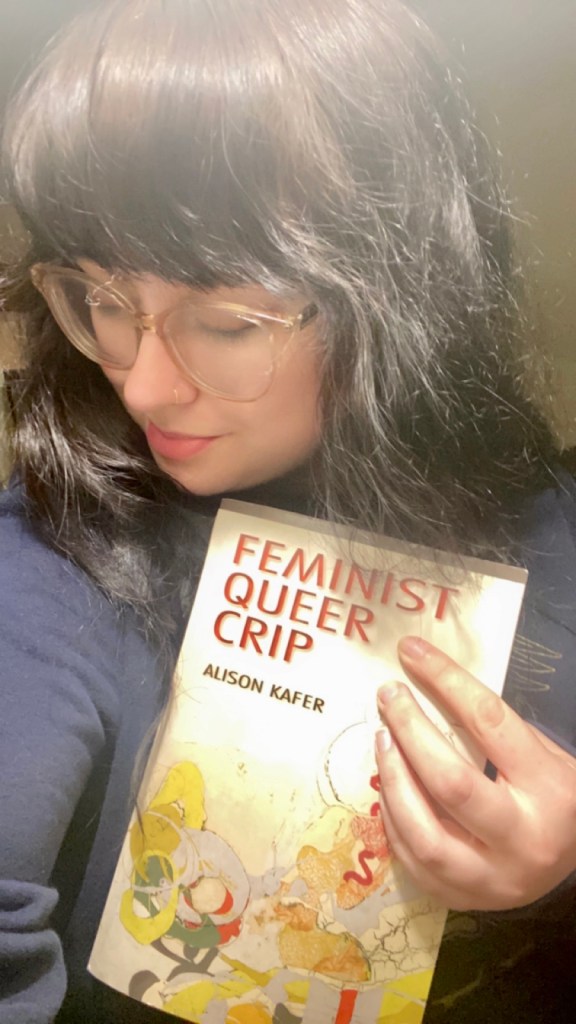
Reading this book (Feminist Queer Crip by Alison Kafer) at the suggestion of one of my favorite professors for my capstone project on autism, and it feels especially poignant in the days of #blacklivesmatter and #SaveTheChildren and #autismawarenessmonth and the recent fight against drag and transgender rights. The first chapter talks a lot about the Child — the personification of the future of society — who is often politicized and weaponized. Think of the children, people say. The image of the Child is more often than not a white cishet non-disabled child born to white cishet non-disabled parents. This Child absolutely matters. But I’m not interested in fighting for him, not because I don’t care about him, but because he already has enough people fighting for his right to exist in peace. Instead, I want to fight for my children.

In a few short years, I’ll likely have a child of my own. That child will likely have a disability of some sort, or rather, a difference that makes it harder to exist in a world that isn’t built for her. Considering my family history, she’ll likely be autistic or ADHD. Depending on our donor, she will likely be at least part black, and she’ll have queer parents who will support her should she eventually come to terms with her own queerness. And guess what? Her life will matter too. She should have a right to exist in peace alongside the theoretical Child described above. I want her to have a future too.

That’s why it’s so important to keep fighting for equality. I feel like it’s important to note that it’s Easter Sunday as I post this. I am a Christian through and through, despite the fact that I don’t “fit” the American Evangelical mold, and I firmly believe that Christ died for EVERYONE. Not just white Americans or straight people or cisgender people or able-bodied and able-minded people. We are all wonderfully made and we all should have a right to inhabit this beautiful planet. This post is a call to prayer and more importantly, a call to action. We need to be a light to this sometimes dark and scary world. We need to keep fighting the good fight.

Even If It Kills Me

TW: sexual assault

I write this from my hotel room at GLR, the annual music therapy conference for the Midwest-based students, practitioners, and academics. It’s hard to believe the last time I was at GLR, I was still legally married to my ex and COVID hadn’t yet happened.

So much has changed.

The last GLR I attended was in Cincinnati. I remember all too well. You might remember too, if you remember this post (HUGE FUCKING TRIGGER WARNING ON THAT ONE). That was the year my dream of becoming a music therapist was stolen from me, when the aftermath of the rape I experienced on that trip tainted the very field I longed to be part of. Suddenly, everything related to music therapy reminded me of the person who violated me. My mental health got worse. I started drinking heavily. Soon, I wasn’t able to keep up with the coursework, and I dropped all my classes.

I’d already left the music therapy program once, due to my mental health, but this seemed insurmountable. And reentering the program after that felt like pushing a boulder up a mountain with a toothpick. I’d already given up twice. Surely I was too damaged to ever be a real music therapist.

But I’m here. I’m still here.

As of writing this, I’m not only at the conference, but I’m gearing up for the prestigious Undergraduate Symposium, where I’ll be giving a presentation on music therapy and autism. All of my current grades are, by some miracle of God, in the A range. I’m meeting with my professor to discuss internships in a week, and I won a research fellowship that paid for my entire senior year, and then some.

It doesn’t seem real. I shouldn’t be here, but I am. And I owe it all to the people who have helped me through recovery — my wife, my family, my professors. And to myself. I fought like hell to get to a place where I’m staring down graduation at last, where I’m finally on the cusp of claiming the title of MT-BC for myself.

This GLR feels almost poetic. I’m back at a hotel not unlike the one I was assaulted at, but I feel safe. I feel whole. Everything has come full circle, and my dream of becoming a music therapist feels not only within reach, but no longer tainted by the hands that hurt me. I’m not going to let trauma steal the very reason I was put on this planet — to heal through music. I am not too damaged.

On my 30th birthday a few weeks back, dad said something that made me tear up a little. When he briefly died on the operating table after a massive heart attack, he said my then-very-young niece appeared to him and said he couldn’t die yet. But he finally told me the rest of the story.

She said he couldn’t die because he had to see me graduate.

I’m not turning back because this time, it’s personal. I love my dad — and myself — more than I hate my rapist. I’m going to get this degree and this certification in spite of everything. In the words of Motion City Soundtrack, I so wanna get back on track. I’ll do whatever it takes.

Even if it kills me.