Between Sorrow and Schadenfreude: A Progressive Christian’s Response to the Assassination of Charlie Kirk

I am so fucking sick of living through major world events.

If you’ve been on some remote retreat in the Himalayan wilderness and haven’t had access to literally any media anywhere, alt-right influencer Charlie Kirk was assassinated at a college event in Utah. I saw the infamous video. It was pretty wild to witness. I’ll confess, a lot of emotions washed over me in that moment, some I’m not proud of. Did I feel a twinge of schadenfreude at the death of man who advocated for me to be put to death for being queer? I’ll admit, maybe a little. Did I feel a bit of relief that he can’t spew any more hateful rhetoric. Absolutely. Let’s get one thing straight — Charlie Kirk was not a good person. If you don’t believe me, I dare you to click that little link up there. He is not someone to idolize or even eulogize, the same way you wouldn’t write a sweet memorial piece for Scar.

“He was a loving uncle and fierce leader for his people.”

All of that being said, I want to make another thing clear: I consider myself a follower of Christ. I feel uneasy using the word “Christian” as of late because of how horrifically perverted American Christianity has become, but my theological beliefs line up most readily with Jesus’s teachings. The real Jesus, not the evangelical one. You know, the wildly subversive pacifistic brown-skinned Palestinian Jewish man who repeatedly preached against tyranny and the wealthy? I’ve always been fascinated by His life and ways, and while some of my personal theology contradicts the established dogma of most denominations, I consider Him to be my spiritual guide and savior.

And that’s what’s making this hard for me. The part of me that’s human wants to dance on the dude’s grave. Yet the part of me that has been redeemed by Christ, that divine inner voice, wants to honor the fact that he was still a person, and he was a child of God too.

Two things can be true at once. Charlie Kirk can be a truly despicable person and the world can be better off without him, and we can also mourn the fact that humanity has devolved to this point. We can mourn the humanity in him, the part he willingly killed in himself years ago for the sake of extremist politics. We can mourn for his kids, who didn’t ask to have him as a father and now have a disturbing core memory to contend with. We can mourn for our trans brothers and sisters, who will inevitably be scapegoated for this. And we can mourn the fact that we’re heading to a very dark place if something doesn’t change quick.

I recently read a post that said that the true test of a Christian isn’t whether or not they love Jesus. It’s whether or not they love Judas. Jesus is easy to love. Judas is much more challenging. And in a lot of ways, Charlie is my Judas. He is proving very, very difficult to show compassion toward. The man got what he had coming to him. To paraphrase the Good Book itself, you live by the sword, you die by the sword. But there’s another relevant verse:

“You have heard that it was said, ‘Love your neighbor and hate your enemy.’ But I tell you, love your enemies and pray for those who persecute you…”

Matthew 5:43-44

We can’t fall into senseless hate. That’s what Charlie would have wanted. The best way to “honor” his memory is to fight back against everything he stood for, including violence and hatred. This isn’t to say there’s never a time when violence is the answer — we had to kill a lot of Nazis in the 1940s to ultimately save a lot of innocent folks, and even Martin Luther King, Jr. understood why folks lash out violently at times — but we also can’t become desensitized to this shit. This can’t be our new normal.

I’ve been worried about the state of the world all day, and I’m praying this won’t be a Franz Ferdinand situation and WWIII doesn’t spring from it. But I’m scared it’s too late. People have become so brainwashed already. I called out my first boyfriend on Facebook for waxing poetic about the man as if he were a saint, and he responded with some of the most vile, vitriolic, hurtful bullshit I’ve ever had directed at me. It was bizarre. He was such a sweet kid, but it goes to show you how effective these conservative influencers are in manipulating young men. We’re dealing with a lot of propaganda and disturbing messaging in the media.

My heart hurts for the state of the world and for the future. I always dreamed I’d become a rock star and have children and live to be a little old lady like the ones I work with. I don’t want to go to war. I’m a lover, not a fighter. This isn’t the future I want for me, and I hope it’s not the future you want either. I sincerely hope with every fiber of my being that we can turn this around. In the words of the late great Ozzy, maybe it’s not too late to learn how to love and forget how to hate.

Maybe the Prince of Darkness and the Prince of Peace had more in common than you’d think.

All I know is I can’t handle much more of this. I was simply not made for times like these.
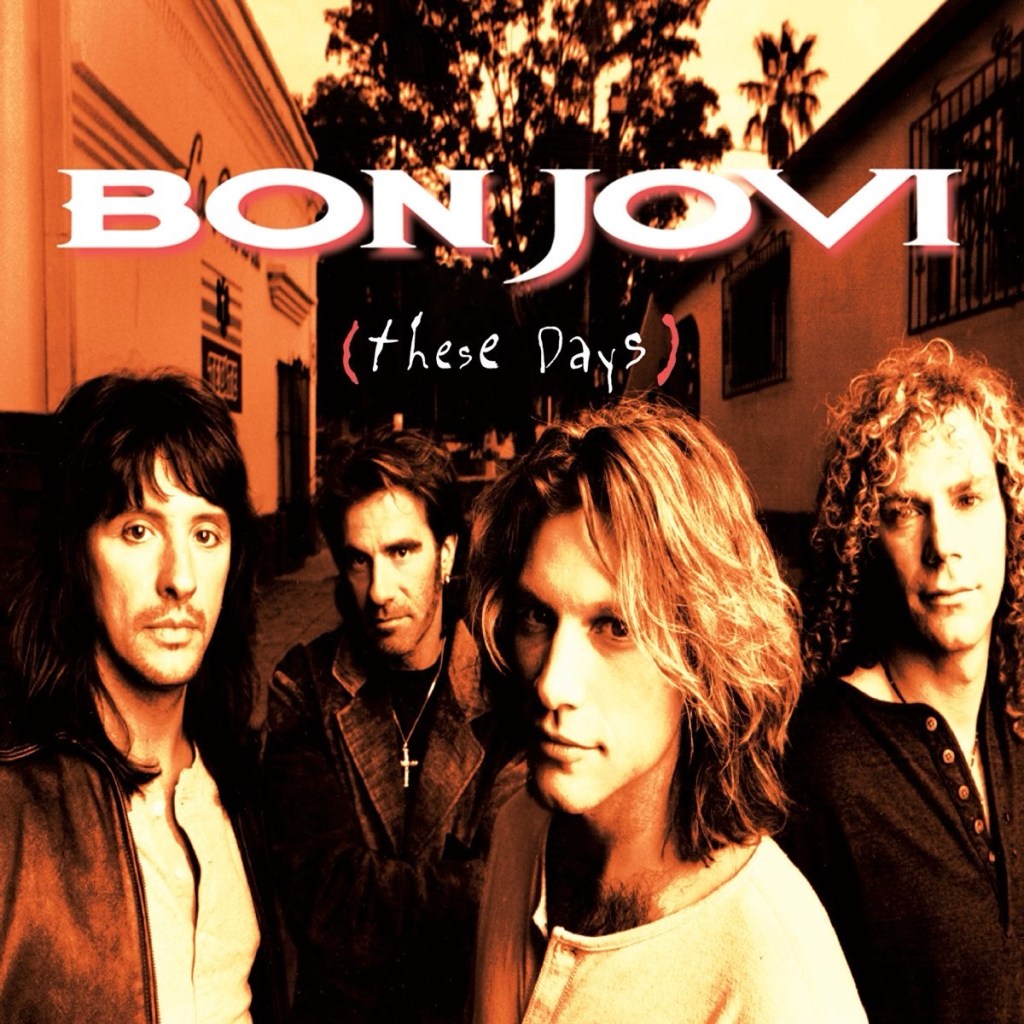
Something to Believe In: What Bon Jovi Taught Me About Deconstruction and Faith

Not so secret confession: Bon Jovi is my favorite band.

Well, I don’t know about absolute favorite. That honor probably goes to Heart at the moment, who I also seldom shut up about. But Bon Jovi my “comfort band” for sure, a nostalgic auditory bowl of chicken noodle soup when I feel most torn up about adult life. They were my childhood obsession, and if there was a “Jessa Don’t Talk About Bon Jovi For One Day” Challenge, I’d lose almost immediately. Richie Sambora is half the reason I play guitar (the other half being the fact that one-on-one guitar lessons were the only activity my then-undiagnosed ADHD ass couldn’t get kicked out of).

Yet despite my immense love of Bon Jovi as a youngin’, there was one single song that was always a “skip” for me. That song? “Something to Believe In,” a track from their wildly underrated 1995 flop, These Days, an album that, to Adult Jessa, has absolutely zero skips because it’s just that good.

Behold, Bon Jovi’s weird moody grunge phase that actually goes hard.

It certainly didn’t help the song’s case to be a power ballad, as that was an art form that would take me a few more years to properly appreciate. But the lyrics were what gave me the most pause, as a good little church girl. The opening lines say it all:

I lost all faith in my God

In His religion too

I told the angels they can sing their songs to someone new

Yeah, you can kinda see why this song gave me pause. It makes me think of my first time going to youth group, right in the middle of this huge campaign to gather up “ungodly” albums and other media for a huge bonfire. I was too attached to my beloved Bon Jovi collection to send it to the flames just yet, but it did make me rethink what I was listening to. And I could not, as a good little church girl, listen to something that so blatantly questioned God.

What would Jesus listen to?

I struggled with this feeling for a long time, every time I put on the full album and heard the opening drum beat begin. I wanted to love the song — something drew me to it, despite everything — but the song seemed so anti-Christian and blasphemous.

I never appreciated it for what it was — a song about deconstruction.

In exvangelical circles, deconstruction is the process in which you begin to question and unpack the beliefs the evangelical church instilled in you. Now, Bon Jovi is not from an evangelical background. In fact, much of the band was raised Catholic to the best of my knowledge, with frontman Jon admitting to being a “recovering Catholic.” But I feel the exvangelical experience and the lapsed Catholic experience are very similar in many ways.

In re-listening to “Something to Believe In” as an adult, I realized one of my lifelong musical heroes had the same wrestlings with God that I was having. It was very similar to the feeling I got when I first re-listened to “Someday I’ll Be Saturday Night” as an adult and realized Jon may have had the same mental health struggles as me, even worse at times. It really humanized this guy I’d viewed as a god growing up. Like, I used to play make-believe that I was Jon Bon Jovi as a little kid, and here I was having this entire revelation that he’s literally just a human being like me.

With his own struggles.

And his own dark, depressive thoughts.

And his own religious trauma.

That’s what “Something to Believe In” started to represent to me, that funnelling of religious trauma into something beautiful. After all, it is not a sin to have religious trauma, nor is it even a sin to have questions at times. In 1 Thessalonians 5:21, we are told to test everything and hold to what is true. That seems like a pretty big green light to, ya know, have questions.

“Ask me anything!”

The evangelical church discourages deconstruction as it can lead to the person believing in another faith, atheism, agnosticism, or perhaps scariest of all, a less oppressive, more affirming form of Christianity. That’s where I ended up falling in the end, but it wasn’t an easy road. There were definitely parts of my life where I felt exactly like how Jon describes himself feeling in the song. Sometimes, you have to reach that nadir in your relationship with God before you truly begin to unpack the toxic things the church has taught you in His name.

Listening to the song now is a reminder of where I’ve been in my spiritual journey. It’s a reminder that this feeling is universal and I’m not alone in this struggle. And most importantly, it’s a reminder that deconstruction can be beautiful.

If you enjoyed the writing in this post and elsewhere on the site, please consider donating to Jessa’s tuition fund! Any help is appreciated!

CashApp: $TheJessaJoyce

Venmo: @TheJessaJoyce

Jesus at the Karaoke Bar: How Singing With Friends Can Maybe Heal the World

I had a real odd revelation recently. I haven’t been to church in a while now, and as a fairly pious person, I should be hankerin’ for a robust spiritual espresso shot of the Good Word. Like, I’ve been an active churchgoer for much of my life, so not having a church home in my town is pretty unusual for me. I checked out a progressive, queer-affirming church in Kalamazoo and even attended a few times, but it didn’t stick the way I thought it would. In fact, you’d think I’m in a terrible spiritual rut by the looks of it.

But believe me, I’m still finding Jesus every week…just in a much stranger place.

That is, the karaoke bar.

WWJS (What Would Jesus Sing?)

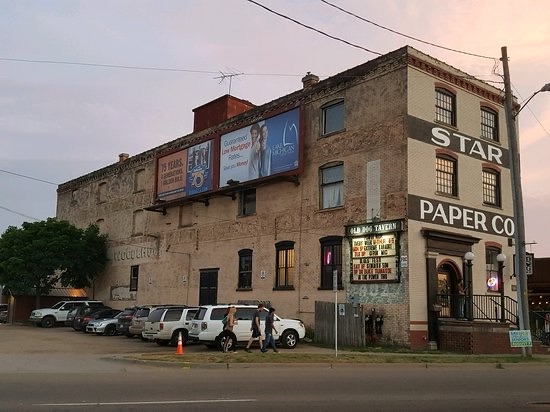
I’ve been an avid karaoke-goer since the move to Fort Wayne last year, when my wife decided on a whim to check out the local gay bar on karaoke night. She doesn’t sing, but knows I love to. So we got all dressed up and sure enough, we met some of the coolest folks there. That was enough to spark something, and we kept going back. When we finally moved to Kalamazoo later on in the year, one of the first things we sought out was another outlet for my newfound karaoke lust. That’s when we found Old Dog Tavern.

Where everybody knows your name!

So we’ve been going every Friday for half a year now. I’ve got a whole slew of friends I see every week. We’ll go out on the back balcony, smoke a joint, and catch each other up on life. Then, when we’re back inside, we all take turns singing our favorite songs and cheering each other on. There’s no competition (well, except when another girl sings Heart — that is my territory), and it’s all in good fun. Some of us are natural performers, and some of us just like being silly on stage. But no matter what, we all go because something keeps drawing us back.

And I think I know what it is.

It’s community.

For years, church was my only community. It was where I went to socialize, make music, break bread, and share life. And I think for a lot of religious folks, that’s the case. The Bible even encourages this:

And let us consider how we may spur one another on toward love and good deeds, not giving up meeting together, as some are in the habit of doing, but encouraging one another—and all the more as you see the Day approaching.

-Hebrews 10:24-25

We need each other. I’ve written extensively about how we’re not designed to live in isolation, and one of the good things I think religion contributes to society, for all its ills, is the inherent sense of community it brings to its congregations. But there’s a hitch. Though the statistics may have changed in the last ten years, data as of 2015 shows that folks in the United States are less religious than they used to be. And people are also lonelier than they used to be. So should we be working to get more butts into pews?

Maybe there’s another solution.

No, not the church — the karaoke bar.

I often describe my experience at karaoke as almost spiritual. I leave with my heart full every time — it’s how I recharge my internal battery each week. It reminds me of the feeling I’d get from singing in church when I was younger. It connects me to the music, to my community, to God, to the universe.

What if everyone had a place like that to go to every week?

The world is a scary place right now, and it’s getting even scarier. What we need now is more singing and more community. Revelations 21:3 and Acts 17:4 maintain that the Lord doesn’t live in a particular building, but within us. When we all gather together, we know that God is there with us. As silly and almost blasphemous as it sounds, I find Jesus every week in the smiles of my friends and the sound of the music. In a weird way, it’s my church.

Religion obviously isn’t for everyone — many folks have been burned by it, myself included — but everyone needs a community. In a culture that’s becoming increasingly secular, we need to figure out spaces for people to fellowship together. That’s why I feel karaoke and similar activities like trivia night and music bingo have the power to really create these strong connections between people.

On Thursdays, I host music bingo at a little bar in a small town north of Kalamazoo, and you really need to see it to believe it. Last week, it felt like the entire population of the town was there, and the air had an electric energy to it. Everyone was talking. Everyone was making friends. I even had a brief heart-to-heart with one of my regulars outside. These are the nights that will make life still worth living when things go to hell.

I leave y’all with a song.

Maren Morris has the right idea. Sometimes you find God in the strangest places. Maybe that is driving down the highway with the radio on. For me, it’s when I grab the mic every Friday.

Silent in the Face of Oppression: What I Would Have Done Differently

Write about a time when you didn’t take action but wish you had. What would you do differently?

The platform I use to publish this website gives me little daily writing prompts as inspiration. Sometimes I use them immediately, sometimes I save them to write about later (and in all actuality, leave them to languish in my “drafts” for eternity). When this one popped up on my screen, I knew exactly what I needed to write about, because as much as I try to live without regrets, this is one of the few that I still cling to for some reason.

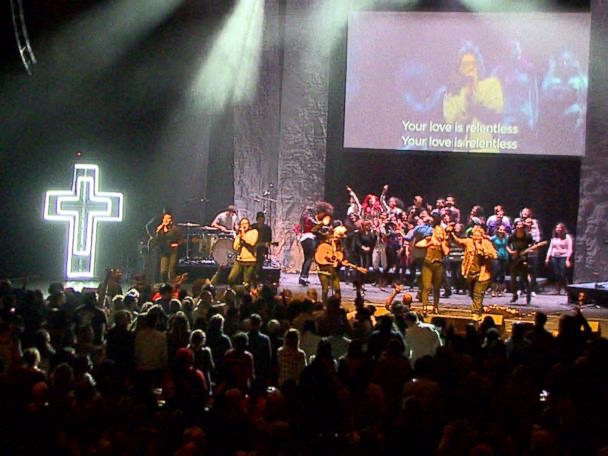
I cut my teeth as a musician and performer in the worship team of the church of my youth. Normally I’d leave it unnamed, but honestly, Metro City Church doesn’t deserve that dignity. Not after the events of this story, at least. I will be honest — my time on the team was an amazing once-in-a-lifetime experience. I had the honor of playing with some of the best musicians I’ve ever met, and on the largest stage I’ve ever played. Imagine a slightly scaled-down version of whatever comes to mind when I say “megachurch,” and that’s basically what we were. A mini Hillsong in the heart of Downriver, with one of the largest congregations in the entire area.

OPEN UP THAT PIT

Every week or so, I’d stand up on that stage and play my heart out for the Lord, which is still one of my favorite ways to connect with the divine. Giving credit where credit is due, I think Metro lit a fire for music and worship in me that still burns to this day. In fact, I still play in my current church’s worship band every now and then. But playing on Metro’s stage was nothing short of amazing. We had all the lights, fog machines, a state-of-the-art audio system, we had in-ear monitors for Christ’s sake (literally!). My point is, for all the smack I’m about to talk when it comes to this church, they did do something right, and that something was music.

The downside was that the church’s politics leaned a bit further right than I would have liked, but in the pre-Trump days, this was easy enough to ignore. Like, I’d get the occasional unprompted “ew, you like Bernie Sanders?” from the pastor or his kid, along with a lecture on why Bernie Sanders sucks. Again, this was entirely unprompted — it’s not like I was wearing a Bernie Sanders shirt, or had a Bernie Sanders sticker on my guitar case, or even brought up Bernie Sanders in conversation, ever. They just knew I was one of the small tribe of progressives, mostly fellow musicians who’d giggle irreverently at the post-worship breakfast about sappy “pro-life” messages or whatever subtle jab the lead pastor decided to throw at the libs that day.

For the most part, though, I could look past it. Sure, the church supported anti-choice measures and preached the dreaded “love the sinner, hate the sin” message when it came to the queer community, but these topics came up so rarely that I didn’t mind. Metro was one of those insidious religious institutions that disguised itself as a “come as you are” church, welcoming everyone and trying to cast as broad a net as possible, as to not alienate anyone. But beneath the surface, those ideologies still lurked. I know way too many gay/trans folks who were duped into feeling safe at Metro, only to get hit with a nonchalant homophobic or transphobic quip from a member of the congregation.

“Adam and Eve, not Adam and Steve!”

I wasn’t out at the time, and I was married to a male member of the church, so I was marked safe from most of these comments. As far as anyone knew, I was a regular, God-fearing, heterosexual woman. But I knew in my heart I wasn’t straight, not entirely, or even mostly. I had to push down a lot of my gay fee-fees to fit in with the rest of the church, which is why I came out as late in life as I did.

Everything changed in one moment, though.

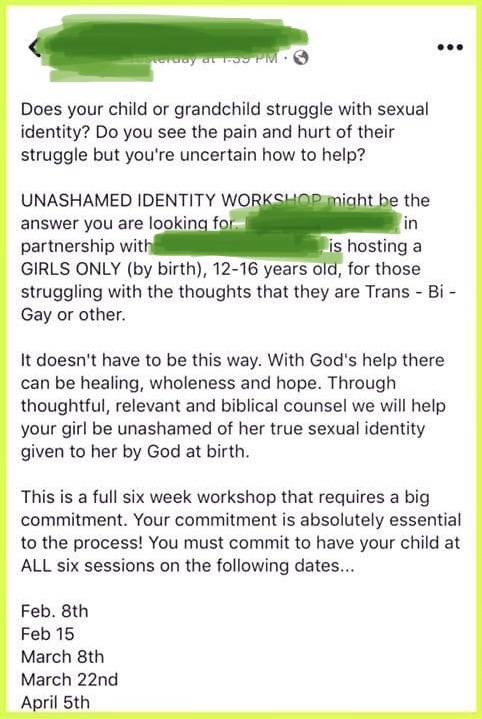
I still remember the burn of the stage lights and the eyes of the congregation as I stood on the stage, guitar in hand, while the pastor rattled off a list of upcoming events. It wasn’t unusual for him to come up and make announcements between songs like this. But one of the upcoming events he named this time shook me to the core: a conversion therapy class for young women.

Here’s where I should have done everything differently. I should have thrown my guitar down and walked off that stage. Screw subtlety — I absolutely should have made a scene. Instead, I froze. I stood there complacent in my own oppression and complicit in the abuse of these girls.

Thankfully, this was the beginning of the end of my time at Metro. As controversy swept over the church throughout the local (and even national) queer community, I found myself torn between the church I loved, who I thought loved me, and my own gut instinct that this was not fucking okay. I even posted a tone-deaf defense of the church, claiming not all of us were raging homophobes, and my ally friends (rightfully) called me out for trying to defend them at all. I knew I had to do something.

So I came out. In front of everyone. I’m queer. I’m one of those girls. I’m on your side. And I’m so glad I did, because the act of finally admitting it to myself led me to leave a marriage my heart wasn’t in and marry my best friend instead. I left the Metro and never looked back, settling on a truly inclusive Methodist church that practiced what Christ actually taught, instead of the Americanized evangelical crap propagated by hipster megachurches.

But I still wonder what would have happened if I’d walked off the stage that morning. It still eats at me that I was silent in the face of oppression and hate. What does that say about my integrity? I’d like to think I’ve grown exponentially since then. I’d like to think that should I be placed in that situation now, I’d stand up for myself and for those girls. The Bible teaches that real love is laying down one’s life for their friends; the least I could do is lay down my pride (and probably get excommunicated, but as they say, que será será).

I don’t hate Metro, at least not the people there. They’re lost in the sauce just like I was. Love the sinner, hate the sin, as those circles always say, and while I hate what Metro stands for, I know there’s still some decent people there fighting the good fight to make it the loving, affirming safe haven it could be.

Well, maybe if the lead pastor would stop doing this.

Yeah, I’m being too optimistic.

If you enjoy my writing and want to help support me and this site, you can donate via Venmo (@jessjsalisbury) or CashApp ($TheJessaJoyce). Every little bit is greatly appreciated! Thanks for taking the time to read my work, and don’t forget to check back every few days for new content!

Pride & Joy: How God Lead Me INTO Being Queer

Another post I originally shared as a FB status but figured it warranted its own post on here, especially since I haven’t posted on the blog in a minute. It’s been a crazy few weeks of coursework but my classes are over after this upcoming week, so expect more ramblings on here soon!

I see people posting their “I was gay but THEN I FOUND JESUS” testimonies all the time, but never any “I found Jesus but THEN I WAS GAY” testimonies. So allow me to share mine.

I used to attend an evangelical megachurch, first in my teens and again when I reached my lowest low after graduation. I was so broken and jaded I needed somewhere I could call home, and the church of my youth seemed right. I started going back, got deeply involved in the music ministry, and even married a man with an intention of starting a family, because that’s what you were “supposed” to do. But I wasn’t truly happy. I had to drink wine just to make household chores bearable. I had such a bad mental breakdown I had to go to a psychiatric emergency facility. I isolated myself from the people I loved and tried so hard to break my own bones to fit into a box that didn’t feel right to me. Even my own mom saw that I was miserable.

The breaking point came when my church announced a conversion therapy class for teenage girls — while I was standing on the stage about to lead worship. I should have walked off that stage, and I still kick myself for not doing it in the moment. But it planted a seed — something wasn’t right. I started to realize I was one of those girls! I’d been attracted to people of every gender, but I had to crush the parts of me that weren’t straight because I wanted so desperately to fit in and be “normal” by these people’s standards.

I was tired. And so I came out.

I’m so glad I chose to live my truth as a pansexual woman. I ended up leaving the marriage I rushed into for the sake of “staying pure” and married my best friend, who I realized I was in love with the entire time. I have a family of fellow queerdos who are truer friends to me than anyone at that church I left. My blood family even sees how happy I am now and is happy for me! And I didn’t have to leave behind my faith in Christ to embrace my true self — I found an affirming church that accepted me and my gay and trans siblings for who they are.

Being queer and following Christ aren’t mutually exclusive things. My faith is stronger for having been tested. God works all things together for the good of those who love Him, and He truly blessed me with so much. I love who He made me to be, and I’m glad I can finally live in the light.

Feel free to share if my story reaches you in some way. I want the world to know it’s okay not to fit into the mold of American evangelical Christianity. God doesn’t love you any less. You are exactly who He created you to be ❤️

Toxic Nostalgia

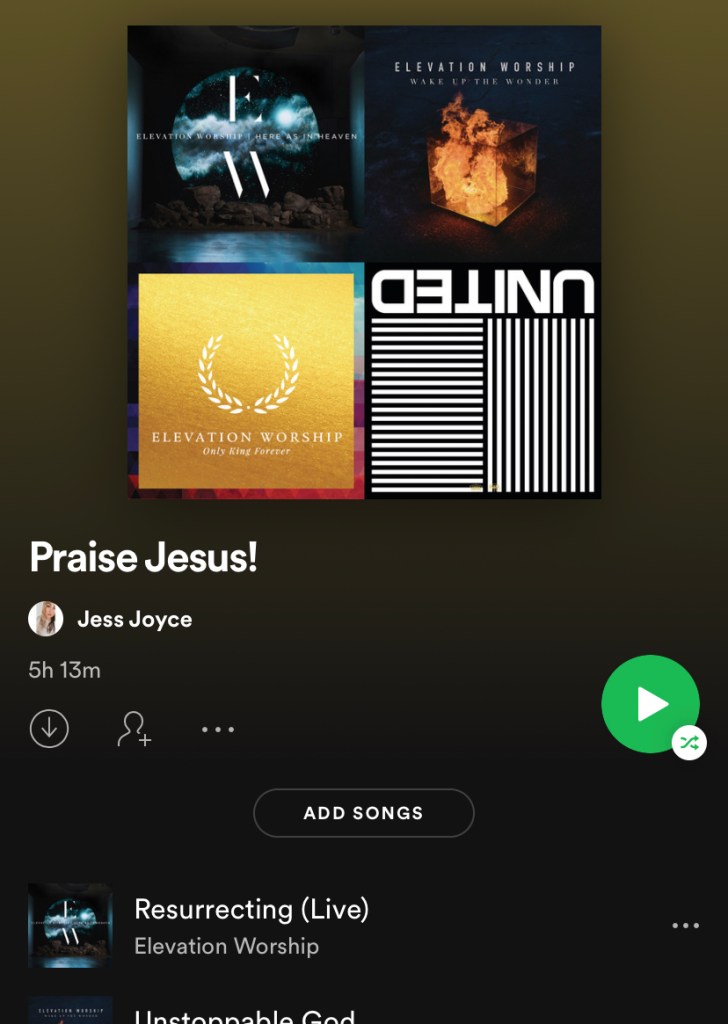
So today at work, I was scrolling through my playlists when I found THAT playlist. The one I haven’t dusted off in ages, the one I used to consult regularly in preparation for the event of the week — Sunday morning church. 

And if Elevation’s “Resurrecting” WASN’T in that playlist, were you really a worship guitarist?

I was a fixture on the main stage of the megachurch I attended at the time. I’d drag my gear to the backstage area, banter with the production guys, and once the lights in the auditorium went down and the spotlights flashed on, I’d throw myself into the music, into worship. The music itself was never especially complex — same few chord progressions, same delay-infused chimey licks that wouldn’t sound out of place in a U2 song. In fact, if you’ve been to a modern church within the last 20 years, you know exactly what I’m talking about. But the emotion, that feeling of being part of something bigger than yourself for just a moment. Like a drug, you spend the rest of your life chasing that high.

Sometimes I wonder why I left it all behind.

Oh right, that’s why.

I felt like a rock star at my old church, but I knew it would come crashing down. I was bisexual, and I was slowly realizing the person I truly wanted to spend my life with was my best friend, another woman. There was no way I could have both. Leaving the evangelical church allowed me to finally live authentically, but at what cost? Chances are, I’ll never set foot on a stage of that size again. I’ll never hear the ring of my guitar through a room that could easily fit three houses inside. I’ll never have people tell me how much of an inspiration I am to their kid. I’ll never have that euphoria that only comes with leading worship at such a massive level.

It’s easy to get nostalgic for things that are toxic. You look back at a past friendship or relationship with these rose-tinted glasses that erase all of the pain it caused you. Hindsight may be 20/20, but it’s also biased as heck. You don’t want to remember the shitty parts, just the parts that made you happy. And you forget that in order to grow into who you are now, you needed to shed that old shell.

I don’t mean to throw any shade at my old church (which will remain unnamed), as they’ve helped me in times of need, and to be honest, I met a lot of very rad people because of my involvement there, many of whom I still speak to today. But I couldn’t live with the cognitive dissonance any longer. In order to grow as a person in Christ, I needed to not only leave the church, but leave behind the harmful lie that God will send me to Hell for the crime of loving another human who sits down to pee. But leaving the church also meant leaving behind the life I’d grown accustomed to, standing in the spotlight before crammed auditoriums week after week. 1 Corinthians 13:11 talks of putting away childish things. Maybe my need to be admired — my need to leave church guitar case in hand every Sunday feeling like a rock star — was the childish thing I needed to put on the shelf.

I won’t deny myself the chance to mourn the loss of my previous church community. I do miss my time there every now and then, but it was important to leave that season behind in order to grow in my faith journey. In order for a plant to flourish, one must cut off the parts that are diseased or damaged, even if the process hurts. Never make the mistake of romanticizing that which was harming you.

There was a time a few short years ago where I couldn’t imagine worship without the lights and fog machines and crowds with raised arms. Worship looks a lot different to me now. Whether it’s meditating on the living room floor, gazing in wonder at the blessings around me, listening to a dusty old playlist at work, or even just sitting in a quiet dark corner of my apartment with the same Sunday morning songs my hands have, for better or worse, committed to memory. To God — not me — be the glory.

Amen, I think.