Confessions of a Manic Pixie Dream Girl

I was scrolling through a certain accursed social media app when once again, I saw some bullshit. Which is how most of my posts on here begin, in all fairness. I’m starting to think I just love self-sabotage.

I do this to myself.

Anyways, the incel BS of the day is this meme:
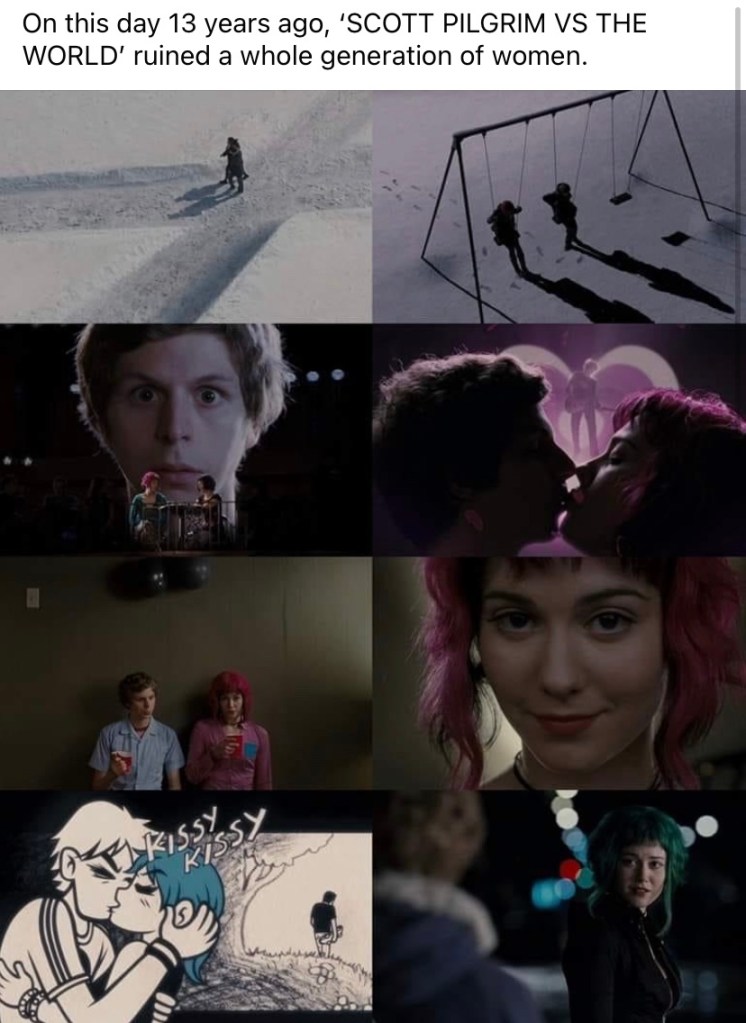
My first instinct was the kneejerk “Oh, this is some ‘girls just wanna be independent blue-haired sluts nowadays instead of perfect blonde housewives and babymakers’ trad nonsense.” That community tends to have a low opinion of blue-haired girls in particular for some reason. Probably because they’re all gay and want nothing to do with you. Kind of like a certain formerly blue-haired blogger I know.

Pictured: gay and wants nothing to do with you

But what if that’s not the intention of this meme? What if there is some valid criticism to the Ramona Flowers archetype?

The Manic Pixie Dream Girl is a character that appears in film and other media to shake up the life of a (usually awkward and dweeby) everyman protagonist. She’s energetic, bubbly, kind of awkward but in a more charming way than the everyman protagonist, and her entire purpose in the narrative is to get said protagonist out of his shell. You know the type. I could put a picture of Zooey Deschanel here…

NOT ME.

…and you’d know exactly who I’m talking about.

A gajillion think pieces have been written on why the MPDG archetype is problematic. Some people say the trope is misogynistic, implying the MPDG is intended to be “not like other girls.” Others take issue with the idea that these quirky women need to “save” men in these narratives. Even the creator of the term feels the character type is shallow and cliche. But my criticism of the MPDG comes from a unique place.

Because for a long time, I was the MPDG.

I was lucky (or unlucky) enough to come of age right when the archetype was gaining steam in the cultural zeitgeist. Somehow, almost overnight, all the quirks that made me annoying or weird started coming off as oddly charming, and I had a long list of suitors all throughout college. But none of them lasted, because the very quirks that made me attractive became grating as time wore on.

It’s not my place to diagnose, but many of the MPDGs of pop culture show signs of being ADHD or autistic, like me. And while being neurodivergent is freaking awesome most of the time, it does come with its downsides, and one of those downsides is difficulty in relationships. For example, I find subtle social cues hard to decipher, and makes communication difficult sometimes. Or impulsivity, which is a huge problem for me. It’s cute when you want to go to Taco Bell in the middle of the night, but it’s way less cute when you buy a boat you can’t afford. Which is something I have done.

The only boat I can actually afford.

There’s nothing wrong with portraying neurodiverse folks as love interests in film and TV— in fact, I love to see that kind of representation!The problem occurs when you only show the rainbows and butterflies. Relationships are hard, and doubly so for those of us who are neurodivergent. We’re not cute little one-dimensional characters who exist to spice up your life. We’re real humans, with human emotions and flaws.

I know it’s a cliche to say you don’t deserve me at my best if you can’t handle me at my worst, but it’s your reality when you date a neurodivergent person. We can be great friends and even better lovers, but you have to accept all of us — not just the idealized versions you see in media.

Sunday Morning Coffee: Sometimes You Gotta Flip a Table

Welcome to my inaugural Sunday morning coffee, where I take a spiritual lesson I’m learning and share it for everyone. I’m not going to pretend I’m this enlightened guru or pastor — I’m just a random weirdo with a blog who likes to write about this kind of stuff. But I feel like I can bring an interesting perspective to the metaphorical table when it comes to scripture, spirituality, and the like, being a queer eclectic Christian married to a mostly agnostic Jewish woman.

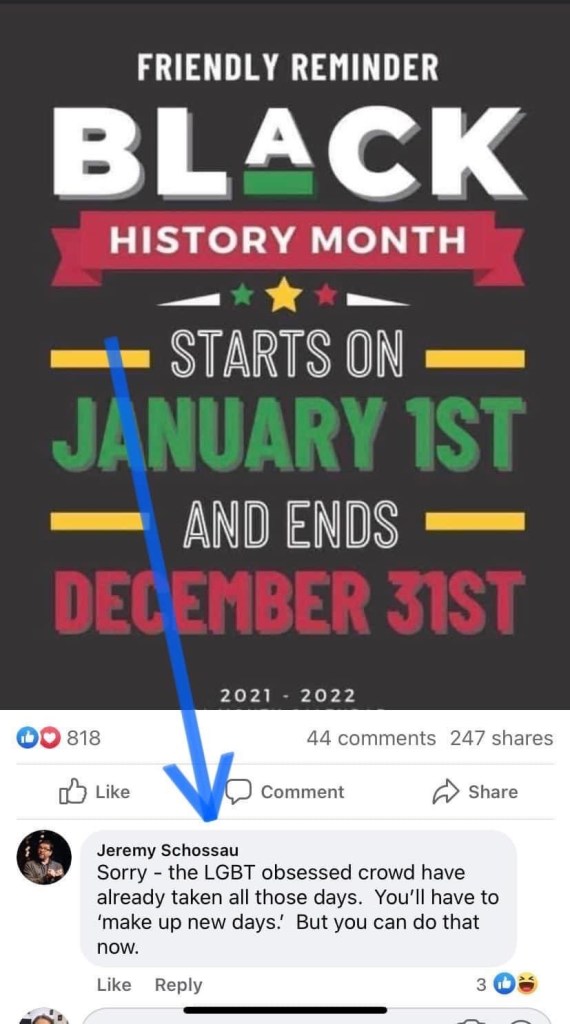
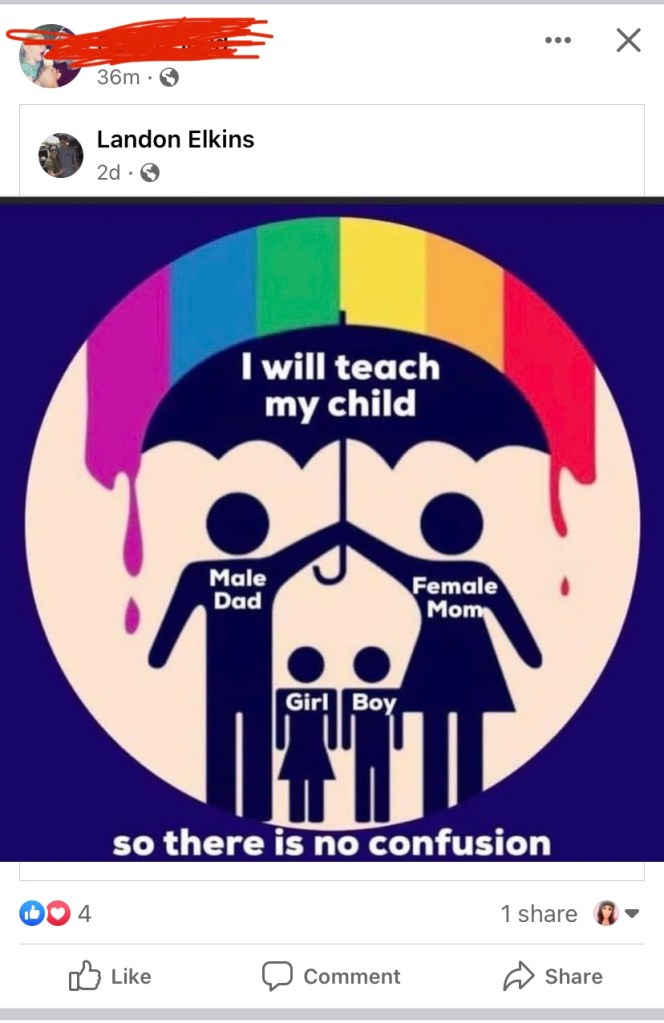
So I was doomscrolling through my Facebook updates when I noticed a friend posted this:

I don’t even have a witty caption for this.

To say I was livid would be an understatement. My blood is still boiling as I type this, and anyone who knows me will tell you I don’t anger easily. To compare my right and my loved ones’ rights to simply exist as ourselves to the most heinous crime against humanity is fucking disgusting and nearly irredeemable in my eyes. And then I clicked on this so-called friend’s profile. He was a Christian?! This man is claiming the name of Christ while posting shit like this? Nothing short of sickening.

What does the heart of God say about anger? It’s easy to fall back on the “seven deadly sins” as a measure of what’s right and what’s wrong, and wrath is right there in that list. But anger isn’t necessarily wrath. When our rage is directed toward something totally justified, we call it righteous anger. In Matthew 21, Jesus Himself demonstrates this.

Jesus entered the temple courts and drove out all who were buying and selling there. He overturned the tables of the money changers and the benches of those selling doves. “It is written,” he said to them, “‘My house will be called a house of prayer,’ but you are making it ‘a den of robbers.

Matthew 21: 12-13

Maybe we need to start flipping some tables. Maybe we need to start using this anger at how our supposed brothers and sisters in Christ are treating people and cheating people. Maybe we should be calling out posts like the one above when we see them pop up on our timelines. Silence never changed anything. Righteous anger makes us want to speak out for the oppressed and the downtrodden, the “least of these.”

I made the mistake of deleting the person who made that post, because I knew I was going to tear them a new one if I didn’t. But what I should have done was use my anger to call them out, gently but firmly. Anger when unchecked turns into wrath, and things can be said that legitimately hurt others (and hurt our own case in the process). On the other hand, righteous anger, when channeled by a spiritually mature person, can be used for good. Open discussions, engage in debates, and let people see the light of Christ through you. If you have to flip some tables, flip those tables, but remember the person behind them. They’re broken too.

No, Trans Women Are Not Threatening Womanhood

I’ve largely disconnected from Facebook because I’m trying to love myself. Still, the primal urge to check in on that hellhole creeps in every now and then. It’s like how some folks enjoy watching pimple popping. It’s often disgusting, but fascinating all the same. I don’t know, maybe I’m following the wrong people.

Anyways, this is what I opened that God-forsaken app to:

Do you know how tempted I am to NOT hide these losers’ identities?

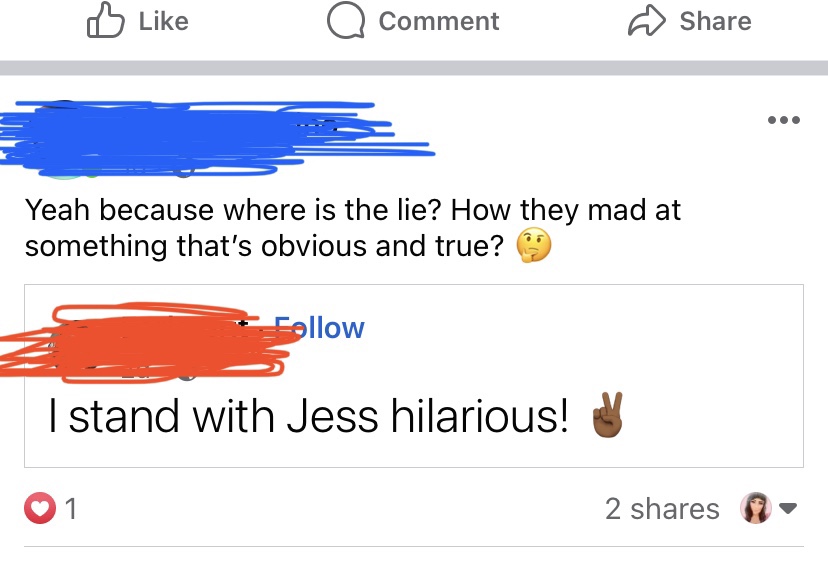
Basically, Jess Hilarious is a comedian (you gotta be with a last name like Hilarious). Recently, she said some pretty TERF-y things, which is what the status above is referring to. Here’s the direct quote, for anyone too lazy to click on the link:

What is the difference between you and someone who has been diagnosed to be mentally insane? The only difference is you don’t have a straitjacket on. Stop talking out your (bleep). Wake up. How are you projecting your anger on real women? Because we are the gatekeepers. We are the gatekeepers for periods. We are the only one that (bleep) bleed, honey.

Jess Hilarious, being decidedly unhilarious

The tirade was in response to a TikTok video of a trans woman who claimed cis women don’t “own” womanhood or periods. The second point is decidedly true — (almost) all AFAB people of a certain age have periods, which includes some trans men and non-binary individuals. And the first point, well, that’s also true, but it’s worth noting that the two aren’t synonymous. Read that again — womanhood and periods are not synonymous. One can exist without the other. Lots of cis women don’t have periods, too, for a number of reasons.

The TERF agenda seems to revolve around the idea that womanhood is this finite resource, and if non-AFAB people get a slice of the pie, there’s less available for what they’d consider “real women.” It’s a silly argument. Someone with a penis wearing a sundress or makeup and going by she/her doesn’t make you, a cis woman, any less of a woman. She’s just out here minding her own business, and you should too. (And everyone should experience the unbridled joy of wearing a sundress on a pretty spring day, I don’t care what gender you are.)

Womanhood should not be gatekept. After all, it is a concept, above all other things. It’s a societal construct that shifts and changes depending on time and culture. 200 years ago, womanhood looked like wearing a corset; in Muslim-majority areas, it might look like wearing a hijab. Heck, pink used to be a masculine color until we decided as a culture to code it as feminine. These are all arbitrary things — we could decide as a society that women need to wear saucepans on their heads and if enough people went along with it, that would be the new normal.

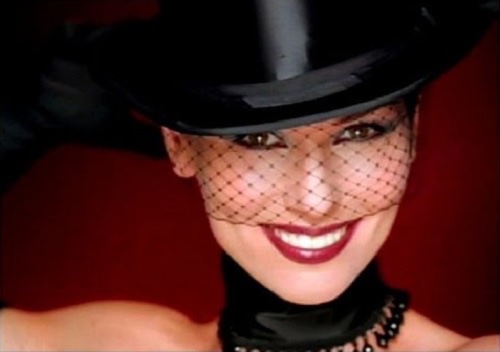
My point here is that if the norms of what your culture considers “womanly” fits how you feel, then womanhood is open to you, and that’s regardless of your naughty bits. It’s the Shania Twain Principle. If you wake up in the morning thinking man, I feel like a woman, I have news for you.

Let’s go, girls.

Sure, pregnancy and childbirth (and periods, by extension) are traditionally associated with womanhood, but like everything that depends on societal norms, there will always be exceptions. Look at women who cannot conceive or carry a child. Do we revoke their woman-card? Absolutely not, and the very idea of doing such a thing is wildly offensive.

There’s room at the table for all of us: cis, trans, or non-binary, able to bear children or unable to bear children, sundress-lovers and pantsuit connoisseurs alike. When addressing important issues like bodily autonomy, such as abortion and birth control rights and the right to receive gender affirming care, it’s more important than ever that all women band together against our common enemy — the greedy, misogynistic old guys in power.

Cue Rage Against the Machine.

Like most people I don’t agree with, I don’t think Jess Hilarious is necessarily a bad person — just misguided. I hope she, too, someday comes to realize that womanhood is for anyone who dares claim it.

Small Towns Are Great! (If You Fit In)

So today’s Thing That Everyone’s Mad About is the Jason Aldean song “Try That in a Small Town.” It’s nothing special to be honest. The lyrics hit on every right-wing talking point that’s popular right now save for the tired (and deeply offensive) “all queers are child molesters” trope. You got gun lovin’, cop lovin’, flag lovin’, all that good stuff. Basically, it’s obvious MAGA-bait. Musically, it’s…a standard issue pop country song. You could rewrite every line as “Bernie Sanders rules!” and I still wouldn’t listen to it willingly. Hell, all politics aside, changing every word to “watermelon” wouldn’t save this song from being an absolute snoozefest. Why do people give this guy attention when like, Jason Isbell exists?

Behold, the superior Jason.

I’m not here to talk music or politics, though, as if anyone gives any weight to my opinions on either. I’m here to talk about the romanticization of small towns.

I grew up in Huron Charter Township, which consists of three small villages: New Boston, Waltz, and the smallest one, where I lived, Willow. Most people just called the whole township New Boston, after the largest village, but I knew the difference, dammit. We were about as far into the country as you could get and still call yourself a suburb of Detroit — most people consider the area part of the larger Downriver region. Still, for all intents and purposes, the area was rural as heck. I’m talking farms, barns, horses, and the like.

Not my hometown, but might as well be.

I liked some aspects of living there. I liked running rampant through the open fields, going muddin’ with my childhood friend, walking with my dad to the little party store by the train tracks and getting holographic Pokémon stickers. It was a quaint life, and it would have been perfect.

What people don’t realize is that living in a small town is hell when you’re the weird kid.

Small towns are tight knit and insular, and that works out well for people who are in the “in-group,” but things get real squirrelly when you break the norms of that in-group. I remember getting teased for everything from not being Catholic to hating ranch dressing to being supposed lesbians with my best friend, back when “lesbian” was an insult and not, well, just an accurate descriptor for me. I didn’t dress like the other kids either, or talk like them, or act like them, which I now realize was an autism thing, but this was also a time when girls were seldom considered autistic. You were just “the weird kid,” and if you were a small town weird kid, news travelled fast that you were to be avoided.

As I got older, the bullying escalated into sexual harassment — girls grabbing my ass and guys pretending to rub their boners on me, all because they knew it made me uncomfy and they thought my reaction was funny. I didn’t tell my parents the nature of the bullying, but they knew something was up. I was coming home from school crying and hibernating all evening. And when my dad went to the principal and the counselor? There was nothing they could do. My dad suspected their indifference to my predicament was partly due to my family being “low importance” in the small town hierarchy. We didn’t go to the local church or participate in the PTA. No one cared what happened to the Salisburys. We were outsiders.

It was so bad, the adults were bullies too. I still remember my Girl Scout troop leader, Mrs. Marsack, who resented me for making her troop look bad. She was so desperate to push me out of her gaggle of otherwise perfect little girls, she barred me from participating in the group camping trip because I wasn’t “mature” enough, despite getting good grades, staying out of trouble, and being more of an “old soul” than was probably healthy for me. I remember locking myself in the bathroom and crying inconsolably. It had never been more clear to me that I wasn’t wanted.

My saving grace was leaving my hometown. Moving to my college town was the best decision I could have made. The thing about larger cities is that more people equals more differences, and suddenly, I was running into weirdos like myself and befriending folks who weren’t like me, but still appreciated my quirks for what they were. Everyone was from somewhere else, and we were all just trying to find our place in the world. It was kind of a beautiful thing. Growing up in a small town, I had no idea there were places like this. It felt utopian.

Cities have their issues too — more people does tend to equate to more crime — but that’s just the nature of humanity. Nowhere is perfect as long as the people there are not perfect. I just know I’d rather live someplace where I can be myself and not have to hide pieces of who I am just to fit in. I’m glad I left my hometown for bigger and better things, and I hope all the other small town weirdos like me get a chance to as well.

Your Song Saved My Life: The Motion City Soundtrack Effect

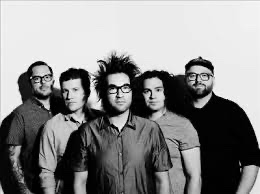
My joke is that there are two kinds of emos — Jimmy Eat World emos, and My Chemical Romance emos. Like much of nature, however, emo can’t be contained into a binary system. Where do we categorize the Taking Back Sunday emos, or the poor, poor Brand New emos who have been languishing ever since it came out that Jesse Lacey kinda sucks? Another band that doesn’t fit cleanly in the JEW/MCR dichotomy is Motion City Soundtrack.

Musically, they’re probably happier sounding than most of their peers — lots of major keys, fast tempos, and cool ass synths. But their lyrics sound as if they’d been written by every one of my mental illnesses in a trench coat. I don’t even have to dig that deep to find songs that match whichever ailment is weighing me down at the moment. Like, their signature song is textbook obsessive compulsive disorder.

I’m sick of the things, I do when I’m nervous
Like cleaning the oven or checking my tires
Or counting the number of tiles on the ceiling
Head for the hills, the kitchen’s on fire
I used to rely on self-medication
I guess I still do that from time to time

-Motion City Soundtrack, “Everything is Alright”

I remember when my dad was in the hospital for a heart attack that nearly killed him, I discovered “Time Turned Fragile,” a song about cherishing the relationship you have with your father and realizing he’s not going to be around forever. “Son of a Gun” takes me back to the drunken tiffs I had with my wife before deciding to sober up, when my stupid antics were all about “pissing you off just for fun.” And “Even If It Kills Me” was the song I played on repeat as I put in my application to music therapy school for the third time, because I too was “so sick of making lists of things I’ll never finish.”

There’s something powerful about a lyricist that can write words that relate so uncannily to one’s life. That feeling when you realize a song is unmistakably written for you — I call it the Motion City Soundtrack Effect, because I can’t think of a band that does it better than them. Taylor Swift comes close at least.

Real recognizes real.

It’s something I aspire to as a songwriter. The only feeling better than finding that song that you relate to so deeply is being the one to write that song for someone else. It’s why I write music in the first place. It’s more than just a catharsis for myself. I write everything in hopes that somebody out there will hear one of my songs and perhaps realize they’re not alone in whatever they’re going through. You know, the same way I realize I’m not alone in my struggles when I listen to MCS.

I’ve written about the power of music and its ability to affect people on a deep level before. I’ve written about discovering it in my own life. I’ve even written about the dark side of these parasocial relationships with musicians before. But it’s worth mentioning again and again — music is a powerful tool, probably the most powerful tool we as humans have, more powerful than bombs or guns or even words. I believe music has the power to change the world, which is why I chose to do it all those years ago, and why I still choose to do it after all this time. Songs can save a life.

I forgot to mention the final few lines of that verse I shared earlier.

But I’m getting better at fighting the future
Someday you’ll be fine
Yes, I’ll be just fine

-Motion City Soundtrack, “Everything is Alright”

I’ll admit I teared up a little when I heard this song played live last night, despite it being one of their happy-sounding uptempo numbers, because it reminded me of how far I’ve come in my own fight with mental illness and OCD. I remembered listening to those words and wishing for a day I’d be just fine, and now I’m finally in a place where my fears are (mostly) under control.

That song and this band have been with me through it all, and I owe a lot to them.

Do you have a band or a certain song that saved your life? I’d love to hear your stories in the comments! If you like what you read here, feel free to support the blog by donating via Venmo (@jessjsalisbury) or CashApp ($TheJessaJoyce). Thanks for all your support!

We Need to Talk About Adderall

Hi! I have ADHD! Did you notice from the everything about me?

ADHD is an example of neurodiversity, or a brain “wiring” that differs from the societal standard. Because of the societal norm being, well, not ADHD, it is also considered a disability. Think of it this way — if humans could fly, but a few couldn’t, those people would be considered disabled by that society’s standards, because that society would be set up for people who flew. Similarly, we as ADHD-havers live in a society that isn’t made for us.

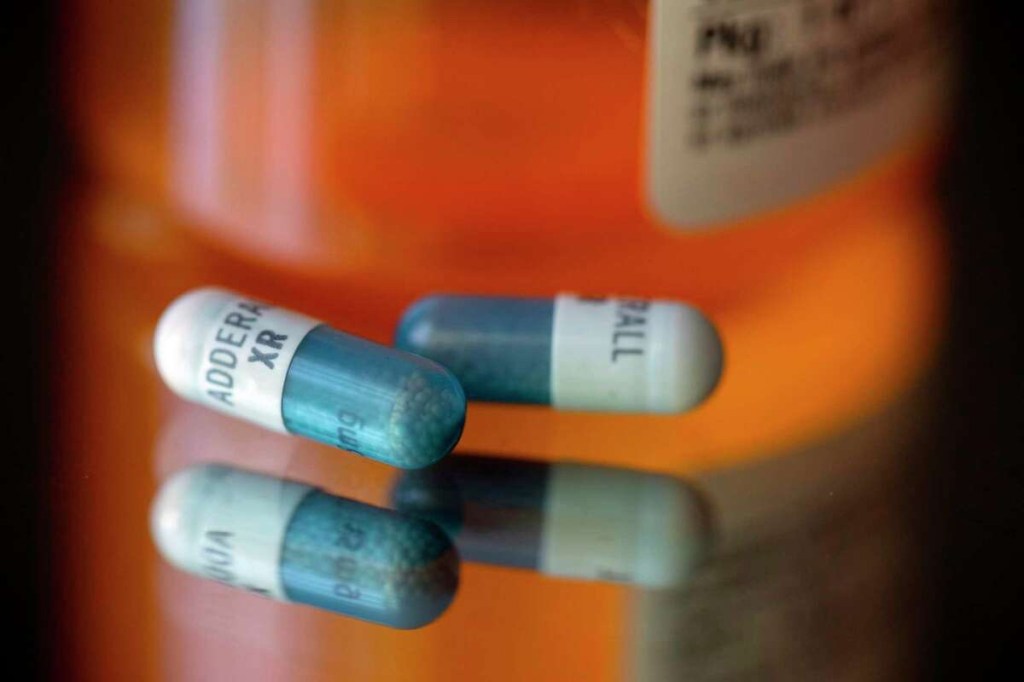
There are quite a few medications out there that up our productivity and attention spans to “normal” by these societal standards, but none are quite as effective as good ol’ Addy. There’s a reason why Adderall near the top of the list of prescribed medications. In 2021, 41.4 million prescriptions were dispensed here in the US alone.

So why is it so freakin’ hard to get?

Maybe I’m biased, but I don’t think there should be so many hoops for disabled folks to jump through to get their meds.

There’s been an ongoing shortage of Adderall, which is highly regulated in the US due to its status as a C-II drug. C-IIs are the big boys, the Norcos and Percocets, the meds ranked just below the scary stuff like heroin and uh, marijuana (unless you live in a cool state like me). Adderall does have a high addiction and dependence rate — but so does alcohol, a drug that’s not medicinal in nature at all, yet is widely available and even promoted in our culture. Due to all this, you’re lucky to get an Adderall script in the first place, and thanks to the shortage, good luck finding it anywhere.

“Have you tried not being ADHD?“

Imagine if we treated things like wheelchairs and service animals like this. Imagine if the very thing that allowed you to function in society was vilified to the extent that Adderall is. I’m not saying we should do away with its prescription only status, but I feel that its C-II status makes it prohibitively hard for people who need it to access it. It’s already hard enough for ADHD folks to make an appointment and go through the long diagnostic process. “But making it easier to get will encourage people to abuse it!” Of course people are going to misuse drugs like Adderall. But people misuse things like Benadryl and cough syrup as well, and those are over-the-counter!

And I’ve heard some downright terrifying Benadryl trip reports.

People underestimate how much of a disability ADHD really can be. It’s hard to hold down a job when you’re not able to focus. It’s hard to even acquire a job with our variety of executive dysfunction. Honestly, in severe cases like mine, it can be a safety issue — I’ve nearly swerved off the road looking at a particularly neat billboard. Adderall makes things a little easier for us, and we should be able to obtain it with as few barriers as possible.

Invisible disabilities are already hard. Maybe let’s not make it harder by restricting access to the medicine we need.

This Land is My Land, Too

I’m going to say something that might be unpopular with some circles.

I’m proud to be an American.

For all its faults, it’s still my home. And it’s the home of MLK and Stonewall and a long legacy of people fighting for a better future. It’s the home of countless influential scientists and inventors. It’s the home of many of my favorite musicians, and the home of some of the greatest entertainers to ever walk the Earth. And most importantly, it’s the home of my closest friends and family. We’re all tied together by this shared land and a shared culture, the same way people have been tied together since the dawn of civilization.

Still, I don’t think America deserves a birthday party this year.

That party hat is starting to look like a dunce cap.

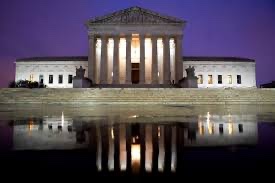
The Supreme Court just ruled that discrimination against certain groups of people is a-okay because free speech or whatever. This would be fine if the group in question were, let’s say, Nazis, but everyone knows this ruling is meant to be a slap toward us gays. As one law professor and analyst put it, “What you’re going to start to see eventually is people saying, ‘I run my little inn in this little town somewhere, and I don’t want to have same-sex couples sleeping in one of my bedrooms.’” It feels like the tippy top of a slippery slope toward something nasty. Not wanting to leave us with just one gut punch, the Court also ruled against student loan forgiveness. This is going to screw over so many hardworking students, current and former, who will be in debt to their eyeballs until death. Like, I’m pretty much banking on just freaking dying before I have to pay back everything at this point.

The debt collectors will never find me in here!

All this on top of the crimes the U.S. has been found guilty of — ridiculous amounts of gun crime, a rising fascist movement, the ever-present racism, stealing the land from the folks who were here first, need I go on?

All that said, I’m still optimistic. I still love this country, warts and all, because of the people here who are trying to make it a better place.

There’s a sentiment among the more jingoistic types that if you’re truly dedicated to your country, you’ll accept it no matter what. This is America — if you don’t like it, get out. You know the type.

But let’s say your family’s home is on fire. It’s a beautiful, beloved home that’s been passed down through generations, and now it’s up in flames. Do you leave it, or do you stay and put it out? There have been times I’ve considered leaving the country, building a raft to Canada or something (as if emigration were ever that easy). But what good does that do for the loved ones who are still trapped in the burning house? What good does that do for the house itself? Maybe the brave thing to do is to stay and fight.

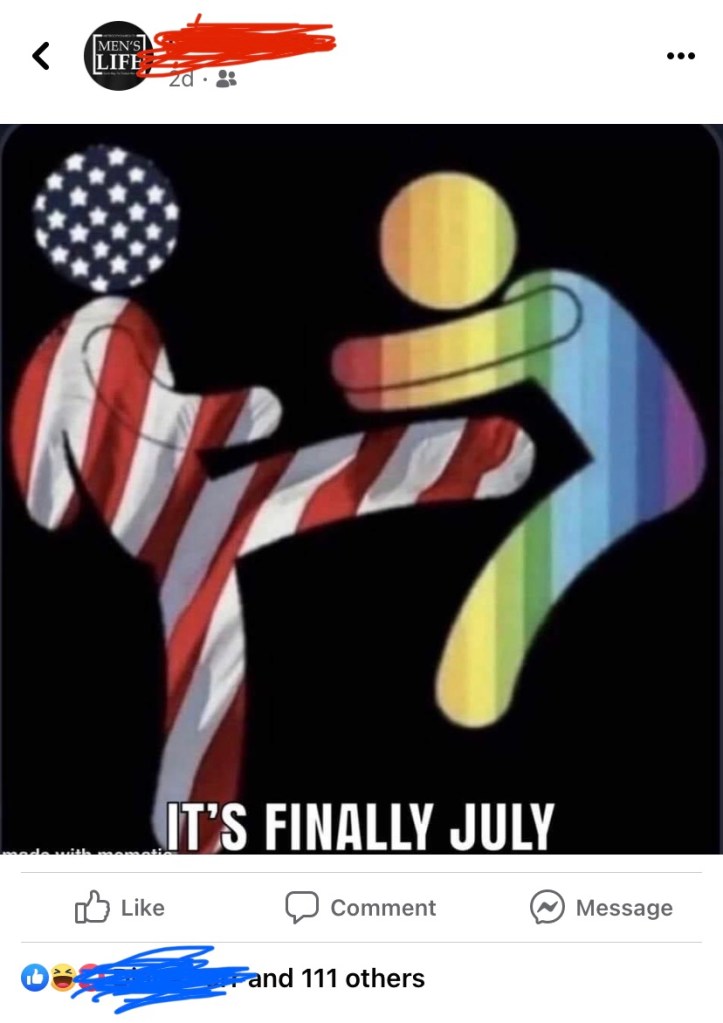
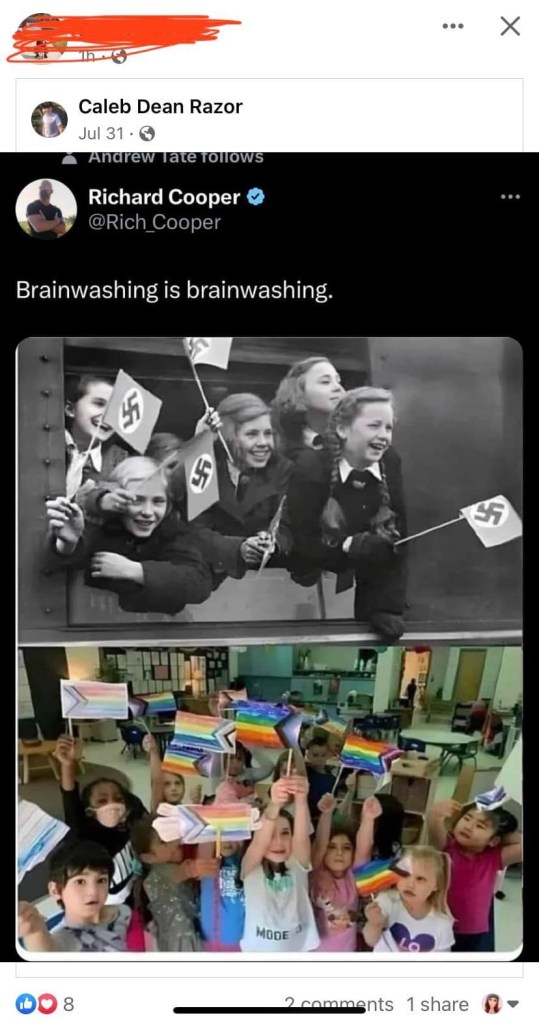
Certain groups of people want to gatekeep the American dream. Hell, I saw this image from a “friend” on my newsfeed just the other day—

More like 111 YIKES.

—as if you can’t be gay and American. As if you can’t be trans and American, or black and American, or Hispanic and American. There’s going to be people who try to convince you this isn’t your home. That you’re not welcome here. It’s in the face of these literal anuses that we need to stand up and claim our identities, resting our feet firmly within this blazing house we were born into. This is our home too, and the fight’s not over until all Americans are safe and thriving on her land.

Silent in the Face of Oppression: What I Would Have Done Differently

Write about a time when you didn’t take action but wish you had. What would you do differently?

The platform I use to publish this website gives me little daily writing prompts as inspiration. Sometimes I use them immediately, sometimes I save them to write about later (and in all actuality, leave them to languish in my “drafts” for eternity). When this one popped up on my screen, I knew exactly what I needed to write about, because as much as I try to live without regrets, this is one of the few that I still cling to for some reason.

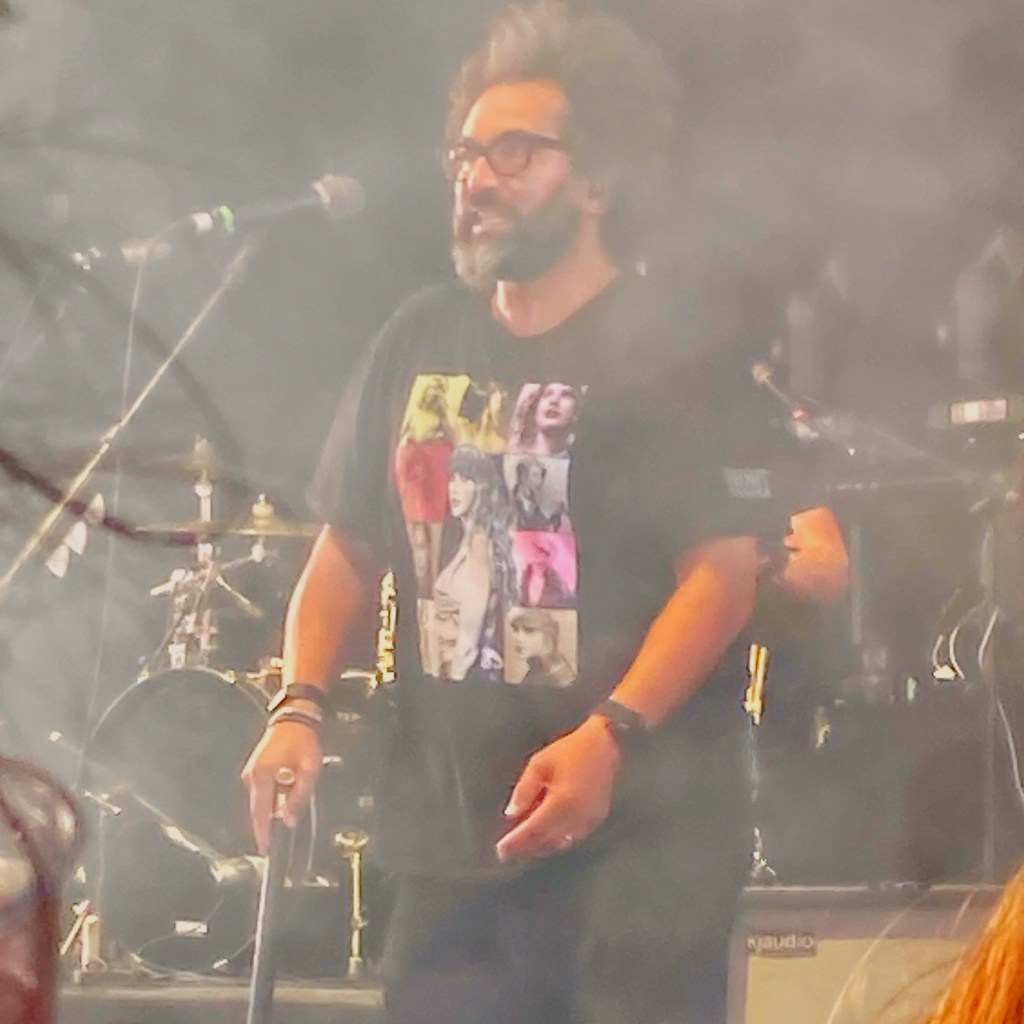
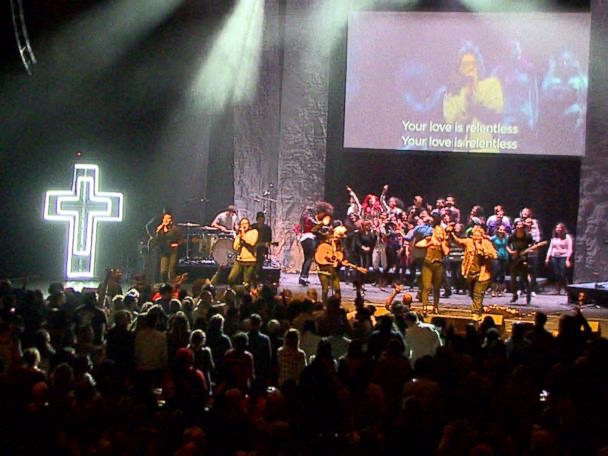
I cut my teeth as a musician and performer in the worship team of the church of my youth. Normally I’d leave it unnamed, but honestly, Metro City Church doesn’t deserve that dignity. Not after the events of this story, at least. I will be honest — my time on the team was an amazing once-in-a-lifetime experience. I had the honor of playing with some of the best musicians I’ve ever met, and on the largest stage I’ve ever played. Imagine a slightly scaled-down version of whatever comes to mind when I say “megachurch,” and that’s basically what we were. A mini Hillsong in the heart of Downriver, with one of the largest congregations in the entire area.

OPEN UP THAT PIT

Every week or so, I’d stand up on that stage and play my heart out for the Lord, which is still one of my favorite ways to connect with the divine. Giving credit where credit is due, I think Metro lit a fire for music and worship in me that still burns to this day. In fact, I still play in my current church’s worship band every now and then. But playing on Metro’s stage was nothing short of amazing. We had all the lights, fog machines, a state-of-the-art audio system, we had in-ear monitors for Christ’s sake (literally!). My point is, for all the smack I’m about to talk when it comes to this church, they did do something right, and that something was music.

The downside was that the church’s politics leaned a bit further right than I would have liked, but in the pre-Trump days, this was easy enough to ignore. Like, I’d get the occasional unprompted “ew, you like Bernie Sanders?” from the pastor or his kid, along with a lecture on why Bernie Sanders sucks. Again, this was entirely unprompted — it’s not like I was wearing a Bernie Sanders shirt, or had a Bernie Sanders sticker on my guitar case, or even brought up Bernie Sanders in conversation, ever. They just knew I was one of the small tribe of progressives, mostly fellow musicians who’d giggle irreverently at the post-worship breakfast about sappy “pro-life” messages or whatever subtle jab the lead pastor decided to throw at the libs that day.

For the most part, though, I could look past it. Sure, the church supported anti-choice measures and preached the dreaded “love the sinner, hate the sin” message when it came to the queer community, but these topics came up so rarely that I didn’t mind. Metro was one of those insidious religious institutions that disguised itself as a “come as you are” church, welcoming everyone and trying to cast as broad a net as possible, as to not alienate anyone. But beneath the surface, those ideologies still lurked. I know way too many gay/trans folks who were duped into feeling safe at Metro, only to get hit with a nonchalant homophobic or transphobic quip from a member of the congregation.

“Adam and Eve, not Adam and Steve!”

I wasn’t out at the time, and I was married to a male member of the church, so I was marked safe from most of these comments. As far as anyone knew, I was a regular, God-fearing, heterosexual woman. But I knew in my heart I wasn’t straight, not entirely, or even mostly. I had to push down a lot of my gay fee-fees to fit in with the rest of the church, which is why I came out as late in life as I did.

Everything changed in one moment, though.

I still remember the burn of the stage lights and the eyes of the congregation as I stood on the stage, guitar in hand, while the pastor rattled off a list of upcoming events. It wasn’t unusual for him to come up and make announcements between songs like this. But one of the upcoming events he named this time shook me to the core: a conversion therapy class for young women.

Here’s where I should have done everything differently. I should have thrown my guitar down and walked off that stage. Screw subtlety — I absolutely should have made a scene. Instead, I froze. I stood there complacent in my own oppression and complicit in the abuse of these girls.

Thankfully, this was the beginning of the end of my time at Metro. As controversy swept over the church throughout the local (and even national) queer community, I found myself torn between the church I loved, who I thought loved me, and my own gut instinct that this was not fucking okay. I even posted a tone-deaf defense of the church, claiming not all of us were raging homophobes, and my ally friends (rightfully) called me out for trying to defend them at all. I knew I had to do something.

So I came out. In front of everyone. I’m queer. I’m one of those girls. I’m on your side. And I’m so glad I did, because the act of finally admitting it to myself led me to leave a marriage my heart wasn’t in and marry my best friend instead. I left the Metro and never looked back, settling on a truly inclusive Methodist church that practiced what Christ actually taught, instead of the Americanized evangelical crap propagated by hipster megachurches.

But I still wonder what would have happened if I’d walked off the stage that morning. It still eats at me that I was silent in the face of oppression and hate. What does that say about my integrity? I’d like to think I’ve grown exponentially since then. I’d like to think that should I be placed in that situation now, I’d stand up for myself and for those girls. The Bible teaches that real love is laying down one’s life for their friends; the least I could do is lay down my pride (and probably get excommunicated, but as they say, que será será).

I don’t hate Metro, at least not the people there. They’re lost in the sauce just like I was. Love the sinner, hate the sin, as those circles always say, and while I hate what Metro stands for, I know there’s still some decent people there fighting the good fight to make it the loving, affirming safe haven it could be.

Well, maybe if the lead pastor would stop doing this.

Yeah, I’m being too optimistic.

If you enjoy my writing and want to help support me and this site, you can donate via Venmo (@jessjsalisbury) or CashApp ($TheJessaJoyce). Every little bit is greatly appreciated! Thanks for taking the time to read my work, and don’t forget to check back every few days for new content!

“Your Biggest Fan, This is Stan” (A Humble Critique of Obsessive Fandom)

It’s fitting that I write this as one of Taylor Swift’s songs plays on the radio at work. Not like I write this stuff on the clock or anything.

Certainly not!

You see, Tay’s the catalyst for the events of this story. Or rather, her loyal army of stans.

My band had a show on Friday, hilariously enough competing with Taylor Swift’s show in Detroit. So I made this infographic as a joke to convince people to see us, a dinky ass local band, instead of her.

I know in humor you’re supposed to punch up, but in this case the punch was more of a playful nose-flick. Everyone in the band is a Swiftie, after all — we just thought it would be a funny way to drum up attention for the band and our show.

At first, we got a pretty hearty positive response, people saying we “won them over” and wishing us a good time at the show.

Then the stans came.

Suddenly, we were inundated with accusations of misogyny (hilarious in hindsight because we’re mostly women), homophobic (also hilarious because we’re mostly queer), and even mocking her mom’s cancer (I sure hope that stan warmed up before making that stretch). One of the “nicer” commenters asserted she’d seen her “three times on this tour” for less than her paycheck and has met her many times. The ones that hurt the most were accusations of us belittling a fellow artist — we would never attack another creator maliciously. Like, we made it clear in the caption that we were actually huge fans and meant no harm to Taylor.

But when you’re a stan, there’s no gray area. Make one perceived slight against their object of adoration, and you become public enemy number one.

Why do people do this?

I think it all comes back to the parasocial relationship people have with musicians. The beauty of music is that it’s a deeply personal medium that brings people together. That’s what drew me to music as a little autistic kid who had trouble socially. Music — and the people behind it — felt like friends to me. There’s a reason I’d make believe I was Bon Jovi and methodically watch anything related to them. In the end, music is what helped me connect to other people and build relationships that have lasted years.

But like nearly everything, there’s a flip side to that phenomenon. Take, for example, the song that gave stans their name — “Stan” by Eminem.

In my personal opinion, “Stan” is easily one of the most unnerving songs ever written. In it, a man describes his obsession with Eminem through a series of letters, culminating in him committing a murder-suicide after being let down by his idol. It’s absolutely chilling and worth listening to. In fact, I’ll link it here:

Another musical episode!

It’s almost funny how watered down the term “stan” has become — or has it? If it came down to it, would Swifties die for their queen? Would the BTS army kill for a bunch of cute guys from the other side of the world?

I mean, they are cute.

I’m almost afraid they would, and that’s because it’s happened before.

If you look at my YouTube subscriptions, you’ll find my two biggest interests to be music and true crime. Don’t worry — I’m not one of those weird Jeffrey Dahmer lovers or hybristophiliacs. I like the thrill of being scared, but fictional monsters don’t do it for me because my brain doesn’t register them as a threat. What does scare me is the fact that real life monsters exist, and are absolutely a threat. And every now and then, the stars align and I find something to watch that’s both music and true crime related.

Ever hear of the Bjork stalker? No?

Ricardo López was your average incel before the term even existed. He was a social recluse who retreated into the world of celebrities to dull the pain of not having many friends, let alone a girlfriend. His main fixation was the Icelandic singer Bjork, to whom he wrote many fan letters and considered her his muse. The obsession wasn’t sexual — he couldn’t envision her as anything but this pure, innocent figure.

So when she finally did get a boyfriend, and a black boyfriend at that (yup, he was kind of a racist too), Ricardo was furious. He wanted to send her straight to hell for her perceived slight against him. So, viewing the process as a sort of sick art project, he began filming a series of video diaries chronicling his plan to kill Bjork with bomb hidden within a book. Ultimately, he’d kill himself too, and he and his love interest/victim would be united in the afterlife.

In the conclusion of his series of “art films,” Ricardo shaves his head and paints his face green and red before shooting himself in the face, dedicating his suicide to Bjork as one of her songs drones on in the background. His bloated corpse and the video tapes would later be found by police, who immediately recognized what was happening to be a threat. They managed to intervene just before the package reached Bjork, narrowly sparing her life.

This is what fandom looks like at its worst, and it still happens. Even our girl Taylor has had to deal with it. And this is why I’m scared to death of becoming anything more than a local act, even though my band is slowly making its way toward greater things. Because with more attention comes more obsession, and people are fucking crazy. Maybe Taylor’s stans will come for me, or I’ll say something to piss off the BTS Army. Or worse, Wake Up Jamie will accumulate its own obsessive fans, and there will be that one bad apple who decides to Selena me.

People need to realize musicians and other performers are literally just people. We make art, we make mistakes, and we have dreams and fears like everyone else. Standom tends to raise people to a godlike level, but at the end of the day, we’re all a bunch of stinky, pulsating meat living on a giant rock. Even Taylor.

Pictured: a stinky meat girl

Why I Kind of Hate Pride Month

Hi! Did you know I’m a big ol’ gay? If you’ve followed my blog for any amount of time, you’ll know I’ve got a wife and a girlfriend who I love very much (yay for polyamory!). I also identify as nonbinary, as in I like they/them, but I’m still cool with she/her. Basically, I’m queer as all heck.

That being said, Pride Month is kind of a bittersweet time for me.

It’s not that I hate being pandered to by huge corporations. Like, please pander to me; I like the attention. In fact, it’s actually kind of dope that we live in a society where it’s more profitable to be progressive than regressive, even if it’s ultimately all for show. Like, I love Target and I love what they’re doing for Pride, but if they pulled their Pride collection from stores in more conservative areas, it’s clear they’re a fairweather ally. If violence broke out at a Pride parade, Target’s not going to take a bullet for me or my friends, which does suck, but it’s probably too much to ask of even the most queer-friendly corporations. Business is business, after all, and corporations aren’t your friends.

No matter how cute their mascot is.

You see, Pride Month is the time of year when I get constant reminders of how much the world still hates me.

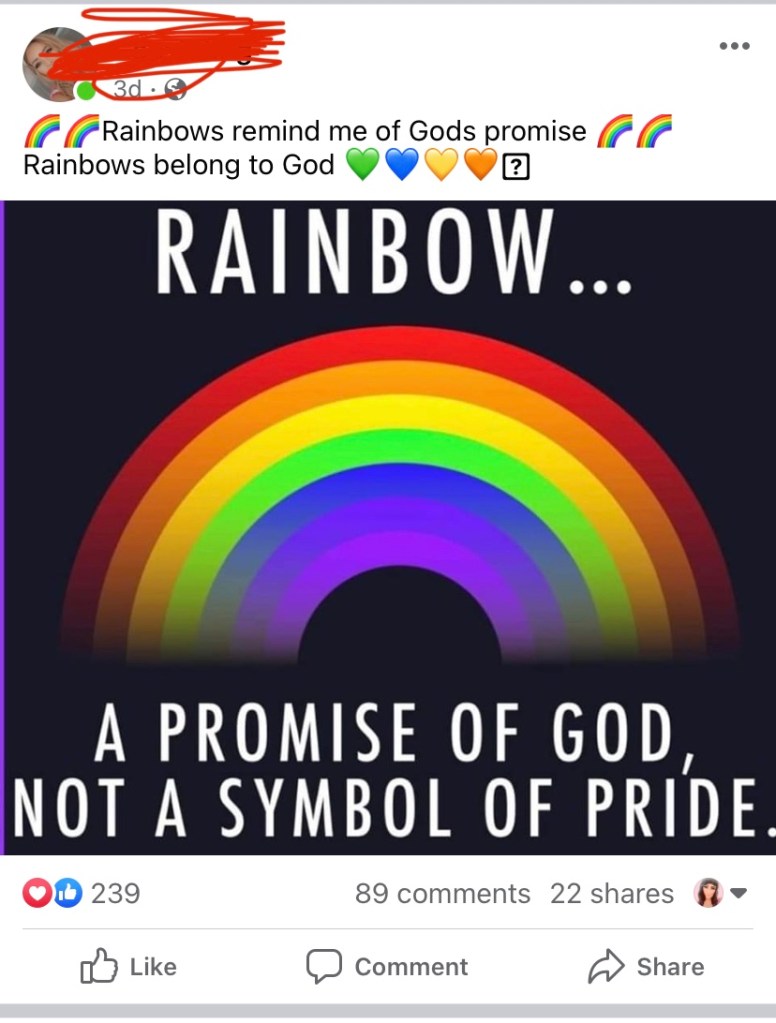
Sure, people are loud and proud about their identities and who they love during the month of June, but it’s also the time of year when the assholes feel the need to shout even louder about how much they “don’t approve of our lifestyles” (at best) or want us to die (at worst). Here are some examples from some of my so-called “friends” on Facebook:

These are some of the more tame ones. I’d post some of the darker ones I’ve seen, but I don’t feel like dwelling on this shit even more than I already have to. I’m talking straight-up genocidal statements and “41 percent” quips. These people want my friends to die. These people want my family to die. These people want me to die. And it’s fucking exhausting. There’s a reason I bought a gun and started working out. It’s dangerous to be queer in this climate.

Don’t get me wrong, I don’t want the homophobes and transphobes to die, because I’m not like them. I believe in taking the higher ground. Rather, I wish they’d get to know actual queer folks, not just the caricatures and straw men presented by right-wing media. Because to be honest, we’re mostly pretty cool! Like, all we want is to be ourselves with the people we love. We’re not “coming for your kids.” We just want to make sure that, should your kids end up gay or trans, you don’t throw them out on the street like a wad of garbage.

We don’t need special treatment. Honestly, I’d trade Pride Month and all of its trappings to just be treated like a human being. In the end, we don’t give a shit about your rainbow cakes and witty t-shirts. We just want to live.