How Ephemeral Love Becomes Eternal Through Music

Brace yourselves, kids. In this post, I mention both Heart and Taylor Swift.

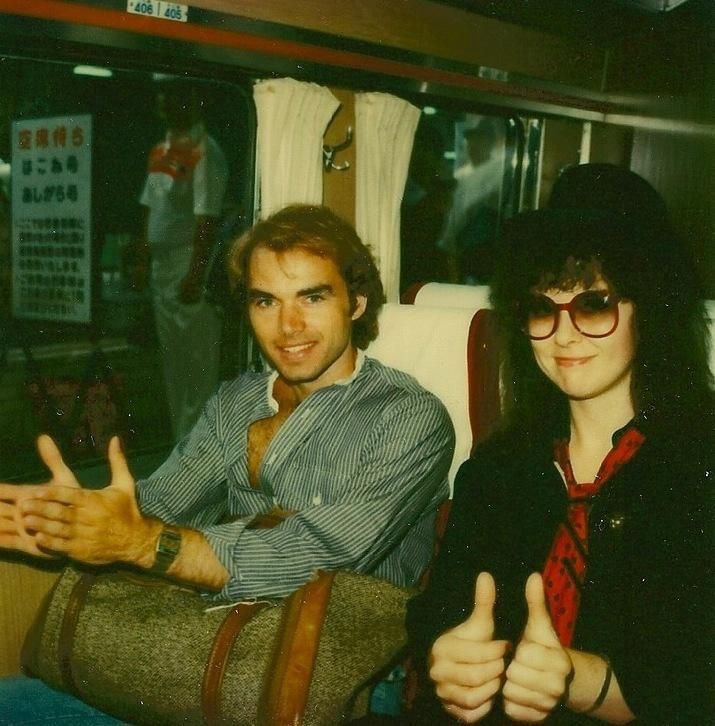
A few days ago, Heart’s original manager, Michael Fisher, passed away. Actually, calling him just their manager is kind of an understatement. In the autobiography of Heart frontwomen Ann and Nancy Wilson, Kicking & Dreaming, Ann tells the story of how Michael was her first love. Their whirlwind relationship inspired one of the band’s earliest and most iconic songs, “Magic Man.”

Why do I mention this? Obviously, Ann and Michael didn’t work out. Michael ended up marrying someone else and having like eleven freakin’ kids, and Ann went on to become a rock star. But their stories are forever intertwined because of that one song. And that’s what this post is about, because when you write a song for someone — or create any art in their honor — you’re preserving a piece of that relationship forever.

I’m a lifelong songwriter. I’m also fascinated by interpersonal dynamics. If you took every song I’ve ever written throughout my life, they would tell countless stories of people who have come and gone and somehow left a mark on me. The songs almost act as containers for the emotions left behind by those old relationships. Each song is a museum of memories. That’s why I have this theory when it comes to songwriting. Well, maybe it’s more of a maxim than a theory. And the maxim is this: If you get even one beautiful creation out of a relationship, it was not a waste of time.

People enter into relationships usually expecting — or at least hoping — to spend forever with someone. The point of dating is to find “your person” (or people, if you’re polyamorous like myself). So when relationships go south, it’s easy to write off the entire experience as meaningless. That’s where art comes in, though. With the magic of creativity, even the shortest-lived tryst can be fuel for a song or a film or a poem or painting.

Taylor Swift is a songwriter I admire deeply, and she’s a great example of this maxim in action. People have given her so much shit throughout the years for writing about her relationships, but honestly, that’s one of the things I like about her writing style. Not because I’m one of those parasocial weirdos who obsess over her dating history, but because that’s how I write songs too. I write about people. She has had many exes, as have I, but I feel like that’s what makes us better at writing. We have these lived experiences we can churn into music, and nothing can take that away from us. Like, she’s not with Taylor Lautner anymore and she hasn’t been with him for over a decade. But “Back to December” is still a beautiful song all these years later, and a song that millions of people still listen to and relate to.

I think of my own songwriting similarly. I think back to Jacob, whom I had a short-lived fling with my freshman year of college that led to the writing of “Smiles & Anchors” and “Tsvi.” I think about Dylan, my high school crush, who inspired “Off the Deep End” and the unreleased track “Outta My System” off my upcoming album Lore. There’s TJ, the muse behind “Song of the Sea,” and Phil, who never reciprocated my feelings but nonetheless influenced the writing of “Oceanography.” There are even songs I’ve squeezed out my non-romantic relationships and the ones that really went south, like the falling out with a former bandmate that led to the writing of “Ladies Don’t Start Fights (But They Can Finish Them).” I can find closure for relationships I wasn’t ready to leave just yet, and peace in relationships I’m happy are over, all because I’ve been able to transmute the pain into something I’m proud of.

I know I write about songwriting pretty frequently, but it is something I’m deeply passionate about. It’s what has gotten me through many breakups and heartaches and unrequited loves. But none of those situations were in vain, all because I could make something beautiful out of them. Relationships — romantic and otherwise — are the backbone of songwriting. We write about human beings and the way they relate to each other. Maybe those relationships don’t last forever, and sometimes, they shouldn’t last forever. Michael Fisher may have been absolutely miserable had he ended up with Ann Wilson, and vice versa, but the love they shared briefly inspired music that people will treasure for generations to come. And to me, that’s the beauty of songwriting.

If you enjoyed the writing in this post and elsewhere on the site, please consider donating to Jessa’s tuition fund! Any help is appreciated!

CashApp: $TheJessaJoyce

Venmo: @TheJessaJoyce

Something to Believe In: What Bon Jovi Taught Me About Deconstruction and Faith

Not so secret confession: Bon Jovi is my favorite band.

Well, I don’t know about absolute favorite. That honor probably goes to Heart at the moment, who I also seldom shut up about. But Bon Jovi my “comfort band” for sure, a nostalgic auditory bowl of chicken noodle soup when I feel most torn up about adult life. They were my childhood obsession, and if there was a “Jessa Don’t Talk About Bon Jovi For One Day” Challenge, I’d lose almost immediately. Richie Sambora is half the reason I play guitar (the other half being the fact that one-on-one guitar lessons were the only activity my then-undiagnosed ADHD ass couldn’t get kicked out of).

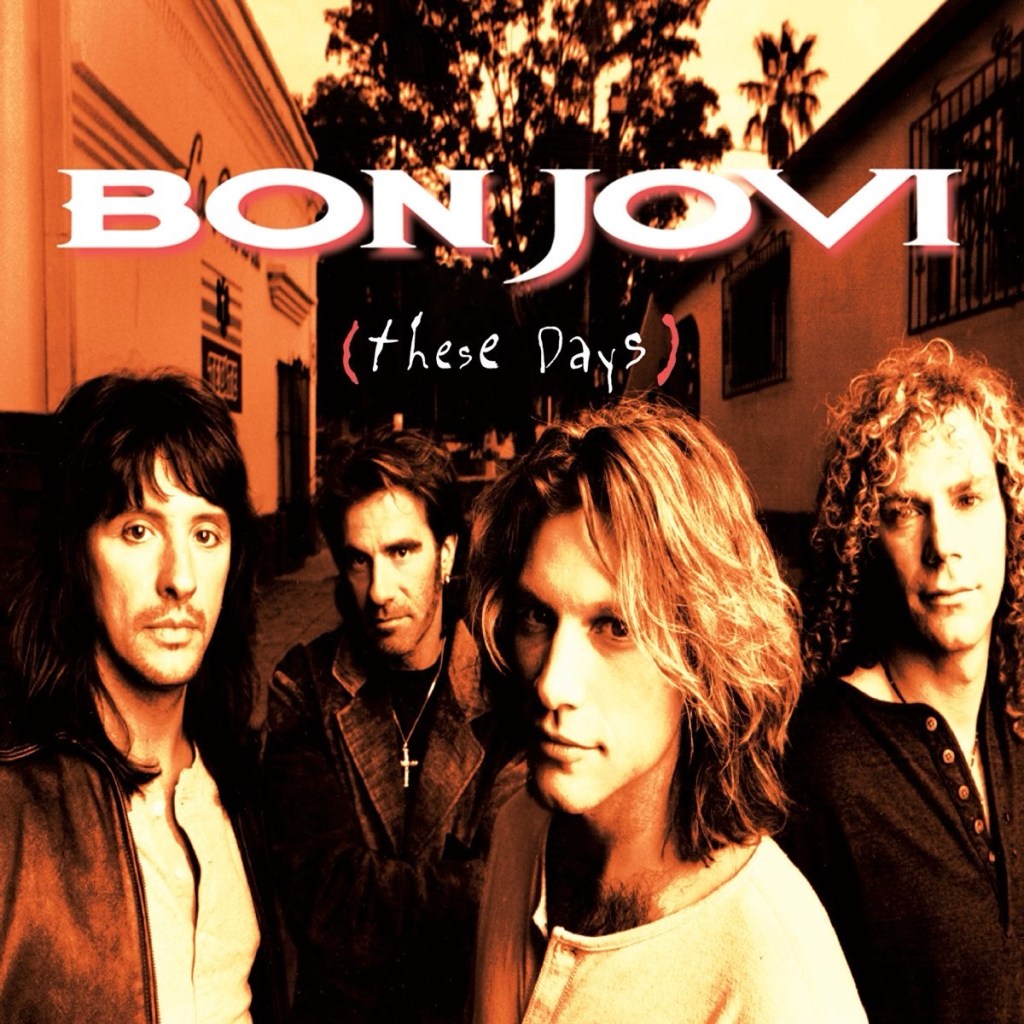
Yet despite my immense love of Bon Jovi as a youngin’, there was one single song that was always a “skip” for me. That song? “Something to Believe In,” a track from their wildly underrated 1995 flop, These Days, an album that, to Adult Jessa, has absolutely zero skips because it’s just that good.

Behold, Bon Jovi’s weird moody grunge phase that actually goes hard.

It certainly didn’t help the song’s case to be a power ballad, as that was an art form that would take me a few more years to properly appreciate. But the lyrics were what gave me the most pause, as a good little church girl. The opening lines say it all:

I lost all faith in my God

In His religion too

I told the angels they can sing their songs to someone new

Yeah, you can kinda see why this song gave me pause. It makes me think of my first time going to youth group, right in the middle of this huge campaign to gather up “ungodly” albums and other media for a huge bonfire. I was too attached to my beloved Bon Jovi collection to send it to the flames just yet, but it did make me rethink what I was listening to. And I could not, as a good little church girl, listen to something that so blatantly questioned God.

What would Jesus listen to?

I struggled with this feeling for a long time, every time I put on the full album and heard the opening drum beat begin. I wanted to love the song — something drew me to it, despite everything — but the song seemed so anti-Christian and blasphemous.

I never appreciated it for what it was — a song about deconstruction.

In exvangelical circles, deconstruction is the process in which you begin to question and unpack the beliefs the evangelical church instilled in you. Now, Bon Jovi is not from an evangelical background. In fact, much of the band was raised Catholic to the best of my knowledge, with frontman Jon admitting to being a “recovering Catholic.” But I feel the exvangelical experience and the lapsed Catholic experience are very similar in many ways.

In re-listening to “Something to Believe In” as an adult, I realized one of my lifelong musical heroes had the same wrestlings with God that I was having. It was very similar to the feeling I got when I first re-listened to “Someday I’ll Be Saturday Night” as an adult and realized Jon may have had the same mental health struggles as me, even worse at times. It really humanized this guy I’d viewed as a god growing up. Like, I used to play make-believe that I was Jon Bon Jovi as a little kid, and here I was having this entire revelation that he’s literally just a human being like me.

With his own struggles.

And his own dark, depressive thoughts.

And his own religious trauma.

That’s what “Something to Believe In” started to represent to me, that funnelling of religious trauma into something beautiful. After all, it is not a sin to have religious trauma, nor is it even a sin to have questions at times. In 1 Thessalonians 5:21, we are told to test everything and hold to what is true. That seems like a pretty big green light to, ya know, have questions.

“Ask me anything!”

The evangelical church discourages deconstruction as it can lead to the person believing in another faith, atheism, agnosticism, or perhaps scariest of all, a less oppressive, more affirming form of Christianity. That’s where I ended up falling in the end, but it wasn’t an easy road. There were definitely parts of my life where I felt exactly like how Jon describes himself feeling in the song. Sometimes, you have to reach that nadir in your relationship with God before you truly begin to unpack the toxic things the church has taught you in His name.

Listening to the song now is a reminder of where I’ve been in my spiritual journey. It’s a reminder that this feeling is universal and I’m not alone in this struggle. And most importantly, it’s a reminder that deconstruction can be beautiful.

If you enjoyed the writing in this post and elsewhere on the site, please consider donating to Jessa’s tuition fund! Any help is appreciated!

CashApp: $TheJessaJoyce

Venmo: @TheJessaJoyce

The App Idea That’s Going to Make Me a Rich Tech Bro (Maybe)

I was already kicking around the idea when this popped up as the daily prompt.

Come up with a crazy business idea.

Hear me out: Tinder for musicians.

Not for dating them (which, I can confirm, is always a bad idea).

Please note that I don’t know a damn thing about developing apps. But the engine seems to be there, you know? You get a person, you swipe right or left depending on if you like them, and if they like you back, you can talk to them. It’s so simple.

So what if we used that same idea for people trying to start bands?

I’m at a crossroads with all of my projects for one simple reason — they all lack a drummer. I’ve tried out several drummers for Wake Up Jamie and no one seemed to fit. My co-frontwoman’s little brother is filling in for now, but it would have been so much easier to just swipe right on a drummer and bring him into the fold that way, right?

I’ve tried luring them in with cheese and it never works.

But imagine a “dating app” for connecting musicians! You’d sign up for this theoretical app and list all of the instruments you can play, as well as your playing level. You could even post videos of yourself playing! Then, you’d scroll through until you find someone you’d want to collaborate with. Once you’ve found your guy or gal, swipe right, and if they’re also down, they’ll also swipe right, similar to Tinder or Bumble. But once you’ve made a match, you can message and coordinate a time to meet up and jam.

Honestly, a social networking site for musicians would fill the same sort of niche. Imagine a MySpace for musicians (okay, MySpace is mostly for musicians these days, but still). You’d add your friends and their bands and be able to follow what they’re doing. Sure, you can already do this with Instagram, but Meta sucks and Zuck eats kittens. Besides, this app would only be for musicians to join. Perhaps later there could be a “fans” option for joining. Honestly, I just really want to see the music scene become more connected.

So those are my crazy business ideas. I’m open to becoming an entrepreneur, but I’d definitely need someone to help with the technical aspects of things.

Because I have no idea how any of this stuff works.

On a related note, if you’re skilled at techy stuff (unlike me), let’s chat.

Dear Cadence, Part Fifteen: Find Your Chosen Family

This is the latest installment in my memoir project, written as a series of letters to my future daughter. Here are the previous entries: Part One, Part Two, Part Three, Part Four, Part Five, Part Six, Part Seven, Part Eight, Part Nine, Part Ten, Part Eleven, Part Twelve, Part Thirteen, and Part Fourteen

Ever since I was little, I wanted to be in a band.

Sounds familiar, right?

After the disaster that was Dethklok, I wasn’t sure I even wanted a band ever again. It didn’t seem worth it to make music with other people if they were just going to hurt me. I was content to just do things alone from now on, if I was even going to keep making music for myself at all. I was back in the music therapy program, and that was enough, right? But deep down inside, I knew I needed more. I kept writing songs and still had that lifelong itch to be a performer. I loved being onstage, and a tiny part of me wished I could share that with someone else.

I met Wally through my new church, a rare queer-affirming church I found in my new old stomping grounds of Ann Arbor, the larger college town that neighbored my smaller college town of Ypsilanti. Wally was an older guy, a little younger than your grandpa was but definitely still old enough to be my dad. He was a quirky fellow with a wife and eight kids and even more keyboards. He was basically a straighter, slightly less flamboyant Elton John who played in a band called Unkle Laylee’s Moonshine All-Stars Band with an old stoner dude named Gray and his aptly named son, Grayson. And when I came to this new church, he took me under his wing and promptly added me to the lineup. I was now Wally’s unofficial bonus daughter/bandmate, but Wally had an official daughter who secretly wished she was in a band as well. 

Enter Hailey.

Hailey was a tiny blonde cheerleader who hid a knack for songwriting that rivaled my own. During one practice, she came down and showed us one of her originals, which gave Wally an idea. Unkle Laylee wasn’t really his vibe, and it wasn’t mine either, so we started our own project right then and there. Our little trio would form the basis of a brand new creation. We couldn’t agree on a name, so we stole the name of my former solo project, Wake Up Jamie, which came from a misheard lyric from an old song no one remembers. 

At first, we frequented local bars and coffee shops, playing to anyone who’d listen. Those were some of the most memorable shows I’d ever play, even if they seemed small and insignificant in the moment. Every weekend or so, we’d meet up and plan our next moves, the three of us. And as our repertoire grew, we realized the project was getting to be too big for only three of us. Wally moved to a position of manager and eventually phased himself out in preparation for a move out-of-state, while we brought on board three new members.

The first was Jerry, an old collaborator of mine I knew from my time in the local music scene. We’d played briefly together in a band called Fate’s Redemption, which I’d left in order to join Dethklok (bad idea). But despite my betrayal, we remained friends, and when I mentioned needing a drummer for the revised Wake Up Jamie, he jumped on the opportunity. The second was an old friend named Chris, a guitarist who I met in music school who could play circles around me. Originally, he was supposed to play bass, but we realized we were squandering his skills as a guitar player by keeping him on bass.

Now Pippa was a cute girl who was active in the music scene and had been following Wake Up Jamie for a minute. We met at a gig and drunkenly made out. Word got out that she was learning bass, so I swept her up and taught her the songs. Was it originally an attempt to get to know her better because I had a massive crush on her? Possibly. But even after our short-lived romantic relationship ended, I found I very much enjoyed her company as a friend, and now as a bandmate.

Wake Up Jamie had reached its final form — me, Hailey, Jerry, Chris, and Pippa.

The band itself went on to play some of the biggest shows in Michigan — Arts, Beats, and Eats, Detroit Pride, and even a radio show. As of writing, we haven’t “made it” in the sense that we can make a living off our music, but that doesn’t matter to me. Wake Up Jamie has never been about getting rich or famous. The band is my honorary family, the people I trust with my life. 

I still remember when one of the members had an emotional breakdown at practice, and we all halted our activities to talk them down and make sure they were okay. We then sat outside during the reminder of practice just sharing our mental health struggles. It was a difficult conversation, but I felt so comfortable sharing my heart with these people, and it was such a warm feeling to know they trusted me enough to share their hearts as well. It was like night and day compared to Dethklok, who was just as mentally ill as a group but chose to address their problems with vitriol and drama. Wake Up Jamie all legitimately care for one another, and I feel like that comes through in our music.

Blood family is important, but your found family is just as sacred. I hope and pray you find your people someday.

Dear Cadence, Part Eleven: You Will Get Hurt, and You Will Hurt Others

This is the latest installment in my memoir project, written as a series of letters to my future daughter. Here are the previous entries: Part One, Part Two, Part Three, Part Four, Part Five, Part Six, Part Seven, Part Eight, Part Nine, and Part Ten

Ever since I was little, I wanted to be in a band.

It wasn’t enough to play music. I wanted a band.

I wanted the family, the ups and downs, the VH1 Behind the Music where we all talk about how much we love each other even after struggling through five overdoses and the guitarist cheating on his wife with the drummer’s wife. I wanted the full experience.

And what I got was Dethklok.

Dethklok was not the real name of this band, but to protect the identities of the innocent (and the guilty), I’ve changed all the names to the members of the protagonists of the show Metalocalypse. In fact, for this chapter and this chapter only, I am Toki Wartooth. You can imagine me with a mustache if it helps.

I met the band when I opened for them at their album release party. It was the biggest show I’d played to date, and even with just me and my acoustic guitar. I got the crowd going, rather impressing the Dethklok guys (I say guys, but there were female members. But for the sake of consistency, we were all guys.)

I played for them a second time at another venue, this one with a private green room. After my performance, they cornered me in the green room bathroom.

“We want you to join Dethklok as our second guitarist and go on tour with us,” they said — no, demanded. And who was I to refuse such an offer!

It was all rainbows and roses at the start. I befriended the other members of the band pretty quickly. There was Nathan Explosion and Skisgaar Skwigelf, the lead vocalist and guitarist, respectively, who were dating. William Murderface was the bassist, a certifiable weirdo, but a charming one. And Pickles the Drummer was just kind of…there. He had red hair.

Learning the songs was easy for me, so much so that the rest of the band was beyond impressed. To be fair, they were basic four chord pop-punk songs for the most part, save for one relatively heavy post-hardcore number where Nathan Explosion would scream and Skwisgaar and I would “chug chugga chug” on the guitar. One of these days I’ll show you one of our old songs. They were definitely songs.

The band was becoming something of a family to me. We’d eat together, play games together, and just generally do life together. And what’s more, people liked us! We had a ton of fans, something I wasn’t used to. There were fanfictions written about us, even. It was surreal.

The fall tour would be the true test of our bonds, though. And as we got ready for the first of our two regional tours, I found myself daydreaming about Murderface more and more. We were the two carnivores of the group — the rest of the band was vegan — and we both dealt with a lot of mental health issues (that we actually acknowledged, since the entire band was incredibly mentally ill and incredibly unmedicated). Was I falling for him? Fans were already shipping Toki and Murderface. Were we a match made in pop-punk heaven? We spent several nights together just hanging out and listening to John Frusciante’s solo material, and after some time, he gave me his grandmother’s ruby ring and asked if someday, I’d marry him. Lost in the fantasy, the rock and roll fairytale I was living in, I accepted.

But that first tour was an absolute whirlwind. We traveled much of the East Coast and Midwest playing tiny clubs and bars. Most of the shows weren’t that big — just a couple of local bands and us — but it was exhilarating to be able to play to new faces every night. I felt like a true rock star, even if we were sleeping in our drummer’s mom van and random people’s houses and not a luxurious tour bus. Even if we all smelled horrible by the end of the tour and we had to mask our natural musks with copious amounts of perfume and cologne. It was an adventure unlike anything I’d ever experienced.

There were arguments now and then, mostly between Nathan Explosion and Skwisgaar. A few times, I was dragged into a conflict, such as the time Skwisgaar and Pickles made me and Murderface cry for not being vegans. (They were all like “What if someone ate your dog?” And I cried, being the damn Pisces I am.) We were a tight knit group, but the threads began to unravel as the fights became more and more frequent. Suddenly, I was seeing how mentally unstable we all were, myself included. Still, these people were becoming my best friends, even more so than your mom and Aunt Mel. I trusted them with my life. It was a toxic, codependent five-way relationship.

By the time our winter tour rolled around, things came to a head. The arguments were so frequent, we were bickering more than we were talking music, or anything else for that matter. Nathan Explosion and Skwisgaar broke up, and Murderface and I were on the rocks too, as I’d recently reconnected with Jacob from earlier and I wanted things to finally go somewhere with him (spoiler alert: it went nowhere). So I was far away from home surrounded by people who all hated each other, and at our homecoming show, Skwisgaar slammed his guitar on the ground in a fit of rage. The next day, we unanimously decided to split up. It was an ugly breakup, uglier than all of my romantic breakups combined. Harsh words were spoken. Threats were made. I finally made the decision to cut them all out of my life, once and for all. And I’m so glad I did.

Healing was rough, but I managed. Your mom and Aunt Mel were the rocks I needed to lean on, and they gave me all the support I needed as I found my way again. I learned my lesson not to trust just anyone, and not to get swept off my feet by whatever shiny opportunity presents itself, because the truth is, it’s not all it’s cracked up to be. People will hurt you, but the right people will own up to it. And you will hurt people too, and it’s your responsibility to own up to it as well. I got stabbed in the back by folks I considered friends, but I wasn’t innocent either. In the end, we were all very mentally ill and very unmedicated.

I’m sure you’re wondering whatever happened to Dethklok. I wondered myself, after several years had passed. So I reached out to my old bandmates to apologize for how things ended and make peace with the pas. Murderface and I became friends again through the local art scene, and Pickles went off on his own and never really spoke to me again. Nathan Explosion didn’t want anything to do with me, and in fact blocked me on all social media. I guess I don’t blame him. The funniest thing happened when I cold-messaged Skwisgaar, though.

“I wanted to apologize if I ever did anything to hurt you,” I wrote. “You were like a big brother to me.”

“You mean sister — I’m trans. And there’s no hard feelings. I know I was an ass too.”

And that, my child, is how I became friends with your Aunt Tegan. Funny how life works itself out.

Your Song Saved My Life: The Motion City Soundtrack Effect

My joke is that there are two kinds of emos — Jimmy Eat World emos, and My Chemical Romance emos. Like much of nature, however, emo can’t be contained into a binary system. Where do we categorize the Taking Back Sunday emos, or the poor, poor Brand New emos who have been languishing ever since it came out that Jesse Lacey kinda sucks? Another band that doesn’t fit cleanly in the JEW/MCR dichotomy is Motion City Soundtrack.

Musically, they’re probably happier sounding than most of their peers — lots of major keys, fast tempos, and cool ass synths. But their lyrics sound as if they’d been written by every one of my mental illnesses in a trench coat. I don’t even have to dig that deep to find songs that match whichever ailment is weighing me down at the moment. Like, their signature song is textbook obsessive compulsive disorder.

I’m sick of the things, I do when I’m nervous
Like cleaning the oven or checking my tires
Or counting the number of tiles on the ceiling
Head for the hills, the kitchen’s on fire
I used to rely on self-medication
I guess I still do that from time to time

-Motion City Soundtrack, “Everything is Alright”

I remember when my dad was in the hospital for a heart attack that nearly killed him, I discovered “Time Turned Fragile,” a song about cherishing the relationship you have with your father and realizing he’s not going to be around forever. “Son of a Gun” takes me back to the drunken tiffs I had with my wife before deciding to sober up, when my stupid antics were all about “pissing you off just for fun.” And “Even If It Kills Me” was the song I played on repeat as I put in my application to music therapy school for the third time, because I too was “so sick of making lists of things I’ll never finish.”

There’s something powerful about a lyricist that can write words that relate so uncannily to one’s life. That feeling when you realize a song is unmistakably written for you — I call it the Motion City Soundtrack Effect, because I can’t think of a band that does it better than them. Taylor Swift comes close at least.

Real recognizes real.

It’s something I aspire to as a songwriter. The only feeling better than finding that song that you relate to so deeply is being the one to write that song for someone else. It’s why I write music in the first place. It’s more than just a catharsis for myself. I write everything in hopes that somebody out there will hear one of my songs and perhaps realize they’re not alone in whatever they’re going through. You know, the same way I realize I’m not alone in my struggles when I listen to MCS.

I’ve written about the power of music and its ability to affect people on a deep level before. I’ve written about discovering it in my own life. I’ve even written about the dark side of these parasocial relationships with musicians before. But it’s worth mentioning again and again — music is a powerful tool, probably the most powerful tool we as humans have, more powerful than bombs or guns or even words. I believe music has the power to change the world, which is why I chose to do it all those years ago, and why I still choose to do it after all this time. Songs can save a life.

I forgot to mention the final few lines of that verse I shared earlier.

But I’m getting better at fighting the future
Someday you’ll be fine
Yes, I’ll be just fine

-Motion City Soundtrack, “Everything is Alright”

I’ll admit I teared up a little when I heard this song played live last night, despite it being one of their happy-sounding uptempo numbers, because it reminded me of how far I’ve come in my own fight with mental illness and OCD. I remembered listening to those words and wishing for a day I’d be just fine, and now I’m finally in a place where my fears are (mostly) under control.

That song and this band have been with me through it all, and I owe a lot to them.

Do you have a band or a certain song that saved your life? I’d love to hear your stories in the comments! If you like what you read here, feel free to support the blog by donating via Venmo (@jessjsalisbury) or CashApp ($TheJessaJoyce). Thanks for all your support!

“Your Biggest Fan, This is Stan” (A Humble Critique of Obsessive Fandom)

It’s fitting that I write this as one of Taylor Swift’s songs plays on the radio at work. Not like I write this stuff on the clock or anything.

Certainly not!

You see, Tay’s the catalyst for the events of this story. Or rather, her loyal army of stans.

My band had a show on Friday, hilariously enough competing with Taylor Swift’s show in Detroit. So I made this infographic as a joke to convince people to see us, a dinky ass local band, instead of her.

I know in humor you’re supposed to punch up, but in this case the punch was more of a playful nose-flick. Everyone in the band is a Swiftie, after all — we just thought it would be a funny way to drum up attention for the band and our show.

At first, we got a pretty hearty positive response, people saying we “won them over” and wishing us a good time at the show.

Then the stans came.

Suddenly, we were inundated with accusations of misogyny (hilarious in hindsight because we’re mostly women), homophobic (also hilarious because we’re mostly queer), and even mocking her mom’s cancer (I sure hope that stan warmed up before making that stretch). One of the “nicer” commenters asserted she’d seen her “three times on this tour” for less than her paycheck and has met her many times. The ones that hurt the most were accusations of us belittling a fellow artist — we would never attack another creator maliciously. Like, we made it clear in the caption that we were actually huge fans and meant no harm to Taylor.

But when you’re a stan, there’s no gray area. Make one perceived slight against their object of adoration, and you become public enemy number one.

Why do people do this?

I think it all comes back to the parasocial relationship people have with musicians. The beauty of music is that it’s a deeply personal medium that brings people together. That’s what drew me to music as a little autistic kid who had trouble socially. Music — and the people behind it — felt like friends to me. There’s a reason I’d make believe I was Bon Jovi and methodically watch anything related to them. In the end, music is what helped me connect to other people and build relationships that have lasted years.

But like nearly everything, there’s a flip side to that phenomenon. Take, for example, the song that gave stans their name — “Stan” by Eminem.

In my personal opinion, “Stan” is easily one of the most unnerving songs ever written. In it, a man describes his obsession with Eminem through a series of letters, culminating in him committing a murder-suicide after being let down by his idol. It’s absolutely chilling and worth listening to. In fact, I’ll link it here:

Another musical episode!

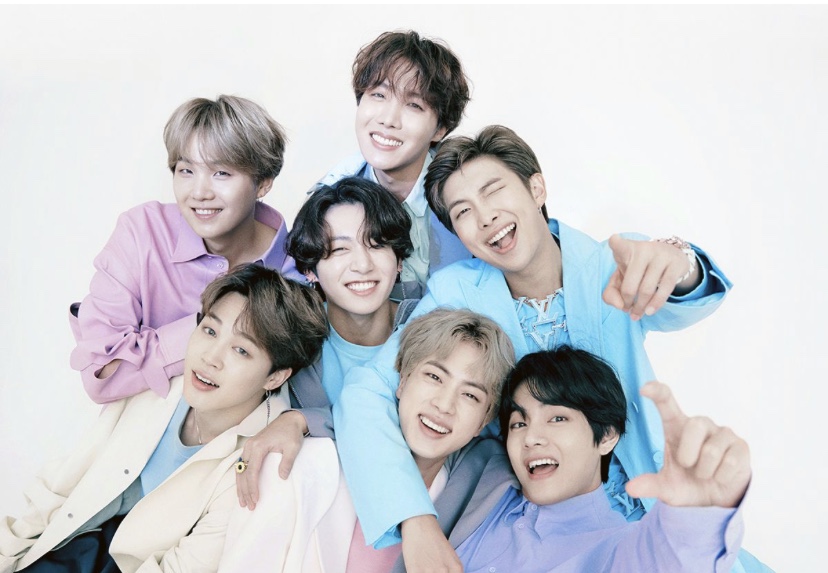
It’s almost funny how watered down the term “stan” has become — or has it? If it came down to it, would Swifties die for their queen? Would the BTS army kill for a bunch of cute guys from the other side of the world?

I mean, they are cute.

I’m almost afraid they would, and that’s because it’s happened before.

If you look at my YouTube subscriptions, you’ll find my two biggest interests to be music and true crime. Don’t worry — I’m not one of those weird Jeffrey Dahmer lovers or hybristophiliacs. I like the thrill of being scared, but fictional monsters don’t do it for me because my brain doesn’t register them as a threat. What does scare me is the fact that real life monsters exist, and are absolutely a threat. And every now and then, the stars align and I find something to watch that’s both music and true crime related.

Ever hear of the Bjork stalker? No?

Ricardo López was your average incel before the term even existed. He was a social recluse who retreated into the world of celebrities to dull the pain of not having many friends, let alone a girlfriend. His main fixation was the Icelandic singer Bjork, to whom he wrote many fan letters and considered her his muse. The obsession wasn’t sexual — he couldn’t envision her as anything but this pure, innocent figure.

So when she finally did get a boyfriend, and a black boyfriend at that (yup, he was kind of a racist too), Ricardo was furious. He wanted to send her straight to hell for her perceived slight against him. So, viewing the process as a sort of sick art project, he began filming a series of video diaries chronicling his plan to kill Bjork with bomb hidden within a book. Ultimately, he’d kill himself too, and he and his love interest/victim would be united in the afterlife.

In the conclusion of his series of “art films,” Ricardo shaves his head and paints his face green and red before shooting himself in the face, dedicating his suicide to Bjork as one of her songs drones on in the background. His bloated corpse and the video tapes would later be found by police, who immediately recognized what was happening to be a threat. They managed to intervene just before the package reached Bjork, narrowly sparing her life.

This is what fandom looks like at its worst, and it still happens. Even our girl Taylor has had to deal with it. And this is why I’m scared to death of becoming anything more than a local act, even though my band is slowly making its way toward greater things. Because with more attention comes more obsession, and people are fucking crazy. Maybe Taylor’s stans will come for me, or I’ll say something to piss off the BTS Army. Or worse, Wake Up Jamie will accumulate its own obsessive fans, and there will be that one bad apple who decides to Selena me.

People need to realize musicians and other performers are literally just people. We make art, we make mistakes, and we have dreams and fears like everyone else. Standom tends to raise people to a godlike level, but at the end of the day, we’re all a bunch of stinky, pulsating meat living on a giant rock. Even Taylor.

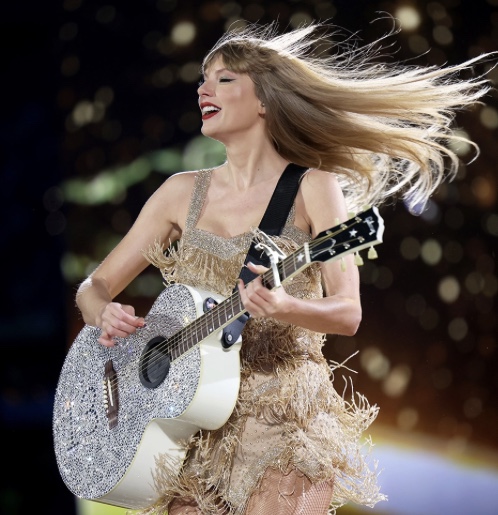
Pictured: a stinky meat girl