My Life as a “Should’ve Been”

Everyone’s familiar with the term “has-been.” It’s a label we give one-hit wonders and washed-up celebs. But the thing about has-beens is that they have at least, well, been. There are so many more people out there who never will reach those heights at all, who had potential and squandered it somehow. I think those are the cases that fascinate me even more. Maybe that’s because I relate.

Are you holding a grudge? About?

I think my biggest grudge is against myself for not going all-in as a musician when I was younger. I feel like I could have actually taken my music somewhere had I started sooner, had I thrown my entire existence into it. It’s hard to accept that it may be too late. There are artists half my age who are making it in the business now. Thirty is grandma-age by industry standards.

It’s not entirely my fault that I didn’t devote myself fully to the dream. I think back to my struggles with mental health, which were debilitatingly severe in my teens and twenties, to the point where I could barely keep up in school and work. Much of the music industry, now and back then, happened on the internet, which I was scared of using for many years. And who could blame me? There are a lot of things to be afraid of on the world wide web.

I had a presence on YouTube, but I remember being nearly paralyzed every time I went to post a new song. I couldn’t help but fear what kind of reactions I would get. I remember some of the mean comments I’d receive about my appearance and worse, my musical abilities. Even in a sea of positive comments, it was the negative ones that haunted me and made me not want to share my music anymore. I had a lot of anxiety about putting myself out there, and I’m beating myself up for it to this day.

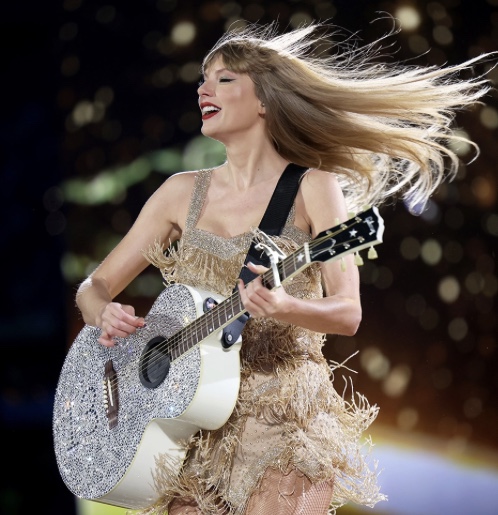
I feel like I could have been something greater. I could have been the next Taylor Swift, or even Christina Grimmie (RIP), had I actually kept an online presence back then. Now I feel it’s too late. In a post-TikTok world, I don’t even know where to begin when it comes to sharing my music. I feel like everything I do will be hilariously irrelevant now that I’m past the peak age for “making it.”

I wish I could go back and tell younger me not to be scared of internet assholes. People are gonna suck, and there’s nothing you can do about that except shine in spite of everything. I wish I hadn’t hidden myself away in the darkest corners because of my anxiety. I feel like a massive “should’ve been,” and it sucks to think about. Maybe it just wasn’t meant to be, and I need to accept that. But a tiny part of me still wonders what could have been had I just put myself out there more.

I guess I’ll never know.

Whoever “She” Is, You Don’t Have to Worry

I write this from the absolute depths. Like, the only way things could get worse is if a meteor struck my apartment or something. I got passed over for the internship of my dreams, which was enough of a blow. Then, my tire goes flat. Oh wait, all my tires are bad. There goes $800. And my boss seems to think everything I touch turns to suck, so work hasn’t exactly been a bed of roses, or even cheap carnations.

All this to say I’m not exactly having a great time.

In my times of trouble, I tend to turn to music to comfort me. I’ll never know why it’s so reassuring to know that at one point in time, some dude with a guitar felt exactly the way you feel. But then, The Maine’s “Whoever She Is” came on.

And I cried. Like a freakin’ baby.

It’s not a sad song, nor is it a love song, as one might be led to believe by the title and the soft acoustic arrangement. Rather, it’s a song about standing strong in the face of adversity. “She” isn’t a woman but a personification of whatever is troubling you. And it’s oddly relatable. She could be “rainy days, minimum wage, a book that ends with no last page” or a whole slew of mundane issues. But the chorus ends with “whoever she is, you don’t have to worry.”

Things will be okay.

I imagine John O’Callaghan writing this song from his own personal hell. I imagine he went through shit like I’m going through now. Everyone does. That’s the beauty of music. It reminds us that we’re not alone in this struggle called life. No one’s above it all, and even the rock stars and pop princesses and that cool singer-songwriter who busks on the streets have their own problems. We live in a broken world, and we’re never going to be completely free of heartbreak and disappointment this side of heaven.

That’s why we have music to comfort us. And as I bawled my eyes out, I realized this is exactly why I do music in the first place. And I’m not going to let a few setbacks keep me from doing what I was made to do.

And neither should you. If you’re reading this and you know how I feel, put on your favorite song, have a good cry, and get back on your feet, because things can and will get better. The world will still turn, and so will the tides of fortune. Bad things happen, but so do good things. And I still believe the good in this world outweighs the bad.

Just remember, whoever “she” is, you don’t have to worry.

Dear Cadence, Part Nine: The Path to Your Dreams is Not Always Linear

This is the latest installment in my memoir project, written as a series of letters to my future daughter. Here are the previous entries: Part One, Part Two, Part Three, Part Four, Part Five, Part Six, Part Seven, and Part Eight

I found out what music therapy was from one of my grandma’s nurses when she was dying. She found out I played music and encouraged me to bring in my guitar to play for my grandma and the other old folks at the nursing home. She told me there were people who get paid to do this kind of thing, and that they actually go to school to study the ways music can be used to help people.

I wasn’t sold entirely. My long term plan was to attend Eastern as a pre-med student and eventually go to the more prestigious (and expensive) University of Michigan for medical school. I’d minor in music, but it wouldn’t be my main thing. I wanted to be a cardiologist or a pediatrician or even a neurosurgeon, something that could legitimately help people, instead of wasting my time selfishly playing music for my own ego (this was before the “Jacob”’arc).

I’d already signed up for all of my freshman year bio classes when my parents overheard me singing and playing in my room.

“Remember what that nurse said about music therapy?” they said, implying that they wanted to become the first parents in human history to encourage their child to go to music school instead of becoming a doctor.

So I went back up to the university right away and auditioned for the music therapy program. I already knew my way around a guitar and I could sing circles around most of the other freshmen trying out, so I was a shoo-in.

Despite being less than a half hour from my hometown, life at the university seemed a world away from life in high school. Not only was I living in an artsy fartsy college town, it was also the point in time when the “quirky weird girl” trope was at its most popular. The days when no one wanted to associate with me seemed like another life. Everyone wanted a piece of the guitar-slingin’ manic pixie dream girl, and I was happy to oblige. I started playing house shows and cafe gigs, and I made a name for myself as the Taylor Swift of Ypsilanti, Michigan.

But the cracks began to show as I struggled to stay awake and focused during my classes, to the point where I’d gotten referred to the university counselors by my professors. To top it off, the anxieties that had plagued me my entire life were coming to a head, to a near debilitating degree, and I had no choice but to consult with a psychiatrist at a local clinic for young adults. It was there that I was prescribed Prozac, which I do credit with saving my life, but it wasn’t nearly enough to save my academic attempts. Music therapy school was brutal, and I found myself fighting hard just to stay on top of my coursework.

I’d signed up for the school newspaper on a whim, and that seemed to be working well for me, at least. I was a naturally skilled writer. I didn’t even have to try to crank out article after article for the paper — I would sit down at my laptop and the words would just flow through my fingertips. I even got awarded the title of editor for the arts and culture section of the paper less than a year into me working there (we’ll revisit that in the next chapter). I did some research on the journalism major and it seemed significantly easier than music therapy, which was becoming increasingly difficult to even find the motivation to study for. As my mental health declined, I wondered how I’d ever be a therapist when I couldn’t even help myself. At least newspaper editors didn’t have to help other people figure their shit out. I could just do my thing and pretend I was okay.

So I made the decision to switch my major to journalism and forego music therapy altogether.

Still, even after I graduated, it felt like something was missing from my life. I tried finding writing jobs but nothing ever stuck. This was around the time I was still reeling from the breakup of my first real band (which we’ll get to) and the crumbling of my first marriage (which we’ll also get to). Nothing was working out, and I needed to regroup and figure something else out. That’s when Coco happened.

Coco was a Disney movie about a little Mexican boy who plays guitar against his family’s wishes. I won’t spoil it, although I’m certain I’ve played it for you at some point in your childhood. (What kind of a mother would I be if I didn’t make you watch all my favorite Disney movies?) But the climax of the movie, where music helps the protagonist’s grandmother momentarily regain her precious memories, made me realize I’d made the wrong decision when I switched majors. I was meant to — destined to — use music to heal people. No, I wasn’t too messed up to be a music therapist. That was a damn lie I told myself and believed to the point it became the truth. I drove straight up to that university myself and told the professors I’d be joining them once again that fall.

And…I failed once more. This time, it wasn’t my choice. I had a strong start. That school year began with me trying my very best. I was doing everything in my power to succeed this time, taking notes and staying alert and keeping organized. Then, something happened at that year’s music therapy conference that derailed all my plans.

I was raped.

The assailant was a total stranger, and I should have known better than to trust him when I met him at the rooftop bar at my hotel. But I was lonely, and it was my first time traveling alone, no friends, no parents, no husband. And he was charming. He said he loved how I was using music to help people.

All before everything went dark, in the absolute worst way possible.

After the incident, my mental health took a nosedive. I couldn’t concentrate for shit. I started drinking myself sick every night. I was making rash decisions and doing everything I could to drown out the ever-present feeling of disgust. I eventually snapped and found myself crying in the office of one of my professors. I couldn’t do this anymore.

And so I dropped out of the music therapy program for a second time. 

This is a depressing chapter, right? I promise it has a happy ending.

Another few years passed and I found myself drifting aimlessly once again. I was in a slightly better place — I was married to someone I actually wanted to be married to, and my mental health was finally on the up-and-up. I even got a proper ADHD diagnosis, which explained some of the inattentiveness that made my previous attempts at the degree more difficult. But I didn’t have a job I actually liked. I knew I was meant for more than wiping people’s butts or slinging prescription pills. (Legally. As a pharmacy technician. Your mother was never a drug dealer.)

So, tail tucked between my legs, I whimpered pathetically at the professors one last time, begging for one last shot at that music therapy degree.

And this time, it worked! While finishing those last two years of schooling, I managed to earn a prestigious scholarship and even presented on autism for the university’s undergraduate research symposium. In 2023, I completed the coursework necessary to become a music therapist. As of writing, I’m waiting to hear back from my internship site. After completing the internship, I have to take a test, and then I’ll be certified. In other words, I still have a long road ahead of me, but the worst is over.

Sometimes I wonder where I’d be if I’d just stayed the course and finished my music therapy degree years ago. The truth is, I probably would have crashed and burned. I needed to learn to take care of myself first; otherwise, I probably wouldn’t have been focused and motivated enough to earn that scholarship or present in that symposium. I would have gotten meh grades and probably would have landed a meh job I would have given up on as soon as things got hard. But my place in music therapy is now fire-forged. I’ve been through the worst, and now I’m better equipped and prepared to face whatever comes next. The twelve years it took me to get this far weren’t a waste of time. Rather, it was time spent figuring out for sure that this is where I belong. I don’t think I would have made it this far had I not taken all the time I needed to reevaluate my core values and recover from, well, everything.

Often, the path to your dreams isn’t linear. It’s a road with many forks, pitfalls, and distractions. If you ever lose your way, though, just remember this chapter. When you discover what it is you’re meant to be in this world, it will chase you down, and no amount of obstacles will keep you from what it is you need to do. You are stronger than everything that will ever try to hold you back. You’re a force of nature unlike anything anyone’s ever seen, and I’m so excited to see where life takes you.
Your Song Saved My Life: The Motion City Soundtrack Effect

My joke is that there are two kinds of emos — Jimmy Eat World emos, and My Chemical Romance emos. Like much of nature, however, emo can’t be contained into a binary system. Where do we categorize the Taking Back Sunday emos, or the poor, poor Brand New emos who have been languishing ever since it came out that Jesse Lacey kinda sucks? Another band that doesn’t fit cleanly in the JEW/MCR dichotomy is Motion City Soundtrack.

Musically, they’re probably happier sounding than most of their peers — lots of major keys, fast tempos, and cool ass synths. But their lyrics sound as if they’d been written by every one of my mental illnesses in a trench coat. I don’t even have to dig that deep to find songs that match whichever ailment is weighing me down at the moment. Like, their signature song is textbook obsessive compulsive disorder.

I’m sick of the things, I do when I’m nervous
Like cleaning the oven or checking my tires
Or counting the number of tiles on the ceiling
Head for the hills, the kitchen’s on fire
I used to rely on self-medication
I guess I still do that from time to time

-Motion City Soundtrack, “Everything is Alright”

I remember when my dad was in the hospital for a heart attack that nearly killed him, I discovered “Time Turned Fragile,” a song about cherishing the relationship you have with your father and realizing he’s not going to be around forever. “Son of a Gun” takes me back to the drunken tiffs I had with my wife before deciding to sober up, when my stupid antics were all about “pissing you off just for fun.” And “Even If It Kills Me” was the song I played on repeat as I put in my application to music therapy school for the third time, because I too was “so sick of making lists of things I’ll never finish.”

There’s something powerful about a lyricist that can write words that relate so uncannily to one’s life. That feeling when you realize a song is unmistakably written for you — I call it the Motion City Soundtrack Effect, because I can’t think of a band that does it better than them. Taylor Swift comes close at least.

Real recognizes real.

It’s something I aspire to as a songwriter. The only feeling better than finding that song that you relate to so deeply is being the one to write that song for someone else. It’s why I write music in the first place. It’s more than just a catharsis for myself. I write everything in hopes that somebody out there will hear one of my songs and perhaps realize they’re not alone in whatever they’re going through. You know, the same way I realize I’m not alone in my struggles when I listen to MCS.

I’ve written about the power of music and its ability to affect people on a deep level before. I’ve written about discovering it in my own life. I’ve even written about the dark side of these parasocial relationships with musicians before. But it’s worth mentioning again and again — music is a powerful tool, probably the most powerful tool we as humans have, more powerful than bombs or guns or even words. I believe music has the power to change the world, which is why I chose to do it all those years ago, and why I still choose to do it after all this time. Songs can save a life.

I forgot to mention the final few lines of that verse I shared earlier.

But I’m getting better at fighting the future
Someday you’ll be fine
Yes, I’ll be just fine

-Motion City Soundtrack, “Everything is Alright”

I’ll admit I teared up a little when I heard this song played live last night, despite it being one of their happy-sounding uptempo numbers, because it reminded me of how far I’ve come in my own fight with mental illness and OCD. I remembered listening to those words and wishing for a day I’d be just fine, and now I’m finally in a place where my fears are (mostly) under control.

That song and this band have been with me through it all, and I owe a lot to them.

Do you have a band or a certain song that saved your life? I’d love to hear your stories in the comments! If you like what you read here, feel free to support the blog by donating via Venmo (@jessjsalisbury) or CashApp ($TheJessaJoyce). Thanks for all your support!

Music Reviews No One Asked For: The Same Five Songs That Play On the Radio at My Job

Welcome to the inaugural Music Review No One Asked For, where I give my opinions on popular (and unpopular) music. For this first installment, I wanted to dip into the songs I hear literally every day of my life, on repeat, forever. I don’t know what cursed Pandora station my coworkers have chosen to be the soundtrack of the urgent care I work at (shout-out to all my fellow healthcare workers, yo), but I swear I have every song it plays memorized at this point. That being said, while there are some songs I wish I could obliterate from existence, there are a few bops amongst the rubble. Let’s start with the queen herself…

Taylor Swift – “Karma”

This was one of my favorites from her Midnights album, and for good reason. It’s catchy as hell, and so deliciously bitchy. That being said, I feel like it loses its luster after 4735383729 listens, which isn’t to say it’s a bad song, just that it doesn’t have the same staying power as some of her stronger material (like “Hits Different,” which I’ve subjected myself to for almost an entire four hour car ride and I still can’t get enough of). The new version with Ice Spice does little to inject new life into the song, mostly because there’s a bazillion other female rappers out there who could do better. Now if Angel Haze was on a Taylor Swift remix, I don’t think I’d ever listen to anything else.

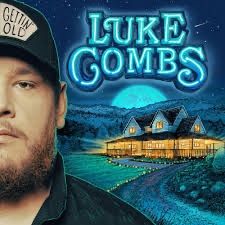
Luke Combs – “Fast Car”

When I first heard this song on the radio, I had to do a double take. It’s so true to the original by Tracy Chapman, I initially thought it was the original by Tracy Chapman (in my defense, the speakers at work are bad). It’s so true to the original, Combs didn’t even change the gender of the song’s protagonist, which I have to admire. Here’s this big, burly, bearded country boy, and yet for the sake of this song, he works at the market as a checkout girl. I actually don’t mind hearing this song when it comes on because it stands on its own. It’s a powerful example of storytelling in music — the girl in the song desperately wants to escape her life of poverty with her lover, but he eventually succumbs to the very vices that plagued her own father. It’s a sad song, and it’s even sadder that the most meaningful song on mainstream radio right now was actually written in the 80s.

Jax – “90s Kids”

Is there a Grammy for “Most Irritating Song”? Because Jax is seemingly gunning for it. “Victoria’s Secret” was bad enough, but this one makes me want to stick forks in my ears every time it comes on. The references all feel forced, and besides, we’re all too old to be pandered to. Go write something for the Zoomers.

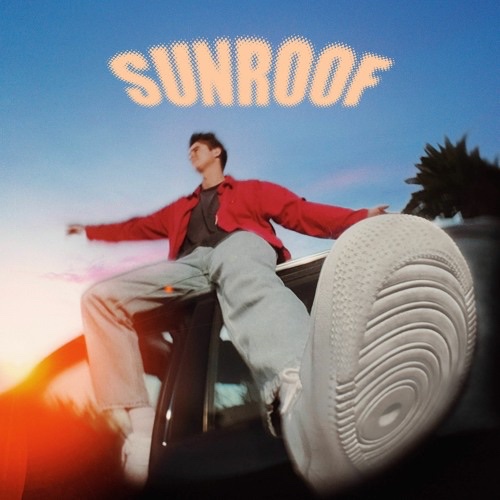
Some Guy – “Sunroof”

I don’t know who performs this song. It’s not even on the album art. It could be anyone. All the guys on the radio kind of sound the same these days anyways. Like, if you put a gun to my head and asked me to point out Post Malone in a police lineup, I’d be screwed. And for the most part, they all sound the same to me. It’s like how all the post-grunge guys had a “sound.” Can you honestly tell Nickelback from Skillet? I mean, I can, but only because my ex-husband subjected me to more Skillet than anyone should have to hear in a lifetime. Anyways, I digress. This song is kind of good, if I’m honest. The little “da da, da da dada dah” part gets stuck in my head frequently. As a songwriter, I admire anyone who can write a good earworm. Would I go out of my way to listen to it? Probably not, but it’s a pleasant little ditty.

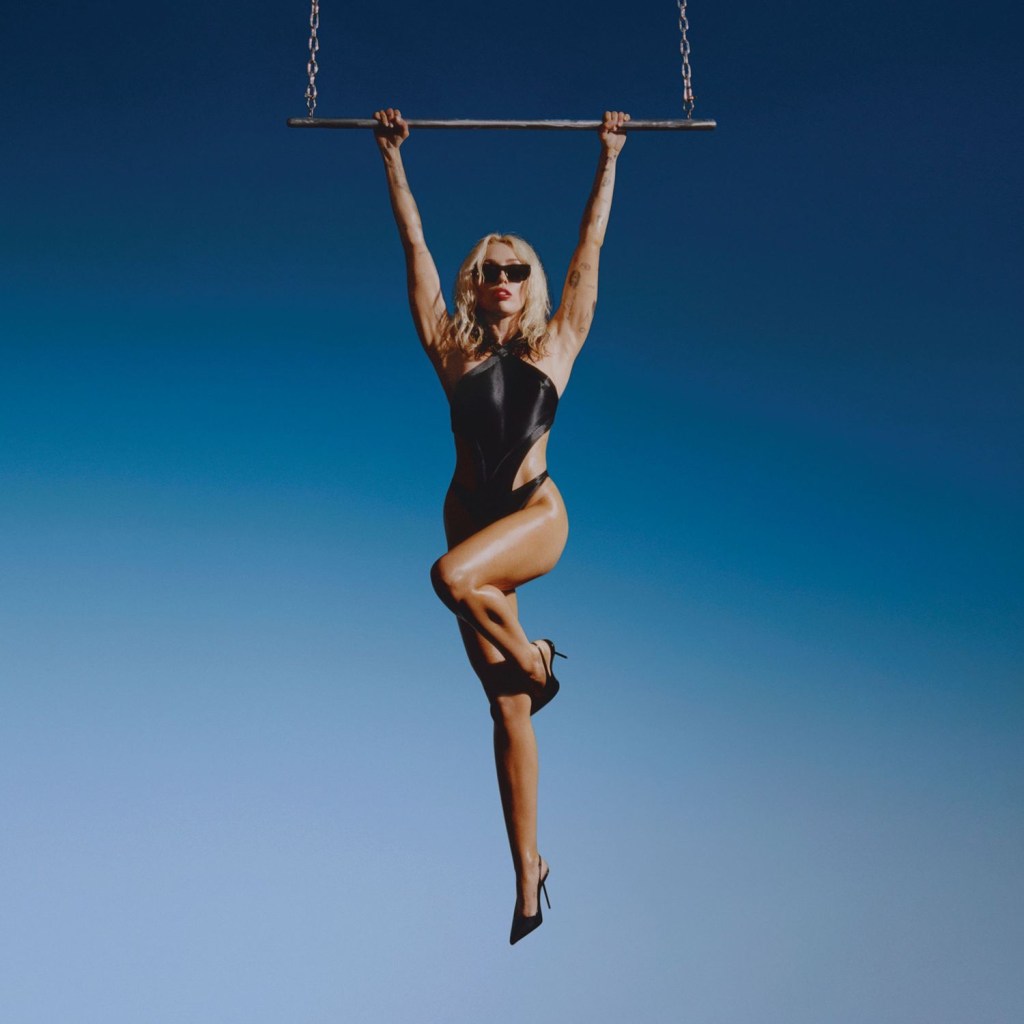
Miley Cyrus – “Jaded”

It’s easy to assume my favorite modern pop singer is Taylor Swift, but the truth is, while she’s my favorite songwriter, she’s not my favorite vocalist. That honor goes to Miley Cyrus. The woman can do it all — rock, rap, country — and all with the finesse Kid Rock can only dream of. That being said, I was a little disappointed with this single. I was hoping she’d lean a little more into the rock direction she’s been heading in, and the chorus is fairly forgettable. I’m only judging her harshly here because I know she’s capable of better. Come on, Miley. Hit us with the true bop we all need right now.

What do you think? Agree? Disagree? Let me know in the comments! If you like my content, feel free to donate to keep this blog going via Venmo (@JessJSalisbury) or Cashapp ($The JessaJoyce). Thanks for all the support!

Dear Cadence, Part Five: Find Your Passion

This is the latest installment in my memoir project, written as a series of letters to my future daughter. Here are the previous entries: Part One, Part Two, Part Three, and Part Four

From the moment I emerged from the womb, I was obsessed with music.

Well, maybe not from that exact moment. I was probably preoccupied with, you know, learning how to breathe air and stuff.

But music was my first love and first language. I remember humming little songs to myself as I spun around, my first dabblings in songwriting. I didn’t know how to write those songs down, as I was a literal toddler, but I loved making up little melodies and singing them to myself. My parents even got me a tiny Walkman with a “record” option and had me singing into it from time to time. I wish I knew whatever happened to those old cassettes. If I ever hit it big, those tapes would be worth millions.

Some of my favorite memories involved singing and dancing around pretending I was Dodger, a cool dog voiced by Billy Joel from an old Disney film called Oliver and Company. (If, by happenstance, you end up with a brother, his name will likely be Oliver. He is not named after this film. Let this be clear. Your brother was not named after a movie with a cool dog voiced by Billy Joel. I just liked the name, okay?) Sometimes my mom would work out and play stuff like Foo Fighters and the Backstreet Boys, which is probably considered oldies by the time you read this. While she would do this, I’d stand in the mirror and lip-synch to the songs, make-believing I was some kind of rock star.

The point being, music and performing have always been an integral part of my identity. Noting this, “Santa” gifted me my first guitar for my eighth Christmas. A year or two later, my parents signed me up for one-on-one guitar lessons with a young punk named Eric, who my mom thought was hot. I’d been kicked out of swimming, gymnastics, dance, and pretty much everything else due to my then-very-undiagnosed ADHD, but I couldn’t get kicked out of guitar lessons. And I didn’t want to be kicked out either! I took to the instrument like a seal to water, and while I didn’t practice as much as I should’ve (read: undiagnosed ADHD), I was a natural. The language and theory of music just made sense to me.

But there was more to my love of music than just the music itself. I loved the idea of sharing it with people. I would watch Behind the Music documentaries for hours on end all about the inner workings of bands I liked. Maybe it’s because I had trouble making friends and was hilariously unpopular as a kid, but I idolized the idea of having a musical found family. I craved the intimacy of working closely with other people who had the same goals and interests as me.

Still, music was very much my personal thing, until one fateful day when I realized I needed to perform, to share my music with people outside my inner circle. It was the first time I ever sang in front of an audience.

In seventh grade, we took an end-of-the-year field trip to the Motown Museum in Detroit. My days at that school were numbered — I’d convinced my parents to let me switch to a semi-private school to escape the constant bullying. Still, I had to get through this stupid trip, which actually was a welcome reprieve from my usual day of sitting in the library like a loser and actively trying to avoid contact with my peers.

The museum, nicknamed Hitsville, USA, was actually more like a small house than whatever you’re picturing, and it’s been said some of the greatest songs of all time had been recorded there. I don’t remember much about the field trip itself, except that in the recording studio, there was a giant hole in the ceiling. This was a reverb chamber, where recordings would be played into and recorded back in order to get a crisp echo effect. The tour guide wanted a student to demonstrate how it worked by singing beneath it. No one’s hands went up. A shiver ran down my spine.

I will never see these people again.

Meekly, I raised my hand and all eyes were on me, the class weirdo who never talked. I took my place underneath the reverb chamber and sang the chorus of my favorite Motown song, “My Girl” by the  Temptations.

The silence that followed was deafening as dozens of wide eyes zoned in on me. Suddenly, the room erupted into applause. As I took my place back in the group, I was greeted with a flurry of “Woah, that was incredible!” Even my biggest bully asked me not to forget her when I won American Idol. For my last few days at that school, I was no longer the class pariah, but the class Mariah. 

Things changed quickly once I discovered my niche in life. I started playing guitar and singing for literally anything I could weasel my way into. At my new school, I became “the voice” of the student population, singing the national anthem for every event and accompanying the jazz band with its vocal pieces. I even got to play (an obviously much whiter) Beyoncé in a choral performance of “Single Ladies,” leotard and all. I became a significantly more confident person with every performance under my belt.

Cadence, I don’t know what your calling will be. Considering who’s likely going into making you, you’ll probably be musically gifted as well. And incredibly smart. And beautiful. And probably have IBS, but you win some and you lose some. No matter what, I know your passion will find you one way or another. And once you find it, chase it with everything you’ve got.

If you enjoy my writing and want to help support me and this site, you can donate via Venmo (@jessjsalisbury) or CashApp ($TheJessaJoyce). Every little bit is greatly appreciated! Thanks for taking the time to read my work, and don’t forget to check back every few days for new content!

“Your Biggest Fan, This is Stan” (A Humble Critique of Obsessive Fandom)

It’s fitting that I write this as one of Taylor Swift’s songs plays on the radio at work. Not like I write this stuff on the clock or anything.

Certainly not!

You see, Tay’s the catalyst for the events of this story. Or rather, her loyal army of stans.

My band had a show on Friday, hilariously enough competing with Taylor Swift’s show in Detroit. So I made this infographic as a joke to convince people to see us, a dinky ass local band, instead of her.

I know in humor you’re supposed to punch up, but in this case the punch was more of a playful nose-flick. Everyone in the band is a Swiftie, after all — we just thought it would be a funny way to drum up attention for the band and our show.

At first, we got a pretty hearty positive response, people saying we “won them over” and wishing us a good time at the show.

Then the stans came.

Suddenly, we were inundated with accusations of misogyny (hilarious in hindsight because we’re mostly women), homophobic (also hilarious because we’re mostly queer), and even mocking her mom’s cancer (I sure hope that stan warmed up before making that stretch). One of the “nicer” commenters asserted she’d seen her “three times on this tour” for less than her paycheck and has met her many times. The ones that hurt the most were accusations of us belittling a fellow artist — we would never attack another creator maliciously. Like, we made it clear in the caption that we were actually huge fans and meant no harm to Taylor.

But when you’re a stan, there’s no gray area. Make one perceived slight against their object of adoration, and you become public enemy number one.

Why do people do this?

I think it all comes back to the parasocial relationship people have with musicians. The beauty of music is that it’s a deeply personal medium that brings people together. That’s what drew me to music as a little autistic kid who had trouble socially. Music — and the people behind it — felt like friends to me. There’s a reason I’d make believe I was Bon Jovi and methodically watch anything related to them. In the end, music is what helped me connect to other people and build relationships that have lasted years.

But like nearly everything, there’s a flip side to that phenomenon. Take, for example, the song that gave stans their name — “Stan” by Eminem.

In my personal opinion, “Stan” is easily one of the most unnerving songs ever written. In it, a man describes his obsession with Eminem through a series of letters, culminating in him committing a murder-suicide after being let down by his idol. It’s absolutely chilling and worth listening to. In fact, I’ll link it here:

Another musical episode!

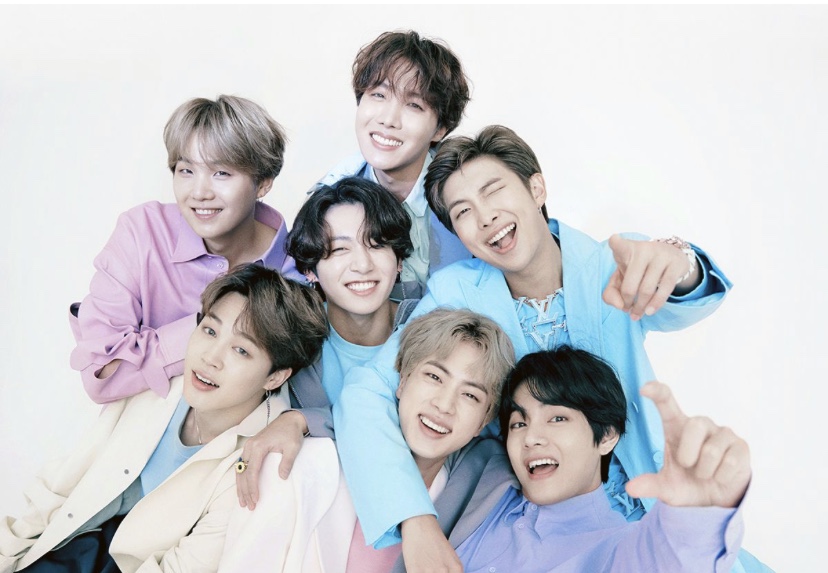
It’s almost funny how watered down the term “stan” has become — or has it? If it came down to it, would Swifties die for their queen? Would the BTS army kill for a bunch of cute guys from the other side of the world?

I mean, they are cute.

I’m almost afraid they would, and that’s because it’s happened before.

If you look at my YouTube subscriptions, you’ll find my two biggest interests to be music and true crime. Don’t worry — I’m not one of those weird Jeffrey Dahmer lovers or hybristophiliacs. I like the thrill of being scared, but fictional monsters don’t do it for me because my brain doesn’t register them as a threat. What does scare me is the fact that real life monsters exist, and are absolutely a threat. And every now and then, the stars align and I find something to watch that’s both music and true crime related.

Ever hear of the Bjork stalker? No?

Ricardo López was your average incel before the term even existed. He was a social recluse who retreated into the world of celebrities to dull the pain of not having many friends, let alone a girlfriend. His main fixation was the Icelandic singer Bjork, to whom he wrote many fan letters and considered her his muse. The obsession wasn’t sexual — he couldn’t envision her as anything but this pure, innocent figure.

So when she finally did get a boyfriend, and a black boyfriend at that (yup, he was kind of a racist too), Ricardo was furious. He wanted to send her straight to hell for her perceived slight against him. So, viewing the process as a sort of sick art project, he began filming a series of video diaries chronicling his plan to kill Bjork with bomb hidden within a book. Ultimately, he’d kill himself too, and he and his love interest/victim would be united in the afterlife.

In the conclusion of his series of “art films,” Ricardo shaves his head and paints his face green and red before shooting himself in the face, dedicating his suicide to Bjork as one of her songs drones on in the background. His bloated corpse and the video tapes would later be found by police, who immediately recognized what was happening to be a threat. They managed to intervene just before the package reached Bjork, narrowly sparing her life.

This is what fandom looks like at its worst, and it still happens. Even our girl Taylor has had to deal with it. And this is why I’m scared to death of becoming anything more than a local act, even though my band is slowly making its way toward greater things. Because with more attention comes more obsession, and people are fucking crazy. Maybe Taylor’s stans will come for me, or I’ll say something to piss off the BTS Army. Or worse, Wake Up Jamie will accumulate its own obsessive fans, and there will be that one bad apple who decides to Selena me.

People need to realize musicians and other performers are literally just people. We make art, we make mistakes, and we have dreams and fears like everyone else. Standom tends to raise people to a godlike level, but at the end of the day, we’re all a bunch of stinky, pulsating meat living on a giant rock. Even Taylor.

Pictured: a stinky meat girl

How Sad, How Lovely (Or, The Tragic Tale of Connie Converse)

It’s not uncommon for me to feel a kinship to a person I’ve never met — and never will meet. From Freddie Mercury to Zelda Fitzgerald to a number of murder victims from the scores of true crime podcasts I binge, I have a tendency to see myself in various figures. I think everyone does this to an extent. Whether it’s a fictional character or a real human who walked this earth, we all want to find someone to relate to in the things we consume.

I was listening to a podcast on unsolved mysteries when I learned her name. Elizabeth “Connie” Converse, a fledgling but pioneering singer-songwriter who gave up and ran away to places unknown, never to be heard from again.

The listening experience was eerie as hell, as the narrators rattled off various facts about her life. She worked as a writer and editor. She was also into visual art in addition to music and writing. She lived in Ann Arbor and likely walked the same streets I do today. And like me, she was plagued with depression, or as she worded it, a “blue funk.”

Connie, born in 1924, would throw herself into the local music scene in the 1950s, playing living room shows and doing home recordings with artist and animator Gene Deitch of Tom & Jerry fame. Her songs are often described as ahead of their time — think a proto-Joni Mitchell. She wrote about subversive themes for the time, things like sexuality and racism. In fact, many consider her the earliest example of the singer-songwriter genre in the US. So why has no one heard of her? Simply put, she never managed to make an impact on wider audiences. Disheartened, she gave up on music and eventually would pack her bags and disappear forever, not even telling her own family her whereabouts. Her fate remains unknown.

But her music survived. In an interview, Gene Deitch shared some of the music he’d recorded in his younger days, including Connie’s music. This sparked a renewed interest in the forgotten artist, and in 2009, an album of her music was released to the public. She finally gained the recognition she’d always wanted. And yet, no one knows if she was even alive to see her half-century-old project see the attention it deserved.

Considering she’d be closing in on 100 years old now, the chances she’s still alive somewhere is incredibly slim. But I wish she was. I wish I could meet with her in some quiet cafe and just talk about music, art, life, anything. I know we’d be kindred spirits. I’d tell her my own frustrations about trying to make it in music, about my struggles with mental illness, how I’ve fantasized about simply disappearing sometimes.

But I can’t have those conversations, so I’ll settle for continuing her legacy. I’ll take her life and learn from it, glean inspiration from it. I’ll be the best songwriter I can be. I’ll be the best writer I can be. I’ll live a life that would make her proud and kick depression’s ass.

Do it for Connie.

Like life, like a smile
Like the fall of a leaf
How sad, how lovely
How brief

Toxic Nostalgia

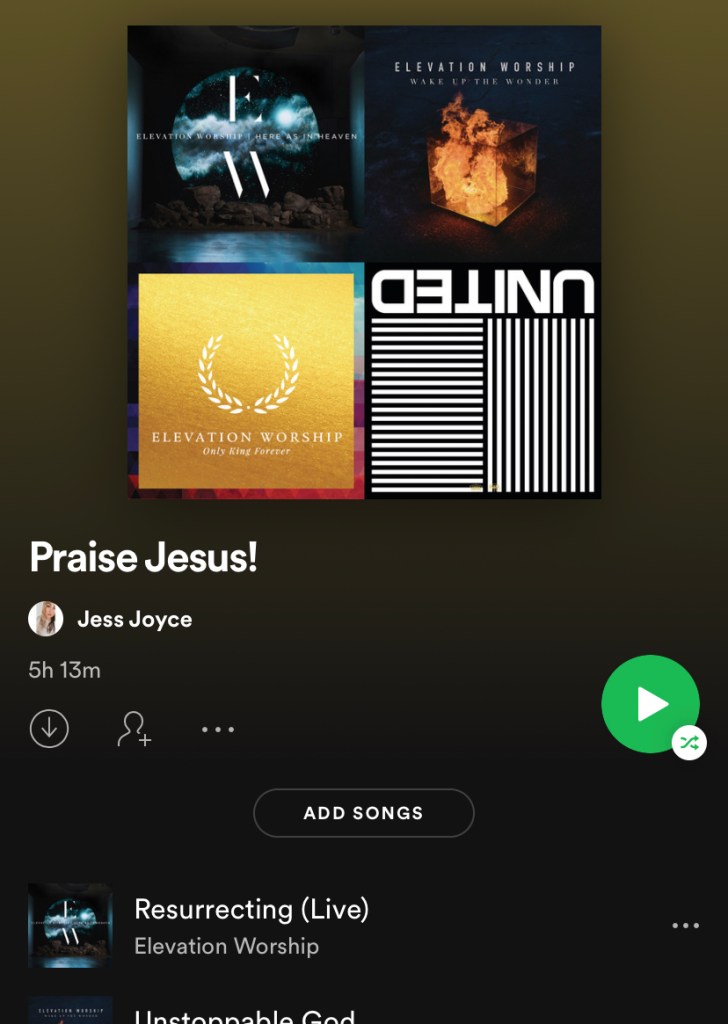
So today at work, I was scrolling through my playlists when I found THAT playlist. The one I haven’t dusted off in ages, the one I used to consult regularly in preparation for the event of the week — Sunday morning church. 

And if Elevation’s “Resurrecting” WASN’T in that playlist, were you really a worship guitarist?

I was a fixture on the main stage of the megachurch I attended at the time. I’d drag my gear to the backstage area, banter with the production guys, and once the lights in the auditorium went down and the spotlights flashed on, I’d throw myself into the music, into worship. The music itself was never especially complex — same few chord progressions, same delay-infused chimey licks that wouldn’t sound out of place in a U2 song. In fact, if you’ve been to a modern church within the last 20 years, you know exactly what I’m talking about. But the emotion, that feeling of being part of something bigger than yourself for just a moment. Like a drug, you spend the rest of your life chasing that high.

Sometimes I wonder why I left it all behind.

Oh right, that’s why.

I felt like a rock star at my old church, but I knew it would come crashing down. I was bisexual, and I was slowly realizing the person I truly wanted to spend my life with was my best friend, another woman. There was no way I could have both. Leaving the evangelical church allowed me to finally live authentically, but at what cost? Chances are, I’ll never set foot on a stage of that size again. I’ll never hear the ring of my guitar through a room that could easily fit three houses inside. I’ll never have people tell me how much of an inspiration I am to their kid. I’ll never have that euphoria that only comes with leading worship at such a massive level.

It’s easy to get nostalgic for things that are toxic. You look back at a past friendship or relationship with these rose-tinted glasses that erase all of the pain it caused you. Hindsight may be 20/20, but it’s also biased as heck. You don’t want to remember the shitty parts, just the parts that made you happy. And you forget that in order to grow into who you are now, you needed to shed that old shell.

I don’t mean to throw any shade at my old church (which will remain unnamed), as they’ve helped me in times of need, and to be honest, I met a lot of very rad people because of my involvement there, many of whom I still speak to today. But I couldn’t live with the cognitive dissonance any longer. In order to grow as a person in Christ, I needed to not only leave the church, but leave behind the harmful lie that God will send me to Hell for the crime of loving another human who sits down to pee. But leaving the church also meant leaving behind the life I’d grown accustomed to, standing in the spotlight before crammed auditoriums week after week. 1 Corinthians 13:11 talks of putting away childish things. Maybe my need to be admired — my need to leave church guitar case in hand every Sunday feeling like a rock star — was the childish thing I needed to put on the shelf.

I won’t deny myself the chance to mourn the loss of my previous church community. I do miss my time there every now and then, but it was important to leave that season behind in order to grow in my faith journey. In order for a plant to flourish, one must cut off the parts that are diseased or damaged, even if the process hurts. Never make the mistake of romanticizing that which was harming you.

There was a time a few short years ago where I couldn’t imagine worship without the lights and fog machines and crowds with raised arms. Worship looks a lot different to me now. Whether it’s meditating on the living room floor, gazing in wonder at the blessings around me, listening to a dusty old playlist at work, or even just sitting in a quiet dark corner of my apartment with the same Sunday morning songs my hands have, for better or worse, committed to memory. To God — not me — be the glory.

Amen, I think.

This Is Me Trying

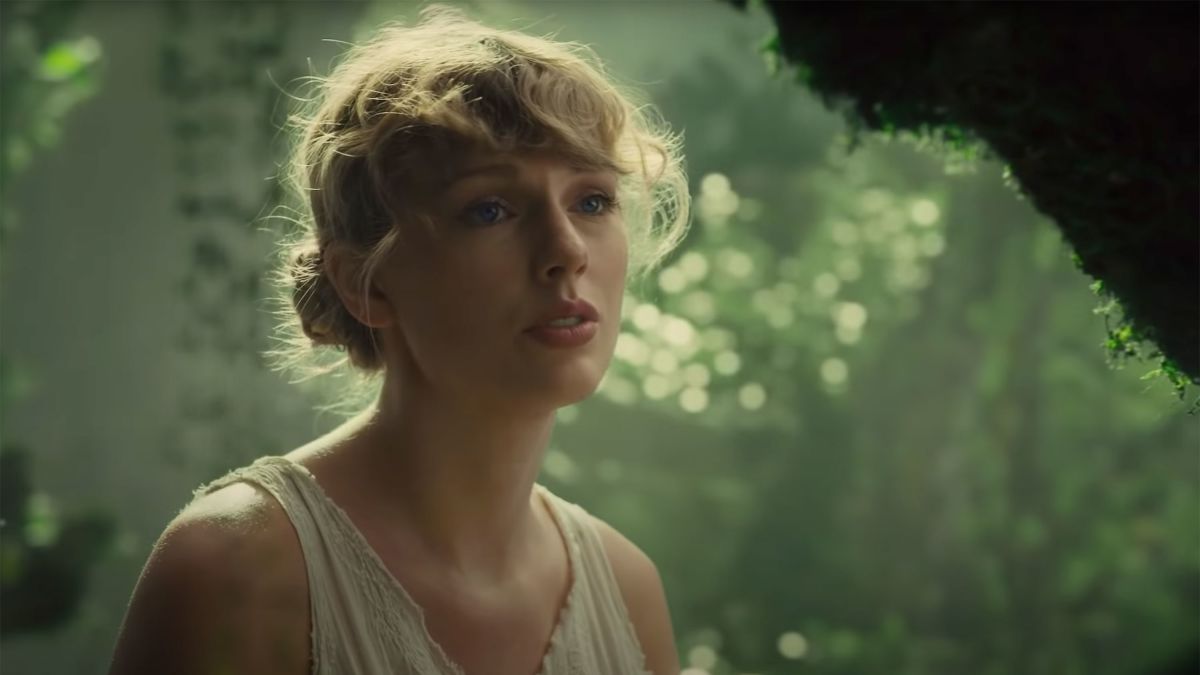
I was fortunate enough to grow up with Taylor Swift’s music, quite literally. She was always walking a step ahead of me, writing music that reflected upon the season of life I was currently in from the perspective of someone who’d just lived it herself. She felt like an older sister figure of sorts, creating the soundtrack to my own dreams and fears and letting me know that whatever interpersonal peril I’d gotten myself into, she’d been there as well.

Cardigan' Easter eggs decoded - CNN

She knows all too well.

This isn’t an article about Taylor though. It’s about me.

If you’ve been following this blog at all, you’d know that I could slap my name on a copy of the DSM-5 and market it as my autobiography. And for the longest time, I was getting shitfaced at my own personal pity party in a paltry attempt to numb my own head. I was a ragged tapestry of depression, anxiety, a budding eating disorder, and what was becoming an addiction to alcohol. My fiancee was heading down the same road, two flaming tanker trucks careening down a highway with no brakes. Two nights ago, we crashed. I was sick. She was scared. I didn’t know how to help her. She had the worst panic attack she’d had in years. I just passed out in my own vomit.

In “this is me trying,” Taylor Swift details her own failures. Once again, I hear myself in the words:

I’ve been having a hard time adjusting
I had the shiniest wheels, now they’re rusting

They told me all of my cages were mental
So I got wasted like all my potential

I was so ahead of the curve, the curve became a sphere
Fell behind all my classmates and I ended up here

I was always the “good girl.” The “pretty girl.” The “smart girl.” I’d had mental health issues my entire life, but I’d always been able to manage them somewhat, at least enough to retain my position as the golden child. The stresses of adulthood and the weight of some poorly dealt-with traumas wore down my defenses until suddenly, I barely recognized myself. Of course I wanted to drink myself to death. I felt like I had little left to live for in the first place.

Then I woke up.

My fiancee drew a line. No more drinking. No more self-medicating. Instead, we stand and fight, and this time, we fight together. The battle against addiction and mental illness is never an easy one, but now, we have something to live for. In just the first few days of sobriety, we’ve rediscovered our creative passions, our love for each other, and our futures. Today in Whole Foods (while shopping for tea to displace our alcohol), we stumbled upon a can of fancy-schmancy cold brew coffee. Nothing special at first glance, but the brand name? Cadence. The exact name she and I had agreed to name our first daughter someday. And it felt like this peculiar sign that maybe everything would be okay.

No, no maybes. We were okay. Even if the road is hard, we’re going to get healthy and happy.

It’s still early in the battle, but I already feel victorious. The first step is admitting there’s a problem. And as I go into my second month of work, I’ll get my insurance back and finally be able to tackle all of the physical and mental health issues that have been holding me back. Then eventually, I’ll be able to finish my music therapy degree without the weight of my own mind pinning me down. We’ll save up money and get into a better living situation. And someday, God willing, I can be the mother Cadence deserves to grow up with.

And I just wanted you to know this is me trying.