I was already kicking around the idea when this popped up as the daily prompt.
Come up with a crazy business idea.
Hear me out: Tinder for musicians.
Not for dating them (which, I can confirm, is always a bad idea).
Please note that I don’t know a damn thing about developing apps. But the engine seems to be there, you know? You get a person, you swipe right or left depending on if you like them, and if they like you back, you can talk to them. It’s so simple.
So what if we used that same idea for people trying to start bands?
I’m at a crossroads with all of my projects for one simple reason — they all lack a drummer. I’ve tried out several drummers for Wake Up Jamie and no one seemed to fit. My co-frontwoman’s little brother is filling in for now, but it would have been so much easier to just swipe right on a drummer and bring him into the fold that way, right?
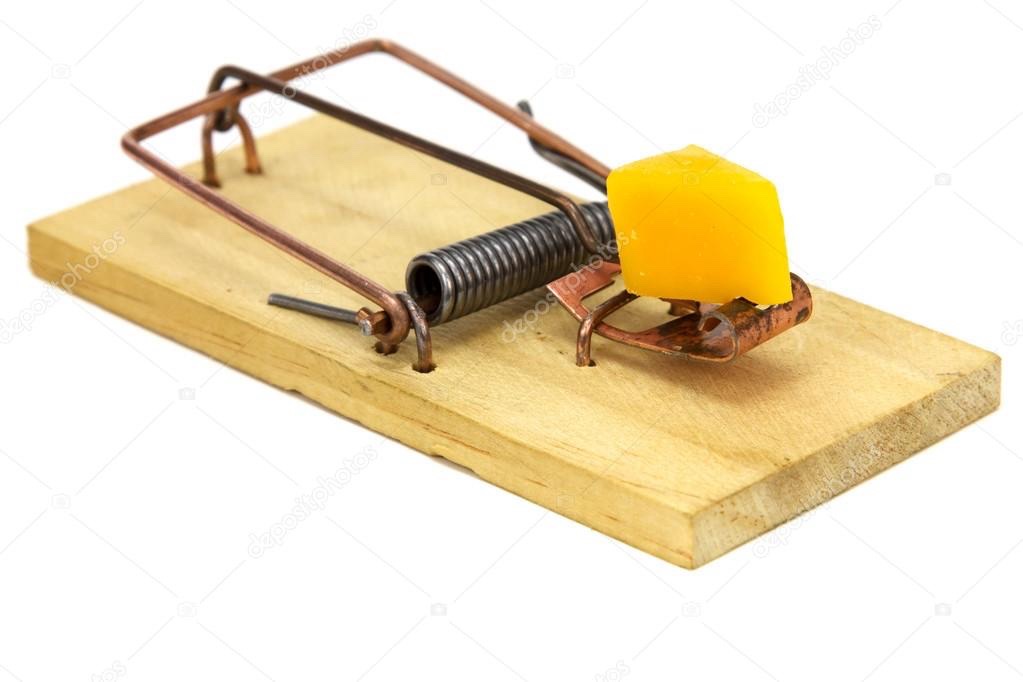
I’ve tried luring them in with cheese and it never works.
But imagine a “dating app” for connecting musicians! You’d sign up for this theoretical app and list all of the instruments you can play, as well as your playing level. You could even post videos of yourself playing! Then, you’d scroll through until you find someone you’d want to collaborate with. Once you’ve found your guy or gal, swipe right, and if they’re also down, they’ll also swipe right, similar to Tinder or Bumble. But once you’ve made a match, you can message and coordinate a time to meet up and jam.
Honestly, a social networking site for musicians would fill the same sort of niche. Imagine a MySpace for musicians (okay, MySpace is mostly for musicians these days, but still). You’d add your friends and their bands and be able to follow what they’re doing. Sure, you can already do this with Instagram, but Meta sucks and Zuck eats kittens. Besides, this app would only be for musicians to join. Perhaps later there could be a “fans” option for joining. Honestly, I just really want to see the music scene become more connected.
So those are my crazy business ideas. I’m open to becoming an entrepreneur, but I’d definitely need someone to help with the technical aspects of things.
Because I have no idea how any of this stuff works.
On a related note, if you’re skilled at techy stuff (unlike me), let’s chat.
This is going to be a controversial post. So hold onto your butts, dear readers.
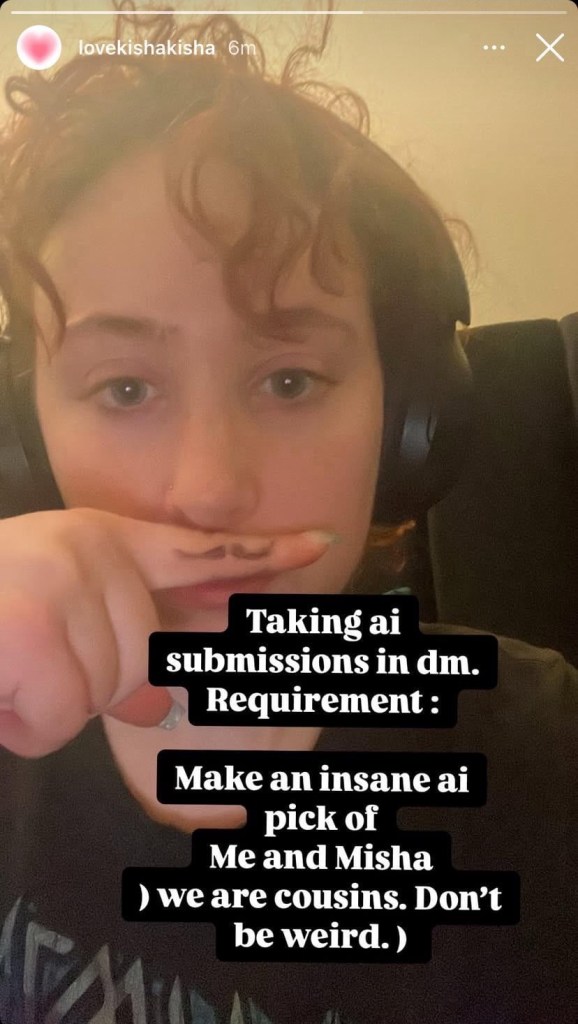
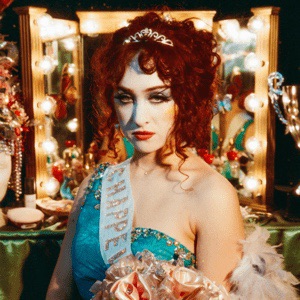
A few nights ago, Reddit’s r/chapppellroan community was abuzz, and not in a good way. The red-haired pop songstress invited controversy when she asked her fans to create unhinged AI images of her and her cousin.
Also embracing the millennial finger mustache, which I thought we collectively decided to forget about.
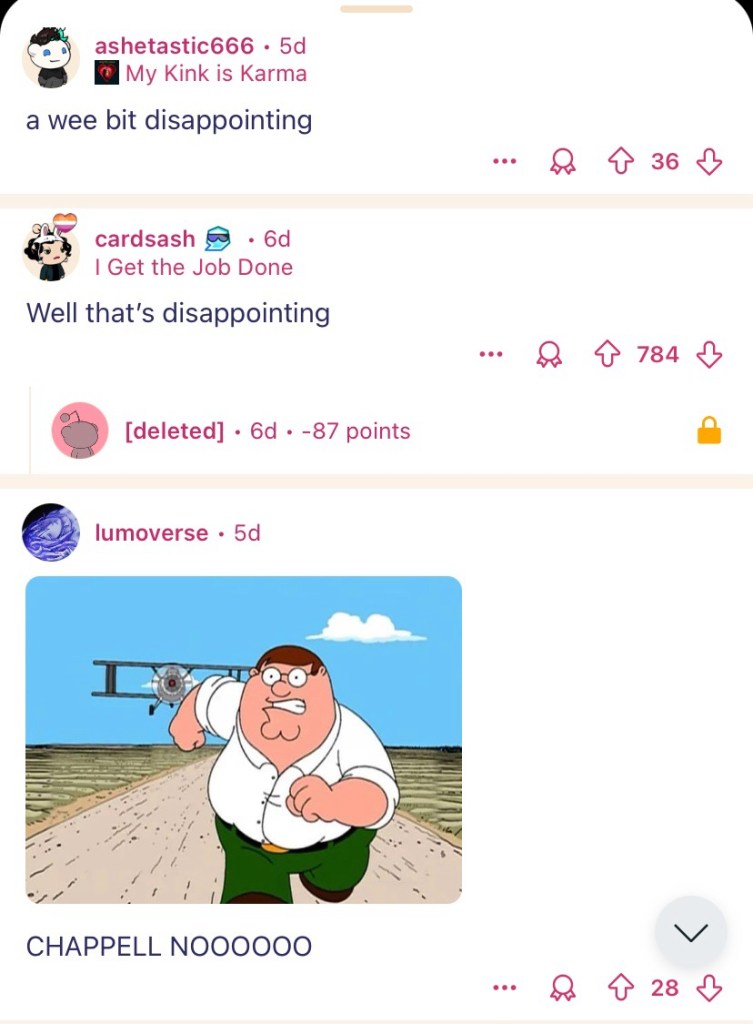
The overwhelming response from her fandom was, well, scathing. A lot of fans were disappointed, to say the least.
CHAPPELL NOOOOOO
And they have reason to be. Artificial intelligence is an ethical landmine. I’m not even talking the environmental impact — remember, training a single bot can produce as much CO2 as five cars do in their lifetime. It already has the potential to put visual artists out of work, and honestly, music isn’t far behind. There are already fully AI songscharting. Being wife to a visual artist and a musician myself, you’d think I’d be as strongly against AI technology as Chappell’s fans. And for a long time, you would have been right.
But I’m not anymore. In fact, I think it can be useful — used correctly.
A good musician friend of mine introduced me to a certain software that utilizes AI to create full, complex songs out of, well, whatever you give it. I was hesitant at first, but one night, I was sitting at work bored to death. On a whim, I decided to flesh out some long-abandoned lyrics I’d written and toyed with the software a little. And I was shocked at how well the software could bring my visions to life. It hit me that I could use this technology to break through writer’s block. After all, according to the software’s terms of service, everything you beep-boop is yours to do whatever you want with. I could flesh out entire demos using AI!
And I can repeatedly listen to my own music like never before!
Let me be clear — I don’t support simply releasing what the software spits out. I think it’s disingenuous to put something out into the world and claim it’s yours when all you did was punch a few buttons. But I don’t see an issue with using it to glean ideas and visualize what you actually want to create. It’s the same concept for visual artists. Use AI to generate some poses or brainstorm ideas, but at the end of the day, your art is what you create yourself with your chosen medium.
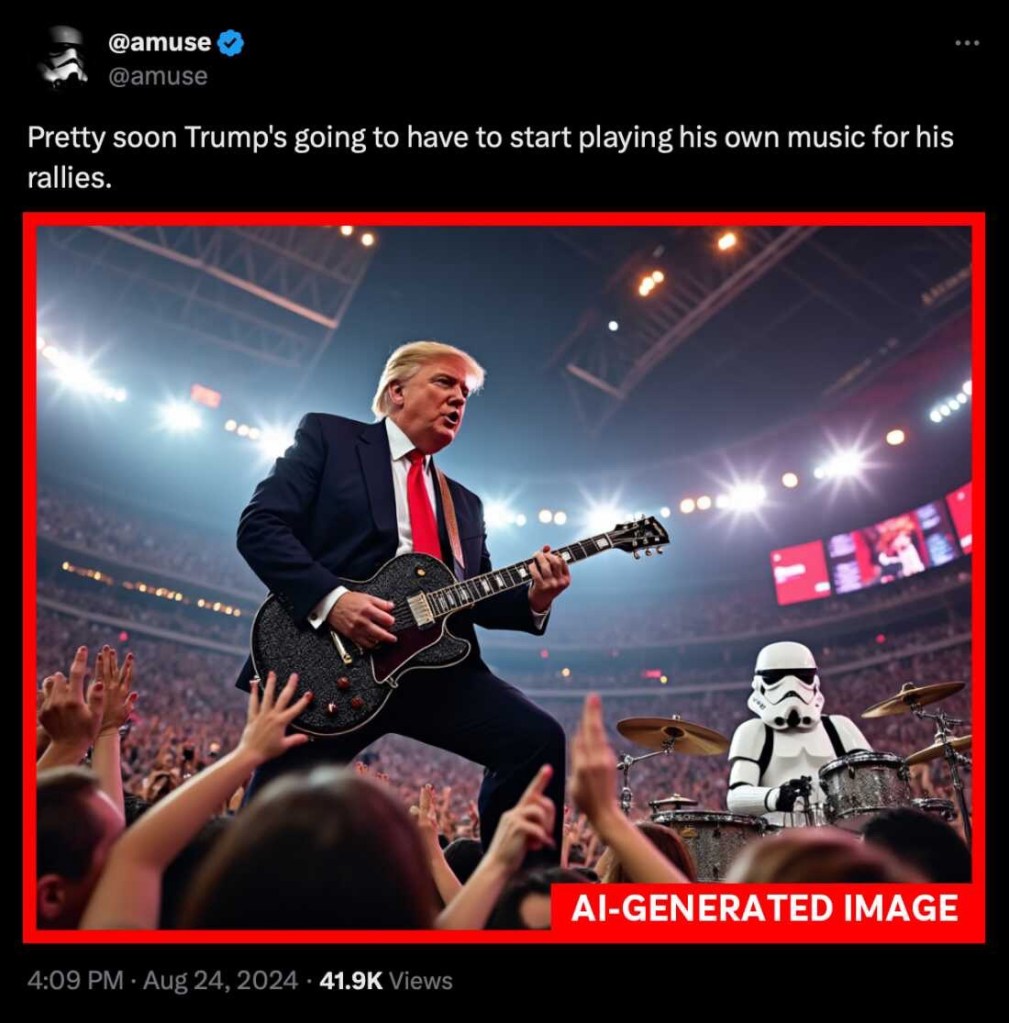
I know it’s really easy for bad actors to use AI for insidious purposes, and I can’t argue that. Sure, making cute realistic neon owl families with AI is innocent enough, but what about Joe Biden and Donald Trump swordfighting with their penises? We have the technology to make a very convincing image of that…atrocity, and publishing it to social media has the potential to damage real people. For that reason, I think there needs to be significantly more legislation surrounding AI (or people are going to develop some really wild ideas about American politics).
Like people believing this man can actually shred.
Still, I don’t think AI is an entirely bad thing. It’s a tool like anything else, and every time a new creative tool comes out, people will declare it the enemy of true art. Painter J. M. W. Turner once said “This is the end of Art. I am glad I have had my day.” This quote was spoken in 1839 and is referring to the daguerreotype. But we still have painters to this day. And now that the technology exists, you can’t put the genie back in the lamp. Like it or not, AI will be a huge part of our future. As the Leadership Conference on Civil and Human Rights succinctly put it:
AI has the potential to help our communities, but if [people] aren’t equipped to successfully enter the future of work, they will not reap the benefits.
In other words, now that it exists, it’s a necessary evil, and folks will have to learn how to interact with it one way or another, lest risk being left behind.
I’m not a believer in black and white thinking. I think there are way too many gray areas in our everyday life, and I think the use of AI is one such gray area. There are many ways to use it ethically, and there are just as many ways to misuse it for sinister purposes. At the end of the day, I don’t think Chappell should be cancelled for wanting to experiment with it.
Let’s be real though, is Chappell even cancelable?
Use it or don’t, just be excellent to each other. And for the love of God, do not generate that penis-swordfighting image.
I had a realization a while back — one of the reasons I pursued music therapy was because it looked “good.” It seemed like a noble profession, using music to improve people’s lives in a meaningful, measurable way. I’d tell people I was studying music therapy and it was an instant “Ah yes, I can trust her, as she is clearly a good person.” All my boyfriends’ moms loved me for it, and strangers would tell me what I’m doing is so beautiful, so kind. It may just be playing guitar for some kid in a hospital, but to that kid, you’re a hero! And who doesn’t want to be a hero, you know?
I think I have a hero complex, and I think that’s what’s prevented me from jumping headfirst into performance instead. I always wanted to be a hero. I wanted to help people. And if I became a rock star, who would I be helping except my own selfish desires?
The typical perception of pretty much everybody is that performing and the arts are just little “extras.” They’re nothing but fun little distractions, right? No one needs a movie or a comic book or music to live.
QUICK! GET HIM THE LATEST TAYLOR SWIFT ALBUM!
What I’m slowly realizing is that, while we don’t need the arts to live, we absolutely need the arts to really live.
When I moved to Kalamazoo, I searched frantically for work. I would have taken damn near anything, but I wanted to try finding a job involving music. And lo and behold, a trivia company was looking for a music bingo host in my area. And I mean, getting to essentially be part-DJ, part-game show host every night?
What is “the ideal job for Jessa”?
I love what I do. It’s a great gig. But for a while, I was feeling like what I did didn’t really matter in the long run. People come into the bar, play music bingo, and leave, going on to live their own lives. I imagine there are probably nurses and firefighters in the audience, and what I do must seem so inconsequential compared to what they deal with every day. And I think those thoughts were starting to wear on me, because I got complaints from one of the bars I work at that I wasn’t “engaging enough.” At first I was angry, because what do you mean I’m not good enough?! But then I realized maybe I’m not giving it my all, and maybe that was because I felt like my job wasn’t important.
So I determined that this show would be my best show yet. I dressed just short of a full drag queen getup, picked some banger categories, and drank enough caffeine to kill a horse. I promised myself I’d socialize the whole time, even if I wanted to sit down. I even moved the chair so I wouldn’t be tempted to just sit down. I was going to give this show my all.
Then, something amazing happened. Sometimes, when you put good vibes out into the universe, the stars align and give you exactly what you need in that moment. What I needed was a glimmer.
No, not the She-Ra character.
Everyone knows what triggers are, but I recently saw that someone coined a term for the opposite phenomenon — glimmers. These are the tiny moments that make life worth living. I experience a glimmer every time I laugh with my wife, or hug my girlfriend, or hear my parents say they’re proud of me. They’re what being alive is all about. They’re little moments of pure joy, which was exactly what I needed.
No, not her either.
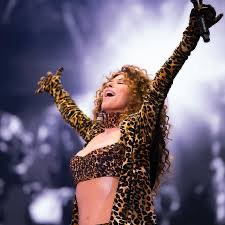
I walked into the bar to an array of balloons. It was an older couple’s 55th anniversary, and I was going to be hosting music bingo smack dab in the middle of it. Thankfully, the couple was cool about me coming to blast disco at them and even joined in the game, along with many of the other folks in attendance. The older woman who was celebrating her anniversary came up to me and told me that her and her husband’s song was “You’re Still the One” by Shania Twain. And anyone who knows me knows I never miss an opportunity to play Shania Twain.
Tangentially related fact: I was so obsessed with her as a small child, I’d draw pictures of her and not my mom. (Yes, my mom was a little jealous.)
When intermission came, the bar dimmed the lights, leaving only the hanging Christmas lights to illuminate the room. I cued up the song and introduced the couple to the entire bar. Then, everyone gathered around the couple with their phone flashlights. Seeing all of their friends and family surround them in a sea of twinkling lights actually made me tear up a little. The family would remember this moment for the rest of their lives.
A moment I helped make happen.
It’s easy to dismiss entertainment as an opium of the masses, even more so than religion, as Marx famously said. But I’d argue that entertainment is as important as the STEM fields, just in a completely different way. Sure, a particular song may be insignificant to you, but that song could have been the one thing that stopped someone from taking their own life. There’s a reason for this album’s existence. I know people who stay alive because they want to see what happens next in their favorite video game franchise. The arts and media provide those small glimmers that keep people going.
So maybe I will go all-in on being an entertainer and creator. Because someone somewhere needs my music. Someone somewhere needs a fun game night at the local bar. Someone somewhere is reading my writings about mental health and my own personal journey and feels less alone because of it. Artists, writers, musicians, video game developers, game show hosts — they’re all heroes in a unique but important way. Entertainment and art communicate ideas, and more than that, hope.
This is a happy blog post, okay? Sure, I wasted more than a decade of my life pursuing a dream that ultimately fell through. I won’t lie and say it doesn’t sting. I do get a little weepy when I think about all the beautiful musical moments I’ve had with my past clients. I still remember playing piano for a dying man and his wife and how sweet it was to perform “their song” one last time for them. That’s something I’ll miss about music therapy. What I won’t miss? All the paperwork and clinical BS that comes with. Simply put, I’m not a clinical person. I’m a creator and a performer, first and foremost. Even if I had pursued cardiology as a career, which was my original plan, I probably would have noped out of that life eventually too. It’s for the best that my parents talked me out of pre-med in favor of music.
Becoming the first parents in the history of human civilization to talk their child out of being a doctor.
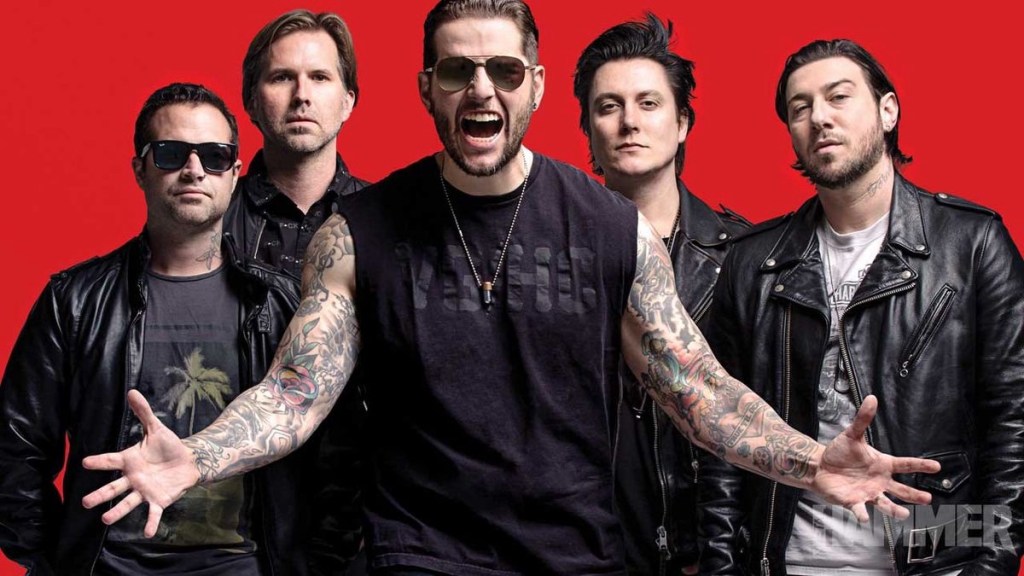
But for the first time in a long time, I feel some degree of hope. Tonight, I submitted my application to the multimedia arts technology degree program at Western Michigan University. It’s been a long time coming. I’ve been toying with getting serious about music production for a while and researching programs to teach me how to be a better mixer and producer. I managed to make a few friends out here who are already in the program and they all highly recommend it. One friend had a buddy who went through the program and became the touring sound guy for Avenged Sevenfold!
Who I admittedly know nothing about, but they’re famous, so that’s something!
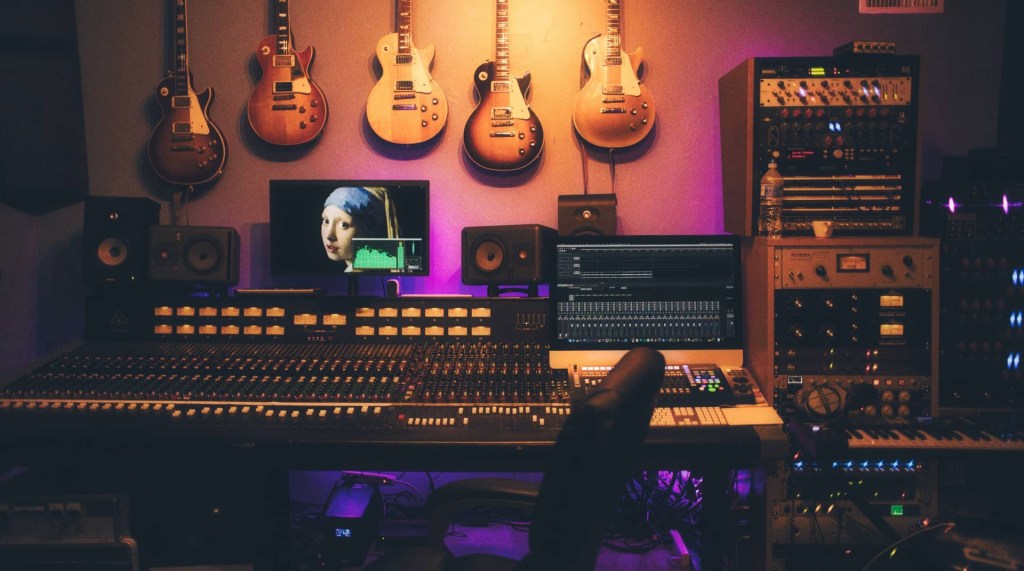
So what to do with this degree? Well, my plan before leaving music therapy behind was to create a space for people of all ages and abilities to make music. I think music should be available to everyone regardless of their circumstances or disabilities. I wanted to build a recording studio not for famous artists, but for everyday folks who want to join in the act of creating music. I’m no longer pursuing music therapy, but those dreams never changed. I don’t need a music therapy degree to apply what I’ve learned about working with people of varying abilities in a musical context. I don’t need a music therapy degree to build a neurodivergence-friendly studio. And I don’t need a music therapy degree to help people make music.
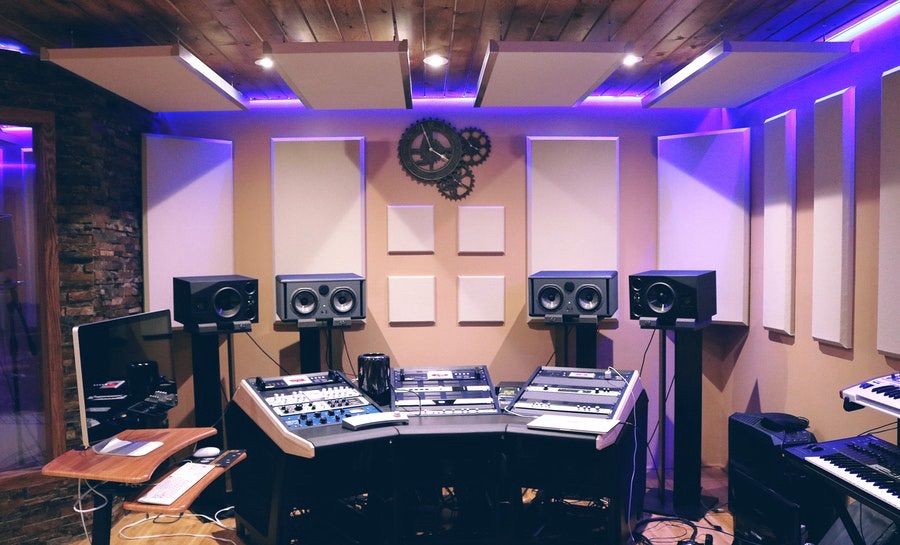
My new dream is to start my own recording studio/music school. I want to provide lessons to the community at an affordable price, and I want a space for my students to record and produce their own music with my help. I want to make my studio a sort of “third space” for the community to be able to meet like-minded people and practice their instruments, and maybe even rent out instruments so folks can try things they might not have ordinarily tried. And if my studio catches on, I want to open multiple locations. I want to start a movement of sorts. Lofty, I know, but what’s the point of dreaming if you don’t dream big?
Quitting music therapy was a difficult decision that made me question my entire place in the world. Still, I’m convinced I can still change people’s lives through music, even without a fancy schmancy music therapy degree. Honing the craft of music production will take me one step closer to doing just that. I refuse to die before I’ve made a difference in the world.
List three jobs you’d consider pursuing if money didn’t matter.
It’s funny that this prompt came up right now, because I’ve been doing a lot of soul-searching regarding my career. After all, music therapy didn’t exactly pan out for me, and the more I learn about the field, the more I’m kinda glad it didn’t work out. Apparently burnout is rampant and no other professionals take it seriously, from what I’ve gleaned from r/musictherapy on Reddit. But for most of my life, if you asked me what I wanted to be, the answer would have been a resounding “music therapist.” It was my entire personality. It was my destiny, or so I believed.
Now, I’m scrambling trying to figure out a Plan B. I didn’t have a backup plan. In my desperate attempt to grasp for alternative career paths, I tried to think of what drew me to music therapy in the first place. Was it helping people? I mean, I’ve worked pretty extensively as a caregiver, and while it feels good to do good, I still didn’t feel completely fulfilled in those jobs. Maybe it was the respect. I could see myself as a celebrated professor or researcher in the field. But in all honesty, music therapists don’t really get a lot of respect at any level (also according to r/musictherapy). That left just one potential reason — I need to make music.
Music is my entire life. I don’t know who I’d be without it. It was my first language. And all I truly want out of a career (and life in general) is to create it. And so I began to brainstorm other careers I could pursue that would allow me to play music, or at least be in close proximity to it. These are the ideas I’m currently batting around.
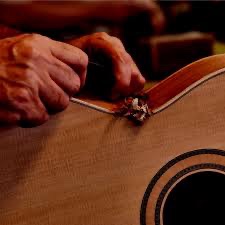
1. Luthier
l’ll admit this one’s farfetched. I’m not a crafty person or a handy person, so making a thing from scratch is a very intimidating prospect. Still, the idea of building and fixing guitars is attractive to me. It’s a very male-dominated field, so being a female (well, femme-by) luthier would make me cool and unique, right? There’s a luthier school an hour and a half away from where I live now, but that would be a ridiculous commute, so I’d have to either live in the dorms or get an apartment out there. My poor wife has been through enough with the Fort Wayne saga, though, and the tuition makes it prohibitively expensive.
2. Music Producer
This is probably the thing I want to do most, if I’m honest with myself. This is a purely creative job. I’d simply be tasked with making music and helping other people make music. I’ve already been doing some producing, although I’m by no means an expert. The local university has a multimedia arts technology degree that seems promising, should I want to hone the craft. One of my friends has a buddy who went that route and ended up touring with Avenged Sevenfold as their sound guy. That being said, that program also costs money I don’t have, not to mention getting the space and equipment I’d need to open my own recording studio. And then I’d need clients, which means I’d have to advertise, which means I need more money. And if I don’t get clients at all, I’m screwed.
3. Professor
When I was pursuing music therapy, my ultimate goal was to become a professor and researcher. After all, I thrive in academia, and I’ve always enjoyed teaching. If I go this route, I’d likely enter the graduate composition program at the local university, and eventually earn a doctorate. I love the idea of being Dr. Salisbury. I want the respect, the stability of being tenured, the freedom to study cool shit and make money doing it. But alas, this program also requires money.
I guess if money didn’t matter, I’d pursue all three of these at different points in my life, maybe go the producer route first and subsequently start my academic career, then learn the craft of building guitars as a retiree. I still (hopefully) have many years ahead of me. But realistically, I’m going to choose one to focus on, due to financial constraints. Unfortunately money does matter.
Maybe I’ll start a GoFundMe.
What do you think I should be? Leave your ideas in the comments!
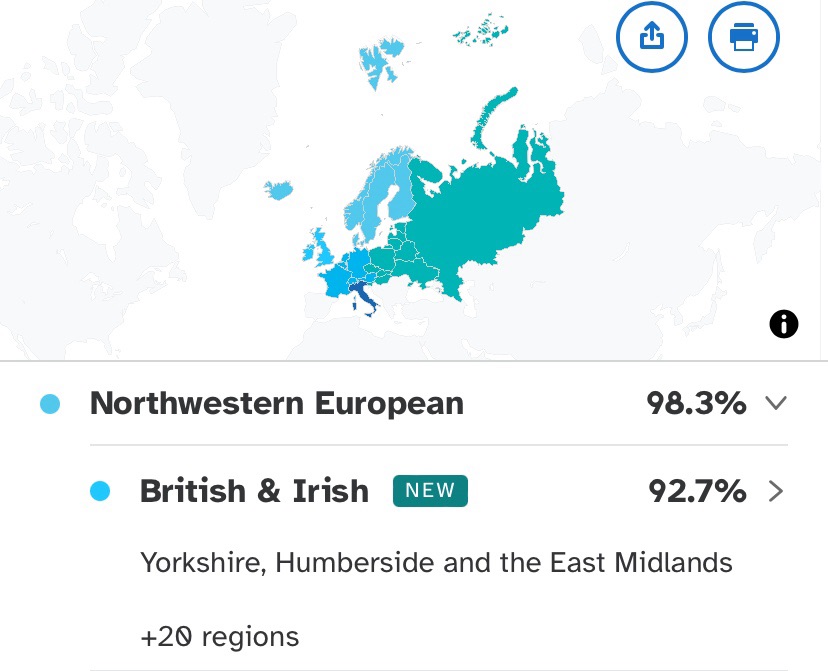
I remember the shock when I got the results back for my 23 and Me test (that I drunkenly ordered back when I did drink).
So I’m pretty British. I was expecting that much, considering my government surname is Salisbury and I don’t think there exists a more British last name. (Except maybe like, Buckingham, or Worcestershire. Is that someone’s last name?) But I wasn’t expecting the sheer amount of Britishness I ended up being. Hardly anyone I know has gotten more than 90 percent of a particular ethnicity, and here I am more British than the late queen herself (probably).
Pip pip cheerio, or whatever.
Was I a little disappointed at first? Maybe. It felt like the most basic ethnic background I could have possibly gotten. We don’t speak a fun language that isn’t English, we’re so white the sun tries to kill us anytime we walk outside, and all we’re really known for is tea and trying to take over the world (and fucking things up for like, a bunch of other people in the process). And like, soccer and shit, but I never cared for sports. Why do I wanna watch a bunch of people I’ll never meet play a game? Wouldn’t you rather play the game yourself? I mean, I wouldn’t want to play personally, but that’s only because I suck at anything that involves silly concepts like “teams” and “balls.”
Pictured: Jessa’s kryptonite
My point is, I didn’t think there was a whole lot to be proud of. Why couldn’t I have been born, well, anything else?
There had to be something cool about being British. It couldn’t all be earl grey and imperialism.
And then it hit me.
The thing I’m most passionate about.
Music!
What aspects of your cultural heritage are you most proud of or interested in?
It’s well-known that Black Americans invented rock and roll, but the British…well, I can’t say they perfected it, since, well, Black Americans also perfected it. But we Brits had a hand in codifying it into the behemoth of a genre it is today. The Beatles, The Rolling Stones, The Who, Pink Floyd, Queen, Led Zeppelin, Deep Purple, Black Sabbath, Fleetwood Mac (well, partially at least)— it’s probably easier to list legendary rock bands that aren’t British.
So how did Britain become such a hotbed for rock music?
Thankfully, your favorite armchair ethnomusicologist is here to break it all down.
As this very well-written article explains, after World War II, Britain was pretty beat up and down bad. But in the 1950s, American rock music infiltrated the tiny country and re-energized a whole generation of folks. As the writer puts it, “…rock ’n’ roll arrived like a form of deliverance, an alien transmission that electrified British youth, literally driving them wild.” The Brits didn’t have any connection to the blues and folk that initially influenced the budding genre, so up-and-coming musicians had to rely on the records they were consuming to learn the ways of rock. At first, artists tried to mask their Britishness to fit in better with the American musicians they were learning from, but eventually, these artists began incorporating their own culture into their music. For example, it was uniquely British repression and rage that fed into subgenres like punk.
I found it strangely comforting to research British influence on rock music. Reading this stuff makes me feel like I’m part of something bigger than myself, that I actually do have a heritage I can be proud of. Although I’m only a second-generation British-American and have never visited the isles myself, I feel a connection to my ancestry through rock’s storied history. It’s kind of cool that music is what ties me to the land my family originated from, since music has been my entire life.
So, it’s actually kind of cool to be 93 percent British after all. (But like, I could live without the sun trying to kill me.)
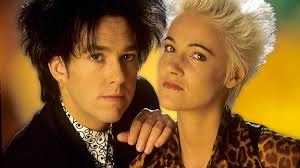
I’ll admit it — I’m a poptimist. I was converted back in seventh grade, when I first heard the Swedish pop duo Roxette.
What’s with Swedes and perfect pop music?
Prior to Roxette, I was firmly in the “rockist” camp. This music journalism term refers to the belief that rock music is superior to pop music in artfulness and authenticity. That was one-hundred percent me at the ripe old age of twelve. You’d think I was a grizzled boomer man instead of an innocent millennial girl judging solely by my music taste. I preferred Boston to Britney Spears, Led Zeppelin to Lindsay Lohan, and ELO to whatever *NSYNC was doing at the time. I looked down upon my fellow tweens for their shallow taste in music, convinced my favorite artists were leagues ahead of theirs.
Then, I heard “Listen to Your Heart.” Not the bullshit DHT version (I will stand by that opinion). The real version by Roxette. I remember being taken aback by the bombast, the emotion, the sheer magnetism of the hook. It had everything I liked about my rock music, but with a pop veneer. I had to investigate, which led me to dig deep in their discography. Their songs were so…catchy. It lit something within me that’s been burning ever since. There had to be an art to creating pop music, because Roxette had mastered that art.
I then fell down an even deeper rabbit hole of pop music, uncovering songwriters like Max Martin, Kara DioGuardi, and (unfortunately) Dr. Luke, who’d go on to shape my entire worldview as a songwriter in my own right. I challenged myself with creating music that was as catchy as theirs. This elusive concept of “catchiness” became my lifelong obsession. To this day, I get a twinge of glee when someone says they get a song of mine stuck in their head. That’s always been my goal, and while I’m still a rock girlie at heart, my love of pop tints all the music I touch.
So why have I fallen out of love with pop music in recent years?
I initially chalked it up to aging. After all, studies have shown that your taste in music solidifies after 30, which is why your mom still listens to hair metal (which, to be fair, is an underrated genre). But there had to be more to it. Since the dawn of popular music, old folks have complained that the younger generation’s new music was too loud, too brash, or too risqué. The Silent Generation complained about Boomers and their heavy metal, the Boomers complained about Gen X and their grunge, and Gen X complained about Millennials and their rap. But I found I wasn’t offended by the pop music the younger generation was putting out. In fact, it was offensively inoffensive, too bland and soft to really stand out. It wasn’t brazen or daring enough, nor was it, dare I say, catchy.
I recently went to a karaoke night at a bar that’s frequented by Gen Z patrons. After all, I live in a college town, so many of the local hot spots are hangouts for younger folks. Although I still look fairly young for my age, I was almost certainly one of the oldest people there. You’d think karaoke night would be the time to sing your favorite party anthems, but to be honest, the song selections were a total snoozefest. One sad slow song after another. I had to leave, it was just getting me down.
When did pop music get so…somber?
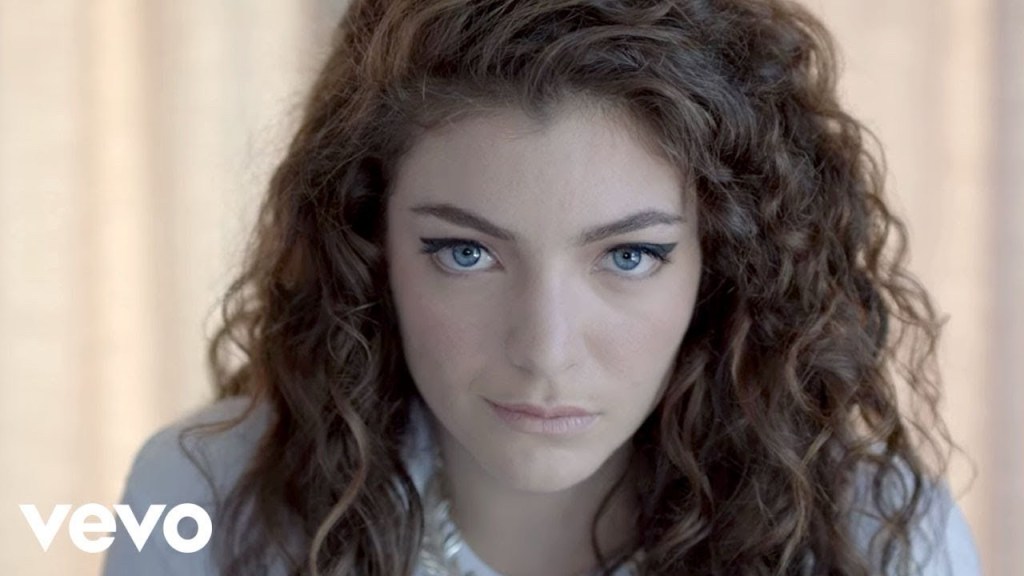
I blame the almighty Lorde.
Amen.
In the early 2010s, we were still experiencing a boom in silly mindless party songs, which, while not exactly lyrically groundbreaking, were sheer poppy fun. We had guys like LMFAO creating bops like “Party Rock Anthem” and ladies like Kesha and Lady Gaga with their array of club bangers. Then, the “Smells Like Teen Spirit” of Gen Z hit and wiped out that scene as fast as Nirvana had dissipated the hair metal that came before. That song was “Royals,” and it set the bar for everything that came after it. Suddenly, pop wasn’t “fun” anymore. It was much more subdued. That’s not necessarily a bad thing, and “Royals” is certainly not a bad song, but it made “avocadas and bananaes” the standard for female vocals, and — worst of all — it killed off the big choruses and catchy hooks I loved.
My wife and I have a joke about the trend of sad repetitive trappy songs. It sounds like musical Xanax, we always say. And it’s true. One of my favorite newer artists, The Band CAMINO, has a song I really love called “Roses.” “Why you wanna be a sad boy?” they ask in the first verse. The whole song ponders why we as a society have to be so sad all the time when you can just “stop and smell the (fuckin’) roses.” I get it — life sucks sometimes, and then you die. But pop music is supposed to be an escape from all that negativity. There’s a time and a place for sad bops, but when all you’re being served is sad bops, it gets a little tiring.
I think that’s the real reason it’s been harder for me to get into recent pop. We’re still living in a post-“Royals” world, but I do have hope that things are turning around. This summer, the newest generation of pop girls set the world ablaze. Olivia Rodrigo is bringing rock-tinged pop back to the charts. Charli XCX engineered an entire movement with her Brat album (and got a nod from President Obama of all people!). Sabrina Carpenter’s newest song has been on repeat for me this past week, and I don’t foresee it leaving my Spotify “on repeat” playlist for a while. And don’t even get me started on Chappell Roan. What we need is a pop music revolution. A femininomenon, if you will.
So let’s stop being sad and play a song with a fucking beat!
If you’ve been following my music career, you’d know I recently released a cover of Chappell Roan’s pop masterpiece “Good Luck, Babe!” It was a labor of love — I adore the song and wanted to explore a more rockish guitar-driven take on it — and I also wanted to drum up some hype around my own music. After all, The Oceanography EP and my other covers weren’t getting attention, and what’s the point of making music if no one listens to it except you? So when I recorded “Good Luck, Babe!”, I sent a little prayer to God or whoever is up there listening that this cover would get me noticed.
You have to admire the creativity of some of these.
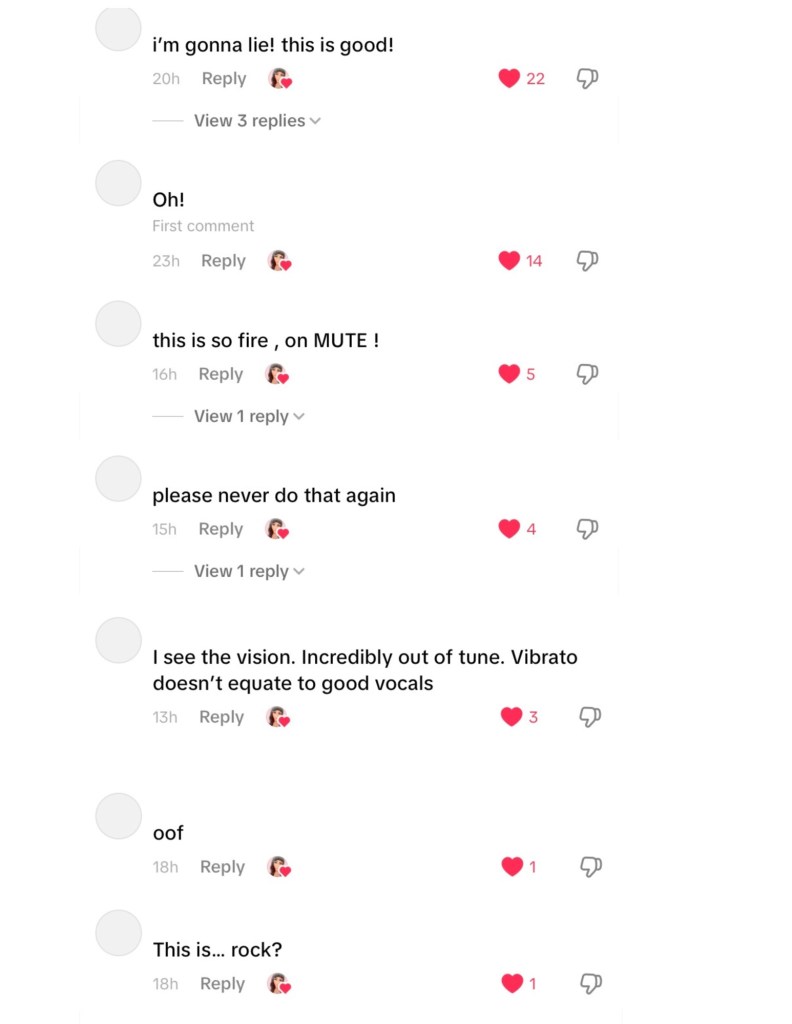
Apparently my stupendous bundle of joy was rubbing a lot of TikTokers the wrong way. I hadn’t gotten this amount of hate on anything I’d posted since my now-deleted post about guitarists drowning out the homophobes at a pride event. And even then, those hate comments were driven by bigotry, not anything I’d actually done or created. They would have gotten up in arms over anything I could’ve posted because I’m a queer woman, so their opinion isn’t valid. They just suck as people. In a way, getting hate comments on my music is worse. I can handle being called a dyke. It’s when you come after something I put hours of love and hard work into that I get a little perturbed.
But through this whole debacle, I’ve learned quite a bit about conducting yourself online as a musician. The second you decide to put your work out there, you’re essentially signing up to be a professional musician, and that requires a degree of, well, professionalism. Here are a few tips and tricks for dealing with haters on the internet.
1. Remember it’s them, not you.
Nothing anyone says online to you is about you. More than likely, they’re dealing with some shit too. Remember the human. They probably had a rough day at work or are going through relationship issues, and they’re looking for a punching bag to take out their frustration. Insulting some guy on the internet is the perfect way to relieve that stress — you don’t have to see this musician you just insulted in real life. They’re just a face behind a screen. Remember these folks are probably just salty because of something that’s going on in their own lives. I know it’s more satisfying to lash out and insult them back, but it shows a lot more maturity to restrain yourself from doing this.
2. Like their comments! Or better yet, thank them!
Nothing deescalates online drama quite like being the bigger person. These folks are looking to rile you up. Don’t let them. Instead, “like” their comments! And if you want to take it one step further, thank them. A simple “Thank you for listening anyways” with a smiley emoji will catch them off guard. This is how I dealt with a lot of the recent hate I’ve gotten. People don’t know how to react to that, so they simply shut up. Kill them with kindness, as I always say.
3. They are talentless fucks.
Okay, I’m gonna be blunt now. Anyone who leaves random hate comments on a musician’s page clearly doesn’t know what it’s like to be a musician. Which immediately makes you cooler than them. In fact, that’s probably why they’re lashing out — they know they can never stand up to you in real life because playing music is cool as hell. Folks can’t handle when other people are more talented than them. Aussies call this “tall poppy syndrome” — when your flower grows to new heights, others will be scrambling to cut you down to their level. Don’t let them.
4. Remember that great art is divisive.
There’s a whole montage in Bohemian Rhapsody where critics’ comments of the band Queen are highlighted. This is the Queen, the band that brought you such legendary hits as “We Will Rock You,” “Don’t Stop Me Now,” “Radio Gaga”…you get the idea. It’s hard to believe now that they’ve reached almost godlike status among music lovers, but not everyone liked them at first. I recently read an enlightening comment from a DJ. He said that the music he spun frequently got both positive and negative reviews. You know what records didn’t get plays? The ones no one cared about enough to hate.
5. Laugh about them.
One musician on Reddit said he puts bad reviews on his upcoming concert flyers like a movie poster so he and his fans can have a chuckle about them. I think this is brilliant! If I saw a band embracing their negative reviews like that, I’d assume they had a good sense of humor before I’d assume they sucked. Even better is editing down the hate comments until they become rave reviews and using those. “This is good!” and “This is so fire” are definitely contenders for good bad reviews for “Good Luck, Babe!” No one needs to know the second half of those reviews, and you’re technically not lying. It’s all in good fun.
6. Keep releasing new music!
Don’t let haters discourage you from posting your music. You have a unique voice, even if other folks don’t see it yet, and the music scene is better for having you in it. Every other artist in existence has had to deal haters, and even some of the greatest albums of all time had their critics. There’s only one you in this universe, and the world is missing out if you give up because of some small-minded asshats on the internet. Ignore the haters and do you. That’s the best you can do.
When I was a kid, I kept magazines by the family dinner table. I couldn’t eat unless I was reading something — anything! Usually I’d read about video games I was into, but sometimes I’d read about music. One of the features I always enjoyed in the music magazines was a featured artist’s list of their favorite albums of all time. Maybe it’s because I enjoy lists, I don’t know. Is that an autism thing? It might be an autism thing.
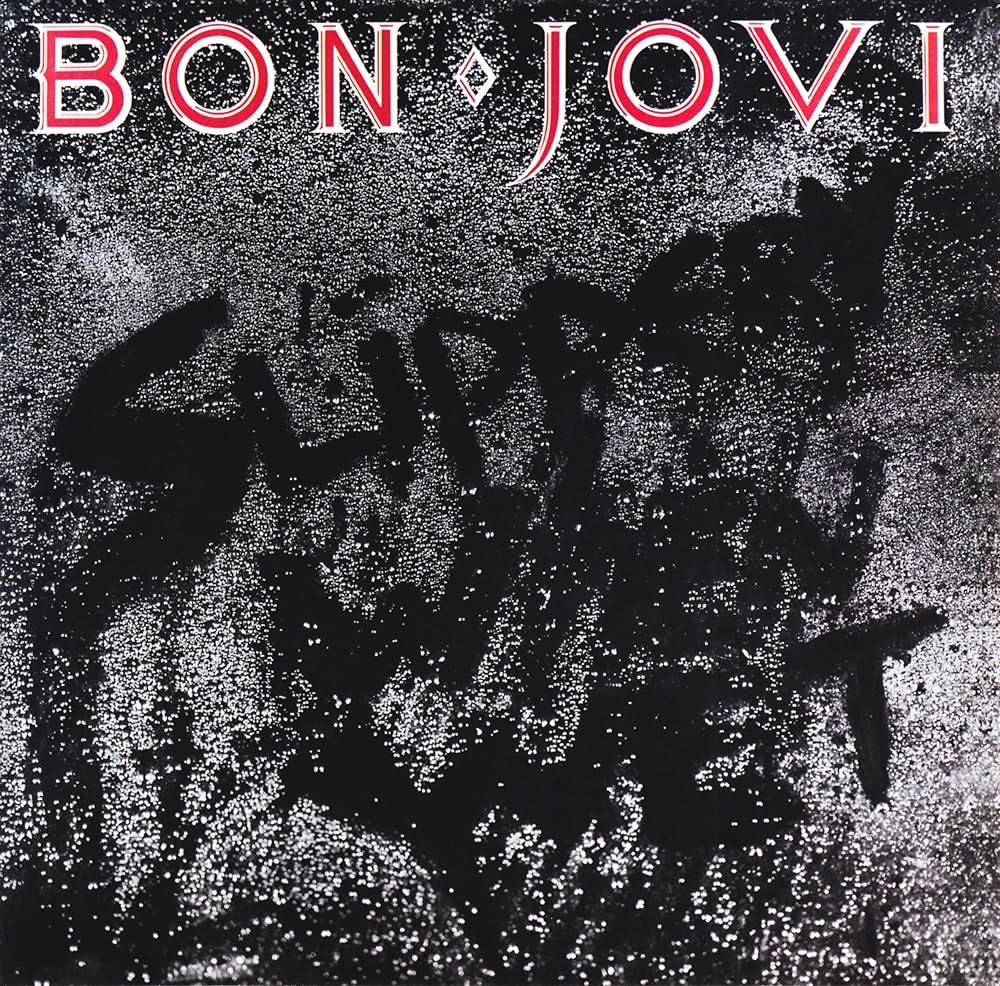
Anyways, I liked to imagine I was a famous musician being interviewed by one of those magazines, and I liked to consider what my answers would be. Now that I’m much older and have a platform of my own, I can just, you know, make my own list. I mean, what’s stopping me? So here’s my official top ten albums of all time. It’s not going to look like a lot of music critics’ top ten albums, as my taste in music is notoriously bad. I mean, Bon Jovi of all bands was my obsession for much of my life. But taste is subjective, am I right? And for better or worse, these are the albums that shaped me as a musician.
1. Bon Jovi – Slippery When Wet
I already mentioned Bon Jovi, so why don’t we start with there?
I remember the first time I heard this album. It was shortly after I discovered Bon Jovi due to the everywhere-ness of “It’s My Life” in 2000. I was very little at the time, but I loved that song. My much-older sister was a teenager in the ‘80s, so she remembered Bon Jovi’s initial run, and she still had her favorite cassette tape from back then. Starting up the tape and hearing synth intro of “Let It Rock” for the first time was nothing short of euphoric. I’d never heard anything like it. And then the bombastic vocals and heavy guitar came in, and I was absolutely in love.
Slippery When Wet also contained “Livin’ on a Prayer,” which was an immediate favorite of mine. I wasn’t sure what the hell a talk box was, but I knew I liked it. And how singable the chorus was! It would become my blueprint for creating earworms as a songwriter. There’s magic in that “woah-oh,” I’m telling you.
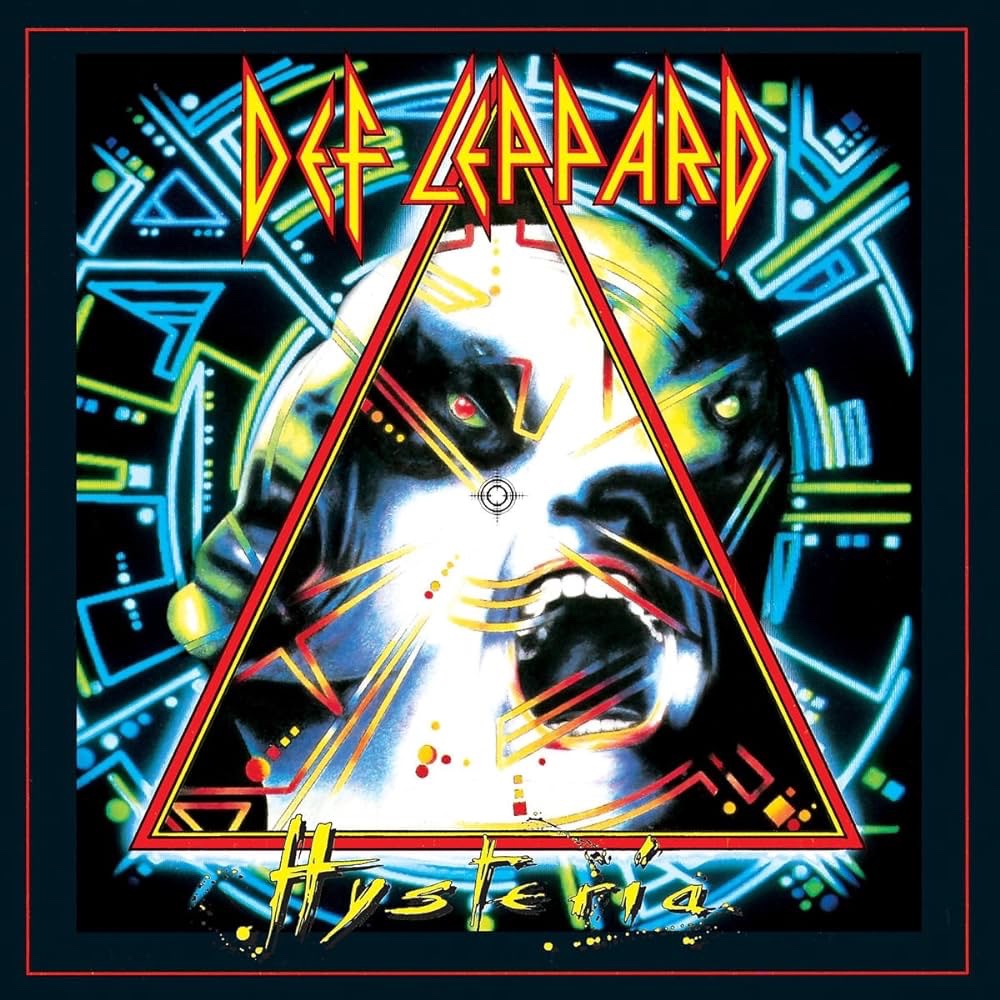
2. Def Leppard – Hysteria
After my mom confirmed her daughter’s bizarre interest in hair metal by giving her a Bon Jovi tape, she passed down even more of her and my sister’s music. Among the albums I received was Hysteria by Def Leppard. I was never as obsessed with Def Leppard as I was with Bon Jovi (and no one was as obsessed with Bon Jovi as me), but they still ranked high on my list of bands for that era. I loved the melodic nature of their music. You’d have this big, in-your-face chorus followed by some of the most captivating melodies. “Animal” is a great example of that.
My favorite from this album is “Run Riot,” which has the singability that I enjoy in a song. And the harmonies are glorious, owing in part to the amazing production of Robert John “Mutt” Lange, one of my favorite producers of all time. He knew just how to layer vocals and really create a lush soundscape with them. And speaking of Mr. Lange, he had a pretty big hand in the third album on my list as well.
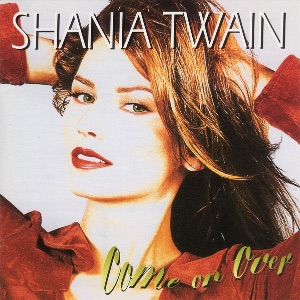
3. Shania Twain – Come On Over
Before there was Bon Jovi, there was Shania.
Shania Twain was my idol. I loved her so much as a toddler. My own mother would get jealous because I’d draw pictures of Shania and not her (sorry Mom). I wanted a horse because I saw a picture of Shania with a horse. And of course, I listened to this album on repeat. I’m shocked I didn’t wear out the tape!
It would be easier to name the songs that weren’t bops on this album, because nearly all of them slap. (Wasn’t a huge fan of the title track, but everything else is a gem.) My burgeoning sense of humor really appreciated “That Don’t And Impress Me Much,” and I’d often quote it. “So what, you think you’re Elvis or something?” “Black Eyes, Blue Tears” was another favorite, albeit a pretty dark song for a three-year-old to truly grasp (it’s about domestic abuse). I loved the use of the talk box (again!) on it. And of course, Mutt’s penchant for strong harmonies is all over this album — he was the producer (and Shania’s husband), after all.
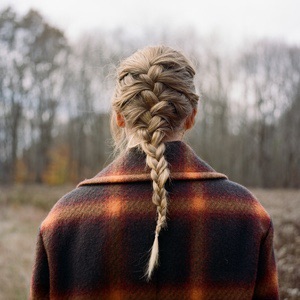
4. Taylor Swift – evermore
I’m skipping ahead quite a bit chronologically, but Taylor felt natural to bring up next. After all, Shania walked so Taylor could run. evermore came during the pandemic, when everyone was in a weird place already. Its sister album, folklore, was released less than five months prior, but aside from “this is me trying” (my neurodivergent millennial burnout anthem), none of the songs on that release resonated with me as much as the songs on evermore. Something about evermore just hit me hard.
Nothing comes close to the heartbreak of “tolerate it” or “happiness,” and the sweet tribute to Swift’s late grandmother, “marjorie,” is sure to leave you weeping, especially when the long-deceased woman’s ethereal voice echoes throughout the end of the song. One of my favorite bands, HAIM, features on “no body, no crime,” the catchiest murder ballad since The Chicks’ infamous “Goodbye Earl.” I’m also rather fond of “ivy,” with lyrics telling the story of a married woman’s tryst with another person who I am convinced is another woman. (She never said the song was autobiographical. I’m not a Gaylor, I swear.)
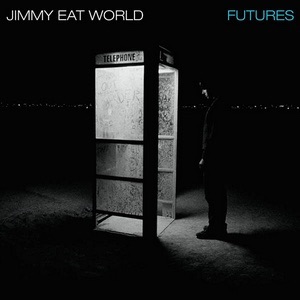
5. Jimmy Eat World – Futures
Confession: prior to about 2009, I didn’t listen to modern music. Anything made before 2000 didn’t really appeal to me, which meant I missed out on all the good emo bands. But a good friend’s then-husband was cleaning out his house and had a stack of CDs to give me, and Futures was among them. I remember the first time I listened to it en route to Chicago for a marching band field trip. I was absolutely blown away. The music, the lyrics, the entire vibe of the album — it completely flipped my perspective on 21st century music. Suddenly, I had a thirst for discovering other alternative and emo bands, which lead me to artists like Brand New, Weezer, and the neon pop-punk bands of the late 2000s.
The album itself is almost a concept album of sorts, dealing with addiction and longing. I couldn’t yet relate to the addiction part, although that would come later on in my personal story. But the longing was something I related to as an angsty teenager. I could listen to songs like “Kill” and “The World You Love” and cry about the fact that Dylan Martin from my church’s youth group would never love me back. I still love this album though, and Dylan and I are good friends now, so it all worked out in the end.
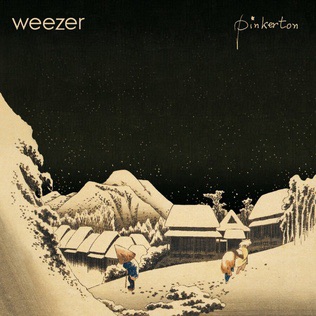
6. Weezer – Pinkerton
In making this list, I nearly forgot about Pinkerton. I’m sure Rivers Cuomo would rather me forget about it, as he was famously embarrassed of it. But it was a crucial part of my lovesick, sexually frustrated teen years. Looking back, the album is essentially Incel: The Musical, but I related to the lyrics quite a bit at the time, as someone who often found myself falling for guys who were less than interested in me. The songwriting on this album made me feel less alone.
“Why Bother” could have been the theme song to my failed teenage crushes. “Why bother, it’s gonna hurt me; it’s gonna kill when you desert me.” And the simple acoustic track “Butterfly” is possibly one of the most beautiful songs ever written. It evokes the image of catching a butterfly only to watch it wither in captivity. It’s a poignant metaphor for holding onto a love that is ultimately bad for the other person. Sometimes it’s better to let go, which was a painful lesson for me to learn. Rivers was there too, and that’s why I love Pinkerton. It’s so real and raw in the way it handles interpersonal relationships.
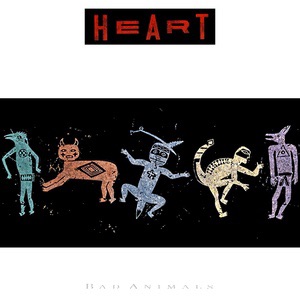
7. Heart – Bad Animals
This was another cassette tape given to me by my mom, who I credit for my taste in music. I remembered hearing Carrie Underwood cover “Alone” as part of an American Idol performance, and my dear mother was like “You’ve got to hear the original.” She pulled out this tape and my mind was instantaneously blown. I’d never heard a voice like Ann Wilson’s in my life. The sheer power behind her vocals gave me shivers. And to learn that the rhythm guitarist of the band was also a woman — that changed everything for me. It was the first time I’d seen another female guitarist. Suddenly, I had someone to look up to in music who looked like me! Representation frickin’ matters.
“Alone” is obviously the standout track from this album, the power ballad that made me fall in love with power ballads. I recorded the music video onto a tape, which my autistic ass watched every single morning before school. I wanted to be like the Ann and Nancy Wilson. They were so beautiful and talented and effortlessly cool, unlike me at the time. I’m not as famous as the Wilson sisters, and I probably never will be, but I’d like to think I made that little girl proud. I’m certain the sheer amount of comparisons I get to Ann Wilson whenever I sing Heart at karaoke would make younger me beyond happy, and that’s what matters.
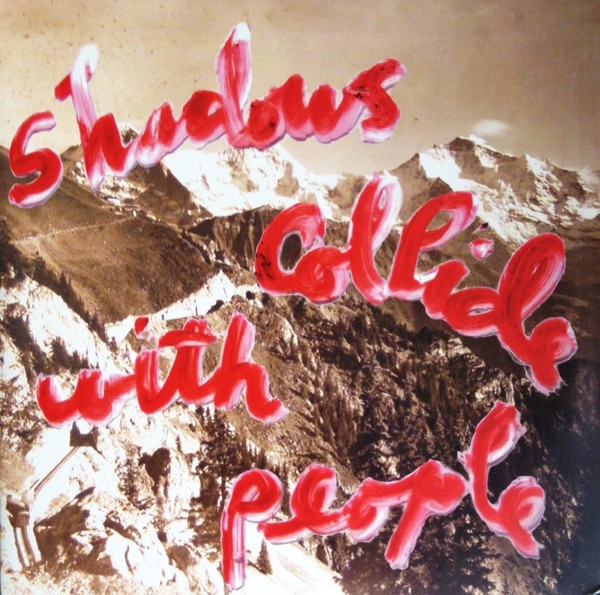
8. John Frusciante – Shadows Collide With People
I’ll admit I was a little torn between including this album versus one of the Red Hot Chili Peppers albums that has influenced me. I discovered John Frusciante through his work with RHCP — I still remember hearing “Dosed” from their album By The Way for the first time and being mesmerized by the beautiful guitar work. It made me want to further explore Frusciante’s work, which lead me to this particular solo album, which I found in a record store or a Goodwill or somewhere. I don’t remember exactly how I happened upon it, but it was quite serendipitous that I did. It ended up becoming my favorite album of all time, carrying me through one of the hardest years of my life.
“Carvel” is an absolute gem of an opener and the reason I pestered my old band to buy me a Carvel cake while we were on tour. The “Carvel cake” in the song is meant to represent drugs, and as someone who very nearly averted an addiction to alcohol, I found myself relating to a lot of the lyrics. The instrumental tracks on the album are eerie and unsettling in the best way, and the ending track, “The Slaughter,” is one of my favorite songs of all time, closing the album on an optimistic note. “I know my pain’s a life away,” Frusciante croons, and I feel it. The worst is over.
9. Chappell Roan – The Rise and Fall of a Midwest Princess
This is easily the most recent album on this list, as Chappell Roan’s meteoric rise to fame was only within the past few months. But this album gives me so much hope for the future of pop music. I was in a musical rut for a long time, and I was starting to become worried that, like many thirtysomethings, my taste in music had solidified. I wasn’t sure if it was my getting older or new music getting more boring that made me give up on discovering new artists. After all, I remember going to karaoke at a bar full of Gen Z college students, and their song choices were decidedly overwhelmingly subdued. The younger generation grew up on the likes of Lorde and Billie Eilish, who, while very talented, mostly make bummers, not bangers. What we needed was someone to inject pop music with a bit of fun. What we needed was a femininomenon.
I have a hard time picking one or two favorites from this album chiefly because they’re all incredible. “Casual” is ethereal and heartbreaking, culminating in Chappell screaming at her would-be lover “You can go to hell!” in the final line. The sheer passion in that delivery gave me goosebumps the first time I heard it. And the horny lesbian anthem “Red Wine Supernova” is an obvious standout, with candid lyrics and witty references to “wands” and “rabbits” (if you know, you know). It’s such a bop, even Melissa Etheridge referenced it at one of her recent shows. Melissa walked so Chappell could run.
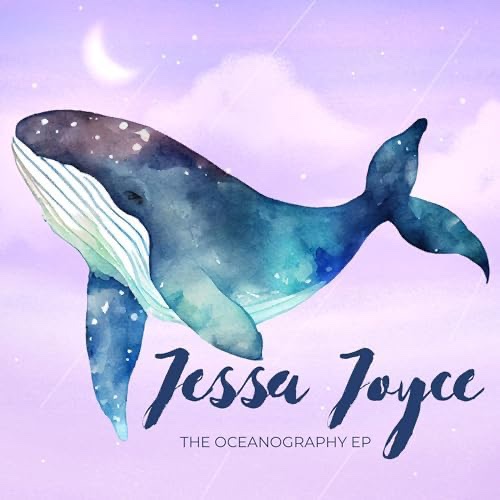
10. Jessa Joyce – The Oceanography EP
And finally…me! It’s probably an unusual choice to put your own album on a list of albums that changed your life, but I can’t think of an album that changed my life more. Sure, it didn’t take off or become as successful as I would have liked, but it proved to me that I could do it. I could record an album! My 2013 spring break was spent locked in my office at the newspaper I worked for at the time, utilizing the Mac desktops there for the GarageBand feature. I had a shitty Blue Snowball mic and a whole lot of caffeine and nicotine in my system (as I hadn’t yet been diagnosed with ADHD and that was my form of self-medication). It was released to Bandcamp with little fanfare, but I felt accomplished. Ten years later, using the knowledge I’d built up about music production and improved equipment (and Adderall), I re-recorded the entire project and released it to Spotify and, well, everywhere else.
“Oceanography” was a song about my longing for a particular guitar-playing guy to like me. It’s about that feeling of wanting to know everything about someone because you’re just that fascinated by them. The folksy “Smiles & Anchors” was dedicated to another guitarist, the title of the song taking its name from his band. The angsty alt-rock “Off the Deep End” was about a completely different guitarist and how I shouldn’t like him, and “Song of the Sea” was about a breakup with a fourth guitarist whom I dated in college. The album could have been called Songs About Guys Who Play Guitar Better Than Me. But they’re all part of my story, and I still love the songs to death, even if those guys aren’t in my life anymore. That’s the beauty of music I think. It’s a snapshot of a time in your life, and Oceanography represents so much of my history. That’s why it’s on this list. I am who I am today because of my lived experiences, and songwriting is my humble way of documenting those experiences. It’s my way of screaming into the void — I was here. Isn’t that what music is all about?
I feel like everyone has their “one that got away,” be it a love interest or a lost friend or missed opportunity. For me, it’s music therapy.
I’ve written extensively on here about my journey through the music therapy program at Eastern Michigan University and the subsequent disaster that was my internship in Fort Wayne. The internship was traumatic in a lot of ways and really disillusioned me to the world of music therapy. It’s still a raw wound, if I’m honest.
Tonight, I broke down. I don’t know what my direction in life is anymore. I found myself excited at the prospect of working in a factory. Just like my dad before me. I know he wanted better for me. He wanted me to get that master’s, get that doctorate, and never have to set foot in a factory. He envisioned an easier life for me. He wanted me to break out of the blue-collar trap my family has been stuck in for generations. He believed in me so hard, he stayed alive to see me graduate.
Now, it’s hard to believe I’ll ever be cut out for anything aside from menial physical labor. I feel like this is my destiny. I’ve perished any dreams of becoming a music therapist, or a professor, or anything else to be honest. I’ll be lucky if I make enough money to have a family of my own someday.
I feel like the title of “failed music therapist” will haunt me forever, like a scarlet letter. I have this vision of me on my death bed, awaiting the end, and some well-intentioned nurse who knows I was a musician in a past life sends in a music therapist to comfort me. But I won’t be comforted. Instead, it’ll rip open the same wound that pains me now. I hate this for me. I don’t want to live with regrets, but I feel like I have no other choice. Music therapy has been ruined forever for me.
I’m tearing up at the gym writing this. That’s where I work now, and while it’s not a glamorous or esteemed position (and the pay is abysmal), there are perks. Just now, one of my regulars snuck up on me to startle me, and we had a good chat. I think talking to me makes her day — she takes care of her dad all day and seems lonely. Maybe that’s the best I can do, just try to bring a little light to wherever I end up working. Maybe someday I’ll bring in my guitar and serenade people as they come in, I don’t know. Maybe music therapy didn’t work out because something else will, and this entire thing will no longer eat at me. Maybe my cover of Chappell Roan’s “Good Luck, Babe!” will take off and catapult me to rock stardom, or at least allow me to make enough money from my music to have a decent enough life.
I have nothing left but this reckless optimism that won’t fucking die. And that’s gotta count for something.





 JESSA JOYCE