
“Eccentric.”
That was the word my older sister used to describe me when I was struggling as a child to fit in. Not necessarily wrong or bad. Just eccentric.
I supposed she was right, although I wanted so badly to hide it. My social skills were admittedly lacking. People, especially kids my own age, were a strange anomaly to me. I wanted so badly to connect, but it was as if a brick wall stood between me and them. Despite my lack of friends, there were things I sought solace in, primarily things I obsessed over. Things like Bon Jovi, Pokemon, birds, and whatever else I could learn as much about as humanly possible and further alienate myself from my peers.
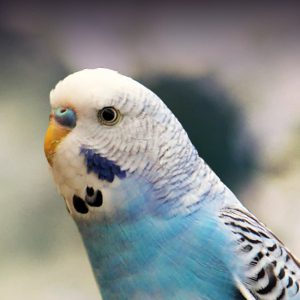
My nickname was “Tweety Bird.” It was absolutely not an affectionate nickname.
This is all textbook Asperger’s, looking back, but the idea that I was on the spectrum at all didn’t enter my mind until I was well into my teen years. The therapist I’d had at age 13 had mentioned the possibility to my mother, but I don’t recall her ever telling me for several years. And why would she? Back then, “autism” was even more of a dirty word than it is now. Why supply the kids who gave me hell in elementary and middle school even more fodder?
A few days ago, this popped up on my Facebook feed.

Credit: Hvppyhands
This comic hit me hard. I slipped through the cracks as a kid because I got good grades and didn’t cause any issues in the classroom, but no one ever bothered to address my difficulties relating to others and making friends.
You see, when you’re on the spectrum, you’re often forced to “mask” the quirks that make you, well, you. You’re a square in a circle world, and you better believe that world is going to hammer your edges hard until you barely resemble the shape you began as. I remember when I first became aware of my own weirdness, somewhere around seventh grade. The stereotypical teen dilemma. I had a crush on a boy, and a popular one at that. I observed the way his friends acted and dressed and tried my hardest to emulate that. Gone were the clothes I felt comfortable in, and I put away the childish things I was obsessed with in favor of more typical interests. It got easier in high school. I was lucky enough to come of age at a time when the “manic pixie dream girl” type was trendy, so suddenly it became “cute” to be the weird girl. It took me a while to learn to pass as “normal,” but I became damn good at it. By senior year, I was class president and colorguard captain, but I still felt like I was concealing parts of myself.
That’s one of many reasons why autism is so hard to detect in adulthood — you’ve had all these years to learn how to mask these quirks. By the time you ask your current therapist about it, you’re met with a shrug. You might be some variety of autistic, but it doesn’t affect your life, so why bother getting a proper diagnosis? You’ve held down a job, you’ve had relationships — hell, you’ve been married! You’re not a “true” Aspie. And to be honest, this hurts. Your identity is entirely invalidated by the hammers that smushed in your edges to make you a socially acceptable circle. Or perhaps hexagon, because you know you’ll never be the perfect little circle everyone expects you to be. No matter how well you pass, you’ll always feel “other.”
That’s why I want to be more vocal about my experiences with Asperger’s and being on the autism spectrum, “proper” diagnosis or not. Because someday, some little girl not unlike my younger self might read this and realize that she doesn’t need to change herself for anyone.
It’s okay to be eccentric.


This is so well-written and I find this so relatable. Thanks for putting it out into words. 🙂
LikeLike