
We Need Each Other

I’m starting to really appreciate the concept of community.

You see, I realized something recently — up until last year, my wife Crass and didn’t really have a community of our own. We had a few friends, even a few ride-or-dies, but no village, so to speak. And every night was the same — we’d get home from work, sit on the couch, and veg out until we inevitably got tired enough to sleep. It was a life, but it didn’t feel like living. It felt like we were just wasting time until the sweet release of death.

“I heard you were desperate for friends.”

I think things started to change for us when I met my girlfriend (we’re polyamorous, to clarify). We actually met at a Valentine’s Day event that I was hesitant to even go to because I wouldn’t know anyone there. But I met Olivia, and she had this contagious energy about her. As I found out, she loved going to things like art shows and open mics and festivals, and I found myself following her to those types of events. Suddenly, I was doing more than just working. I was living.

But karaoke was the catalyst that led to the life I know now. When we first went to Fort Wayne for my ill-fated internship, Crass suggested checking out the local gay bar the first week. Which was very uncharacteristic of her, an introvert, but I think she was feeling what I was feeling at the time. Restless.

It was at the gay bar that we met the first karaoke crew. There was Kyli, feisty and charismatic, and Theo, her calmer (albeit very silly) best friend, and their pal Zariel, a big lovable goofball who could sing “Poison” by Bell Biv DeVoe like no one’s business. They were so quick to welcome us into their world. We started going on all kinds of adventures around town, and despite the internship falling through, I don’t regret a thing because of the people I met there.

As I’ve started to say, the real music therapy degree was the friends we made along the way.

I’ll admit it sucked moving away from them (which was the only part that sucked about leaving Indiana, where no one should be). We’d finally found a tribe to call our own, only to lose them almost immediately. But we had to do what we had to do, and that involved moving to Kalamazoo, where the universe had been leading us for years. I started to worry if we’d find our people in this town. It was a college town after all, and we skewed a little older than college age. Were we doomed to be lonely again?

Then Crass threw out the same suggestion that seemed to work in Fort Wayne — let’s check out the local karaoke scene.

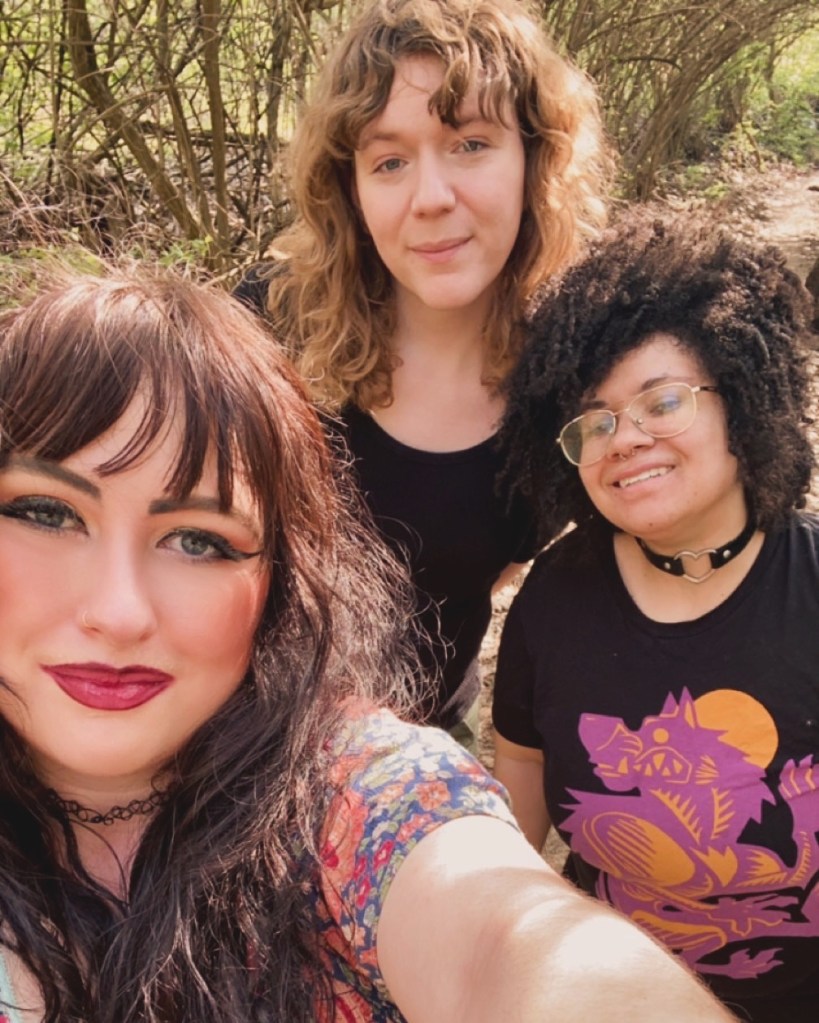
That first night, we met so many fantastic people (and one awful person), and we were hooked. From then on, every Friday, we’d gather at Old Dog Tavern downtown and sing our hearts out. There was Steve and Luke and David, the three most wholesome white cis dudes you’ll meet this side of Mister Rogers (but with a lot more marijuana). There was Mary Emma, a beautiful and confident slightly older queer woman who quickly became someone I could look up to. There was Clara, a kind statuesque blonde bartender who could quite possibly out-belt Aretha herself. There was Kim, who admittedly sucked, but they can’t all be winners I guess. The karaoke scene had so many colorful characters, and I loved getting to build relationships with all of them (except Kim, cause fuck Kim).

They say no man is an island, and it takes a village to raise a child. I’m sure those proverbs extend to women and nonbinary folk as well. I don’t often quote from the Bible on here anymore because I know spirituality can be a touchy subject, especially with our current political climate, and I don’t want to alienate any of my readers. Still, there’s a few verses from my favorite emo song — ahem, Biblical book — Ecclesiastes, that describes this phenomenon perfectly.

Two are better than one,
    because they have a good return for their labor:
If either of them falls down,
    one can help the other up.
But pity anyone who falls
    and has no one to help them up.
Also, if two lie down together, they will keep warm.
    But how can one keep warm alone?
Though one may be overpowered,
    two can defend themselves.
A cord of three strands is not quickly broken.

-Ecclesiastes 4:9-12

I’ll leave y’all with this, and I promise it’ll all come together. When I married my ex-husband, it was a shotgun affair because of his faith, so I didn’t know a lot about him, like the fact that dancing is prohibited in his aforementioned faith. No one told me that until the reception. I was pissed. All I wanted since I was a kid was a fun session I could dance at with all my friends and family! I honestly should have been more of a bitch about it than I was.

I shoulda gave Bridezillas a run for their money.

Anyways, that marriage obviously failed, and when I remarried my current spouse, we had a small, intimate (also shotgun) ceremony that lasted all of ten minutes. So I never got my wedding dances.

As I mentioned in a different post, Olivia and I are engaged-ish. We can’t legally marry, but we can have one hell of a commitment ceremony to make up for it. And when one of my new friends found out about the disaster that was my first wedding, he offered to rally the karaoke crew together to raise funds for a ceremony for me and Olivia, one we could really dance at. It was enough to almost make me tear up. Not just the idea of finally getting to dance, but the idea of all my friends coming together to help us.

I have a community now.

Things aren’t great at the moment, and it has been weighing on me quite a bit if I’m honest. I don’t know what’s going to happen in the next few years. The Trump administration already removed the T from “LGBTQ,” which does not give me warm fuzzies about the future of us queer folks in this country. Will I be rounded up and imprisoned or worse for loving another woman? I don’t know yet, and it’s scary. But I’m not going into battle alone. I’ve got so many good people in my corner now, and I have no doubt in my mind every single one of them would fight for me if it came down to it.

Community is going to be what saves this country. More than ever, we need each other.

My Strange Addiction: Watching People Suck

Oh hey, a prompt.

How do you waste the most time every day?

I have a confession: I’m fascinated by the worst people. It’s probably detrimental to my mental health, but I often find myself looking in the comments section of absolute cesspools on the internet for hours on end.

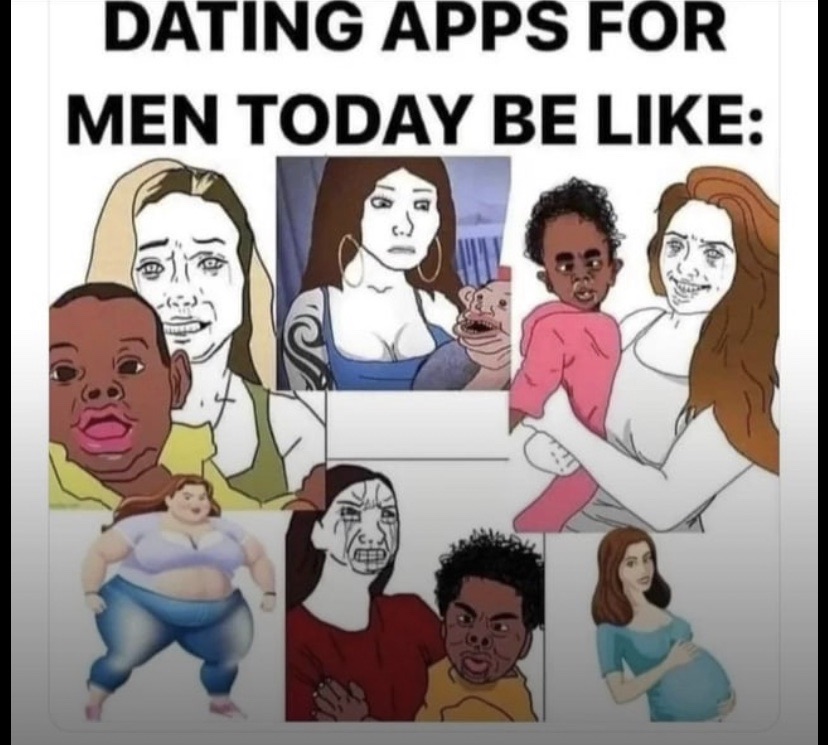
In my more naive years, I’d often debate people like this. I’d craft some well-written argument about how yes, trans folks are valid, gay folks should have a right to be with who they please, and black folks should, ya know, exist. This is usually followed by guys with profile pictures that look like a frostbitten toe laugh reacting the post to hell. I’ve since stopped because it’s no use arguing with people who look like this:

Apologies to this man for using him as an example but like, do better bro.

I consider it a matter of knowing my enemy. I want to know what these asshats’ talking points are so I can watch for signs of that shit in everyday conversation. The second someone brings up TERF rhetoric or starts talking about how we need a “straight white pride” month, I know to run in the opposite direction as fast as humanly possible. But also, it’s just kind of fascinating to me. Like, what leads a person to that level of hate? What makes one devolve into posting bullshit like this?

Ahh yes, the worst thing a woman can be, the mother to a biracial child.

It costs zero dollars to not suck. Imagine if people just minded their own business and didn’t brigade random people’s posts because they shared a picture of a queer person having fun? The other day, I had to put one of my own posts on private because it kept getting shared to hate groups. Like, why though? What are people getting out of this? I wasn’t even that mad — haters make me famous and all that — but the notifications were annoying as hell, and I was tired of seeing Greg’s thumb-looking ass popping up on my feed every few minutes.

I guess to me, it’s a reminder of what I fight for everyday. I use my platform on here to humanize the queer experience. I realize a lot of these folks have probably never met someone who isn’t exactly like them. I was similar when I first went off to university. I repeated the whole “Adam and Eve, not Adam and Steve” BS because my high school friends would say it — God knows I’d never admit to being bisexual in front of them. But a funny thing happened when I moved to my college town. I met other queer folks and even came to terms with my own queerness, and I changed. But these people have never left their hometowns. They’re in a white, cishet circle-jerk forever, and it’s actually pretty sad. There’s a lot of beauty in human diversity and the way we connect with one another. We’re just people, and we want to live and love too.

Imagine seeing something this precious and being like “wow, I hope they all die.”

I should probably cut back on my “patrolling” these ugly spaces though. Even reporting doesn’t do any good — the comments never get taken down (thanks, Zucc!). Maybe I should look more toward the beautiful things in life and focus my energies there instead. Even the Bible says so:

Finally, brothers and sisters, whatever is true, whatever is noble, whatever is right, whatever is pure, whatever is lovely, whatever is admirable—if anything is excellent or praiseworthy—think about such things.

-Philippians 4:8

Hmm, maybe the Good Book is onto something.

Dear Cadence, Part Thirteen: Stand Up For What You Believe In

This is the latest installment in my memoir project, written as a series of letters to my future daughter. Here are the previous entries: Part One, Part Two, Part Three, Part Four, Part Five, Part Six, Part Seven, Part Eight, Part Nine, Part Ten, Part Eleven, and Part Twelve

While I was still married to Josh, the church we attended was a huge part of our daily lives. We were so immersed in the life of that church, we didn’t do much outside of it. I cut out most of my friends who didn’t attend, not intentionally for what it’s worth, but I felt I didn’t relate to those friends anymore. I even stopped talking to your mom as much, despite her being my best friend. She never as much as saw the inside of our condo.

But the church wasn’t perfect. I knew about its political leanings before I jumped back in, having been Facebook friends with many of its attendees. Many were diehard conservatives who’d eventually drink the Trump Kool-aid, some even progressing to QAnon conspiracies and the like. And most mourned the day gay marriage was legalized, which rubbed me the wrong way. But Jesus was bigger than petty politics, right? He didn’t care if I voted for Bernie Sanders, even if the pastor’s kid gave me the side-eye for it. This church was where I felt the most connected to Him, and that was what mattered most, I thought.

There was a small collective of progressive folks, mostly other musicians in the worship team. After playing, we’d sit in the break room and eat our breakfast, discussing whatever off-color joke about “those libruls” was said during service that morning. We were renegades in the sense that we didn’t adhere to absolutely everything the pastor taught, which was scandalous for a church that emphasized that their way was the “right” way and no other path was valid. We did wild things like have gay friends and believe in universal healthcare. Josh was a fringe part of this group — I think he had trouble letting go of the teachings of his family, which were even more reactionary than that of the church, if that can be believed. At least the church played rock music.

But for the most part, there wasn’t any tension between us and the rest of the church. We were able to coexist peacefully. In fact, politics and social issues were seldom brought up. There’s an insidious kind of evangelical church that preaches acceptance for all, that puts on a pair of hipster skinny jeans and plays guitar and pretends to be young and relevant, but as soon as you’re comfortable within the culture of the congregation, smacks you over the head with the classic line —“love the sinner, hate the sin.” Which is almost always directed at queer folks, mind you. But as long as no one brought up gay and trans rights, it was never addressed.

Until one Saturday evening service, that is.

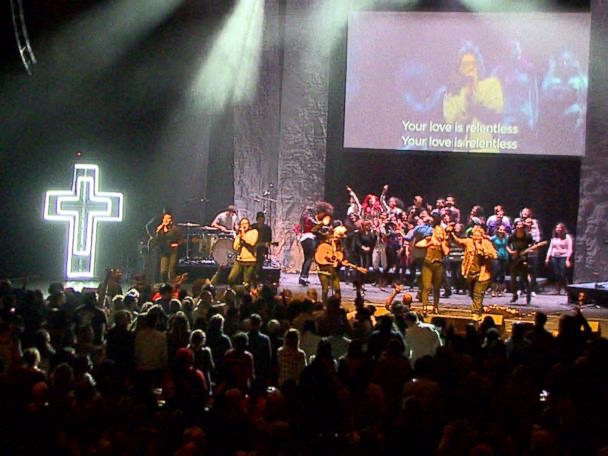
I still remember the burn of the stage lights beating down on my face, the way my guitar felt in my hands, and the sound of the pastor’s voice as he announced it. 

A conversion therapy class for teenage girls.

I thought I was going to be sick. I should have stormed off the stage. I should have made a scene. I should have stood up and told him, in front of the entire congregation, that what he was doing was fucked up. But I didn’t. I stood there like a good little sheep and did jack shit about it. But I knew the storm was coming. 

And as expected, word got out that my church was hosting such a class. And people were rightfully furious. Like, “protesting in front of the church” furious. Here I was caught between these two worlds, the church I’d dedicated my life to serving and what I knew in my heart was right. I didn’t know what to do. I didn’t think these people I was serving alongside were evil, but they were doing something that was unequivocally evil. Love the sinner, hate the sin, as they always said, right? But I wanted to make a stand somehow. I had to show these girls I was on their side. That I was one of them.

So I came out. Publicly. For the first time ever.

Reactions were mixed. Most people weren’t surprised to hear I was pansexual — I’d already had a pretty homoerotic relationship with your mom. There was some pushback from the church elders, and the pastor cornered me to tell me how I was so wrong. I didn’t care. The blatant homophobia of the church should have pushed me further into the closet, but instead, it emboldened me to live more authentically.

I stayed at that church for a few more weeks, praying I could change it from the inside, but you gotta know when you’re fighting a losing battle. These people were stuck in their ways. As much as I hated to admit it, as much as I hoped their so-called love of Christ would soften their hearts, there was no saving them. So I left. I found a church out where I worked that accepted me — all of me. Most of the other secret progressives trickled out as well, finding affirming churches or abandoning religion altogether. I couldn’t blame them, for if my faith was any weaker than it was, I probably would have done the same. But I stayed strong in my belief that there is a God, and that He loves wildly, without conditions, and without prejudice.

In a weird way, I’m glad my old church showed its true colors the way it did, because it gave me the push I needed to stop lying to myself and everyone else about my sexuality. Had things continued the way they were, I would have never left, and I would have never come out, and I would have never married your mom or fallen in love with Olivia (I’m not sure what parental title she has yet, but she likely helped me create you, which is really cool!). I am where I am now because I took a stand. My only regret is not walking off that damn stage when I had a chance. I hope when you’re faced with prejudice, you’ll be even stronger than I was. Walk off the stage. Throw a fit. Make a scene. Let the world know that shit doesn’t fly. I pray you have courage where I didn’t.

Sunday Morning Coffee: Love and Fear

It’s been three days since my last argument with a Facebook asshole about LGBTQ stuff, and I’m still simmering from it. I think I let things like that affect me way more than I should. Maybe I really am a bleeding heart hippie.

Can’t we all just sing “Kum-Ba-Yah” together?

It’s not easy for me to sit back and just take it when randos are slinging homophobic/transphobic slurs, suicide jokes, and even pedophilia accusations against you and your favorite people. Why are some folks so eager to say disgusting, slanderous things about entire groups of people they don’t even know? It literally baffles me — I can’t wrap my mind around it. I wouldn’t say things remotely as heinous against strangers I simply don’t agree with. My momma raised me better than that.

I’m tempted to call these people evil, but I won’t. I will call it as I see it — their actions are evil —-but to borrow a phrase so often weaponized against the queer community, “love the sinner, hate the sin.” You see, the opposite of love isn’t hate. It’s fear. And these people are lashing out like scared dogs at things they don’t understand.

The Bible itself says “There is no fear in love, but perfect love casts out fear” (1 John 4:18). When you don’t understand something, the human tendency is to fear it. And often, that fear becomes hate. When I was a kid, I was afraid of the dark because I didn’t know what was hiding in it. I hated being in the dark for that reason. But the dark was never bad — I just didn’t understand it.

I think these people who blindly hate those who are unlike them simply don’t know love. I understand that many people didn’t have a lot of love growing up — maybe their families were abusive, or perhaps they were bullied. That will lead to a life of fear, and a life of fear is a life of hate. The antidote is love.

Whenever I see transphobic memes online, I think of my girlfriend Olivia. I can’t wrap my mind around how anyone could possibly hate her. But they don’t know her like I know her, because to know her is to love her. I wish everyone had an Olivia to show them what love means.

So instead of letting fear win, let love in. Show love wildly, recklessly, with no remorse. Love your enemies. Love the people who persecute you. Love the people who call you names or make nasty accusations or tell you to kill yourself.

Love like Jesus did.

Sunday Morning Coffee: Sometimes You Gotta Flip a Table

Welcome to my inaugural Sunday morning coffee, where I take a spiritual lesson I’m learning and share it for everyone. I’m not going to pretend I’m this enlightened guru or pastor — I’m just a random weirdo with a blog who likes to write about this kind of stuff. But I feel like I can bring an interesting perspective to the metaphorical table when it comes to scripture, spirituality, and the like, being a queer eclectic Christian married to a mostly agnostic Jewish woman.

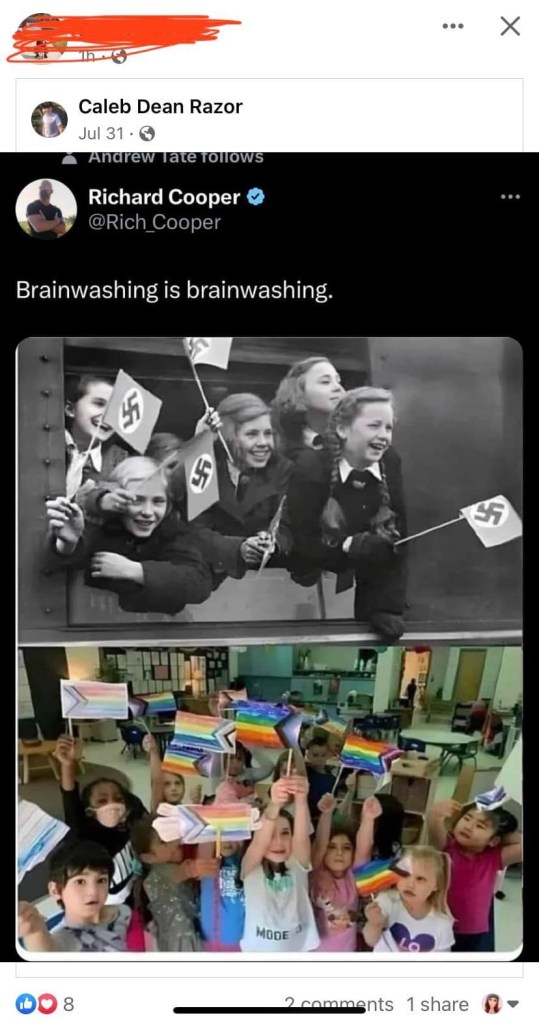
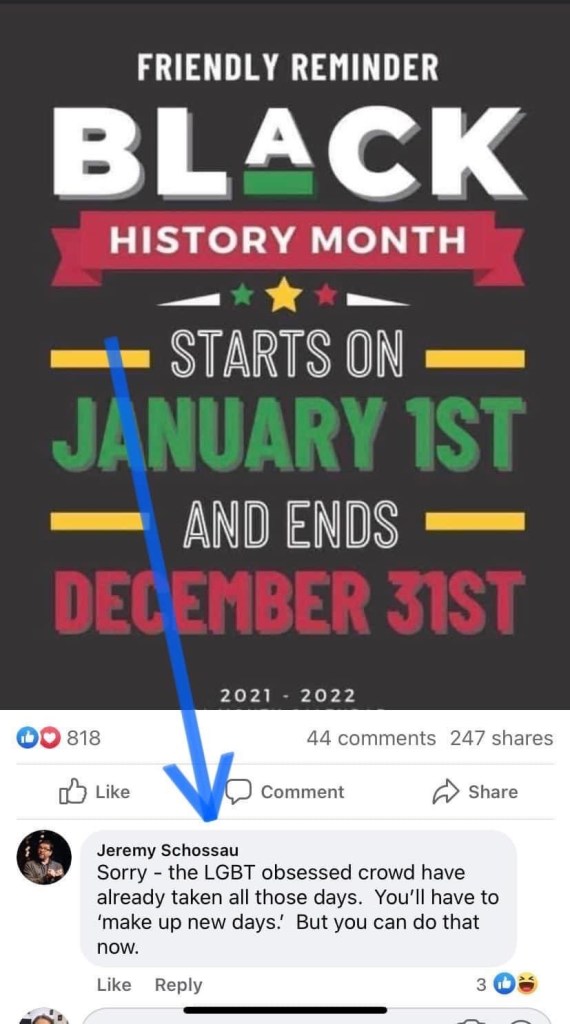
So I was doomscrolling through my Facebook updates when I noticed a friend posted this:

I don’t even have a witty caption for this.

To say I was livid would be an understatement. My blood is still boiling as I type this, and anyone who knows me will tell you I don’t anger easily. To compare my right and my loved ones’ rights to simply exist as ourselves to the most heinous crime against humanity is fucking disgusting and nearly irredeemable in my eyes. And then I clicked on this so-called friend’s profile. He was a Christian?! This man is claiming the name of Christ while posting shit like this? Nothing short of sickening.

What does the heart of God say about anger? It’s easy to fall back on the “seven deadly sins” as a measure of what’s right and what’s wrong, and wrath is right there in that list. But anger isn’t necessarily wrath. When our rage is directed toward something totally justified, we call it righteous anger. In Matthew 21, Jesus Himself demonstrates this.

Jesus entered the temple courts and drove out all who were buying and selling there. He overturned the tables of the money changers and the benches of those selling doves. “It is written,” he said to them, “‘My house will be called a house of prayer,’ but you are making it ‘a den of robbers.

Matthew 21: 12-13

Maybe we need to start flipping some tables. Maybe we need to start using this anger at how our supposed brothers and sisters in Christ are treating people and cheating people. Maybe we should be calling out posts like the one above when we see them pop up on our timelines. Silence never changed anything. Righteous anger makes us want to speak out for the oppressed and the downtrodden, the “least of these.”

I made the mistake of deleting the person who made that post, because I knew I was going to tear them a new one if I didn’t. But what I should have done was use my anger to call them out, gently but firmly. Anger when unchecked turns into wrath, and things can be said that legitimately hurt others (and hurt our own case in the process). On the other hand, righteous anger, when channeled by a spiritually mature person, can be used for good. Open discussions, engage in debates, and let people see the light of Christ through you. If you have to flip some tables, flip those tables, but remember the person behind them. They’re broken too.

Silent in the Face of Oppression: What I Would Have Done Differently

Write about a time when you didn’t take action but wish you had. What would you do differently?

The platform I use to publish this website gives me little daily writing prompts as inspiration. Sometimes I use them immediately, sometimes I save them to write about later (and in all actuality, leave them to languish in my “drafts” for eternity). When this one popped up on my screen, I knew exactly what I needed to write about, because as much as I try to live without regrets, this is one of the few that I still cling to for some reason.

I cut my teeth as a musician and performer in the worship team of the church of my youth. Normally I’d leave it unnamed, but honestly, Metro City Church doesn’t deserve that dignity. Not after the events of this story, at least. I will be honest — my time on the team was an amazing once-in-a-lifetime experience. I had the honor of playing with some of the best musicians I’ve ever met, and on the largest stage I’ve ever played. Imagine a slightly scaled-down version of whatever comes to mind when I say “megachurch,” and that’s basically what we were. A mini Hillsong in the heart of Downriver, with one of the largest congregations in the entire area.

OPEN UP THAT PIT

Every week or so, I’d stand up on that stage and play my heart out for the Lord, which is still one of my favorite ways to connect with the divine. Giving credit where credit is due, I think Metro lit a fire for music and worship in me that still burns to this day. In fact, I still play in my current church’s worship band every now and then. But playing on Metro’s stage was nothing short of amazing. We had all the lights, fog machines, a state-of-the-art audio system, we had in-ear monitors for Christ’s sake (literally!). My point is, for all the smack I’m about to talk when it comes to this church, they did do something right, and that something was music.

The downside was that the church’s politics leaned a bit further right than I would have liked, but in the pre-Trump days, this was easy enough to ignore. Like, I’d get the occasional unprompted “ew, you like Bernie Sanders?” from the pastor or his kid, along with a lecture on why Bernie Sanders sucks. Again, this was entirely unprompted — it’s not like I was wearing a Bernie Sanders shirt, or had a Bernie Sanders sticker on my guitar case, or even brought up Bernie Sanders in conversation, ever. They just knew I was one of the small tribe of progressives, mostly fellow musicians who’d giggle irreverently at the post-worship breakfast about sappy “pro-life” messages or whatever subtle jab the lead pastor decided to throw at the libs that day.

For the most part, though, I could look past it. Sure, the church supported anti-choice measures and preached the dreaded “love the sinner, hate the sin” message when it came to the queer community, but these topics came up so rarely that I didn’t mind. Metro was one of those insidious religious institutions that disguised itself as a “come as you are” church, welcoming everyone and trying to cast as broad a net as possible, as to not alienate anyone. But beneath the surface, those ideologies still lurked. I know way too many gay/trans folks who were duped into feeling safe at Metro, only to get hit with a nonchalant homophobic or transphobic quip from a member of the congregation.

“Adam and Eve, not Adam and Steve!”

I wasn’t out at the time, and I was married to a male member of the church, so I was marked safe from most of these comments. As far as anyone knew, I was a regular, God-fearing, heterosexual woman. But I knew in my heart I wasn’t straight, not entirely, or even mostly. I had to push down a lot of my gay fee-fees to fit in with the rest of the church, which is why I came out as late in life as I did.

Everything changed in one moment, though.

I still remember the burn of the stage lights and the eyes of the congregation as I stood on the stage, guitar in hand, while the pastor rattled off a list of upcoming events. It wasn’t unusual for him to come up and make announcements between songs like this. But one of the upcoming events he named this time shook me to the core: a conversion therapy class for young women.

Here’s where I should have done everything differently. I should have thrown my guitar down and walked off that stage. Screw subtlety — I absolutely should have made a scene. Instead, I froze. I stood there complacent in my own oppression and complicit in the abuse of these girls.

Thankfully, this was the beginning of the end of my time at Metro. As controversy swept over the church throughout the local (and even national) queer community, I found myself torn between the church I loved, who I thought loved me, and my own gut instinct that this was not fucking okay. I even posted a tone-deaf defense of the church, claiming not all of us were raging homophobes, and my ally friends (rightfully) called me out for trying to defend them at all. I knew I had to do something.

So I came out. In front of everyone. I’m queer. I’m one of those girls. I’m on your side. And I’m so glad I did, because the act of finally admitting it to myself led me to leave a marriage my heart wasn’t in and marry my best friend instead. I left the Metro and never looked back, settling on a truly inclusive Methodist church that practiced what Christ actually taught, instead of the Americanized evangelical crap propagated by hipster megachurches.

But I still wonder what would have happened if I’d walked off the stage that morning. It still eats at me that I was silent in the face of oppression and hate. What does that say about my integrity? I’d like to think I’ve grown exponentially since then. I’d like to think that should I be placed in that situation now, I’d stand up for myself and for those girls. The Bible teaches that real love is laying down one’s life for their friends; the least I could do is lay down my pride (and probably get excommunicated, but as they say, que será será).

I don’t hate Metro, at least not the people there. They’re lost in the sauce just like I was. Love the sinner, hate the sin, as those circles always say, and while I hate what Metro stands for, I know there’s still some decent people there fighting the good fight to make it the loving, affirming safe haven it could be.

Well, maybe if the lead pastor would stop doing this.

Yeah, I’m being too optimistic.

If you enjoy my writing and want to help support me and this site, you can donate via Venmo (@jessjsalisbury) or CashApp ($TheJessaJoyce). Every little bit is greatly appreciated! Thanks for taking the time to read my work, and don’t forget to check back every few days for new content!

Pride & Joy: How God Lead Me INTO Being Queer

Another post I originally shared as a FB status but figured it warranted its own post on here, especially since I haven’t posted on the blog in a minute. It’s been a crazy few weeks of coursework but my classes are over after this upcoming week, so expect more ramblings on here soon!

I see people posting their “I was gay but THEN I FOUND JESUS” testimonies all the time, but never any “I found Jesus but THEN I WAS GAY” testimonies. So allow me to share mine.

I used to attend an evangelical megachurch, first in my teens and again when I reached my lowest low after graduation. I was so broken and jaded I needed somewhere I could call home, and the church of my youth seemed right. I started going back, got deeply involved in the music ministry, and even married a man with an intention of starting a family, because that’s what you were “supposed” to do. But I wasn’t truly happy. I had to drink wine just to make household chores bearable. I had such a bad mental breakdown I had to go to a psychiatric emergency facility. I isolated myself from the people I loved and tried so hard to break my own bones to fit into a box that didn’t feel right to me. Even my own mom saw that I was miserable.

The breaking point came when my church announced a conversion therapy class for teenage girls — while I was standing on the stage about to lead worship. I should have walked off that stage, and I still kick myself for not doing it in the moment. But it planted a seed — something wasn’t right. I started to realize I was one of those girls! I’d been attracted to people of every gender, but I had to crush the parts of me that weren’t straight because I wanted so desperately to fit in and be “normal” by these people’s standards.

I was tired. And so I came out.

I’m so glad I chose to live my truth as a pansexual woman. I ended up leaving the marriage I rushed into for the sake of “staying pure” and married my best friend, who I realized I was in love with the entire time. I have a family of fellow queerdos who are truer friends to me than anyone at that church I left. My blood family even sees how happy I am now and is happy for me! And I didn’t have to leave behind my faith in Christ to embrace my true self — I found an affirming church that accepted me and my gay and trans siblings for who they are.

Being queer and following Christ aren’t mutually exclusive things. My faith is stronger for having been tested. God works all things together for the good of those who love Him, and He truly blessed me with so much. I love who He made me to be, and I’m glad I can finally live in the light.

Feel free to share if my story reaches you in some way. I want the world to know it’s okay not to fit into the mold of American evangelical Christianity. God doesn’t love you any less. You are exactly who He created you to be ❤️

Think of the Children! (An Easter Manifesto)

I originally posted this on my Facebook and Instagram pages (@thejessajoyce, if you’re curious), but I wanted to share this brief little write-up here as well. It’s so important to get this message out there since more often than not, the theoretical future of society and the fight to better it is co-opted by straight, cis, white, non-disabled people in an effort to tear down people who are not like them. I want to present a counter-argument. If all lives truly matter, as many on the political right say, and we must “think of the children,” my future children should be considered as well. There is room for everyone at the table of life, and we need to remember that this Easter.

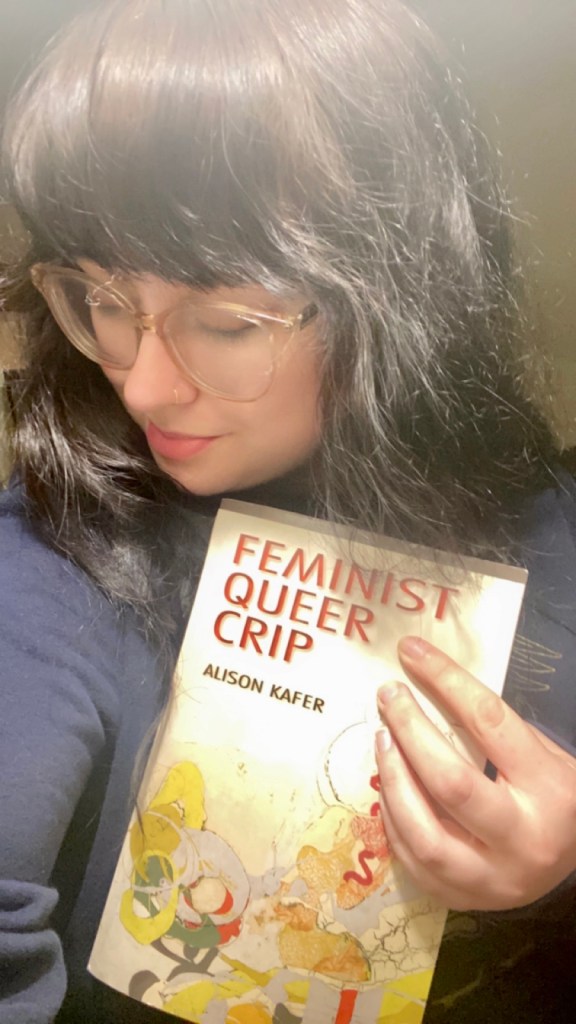
Reading this book (Feminist Queer Crip by Alison Kafer) at the suggestion of one of my favorite professors for my capstone project on autism, and it feels especially poignant in the days of #blacklivesmatter and #SaveTheChildren and #autismawarenessmonth and the recent fight against drag and transgender rights. The first chapter talks a lot about the Child — the personification of the future of society — who is often politicized and weaponized. Think of the children, people say. The image of the Child is more often than not a white cishet non-disabled child born to white cishet non-disabled parents. This Child absolutely matters. But I’m not interested in fighting for him, not because I don’t care about him, but because he already has enough people fighting for his right to exist in peace. Instead, I want to fight for my children.

In a few short years, I’ll likely have a child of my own. That child will likely have a disability of some sort, or rather, a difference that makes it harder to exist in a world that isn’t built for her. Considering my family history, she’ll likely be autistic or ADHD. Depending on our donor, she will likely be at least part black, and she’ll have queer parents who will support her should she eventually come to terms with her own queerness. And guess what? Her life will matter too. She should have a right to exist in peace alongside the theoretical Child described above. I want her to have a future too.

That’s why it’s so important to keep fighting for equality. I feel like it’s important to note that it’s Easter Sunday as I post this. I am a Christian through and through, despite the fact that I don’t “fit” the American Evangelical mold, and I firmly believe that Christ died for EVERYONE. Not just white Americans or straight people or cisgender people or able-bodied and able-minded people. We are all wonderfully made and we all should have a right to inhabit this beautiful planet. This post is a call to prayer and more importantly, a call to action. We need to be a light to this sometimes dark and scary world. We need to keep fighting the good fight.

In Search of the “Genesis Week” and the Innately Human Act of Creation

If you didn’t grow up in the church, the idea of a “Genesis week” is probably foreign to you. If you did grow up in the church, you probably heard it told a zillion times in Sunday school, but maybe never heard it phrased that way. Basically, it’s the creation story of the Abrahamic faiths — God spoke, and in seven days, the universe was formed.

These days, in my post-evangelical philosophy, I don’t believe the world was formed in seven 24-hour days, but over several eras, in accordance to what we now know from scientific discoveries. This ideology is known as old-earth creationism, and seeks to reconcile the concepts of evolution and the text of the holy scriptures. In fact, the Hebrew word for “day,” yom, can mean a period of time, not just 24-hours, which implies the creation “week” was actually millions upon billions of years.

This is tangentially related to the topic at hand, kind of (I hope).

I’ve been a little creatively stifled as of late, mostly owing to my own dumb brain. I’ve been meaning to post the entire first part of my story (not just the intro), but I keep chickening out and not doing it. At the same time, my band is in the midst of recording its debut album, and of course, that’s progressing at a snail’s pace too. I want to write and play music and draw and dance and do all of the things that have been on my heart, but I just can’t seem to shake this mental block.

I revisited Psalm 51, the emo poetry King David wrote after being called out by the prophet Nathan for thinking with his dick. (I need to be a biblical scholar with these descriptions, I swear.) I’ve always related to this passage as someone who’s also slutted too close to the sun and ended up hurting people I care about (although I never, you know, had a dude killed in war so I could sleep with his wife). A lot of the time, when reading through this psalm, I’d reflect on the whole “I suck and need God’s grace” aspect of it, but there’s a sneaky little part that I’ve always overlooked. I discovered it when I switched over to The Message version of the Bible, which is basically the translated scripture disguised as John Mayer lyrics.

God, make a fresh start in me,
shape a Genesis week from the chaos of my life.

-Psalm 51 (MSG)

There it is! The Genesis week!

The intention of this verse, I’m assuming, is that we need God to take a Genesis week to work on us, but my first instinct was to apply this to my own life as well. Do I need a Genesis week — a week (or an entire era) of intense creation?

Humans are innately creative, but I feel like sometimes we suppress that part of ourselves. As children, we were always playing make-believe and acting out stories we made up. The fact that we’re born like this is no accident — we were made in the image of God, and so the power and desire to create is rooted in the very depths of the human spirit. It’s the one thing that makes us different from the rest of Animalia. Even if my cat had opposable thumbs, he still wouldn’t be able to paint a picture, or write a story, or dance in a ballet production (as hilarious as that would be). That’s a uniquely human characteristic.

Basically, when God created humans, He gifted us with His own special ability to imagine, to create. Think about it — the power that created the entire universe is inside you! And yet, we take that for granted. Our society tries to beat the imagination out of you before you have the change to do something revolutionary with it, and sadly, it often succeeds. It reduces us to little more than lazy housecats content to eat, sleep, and poop all day. We were built to be like God, but spend most of our time being like Garfield.

I think we all need a Genesis week. Imagine what would happen if we all stepped back for a while and did what made our hearts happy. What would happen if we threw ourselves into our creations and stopped caring what other people think? What if we wrote, sang, danced with abandon? What if instead of being so divided, we united over music and art and storytelling, the way we were intended to be? I think that would spark more than just a revolution. It would create a new Eden, a place of peace and contentment.

There’s a reason I study music therapy, and it’s because I feel there’s nothing closer to God than the act of creation. Nothing heals and changes people quite like creating music — or creating anything for that matter! Throw yourself into your creative endeavours, and if you don’t have one yet, find your passion. Maybe it’s baking. Maybe it’s knitting cat sweaters. It doesn’t matter.

Just create.

Why Anchors?

It’s a question I get asked a lot, especially during sandal season, when my little anchor tattoo is clearly visible on my left foot. It’s the symbol I chose to represent my blog, my business, and my spirituality as a whole. But where did my obsession with anchors originate, and why are they so special — dare I say, sacred — to me?

It helps to know a little about the traditional symbolism. In sailor culture, tattoos were popular long before they made their way onto the lower backs of even the most demure housewife. To these seafarers, the anchor represented stability. A sailor often got an anchor tattoo for a special lady, typically a lover or his mother, to remind him of the love and security he has waiting for him back home.

Additionally, the anchor is associated with bodies of water, to which I’ve always felt a connection to. I’ve lived near the same river for a majority of my life, and being a Pisces, the element holds a spiritual importance to me. The shape of the anchor resembles a cross, which is significant to me as well, as my Christian-rooted beliefs play no small part in my personal spiritual practices.

But believe it or not, it goes even deeper than that.

I remember briefly dating a fellow musician my freshman year of college. He was someone I admired greatly, and still do, for his musicianship as well as his humility. He would tell me about how he made music for other people, simply because he loved the way it made them happy. Music was more than just his hobby or his job. It was the way he connected with others, and he viewed it as something of a sacred duty to use his talents to spread joy. His band used a lot of anchors in their symbolism as well, representing humility and groundedness. He never wanted to lose sight of why he did what he did. He never wanted music to become a selfish act.

That philosophy really resonated with me, especially as a music therapist-in-training, and despite the relationship ending, I held fast to the wisdom he had shared. Music — and all my creative endeavours for that matter — now held a deeper meaning to me, and I adopted the anchor as a symbol of staying humble and remembering why I do what I do. Getting that tattoo, my first tattoo for that matter, was my way of making sure I always had that reminder to put others first in all things. Music and life in general shouldn’t be about getting famous or hitting it big. It should be about leaving the world a brighter place than how you found it.

No matter how far I sail in this life, I won’t forget or forsake the people and places I hold dear. May everything I do reflect a heart of humility and love.