Why Anchors?

It’s a question I get asked a lot, especially during sandal season, when my little anchor tattoo is clearly visible on my left foot. It’s the symbol I chose to represent my blog, my business, and my spirituality as a whole. But where did my obsession with anchors originate, and why are they so special — dare I say, sacred — to me?

It helps to know a little about the traditional symbolism. In sailor culture, tattoos were popular long before they made their way onto the lower backs of even the most demure housewife. To these seafarers, the anchor represented stability. A sailor often got an anchor tattoo for a special lady, typically a lover or his mother, to remind him of the love and security he has waiting for him back home.

Additionally, the anchor is associated with bodies of water, to which I’ve always felt a connection to. I’ve lived near the same river for a majority of my life, and being a Pisces, the element holds a spiritual importance to me. The shape of the anchor resembles a cross, which is significant to me as well, as my Christian-rooted beliefs play no small part in my personal spiritual practices.

But believe it or not, it goes even deeper than that.

I remember briefly dating a fellow musician my freshman year of college. He was someone I admired greatly, and still do, for his musicianship as well as his humility. He would tell me about how he made music for other people, simply because he loved the way it made them happy. Music was more than just his hobby or his job. It was the way he connected with others, and he viewed it as something of a sacred duty to use his talents to spread joy. His band used a lot of anchors in their symbolism as well, representing humility and groundedness. He never wanted to lose sight of why he did what he did. He never wanted music to become a selfish act.

That philosophy really resonated with me, especially as a music therapist-in-training, and despite the relationship ending, I held fast to the wisdom he had shared. Music — and all my creative endeavours for that matter — now held a deeper meaning to me, and I adopted the anchor as a symbol of staying humble and remembering why I do what I do. Getting that tattoo, my first tattoo for that matter, was my way of making sure I always had that reminder to put others first in all things. Music and life in general shouldn’t be about getting famous or hitting it big. It should be about leaving the world a brighter place than how you found it.

No matter how far I sail in this life, I won’t forget or forsake the people and places I hold dear. May everything I do reflect a heart of humility and love.
Banishing Fear

If you haven’t read my last blog post, I’ve been dabbling in witchy shit as of late. It’s been interesting experimenting with herbs and oils and crystals and whatnot and seeing what works. Like I mentioned in my previous post, I tend to approach everything with a sense of skepticism. I like to weigh things against actual proven science. But sometimes, you just have to do something because it feels right. Because you don’t have any scientific way to fight the crushing weight of impermanence and mortality. My Prozac has worked wonders for a lot of my mental health issues, but there’s still that looming feeling of “I am going to die and be forgotten someday” that permeates everything I do.

It’s been a fear of mine ever since I was incredibly young — yes, I, as a sweet, innocent little girl, constantly perseverated on death. I have distinct memories of clutching my Bible and praying there was something after “the end.” It’s persisted to this day, and to be honest, it’s probably gotten louder, considering I’m closer to death now than I was as a child. I’ve noticed my brain tends to dwell on the idea that nothing lasts forever. I prepare for the end of things before they’re even over and can’t seem to live in the moment, because all I can think about is “this is going to end.” It’s not all about death, but it tends to circle back around to death eventually. Take for example my relationships. They might not work out, which is a scary enough thought, but then the thought occurs — what if they do? It’s still going to end someday. Someone’s gonna die first. And it’s going to kill me.

I remember reading something about how people are forgotten in only a few generations. Think about it. How much do you really know about your great-grandma? And someday when you have children of your own, will you tell them in extensive detail about your grandpa? You can only keep a memory alive for so long. The film Coco hit me on several levels. For one, it was the push I needed to get back into music therapy. But the scene where a dead man literally fades away as his family finally forgets him completely ruined me. It hit me that that will happen to me someday. I feel like it’s been a huge motivator in me being creative, since I want to leave something behind after I die, but the flip side is the amount of dread it places in my heart. It gets overwhelming to think about sometimes, and it’s been especially bad these past few weeks.

So, at my wit’s end, I decided to perform a banishing ritual to send my fears surrounding death into the abyss, once and for all. If you have similar fears to me, maybe try this little ritual and see how you feel afterwards.

You’ll need:

-a black candle

-frankincense and myrrh oils

-something to carve a word into the candle

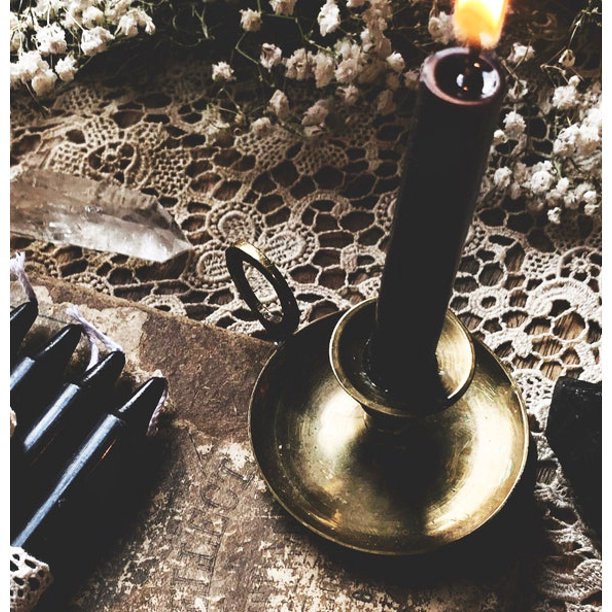
Try to perform this ritual during a waning moon, since that’s the best time to get rid of the stuff that’s bringing you down. Start by purifying your space however you feel comfortable (I used my cedar smudge stick). Get out your black candle and place it in a safe space. The color black is used traditionally for protection and banishing negativity. With your chosen utensil, carve a word that represents your fear into the candle. I chose “dread,” but feel free to use whatever speaks to you. Anoint the candle with frankincense and myrrh. These oils are significant in my Christian tradition as the gifts the wise men brought Jesus as a baby, and for good reason. They’re symbolic of death, spirituality, and holiness. They seemed like the natural choice for this ritual for that reason. Light the candle and keep it in a safe place to burn out naturally, and meditate on the word you wrote melting away.

It’s worth noting here that my practice is rooted primarily in my Christian beliefs. So when I performed this myself, I used the time the candle was burning to talk to God, and I feel like He gave me a lot of insight on why the thought of being forgotten scared me so much. I felt like I was being convicted in my own elevated sense of self-importance. Why do I feel so strongly about being remembered for something? Shouldn’t I be working on staying humble and showing kindness to those around me? Aren’t there more important things in life than being a name in the history books? Jesus Himself said it best in the Parable of the Wedding Banquet:

When you are invited to a wedding banquet, do not sit in the place of honor, in case someone more distinguished than you has been invited. Then the host who invited both of you will come and tell you, ‘Give this man your seat.’ And in humiliation, you will have to take the last place. But when you are invited, go and sit in the last place, so that your host will come and tell you, ‘Friend, move up to a better place.’ Then you will be honored in front of everyone at the table with you. For everyone who exalts himself will be humbled, and the one who humbles himself will be exalted.”

Luke 14: 8-11

Perhaps you’re of a different religious tradition, which is fine. I created this ritual to be something anyone of any faith can participate in, though your conversation with your spirit or deity will likely differ from mine. What’s important, however, is that you meditate on why you’re afraid of what you’re afraid of, and listen closely for insight on how to deal with those feelings. But one universal truth did come to me while I was praying and meditating, a simple affirmation.

I accept the flow of life.

People change, circumstances change, relationships change, and eventually, you will die. We all will die. But that’s okay. As an animated lion once said, we’re all part of the circle of life, and we all need to come to terms with that eventually. What matters now is how we treat each other. Love begets more love, and that will remain long after we are gone.

Straight Outta the Broom Closet

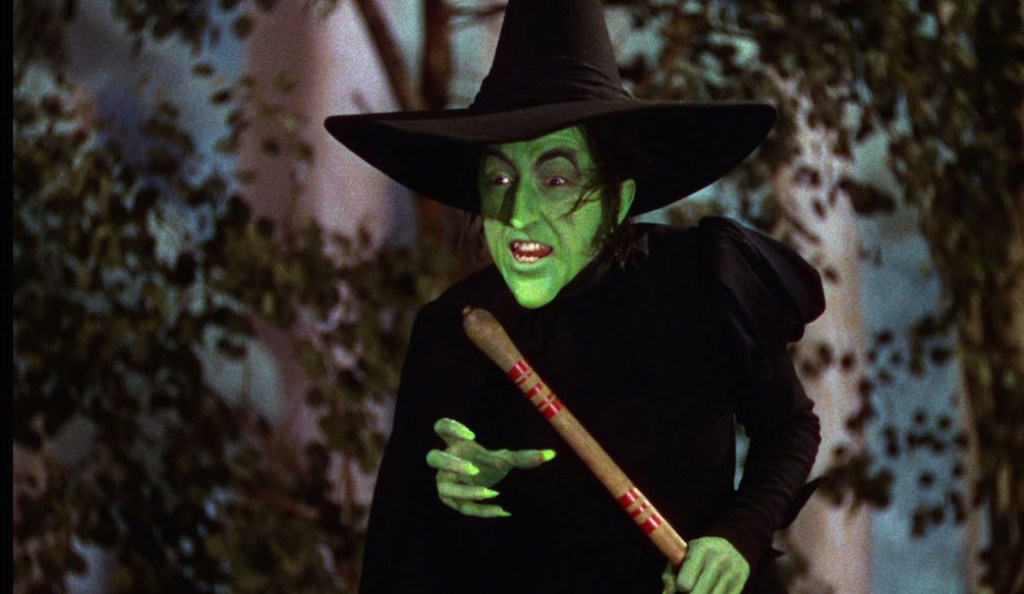
So, uh, I guess I’m a witch?

It’s not easy being green.

I started researching my family history during the lockdown. Genealogy is an endeavor my cousin beat me to, though, so I asked her some questions about our ancestors. Turns out, we’re descended from Appalachian witches! You see, before there were doctors in the remote areas of the mountains, wisened granny witches would serve as both apothecaries and spiritual leaders in the community. And it made sense — there were some weird things my family did that I never realized were weird, like being able to tell when a rainstorm was coming by the leaves and using tobacco as an antidote to insect stings. I guess normal families don’t rip up a cigarette and apply it to their child’s feet when they step on a bee.

SCREW URGENT CARE.

One thing that struck me as interesting was the fact that these Appalachian witches drew inspiration from the pagan traditions from the British Isles where they once originated, the indigenous traditions of the folks they often intermixed with, and, to my surprise, Christianity! You can be a Christian and a witch?

It makes sense when you throw out the demon-summoning, hex-casting preconceptions people often have about witchcraft and break it down into what it really is — taking charge of your own spirituality. It’s sitting on your bathroom floor with nothing but a candle and praying directly to your higher power. It’s going against the grain of organized religion and interacting with a god or a spirit by yourself, without the interference of a church or priest or pastor. And that’s what spirituality should be, in my humble opinion — a very personal affair, and one that’s unique to you. Everyone has their own interpretations of their sacred scriptures, and while it is wise to seek counsel from people you admire spiritually, no one should have the power to tell you what to believe. The second you succumb to dogma, you check your brain at the door. This is how dangerous groupthink and cults start.

The second you succumb to dogma, you check your brain at the door.

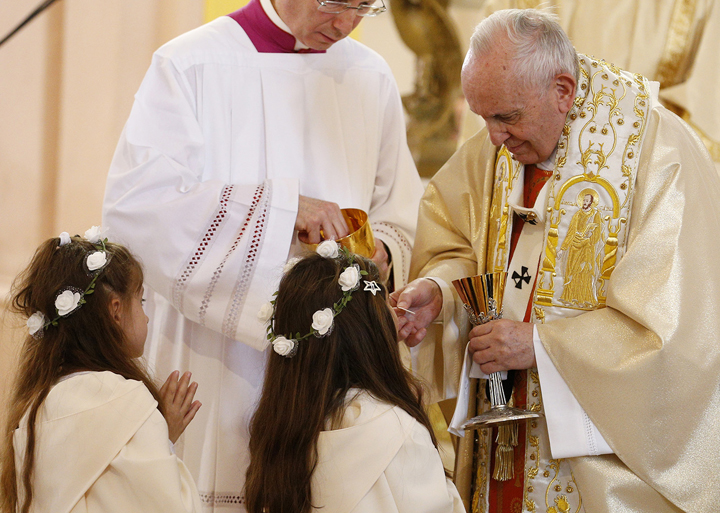
So how can a witch be Christian? Part of witchcraft is communing with a spirit guide of your choice, whoever speaks to you. Some witches work with members of the Roman or Greek parthenon, some with ancient Egyptian or Celtic deities, and others with fae or other spirits. I just happen to believe in the God of the Abrahamic faiths, specifically the Trinity, or the Father, Son, and Holy Spirit (who I often interpret as the personification of wisdom, who is often characterized as feminine). So when I mix together oils to anoint a candle, or hold a crystal that’s supposedly imbued with a virtue I want to manifest, or use my cedar smudge stick to purify my spaces, that is the deity whom I am consulting. Additionally, Christianity and witchy spiritual practices are often intertwined in various cultures. Look at Haitian voodoo, Dia de los Muetos, and, most personally to me, the Appalachian spiritual tradition. Even a lot of standard Christian traditions are essentially witchcraft under a different name. Consecrating bread and wine and consuming to honor a deity? That’s witchy as heck, man.

The Pope: Head Witch In Charge

Full disclosure: I’ve always been a skeptic, even when it comes to Christianity in and of itself. I don’t claim to know everything, and I think it’s foolish to assert that any human has all the answers to the big spiritual questions. If we could understand our God, He wouldn’t be God. Part of embarking on a spiritual journey is accepting you’ll never know everything, and the truth is, this could all be bunk. But I know my spiritual practices give me a sense of inner peace, so even if I’m praying to absolute nobody in the end, the mental and emotional benefits I receive from my practice are worth it. And a lot of “witchy” practices are rooted in things like self-care and intention setting, which are helpful to me as the proud owner of the absolute worst case of ADHD my therapist has ever seen. If burning a candle or holding some rock gives me that extra motivation to create and do what I love, so be it. I’ll gladly psyche my brain into doing what I want it to do for once.

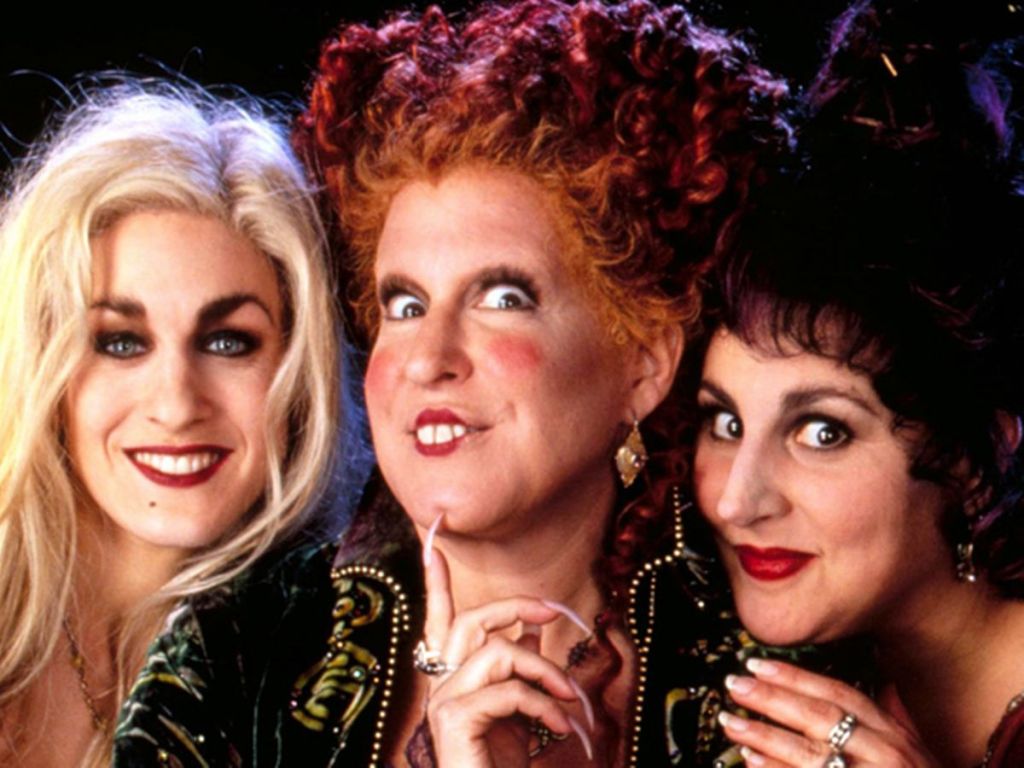
So that’s a little overview of where my beliefs and spiritual journey have been leading me lately. I’ll share some of my rituals and advice on this blog in upcoming posts. Until then, peace out, y’all. I’m off to eat unsuspecting meddling children and absorb their energy to maintain my eternal youth. The usual, you know?

Come, we fly!

Do You Kiss Your Mother With That #$%@* Mouth?!

CW: strong language, obviously

Cue the dolphin noises.

I remember sitting through a sermon about…I don’t know, helping the needy or something. I should remember exactly what it was, because it was one of those important messages, like the stuff Jesus really cared about. The reason this sermon sticks out in my memory was the illustration the pastor used, though. The thing that made it powerful. A little four-letter word that made the entire auditorium freeze. And the kicker:

“You all probably cared more about the fact that your pastor just cursed than the fact that there are people out there suffering.”

That moment stuck with me. We make an idol out of not saying certain words because hey, that’s not what “good Christians” do. But is there any truth to the old “no cussin’” rule that’s been shoved down our throats since childhood? Do we all need to rinse our mouths out with soap?

Let me preface by saying this: Christian or not, there are certain situations where we should use nothing but clean language. If you’re around children, absolutely do not drop an f-bomb! Same with formal meetings — can you imagine asking for a mother-effin’ raise? You’d be fired on the spot, or at least laughed out of the workplace.

But Christians should never, ever, EVER say bad words! Right, Jess? RIGHT?!

In Philippians 3:8, Paul describes the things of this world as garbage compared to the worth of knowing Christ. Except, that’s not what he said. The word he used for “garbage” was “skubalon,” an old, crude Greek word for dung. In other words, shit. He called it all shit. And is he wrong to compare all worldly things to shit, especially when compared to the greatness that is Jesus? That’s a strong, but not necessarily unfounded, comparison.

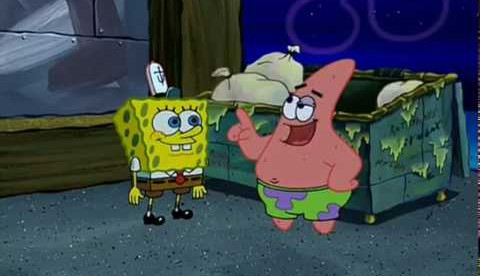
Ephesians 4:29 says “Do not let any unwholesome talk come out of your mouths, but only what is helpful for building others up according to their needs, that it may benefit those who listen.” Like I said before, there’s a time and a place for strong language. After all, words have power. We need to think about the context in which these words are being used. Obviously, things like racial slurs are never acceptable, but the traditional “four-letter words” are a little more ambiguous. Spongebob eloquently described them as “sentence enhancers,” and there’s some truth to that. Because of the power of these words, they draw attention. Sometimes they draw attention to things that need attention, like the example at the start of this post. Sometimes, they’re used to cause harm. But like most words, they’re just…neutral.

You don’t need to be Mister Rogers in your speech around absolutely everyone all the time. When the Bible says to build people up “according to their needs,” maybe they need to hear that they’re “fucking awesome,” or that they’re “a badass.” If you’re not comfortable with such language, no one’s saying you HAVE TO talk that way, but as Christians, I feel we need to loosen the “no cussing ever” rule to account for situations where strong language is used positively. No matter what we say or how we say it, it should not be words intended to break someone down. Telling someone to “fuck off” or calling them a “piece of shit” is absolutely unacceptable and has no place in a Christian’s vocabulary. Even phrases that don’t contain profanity can be hurtful. If someone said “I hope your mom dies,” I’d be way more offended than if someone called me a “bitch.” Again, it’s all about context and intent.

Whatever you say, and whoever you say it to, do it with love. That’s one thing I think we can all heckin’ agree on.

Good News, Everyone: WE’RE REBRANDING!

You might have noticed the domain name and blog title have changed. Don’t worry, it’s still me! I wanted to rebrand this blog into something that gives hope, something that can serve you — yes, you! — as an anchor in the storm we call life. Here, you’ll find my personal observations on topics like spirituality and mental health, (eventually daily) devotionals, and things that have helped me through my sometimes turbulent journey.

My perspective is a Christian one, albeit a more progressive version than you’re likely used to. If you have an established faith, or don’t really believe in anything, don’t fret! I’m not here to convert anyone. Instead, I want to be a voice for those who may have been burned by the traditional Church, people who are neurodiverse, queer, or who maybe just don’t fit the “churchy” norm. I know what it’s like to feel excluded from my own faith tradition, but God never abandons His kids, and I’m still learning from Him every day. That’s why I want to share what I’ve learned with you all. Because if I can help just one person reading this feel less alone, everything I’ve been through will be worth it.

So here’s to setting sail on this new adventure. And you are absolutely welcome along for the ride.

The Three Words That Made Me Hate My Own Body

I remember the first time I became aware of the male gaze.

I was twelve.

It was at a Rite Aid with my mom getting some film developed (which definitely just dated me). I saw a pair of older guys talking about something, and laughing, but I didn’t know what was happening. My mom shot them a look and pulled me away quickly.

“Those creeps were looking at you,” she said.

I was twelve. Twelve. Like, all I cared about was Pokemon and my stuffed animals. But I didn’t look it.

The film wasn’t the only thing that was developed.

If you follow literally anyone in the exvangelical community, you’ve probably heard of “Modest is Hottest,” the Matthew West track that’s been setting the Christian music scene ablaze. It’s a silly tongue-in-cheek song — I’m not too cool to admit that I laughed at “a sensible pair of slacks.” But after taking a moment to consider the culture that birthed this tune, it left a sour taste in my mouth. And judging by the backlash it’s received, I’m not alone in that sentiment.

My family never pushed purity culture onto me; rather, it was the churches I attended. The modesty talks were ubiquitous, at least among female leaders. Judging by the gendered sermons we sometimes had to endure, girls had two main problems — not feeling pretty enough, and not wearing enough. I never cared too much about the former as a kid, but as my own body made me painfully aware, I had to care about the latter, lest I get embarrassing lectures from youth leaders and mocking chants of “modest is hottest” from other girls. Yup, there’s that phrase again.

Here’s the thing — I never intentionally dressed to, as these talks put it, “cause my brothers to stumble.” I was just wearing what all of my friends were wearing. But because of the way I was built, my body was inherently dirty, inherently sexual. And people behaved differently because of this. I’d be groped by other students at my school because they thought my reactions were funny (which is doubly fucked up considering I was on the autism spectrum). When swimming with others, I’d be given the “t-shirt of shame” for exposing too much of my breasts, even though I was wearing the same kinds of bathing suits as other girls my age. And of course, I was made to feel like I was this filthy sinner for garnering looks from guys, because hey, it’s the girl’s job to keep guys from stumbling. Even when that girl is — let me reiterate — twelve.

It honestly messed me up for a while. At first, I tried to run away from my sexuality, playing the part of the innocent, virginal ingenue. When I inevitably couldn’t keep up that facade, I learned into my own sex appeal, feeling it was the only real thing I had to offer. No one cared about my intelligence or creativity. I was a walking pair of double D’s.

If you’re in a similar place to me, I’m here to tell you that there is nothing dirty or shameful about your body. Your body is a beautiful gift, every single bone and tendon and nerve and glob of fat! 1 Corinthians 6:19-20 says “Do you not know that your bodies are temples of the Holy Spirit, who is in you, whom you have received from God? You are not your own; you were bought at a price. Therefore honor God with your bodies.” Conversely, should we not honor other people’s bodies by respecting them, no matter what shape or size they are, if they are indeed temples of the Holy Spirit?

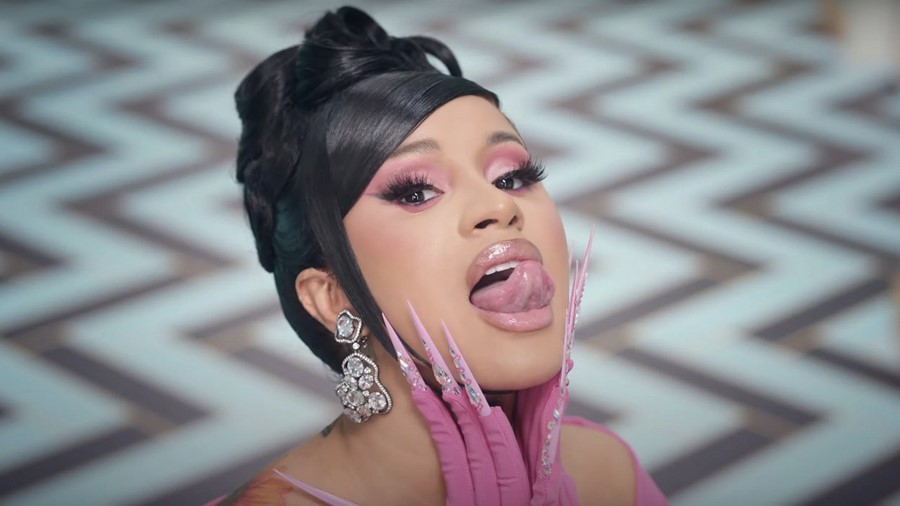
I don’t think modesty is necessarily a bad thing. My philosophy had always been “if it brings you closer to God and hurts no one else, you do you.” My point is that someone’s inherent worth doesn’t come from how much skin is exposed. Forcing modesty on girls as if their worth depends on it isn’t healthy. Rather, we should be teaching young men to honor and respect women whether they’re cloaked in Amish garb or doing their best Cardi B.

Time for some Worship And Praise.

When God Sends Your Hogwarts Letter

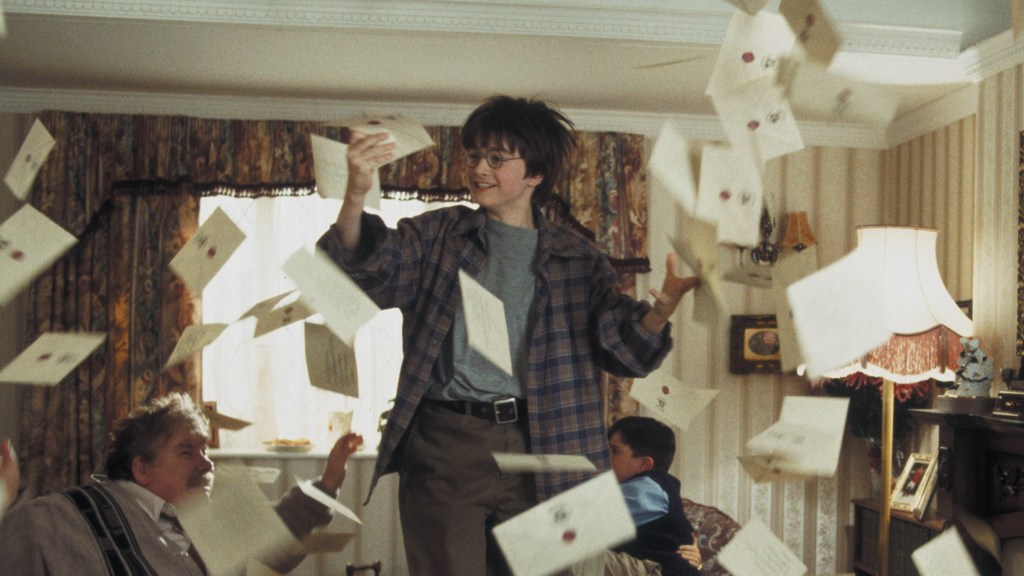
Let’s make one thing clear: I despise Harry Potter. Absolutely loathe it. I can’t follow it to save my life, the creator sucks, and Pokémon is the superior millennial franchise in every way. But sometimes I fondly remember a sermon I saw many years ago talking about it. No, they didn’t go on a rant about how it’s Satanic and all that crap (surprisingly). Instead, they viewed it as an allegory for the way God calls us to certain things in our lives, and the absolute ridiculous lengths He’ll go to in order to owl-airdrop that Hogwarts acceptable letter to your front step. I think about that scene with the with all the letters flying around a lot still, even though I’m not a huge fan of my old church and certainly not a fan of Harry Potter.

From a young age, I always imagined that Hogwarts letter to be an acceptance into a doctoral program. My joke is that I refuse to die before adding the letters “Dr.” in front of my name. It just made sense. I was (almost) top of my class and had a passion for learning and academia like none other. And full disclosure, a good part of why I wanted this so badly was to prove to everyone I was actually smart! To be honest, it was more than a little vain — I craved the status that came with the title. 

So I decided there was no way around it. I was going to become a doctor of something or other. Medicine, psychology — trust me, I’ve cycled through all the aspirations. But every time I try to commit to something, life gets in the way. Too much money, mental health issues, parents convincing me to pursue classical guitar instead of premed (no regrets; music school was the time of my life).

Maybe it’s not in this season of life to pursue such things. Or perhaps — even scarier — I’m not supposed to pursue them at all.

Jesus Himself said to deny yourself and take up your cross (Matthew 16:24). What does that even mean for my own life though? Do I really have to give up on my futile attempts to glorify myself, to add a little pizzazz to my own name, to hold the coveted title of “doctor” I’ve dreamed about my entire life? And it hit me.

Maybe I’m supposed to be Pastor Jess instead of Dr. Jess. 

It’s perfect. I get to learn theology (which I’m already a huge nerd about), play music, write, interact with and help people on a personal level, and perhaps most importantly, further the Kingdom of God. I keep going back to a certain phrase: “Be the change you want to see in the world.” I keep complaining that there are so few affirming churches, but what am I doing to change that? I personally know so many queer folks who feel disenfranchised by their churches and the Christian community at large. Maybe it’s my job here on this little blue planet to help give them a community who loves and accepts them as they are while leading them home to a God who loves and accepts them as they are. I know I’m not a perfect person by any means, but God uses imperfect people all the time. I’ve prayed about this for a while now and all signs seem to point in this direction. I feel like I finally got my Hogwarts letter.

Maybe being a pastor isn’t as glamorous as being a professor or doctor. But if I can help just  just one gay or trans kid feel like God hasn’t abandoned them, it will all be worth it.

Devotional #1: Created to Create

Oh no, not another analysis of the Biblical creation story. Like there hasn’t been ten million of those dating back to the dawn of civilization. What’s some twenty-something chick with too much time on her hands going to teach me that I haven’t already heard?

Surely you know the tale by now. God took a week of His eternal existence to make this big round blue thing we call home. Well, maybe a week, maybe several eons, depending on your interpretation. I’m not here to debate the many views on that argument and why Old Earth Creationism is the correct one. I think in the noise of whether or not the creation story is to be taken literally, we lose what is possibly the most important verse in the first chapter of the Bible.

So God created mankind in his own image, in the image of God he created them; male and female he created them. –

Genesis 1:27

It’s worth noting that the creation story of the Abrahamic faiths doesn’t start with sex or violence, as many of the creation stories of that day did, not did the Creator make us to be slaves or toys. In the Catholic tradition (full disclosure: I am not Catholic, but the podcast I learned about this stuff is), it’s explicitly stated that we were simply created because God wanted to share life with us. He never needed us; he wanted us. Which is cool in and of itself. But we often miss the coolest part — we were made IN HIS IMAGE.

Male. Female. Heck, I’m certain non-binary folks would be included had there been a word for y’all on Ancient Hebrew. We were created creative. Let me say that again.

You were created — BY a creative God — to be creative. The Creator of everything ever gave you His awesomest superpower.

If you’ve spent even one afternoon around a kid, you know how imaginative we are from birth. Children will weave together entire universes. It’s an innate power built into our software, yet it so often gets beaten out of us by adulthood. Just listen to “Flowers Are Red” by Harry Chapin. We sacrifice our gifts of creativity and imagination on the alter of adulthood and leave behind that part of ourselves that was created to be divine.

What did you do as a kid that brought you joy? What sparked your imagination? Take a moment to reconnect with that part of your soul. Give any reservations to God and jump right in. Who cares if you’ll never be the next Stephen King or Pablo Picasso? Humans were created to create, so break out that pen or paintbrush and get to it.

Left Behind: The Kids: The Discussion: Part One

Mentally prepare.

Ah, premileenial dispensationalism, the eschatological position that boils down to “God sweeping away his chosen few in preparation for ending the world or some garbage.” It’s a divisive theory held by many American Evangelicals and not many other Christians, including many of those affiliated with the Catholic, Eastern Orthodox, Anglican, Episcopalian, Methodist, and Lutheran churches. Despite all of these well-established organizations having different interpretations of the Good Book and generally calling bullshit on this theory, it persists to this day, unsurprisingly perpetuated by the same population that thinks COVID is a hoax and left-leaning politicians drink children’s blood.

But it makes for some damn good reading. Sharknado good.

Enter the Left Behind series, literature’s answer to delicious cringe. Penned by Jerry B. Jenkins and Tim LaHeye, it was beloved (or hated) enough to score not one, but two film adaptations, one of which starred Evangelical darling Kirk Cameron. Not content to just pollute the minds of adults, the series was expanded to kids with the aptly titled series Left Behind: The Kids.

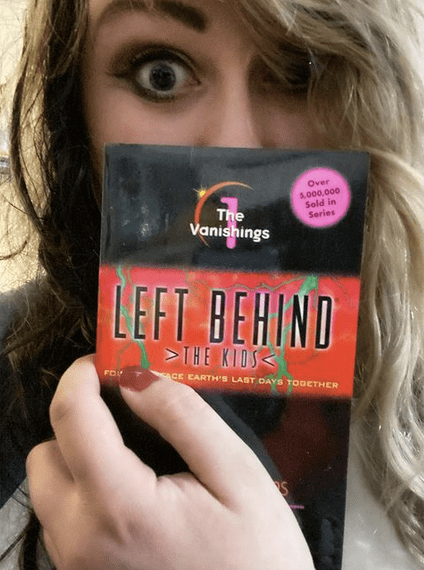
My good friend Luke of the ex-Pentecostal blog Unlearning Together (IG: @unlearning_together) mentioned re-reading the kids’ books as a project for their blog, and the idea seemed genius. Unpacking some deep-rooted religious trauma while shooting the shit about some cringy book from years ago? It sounded like a great time to me. We found some used copies on Amazon and so the games began. In several upcoming posts, we will read and discuss this literary tire fire. Below is our pre-reading discussion. Digressions include terrible fanfiction.

Luke: Hell yeah, I’m hype for this.

Jess: Right? Like I remember there being no likable characters. Or even memorable ones.

Luke: Yeah, they were barely even tropes. It was “the rich one,” the youngest one,” “the black one,” “girl.” Featuring “adult.”

Jess: I vaguely recall looking through the TVTropes page for the original books and thinking that all the characters had really awkwardly porny names.

Luke: Bahaha, yup.

Jess: RAYFORD STEELE. BUCK WILLIAMS.

Luke: RAYFORD STEELE IS 100 PERCENT AN 80s PORNSTAR NAME. Also, Nicolae Carpathia is absolutely a character in bad vampire porn.

Jess: The rule 34 almost writes itself.

Luke: Honestly.

Jess: Has Rayford Steele/Buck Williams slash been written?

Luke: If it hasn’t…it’s about to be.

Jess: THAT ship hasn’t been written. Buck/Nicolae, however…

Luke: Oooooh, spoicy. I want to look it up but I’m afraid.

Jess: There’s also an *NSYNC crossover fic. I think I found our next project.

Luke: YESS.

Jess: Oh god, the first chapter has a very explicit JC Chasez/Lance Bass love scene. I’ve seen too much.

Luke: NOOOOOOOO. Someone sat down to make this a reality.

Jess: IMAGINE BEING ONE OF THE MEMBERS OF *NSYNC AND FINDING THIS.

Luke: I wonder if Lance knows. He’s pretty active on TikTok. Hmmm…

Jess: I mean, I’d read slash of myself. Just because morbid curiosity.

Luke: Fair. Probably same. The weirder the pairing, the better to be honest.

Jess: You should see some of the Queen fanfics I’ve seen. Again, morbid curiosity. I declare myself cleared of all charges.

Luke: Bahaha. But have you been on the Property Brothers side of fanfiction?

Jess: I…don’t think I want to know.

Luke: It’s amazing.

Jess: I shall take your word for that. Anyways, any final words before we dive into this trash fire of a book? It’s not too late to turn back.

Luke: No turning back. “Abandon all hope, ye who enter here.”

To be continued…

An Open Letter to the Church

Hi Church! Yup, the “big C” Church. Whether you’re a pastor or part of the congregation or even just an Easter-and-Christmas Christian, this letter is for you! Yay!

So here’s the thing. I really want to go to church with you. I really do. I want to have Bible studies and deep theological discussions with you. I want to break communion bread with you. I want to lift my hands in worship and bawl like a baby to “How He Loves” with you (the “sloppy wet kiss” version, of course). But I can’t. And all because I’ve committed the heinous sin of wanting to marry and start a family with someone else who pees sitting down.

Consumer favorites rely on hot dog casings and netting | 2020-06-13 | The  National Provisioner
This is crucial for a Godly marriage, apparently.

It’s not for lack of acceptance — roughly 80 percent of unaffiliated Christians support gay marriage. And trust me, we want in too — about 50 percent of queer folks consider themselves religious, many of them Christians. So what’s the deal? Are we too afraid to let the gates fling open, as Christ would have wanted? Are we so stuck in our old ideals that we can’t possibly change the way we do things?

I urge you to question everything. Don’t take it from me, take it from the Good Book itself.

“Test everything that is said. Hold on to what is good.”

1 Thessalonians 5:21

What if everything we were taught about gender and sexuality as it relates to Christianity is wrong? I could deconstruct the infamous clobber verses, but scholars much more well-versed in the Scriptures already have. I want to take a different approach. In Matthew 7, it is said that we are to distinguish God’s truth from lies of false prophets by examining their fruits. What are the fruits of exclusion theology? In addition to alienating the aforementioned 50 percent and denying them the church experience, we have to think about the next generation and the messages we’re sending them by holding to these toxic ideas. According to The Trevor Project,  queer youth are 8.4 times more likely to attempt suicide when in an non-supportive environment. Kids freaking dying isn’t a fruit of the Spirit, right? Because that’s a pretty rotten fruit.

But Jess, you say, my church welcomes everybody! Well…

“Let your yes be yes, and your no be no. Anything else comes from a non-denominational pastor asked whether his church affirms gay people.”

Ken Wilson, the wisest pastor I know

Seriously, ask your pastor if they officiate gay marriages. Ask if they let queer folks have leadership roles. I guarantee you’ll get some convoluted “love the sinner, hate the sin” spiel. You’d be hard-pressed to find a “come as you are” hip megachurch with its own coffeeshop that would let me, a bisexual woman, even just play guitar for the worship team, much less be a worship leader. Not unless I denounced part of my sexuality and ended up with a dude, which, uh, didn’t happen.

Pastors, please rethink your stances on LGBTQ issues, and congregants, speak up. Let your church leadership know that you won’t support anti-LGBTQ rhetoric any longer. I remember standing onstage at my old church while a thinly veiled conversion therapy course for young girls was revealed. I should have walked off the stage right then. I still regret it to this day. Friends, don’t be like me. Christ has gifted us with bravery and strength to stand up to oppression. Now’s the time to be brave.

Peace be with you and all that,

Jess