Small Towns Are Great! (If You Fit In)

So today’s Thing That Everyone’s Mad About is the Jason Aldean song “Try That in a Small Town.” It’s nothing special to be honest. The lyrics hit on every right-wing talking point that’s popular right now save for the tired (and deeply offensive) “all queers are child molesters” trope. You got gun lovin’, cop lovin’, flag lovin’, all that good stuff. Basically, it’s obvious MAGA-bait. Musically, it’s…a standard issue pop country song. You could rewrite every line as “Bernie Sanders rules!” and I still wouldn’t listen to it willingly. Hell, all politics aside, changing every word to “watermelon” wouldn’t save this song from being an absolute snoozefest. Why do people give this guy attention when like, Jason Isbell exists?
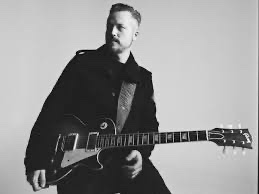
Behold, the superior Jason.

I’m not here to talk music or politics, though, as if anyone gives any weight to my opinions on either. I’m here to talk about the romanticization of small towns.

I grew up in Huron Charter Township, which consists of three small villages: New Boston, Waltz, and the smallest one, where I lived, Willow. Most people just called the whole township New Boston, after the largest village, but I knew the difference, dammit. We were about as far into the country as you could get and still call yourself a suburb of Detroit — most people consider the area part of the larger Downriver region. Still, for all intents and purposes, the area was rural as heck. I’m talking farms, barns, horses, and the like.

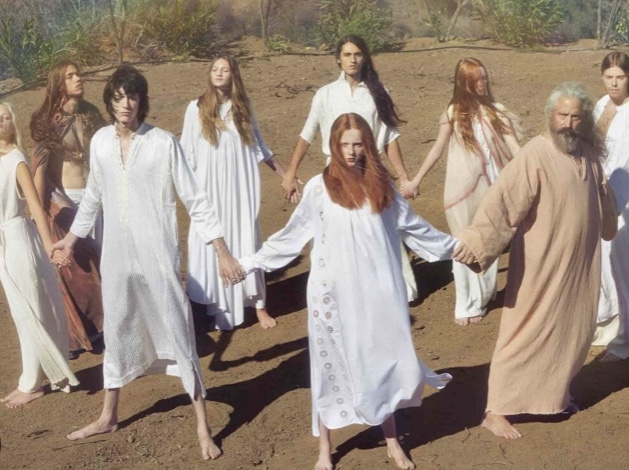
Not my hometown, but might as well be.

I liked some aspects of living there. I liked running rampant through the open fields, going muddin’ with my childhood friend, walking with my dad to the little party store by the train tracks and getting holographic Pokémon stickers. It was a quaint life, and it would have been perfect.

What people don’t realize is that living in a small town is hell when you’re the weird kid.

Small towns are tight knit and insular, and that works out well for people who are in the “in-group,” but things get real squirrelly when you break the norms of that in-group. I remember getting teased for everything from not being Catholic to hating ranch dressing to being supposed lesbians with my best friend, back when “lesbian” was an insult and not, well, just an accurate descriptor for me. I didn’t dress like the other kids either, or talk like them, or act like them, which I now realize was an autism thing, but this was also a time when girls were seldom considered autistic. You were just “the weird kid,” and if you were a small town weird kid, news travelled fast that you were to be avoided.

As I got older, the bullying escalated into sexual harassment — girls grabbing my ass and guys pretending to rub their boners on me, all because they knew it made me uncomfy and they thought my reaction was funny. I didn’t tell my parents the nature of the bullying, but they knew something was up. I was coming home from school crying and hibernating all evening. And when my dad went to the principal and the counselor? There was nothing they could do. My dad suspected their indifference to my predicament was partly due to my family being “low importance” in the small town hierarchy. We didn’t go to the local church or participate in the PTA. No one cared what happened to the Salisburys. We were outsiders.

It was so bad, the adults were bullies too. I still remember my Girl Scout troop leader, Mrs. Marsack, who resented me for making her troop look bad. She was so desperate to push me out of her gaggle of otherwise perfect little girls, she barred me from participating in the group camping trip because I wasn’t “mature” enough, despite getting good grades, staying out of trouble, and being more of an “old soul” than was probably healthy for me. I remember locking myself in the bathroom and crying inconsolably. It had never been more clear to me that I wasn’t wanted.

My saving grace was leaving my hometown. Moving to my college town was the best decision I could have made. The thing about larger cities is that more people equals more differences, and suddenly, I was running into weirdos like myself and befriending folks who weren’t like me, but still appreciated my quirks for what they were. Everyone was from somewhere else, and we were all just trying to find our place in the world. It was kind of a beautiful thing. Growing up in a small town, I had no idea there were places like this. It felt utopian.

Cities have their issues too — more people does tend to equate to more crime — but that’s just the nature of humanity. Nowhere is perfect as long as the people there are not perfect. I just know I’d rather live someplace where I can be myself and not have to hide pieces of who I am just to fit in. I’m glad I left my hometown for bigger and better things, and I hope all the other small town weirdos like me get a chance to as well.
Dear Cadence, Part Three: Embrace What Makes You Weird

This is the latest installment in my memoir project, written as a series of letters to my future daughter. Here are the previous entries: Part One and Part Two

My earliest memory was waking up from a nap on top of a stack of rugs inside a sketchy flea market. But my second earliest memory was watching Wheel of Fortune.

I didn’t know what it was – the colors, perhaps. That’s the only reason I can think of why a toddler would enjoy a words-based game show. I got a little older, and I found myself scared of cartoons because they were so loud and bright compared to my beloved Wheel of Fortune. And CNN. My dad always had our boxy TV on CNN, and it became such a thing to me, I’d freak out if anything else was on. And I needed the History Channel on my bedroom TV to sleep. I wouldn’t accept anything else.

I was really sensitive to noises. If my mom was vacuuming, I’d hide behind the recliner and cower for my life. There were some sounds I liked a lot, like the sound of the bath filling. I’d curl up in the corner of the bathroom and just listen to the sound of the water until my mom would inevitably pick me up and put me in the tub. Sometimes, I’d make little sounds just because it felt right, usually bird noises. And music. I always say music was my first language. Growing up, I didn’t talk a lot to people who were my age. I could and would give my entire life story to the cashier at Kmart, but I had a hard time socializing with peers. But I loved singing for absolutely anyone who would listen. My classmates would even throw coins at me for singing songs at recess.

What I didn’t realize, though, was that they were making fun of me.

I was 17 or 18 before my mom said the “a” word to me. As in autism. It’s a scary-sounding word to a lot of parents, and when I was a child, there was an even steeper stigma attached to it. No mom wanted their kid to get diagnosed with autism. So she never got me diagnosed, not even when my childhood psychologist had mentioned it. And my teachers didn’t bother to check up on me either. So little Jessie spins around in the back of the classroom during lectures, obsesses over 8-track tapes, and has no friends? Well, she gets good grades and doesn’t start problems, so we’ll just pretend there’s nothing weird about this child.

But I knew there was something wrong with me. There had to be. I had an encyclopedic knowledge of vintage music, but I couldn’t make eye contact or even speak a coherent sentence to someone my own age without feeling wildly uncomfy. And my ever-present weirdness made me an easy target for the innocent cruelty of schoolchildren. I remember how sensitive I was to the smell of ranch dressing. As soon as the other kids found out the stench alone made me gag, I had to start eating lunch in the library, lest I be pelted with ranch dressing packets.

Two memories stick out in particular. One was of my “frenemy” Carissa and her crony, another Jessica, framing me for hitting Other Jessica, simply because they didn’t like me. Because I didn’t “fit in.”Jessica had made a red mark on her face and claimed I’d hit her, and Carissa corroborated her story. It was my word against both of theirs, so I ended up getting sent to the principal’s office over it. I lost my trip to McDonald’s over that, actually.

Another time, I got punched in the stomach by some guy. Ouch.

My point is, if you’re anything like me — and I’m guessing you’re a lot more like me than you’d like to admit — you’re gonna be weird, and that’s going to make you a target for unsavory people. They’ll hurt you because they think it’s funny. They’ll take advantage of you because they know they can get away with it. And a younger, less-wisened version of myself would have said your best course of action would be to change yourself, to fit in. 

Because that’s exactly what I did.

I meticulously studied what the “cool girls” were doing and started copying their mannerisms and adopting their interests. I learned to shut my big dumb face when I wanted to obsess over Bon Jovi or Pokémon. I ditched my 70s rocker style for a more conventional preppy look, and my beloved red lipstick got thrown in the trash. I stopped talking about my special interests and “smart kid things” and put on a bimbo facade because it made people tease me less. Everything that made me unique got watered down to something more palatable.

I broke my own bones to fit in someone else’s box.

Sure, I made friends, but inside I was miserable. It took so much out of me to hide parts of myself. And I knew deep down I still didn’t fit in entirely. I was last to be picked in literally everything. I remember going to on a trip to Chicago with the marching band and my “friend” group chose to room together without me. I did manage to get voted senior class president — because no one else ran.

My saving grace was that around the time I became an adult, the “manic pixie dream girl” stereotype became the hottest thing, and suddenly everything that made me eccentric and weird made me desirable. In college, I started dropping the act and grew into what I was all along — a confidently autistic woman, quirks and all. And it won me way more genuine friends, people who have stuck around in the long run, who would never ditch me or pick me last. My college years were filled with so many experiences of legitimate joy, the kind that only comes when you’re living as your authentic self.

So if your thing is trains, be the biggest freaking ferroequinologist out there. If you like dressing like a pirate in everyday life, tighten up that corset and straighten that eyepatch. If you love music like I do, sing and dance your heart out and don’t give a damn who throws coins at you and laughs. History forgets normal people like them, but weird people like us live on forever. Being yourself is one of the hardest things you’ll ever have to do, but it’s worth it.

Think of the Children! (An Easter Manifesto)

I originally posted this on my Facebook and Instagram pages (@thejessajoyce, if you’re curious), but I wanted to share this brief little write-up here as well. It’s so important to get this message out there since more often than not, the theoretical future of society and the fight to better it is co-opted by straight, cis, white, non-disabled people in an effort to tear down people who are not like them. I want to present a counter-argument. If all lives truly matter, as many on the political right say, and we must “think of the children,” my future children should be considered as well. There is room for everyone at the table of life, and we need to remember that this Easter.

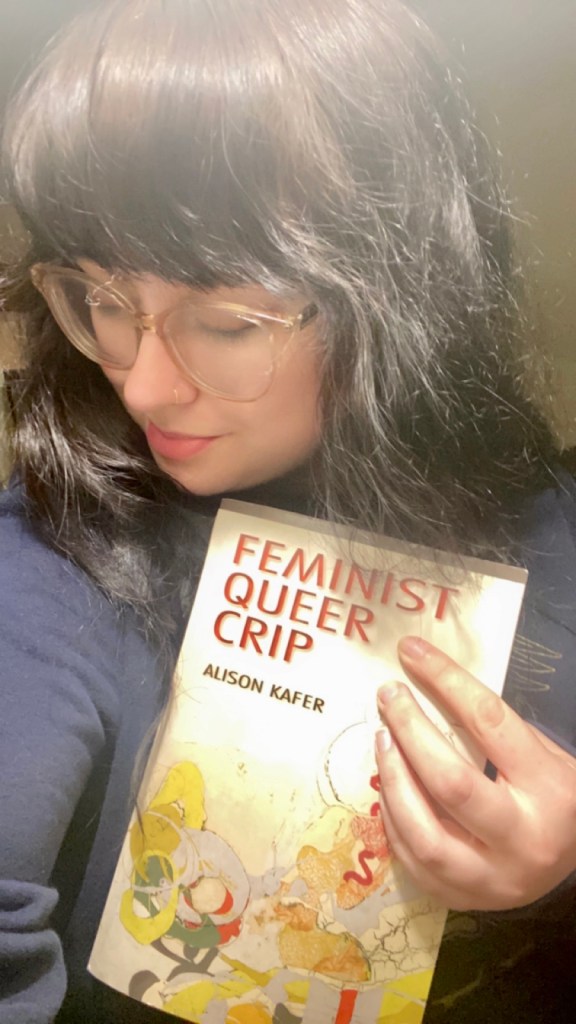
Reading this book (Feminist Queer Crip by Alison Kafer) at the suggestion of one of my favorite professors for my capstone project on autism, and it feels especially poignant in the days of #blacklivesmatter and #SaveTheChildren and #autismawarenessmonth and the recent fight against drag and transgender rights. The first chapter talks a lot about the Child — the personification of the future of society — who is often politicized and weaponized. Think of the children, people say. The image of the Child is more often than not a white cishet non-disabled child born to white cishet non-disabled parents. This Child absolutely matters. But I’m not interested in fighting for him, not because I don’t care about him, but because he already has enough people fighting for his right to exist in peace. Instead, I want to fight for my children.

In a few short years, I’ll likely have a child of my own. That child will likely have a disability of some sort, or rather, a difference that makes it harder to exist in a world that isn’t built for her. Considering my family history, she’ll likely be autistic or ADHD. Depending on our donor, she will likely be at least part black, and she’ll have queer parents who will support her should she eventually come to terms with her own queerness. And guess what? Her life will matter too. She should have a right to exist in peace alongside the theoretical Child described above. I want her to have a future too.

That’s why it’s so important to keep fighting for equality. I feel like it’s important to note that it’s Easter Sunday as I post this. I am a Christian through and through, despite the fact that I don’t “fit” the American Evangelical mold, and I firmly believe that Christ died for EVERYONE. Not just white Americans or straight people or cisgender people or able-bodied and able-minded people. We are all wonderfully made and we all should have a right to inhabit this beautiful planet. This post is a call to prayer and more importantly, a call to action. We need to be a light to this sometimes dark and scary world. We need to keep fighting the good fight.

Pieces of Myself: Learning to Love Past-Jess

Full disclosure: I started using the good ol’ Mary Joanna to help me sleep at night. Yeah yeah, I know that technically means I’m not sober by the broadest definition of the term, despite being alcohol-free for about a year new (hell yeah). But I use it medicinally to help with my constant waking up in the middle of the night, and honestly, it does help me get a more restful sleep

Sometimes after I smoke, I don’t immediately fall asleep, and when that happens, I either get horny, paranoid, or philosophical. It’s kind of a crapshoot every time which of my high personalities shows up. It’s usually the one I don’t want at the time, which means using it as an aphrodisiac is a gamble.

“Jess, this is not the time to ramble about how we’re living in a simulation.”

Last night, though, I had a strange experience. My wife was giving me a pep talk regarding my mental health, which has been pretty bad as of late. Nothing concerning, just the usual “What if life is meaningless and everything I do will eventually be forgotten?” Which is pretty heavy stuff to think about literally every second of the day, and I’ve been in this mindset for most of my life. Yay, anxiety!

But, in my high, pseudo-intellectual stupor, something my wife said really itched a part of me I didn’t know I needed to reach — the past Jesses (is that the proper plural of Jess?).

I haven’t been nice to past me. Not any of them. I tend to think of my past selves as different people, instead of a cohesive part of who I became. I look at Child Jess through my adult eyes and judge her unfairly for being, well, an outcast. A pariah. The weird autistic little girl who stims by spinning around in the back of the classroom and making bird sounds. I get mad at my younger self for having the nerve to not fit in and be popular. And as my wife said, that little girl is a part of me still, and every time I resent my childhood eccentricities, I bully her the same way I was bullied by other people.

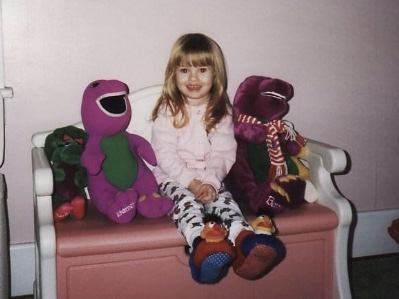
PROTECT THIS CHILD.

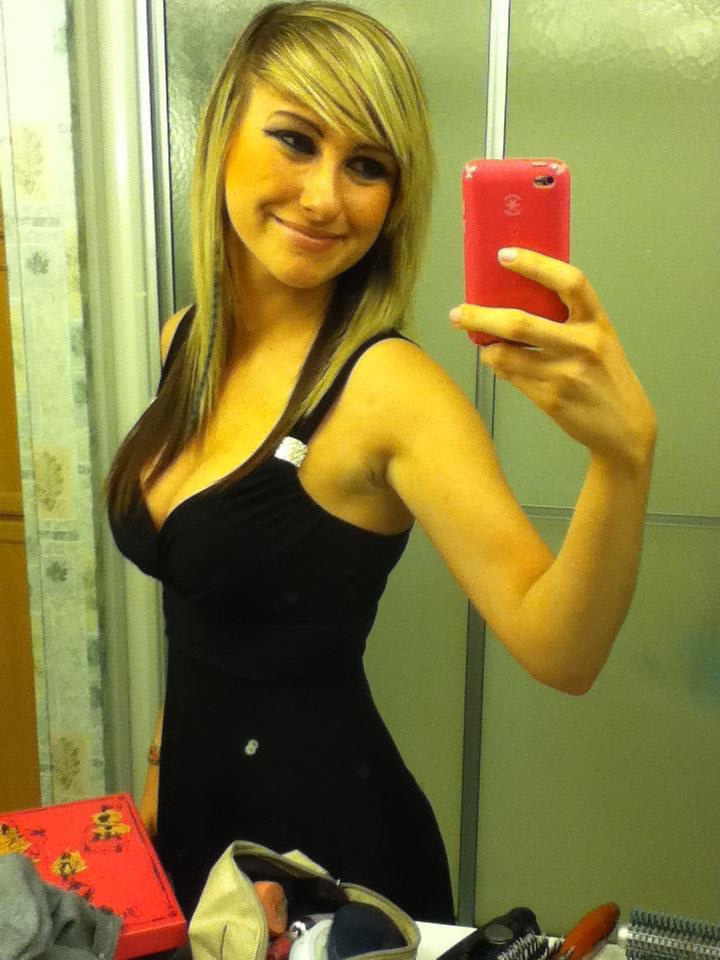
Then I think of College Jess. The me who was skinny and outgoing and optimistic and popular and excelled at school despite barely trying. Although she’s a part of me as well, I resent her for being all the things I wish I was now. I’m jealous of a past version of me! It makes no sense when I really think about it — at that time, my mental illnesses were worse than they’d ever been before, and I’d sooner saw off my own pinky toe with a nail file before I’d willingly deal with my OCD at its worst again. But I only see this rose-tinted version of the past, with this girl who is infuriatingly everything I want to be. Everything I was.

Yes, I was that bitch.

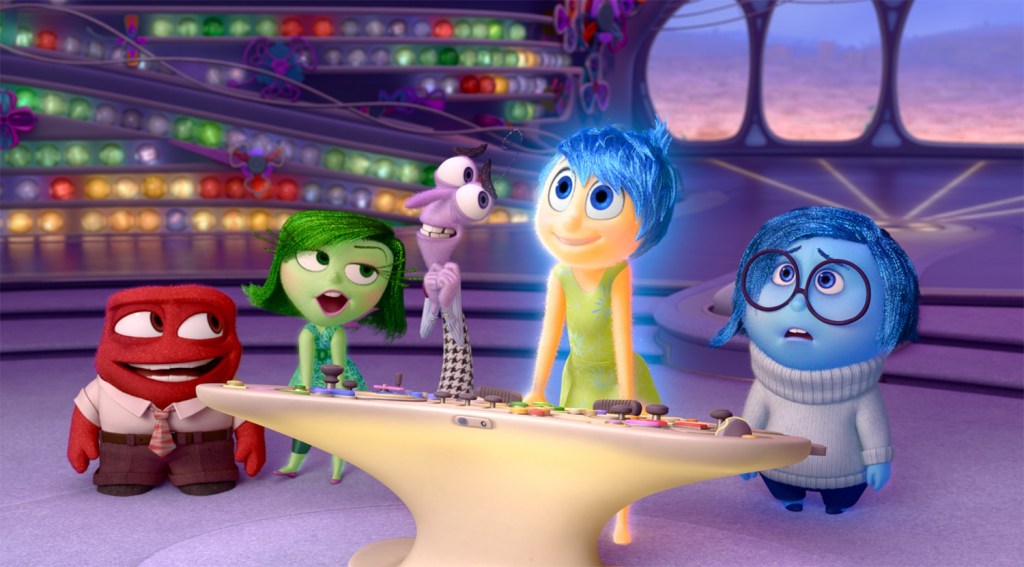
The thing is, these aren’t two different people. They’re all me, and they’ve taken me to where I am now. And honestly, where I am now isn’t that bad. I have a wife and a girlfriend I love dearly (that poly life, I’m tellin’ ya). I’m back in school for music therapy, and I’m closer than ever to getting this degree. I even won a scholarship for it! I’m about to be debt-free, and I’m working on getting back in shape. And despite my depression being ever-present, my mental health has never been better. Everything is falling into place for once, and I owe it all to my past selves for bringing me to this place. I started thinking of these past selves as an Inside Out-type of inner council that influences my day to day decisions and emotions.

It’s going to be a process, but I’ve started making peace with my past. I want to continue to honor and integrate these past versions of Jess into myself as a whole. Writing this out was my first step in healing these broken pieces of me. If your brain works at all like mine, I hope this little blog post helps you, too.

I’m Autistic (And Why That Matters)

Fair warning: I’m going to be writing about this topic a lot in the next few months for reasons I’ll elaborate on in a few paragraphs.

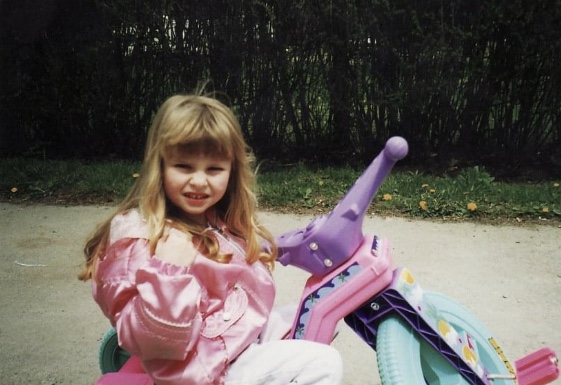
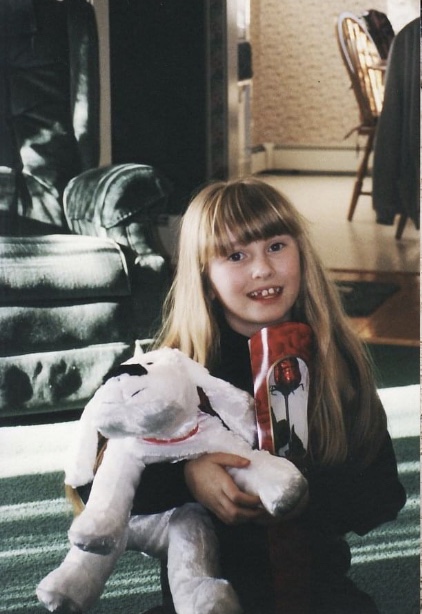
And yes, I will be using this topic as an excuse to post as many adorable pictures of little Jess as I can.

My last blog post delved a little into what it was like growing up autistic and how I’ve learned to mask to such a degree that most of my psychiatrists don’t even take me seriously when I mention that I’m likely on the spectrum. For that reason, I’ve been hesitant to “claim” the title of autism. If I’m “cured,” then I don’t have autism anymore, right? If I can blend in enough with the “normies” to not have any visible disability, and I can’t even get a proper diagnosis, I’m not really autistic. I’m just faking it for attention. Initially, I gave up on getting “properly” diagnosed for that reason.

Last week, I began research on my project for the undergraduate symposium. It will go hand-in-hand with my presentation that is conditional for my receiving of the Brehm fellowship, awarded to students who are looking to contribute to the field of disability research and advocacy. I chose autism as my focus, primarily because it has affected my life in deeply personal ways, even without a clinical diagnosis.

Even if I had to “change” to fit in with neurotypical society.

One of the books I found myself drawn to study was Unmasking Autism by Dr. Devon Price. His research comes from a neurodivergent place, being autistic himself, as well as having a queer perspective as a trans man. The book focuses on the ways neurotypical “passing” folks have used “masks” to fit in with societal norms. Traditionally, these masks were forced on us by things such ABA, now viewed as harmful by most autistic advocates. Some of us, like me, consciously decided to, as I like to say, break our own bones to fit in someone else’s box.

At this point in life, after decades of studying people’s behavior and learning what works and what doesn’t in social situations. I “pass” well enough that I’ve hesitated to claim the autistic title. I’m scared I’ll be looked at as a fraud by the community, someone who claims the title for clout and to excuse my admittedly sometimes annoying idiosyncrasies. But as I’m learning, that’s about as nonsensical as me trying to pass as straight for so many years when I knew damn well I was pansexual, and about as harmful too. It’s harmful to the community, as I perpetuate internalized prejudices by denying my identity, and it’s harmful to myself, as I force my body and mind into a crevice they were not designed to fit into.

Cats make it look so easy.

Here’s the thing — Price explains that oppressed folks are ridiculously underdiagnosed because we’re forced to conform even more than people who are part of the majority. Straight white dudes can skate by on their privilege, but we have to try harder to make it in this world, and part of that involves hiding the less socially acceptable pieces of ourselves. Not only that, but the current diagnostic tools used for detecting autism is literally based on its presentation in white little boys. If you’re black, or an adult, or a woman, or any combination of that, it’s damn near impossible to get a proper diagnosis because of implicit biases in the testing process.

Here’s the other thing — a proper diagnosis isn’t a requirement to be part of the autistic community. In addition to the roadblocks mentioned above, there’s also the problem of access to testing, which is often prohibitively expensive and not readily available to everyone. For this reason, self-diagnosis (or as Price puts it, self-realization) is valid. If you relate to the autistic experience, you’re probably one of us. Surprise!

“ONE OF US. ONE OF US.”

So that’s that. I’m autistic. And no, I don’t have autism any more than I have pansexuality. It’s just part of me. And that’s important, because we need more people to advocate for people like us.

Just a few days ago, a dear well-intentioned friend of mine invited me to an online seminar about some wellness products. The speaker went on and on about how her tinctures and potions can cure this and that. And then — I shit you not — she spoke this exact sentence:

“Our products have been shown to eradicate autism.”

Almost immediately, I excused myself and logged off. I felt gross, like someone told me they could fix my gay, as if that wouldn’t erase the beautiful, loving relationship I have with my wife. This time, that sentence — it was about me. It took me three decades to come to terms with who I am. It took me three decades to learn to have a beautiful, loving relationship with myself, with my own identity. And the fact that someone tried to sell me a cure for that feels insulting.

We need more people to fight the good fight for us. We need more people to stand up and declare that there’s nothing wrong with us, just that society isn’t built for us. We’re not the problem, the current rigid sense of “this is what is socially acceptable and this is what is not” is the real problem. As long as we don’t fit into the narrow ideals of what is acceptable behavior, we’re going to continue to be dehumanized and discriminated against. So something needs to change, and maybe it shouldn’t be us.

This was a lot of words, but I feel like it’s important to say. I am autistic, and I don’t owe anyone a proper diagnosis to claim that. Not in a world that makes it prohibitively difficult for an AFAB adult to even get clinically diagnosed, let alone get assessed. Not in a world that beat all the quirks and idiosyncrasies out of me before I even reached adulthood.

No, I don’t owe anyone a damn thing.

Phantom of Me

Damn it, Rina Sawayama. This website is going to turn into a fan blog if you keep this up.

I swear this woman lives rent free in my head.

I was on my way to work, listening to her as per usual, when her song “Phantom” came on. I’d listened to it in passing, but I never really listened to it. The second verse just hit me like a truckload of turkeys.

If I could talk to you, I’d tell you not to rush
You’re good enough
You don’t have to lose, what makes you you
Still got some growing to do

When did we get so estranged
Haunted by the way I’ve changed
Claiming back the pieces of me that I’ve lost
Reaching in and hoping you’re still, waiting by the windowsill
I’d bring you back to us

I wasn’t a popular kid. Quite the opposite, actually. A lot of it, looking back, was because of my (finally freaking diagnosed) ADHD and (still freaking undiagnosed) autism. I was the weird kid who spun around in the back of the classroom and stimmed by making parakeet sounds. I had special interests like 8-track tapes and Bon Jovi, stuff “normal” kids thought were strange. I had sensory issues when it came to smell and gagged at the scent of ranch dressing, which my peers loved to torment me with. I had to eat lunch in the library to avoid being pelted with the stuff! And it’s so easy for me to forget that I used to come home from school crying every day because kids are so fucking cruel.

What changed?

In the autistic community, there’s a term called “masking.” You hide parts of yourself to fit in. You learn to “pass” as neurotypical, because there’s no other way for people to love you. When I got into middle school, something flipped. I methodically studied what the “cool kids” were wearing and doing, and made myself into a caricature of who I really was in order to be the “most popular” version of myself. I clipped my own colorful wings to become something I wasn’t, all for my peers’ approval. And it worked. By senior year, I was unrecognizable. By college, I was — dare I say — popular. But little Jess—

that Jess was dead. And I killed her.

I’ve brought up getting a proper autism diagnosis to my therapists several times, and each time I get almost laughed out of the clinic. But you’re so popular, and social. You don’t look autistic, whatever that means. You don’t go on and on about your special interests — because I learned early on that talking about the color of Richie Sambora’s toothbrush would get me ostracized. You don’t stim — because making silly little sounds and moving my body in ways that make me feel good aren’t “socially acceptable.” You don’t have sensory issues — because I had to force myself to deal with things that made me really uncomfortable, because otherwise, no one would like me.

I broke my own bones to fit in someone else’s box, and left me with a phantom of myself.

I wish I could tell my younger self that she doesn’t need to change to fit in. That she doesn’t need to hide entire parts of herself. That she’s valuable the way she is, and doesn’t need to change. That’s why autism acceptable — not just awareness — is so important. Because somewhere, some little girl is feeling the exact way I felt back then. And I don’t want her to feel like she needs to kill her autistic self in order to be loved.

I hope she’s still there, waiting by the windowsill.

Confessions of the Class Weird Kid

“Eccentric.”

That was the word my older sister used to describe me when I was struggling as a child to fit in. Not necessarily wrong or bad. Just eccentric.

I supposed she was right, although I wanted so badly to hide it. My social skills were admittedly lacking. People, especially kids my own age, were a strange anomaly to me. I wanted so badly to connect, but it was as if a brick wall stood between me and them. Despite my lack of friends, there were things I sought solace in, primarily things I obsessed over. Things like Bon Jovi, Pokemon, birds, and whatever else I could learn as much about as humanly possible and further alienate myself from my peers.

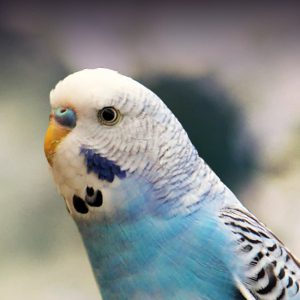
parakeet budgie

My nickname was “Tweety Bird.” It was absolutely not an affectionate nickname.

This is all textbook Asperger’s, looking back, but the idea that I was on the spectrum at all didn’t enter my mind until I was well into my teen years. The therapist I’d had at age 13 had mentioned the possibility to my mother, but I don’t recall her ever telling me for several years. And why would she? Back then, “autism” was even more of a dirty word than it is now. Why supply the kids who gave me hell in elementary and middle school even more fodder?

A few days ago, this popped up on my Facebook feed.

Credit: Hvppyhands

This comic hit me hard. I slipped through the cracks as a kid because I got good grades and didn’t cause any issues in the classroom, but no one ever bothered to address my difficulties relating to others and making friends.

You see, when you’re on the spectrum, you’re often forced to “mask” the quirks that make you, well, you. You’re a square in a circle world, and you better believe that world is going to hammer your edges hard until you barely resemble the shape you began as. I remember when I first became aware of my own weirdness, somewhere around seventh grade. The stereotypical teen dilemma. I had a crush on a boy, and a popular one at that. I observed the way his friends acted and dressed and tried my hardest to emulate that. Gone were the clothes I felt comfortable in, and I put away the childish things I was obsessed with in favor of more typical interests. It got easier in high school. I was lucky enough to come of age at a time when the “manic pixie dream girl” type was trendy, so suddenly it became “cute” to be the weird girl. It took me a while to learn to pass as “normal,” but I became damn good at it. By senior year, I was class president and colorguard captain, but I still felt like I was concealing parts of myself.

That’s one of many reasons why autism is so hard to detect in adulthood — you’ve had all these years to learn how to mask these quirks. By the time you ask your current therapist about it, you’re met with a shrug. You might be some variety of autistic, but it doesn’t affect your life, so why bother getting a proper diagnosis? You’ve held down a job, you’ve had relationships — hell, you’ve been married! You’re not a “true” Aspie. And to be honest, this hurts. Your identity is entirely invalidated by the hammers that smushed in your edges to make you a socially acceptable circle. Or perhaps hexagon, because you know you’ll never be the perfect little circle everyone expects you to be. No matter how well you pass, you’ll always feel “other.”

That’s why I want to be more vocal about my experiences with Asperger’s and being on the autism spectrum, “proper” diagnosis or not. Because someday, some little girl not unlike my younger self might read this and realize that she doesn’t need to change herself for anyone.

It’s okay to be eccentric.