
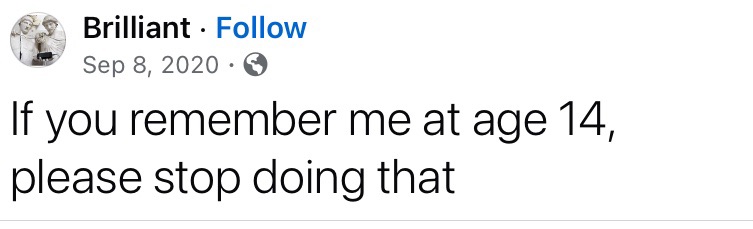
I was on That God-Forsaken Platform That Shall Not Be Named when I saw someone share this status:
Everyone is cringy at 14, but I was a special kind of cringe. You see, at age 14, I was a very different Jessa (or shall I say, Jessie, as I was going by back then). I was in a sort of state of transition, as most people are at that age. For me personally, that transition was between shy, awkward me and cool, confident me.
I remember the catalyst for that transition being my seventh grade obsession with this cool guy named Kyle Kelley, who I was definitely going to marry someday. Suddenly, I wasn’t content to stay in the corner doodling pictures of Richie Sambora and imagining what Pokémon I wanted to add to my team when I got home. I desperately wanted to be one of the popular girls, like Kyle Kelley’s cheerleader girlfriend.
But that would involve me — gasp — talking to other kids!

I’ve touched on my autism before. I will admit I’m not officially diagnosed yet — it’s damn near impossible to get a proper diagnosis as an adult AFAB person. Because of the sheer amount of gatekeeping when it comes to diagnosis, most autistic folks accept self-diagnosis as valid. And believe me, the signs were all there. I was sensitive to loud sounds, hiding whenever I heard the neighbor girl’s loud bass from her car or the sound of the vacuum cleaner. I’d hyperfocus on things like Bon Jovi and parakeets, learning everything I possibly could about them and talking incessantly about them to anyone who’d humor me. I’d stim by making bird sounds and running around randomly. I would finish my homework quickly so I could spin around in the back of the classroom (okay, that one might be on you, ADHD). And I was garbage at socializing. Talk to people? You might as well have asked me to build a rocket to the moon, because that was not happening.
Then, of course, I met Kyle Kelley and suddenly, I had this burning passion to become “cool,” whatever that even meant. I studied meticulously the mannerisms and interests and the clothing of the girls I thought were cooler than me. It was almost like a science project, observing the “cool girls” in their natural habitats and trying to emulate them. Looking back, it was just baby-me learning how to mask, and I was absolutely terrible at it at first.
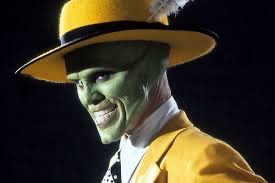
Which led to me being labeled something of a bimbo, despite me being one of the smartest kids in my class.
I didn’t know how to speak to people properly, and I’d often clam up when confronted with an actual conversation. And so I’d say the first dumb thing that came to my head in my desperate attempt to say anything. I honestly didn’t know how to interact with other folks my age. I figured it was better to be considered dumb than be an outcast, and the kids in my grade thought I was funny and silly because of it. So I went along with the “dumb blonde” label, because at least it wasn’t “weird kid.” It was such a pervasive label, I even got typecast in the school play as the stereotypical bimbo. Like, this character was soap-eating levels of dumb. At least I didn’t have to actually eat soap for the bit (it was white chocolate).
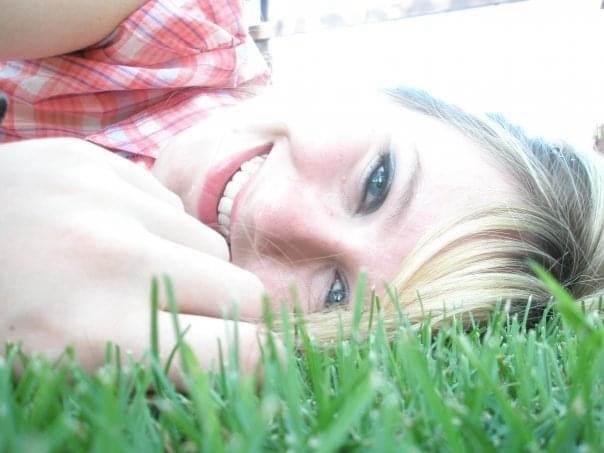
At some point between high school and university, socializing became more natural to me and I was able to shed the “dumb blonde” label. I certainly shed the “blonde” label when I dyed my hair dark (bleaching was starting to take a toll on my hair, and I wanted to emulate my hero, Ann Wilson). But I still have some empathy for the little girl who thought popularity was more important than being viewed as smart or deep. It wasn’t her fault people didn’t take the time to get to know her as anything else.
 JESSA JOYCE