
Fair warning: I’m going to be writing about this topic a lot in the next few months for reasons I’ll elaborate on in a few paragraphs.
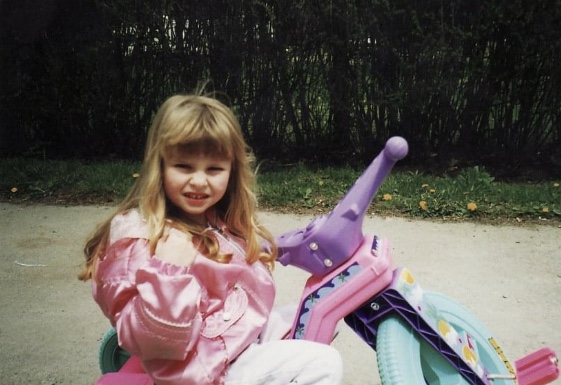
My last blog post delved a little into what it was like growing up autistic and how I’ve learned to mask to such a degree that most of my psychiatrists don’t even take me seriously when I mention that I’m likely on the spectrum. For that reason, I’ve been hesitant to “claim” the title of autism. If I’m “cured,” then I don’t have autism anymore, right? If I can blend in enough with the “normies” to not have any visible disability, and I can’t even get a proper diagnosis, I’m not really autistic. I’m just faking it for attention. Initially, I gave up on getting “properly” diagnosed for that reason.
Last week, I began research on my project for the undergraduate symposium. It will go hand-in-hand with my presentation that is conditional for my receiving of the Brehm fellowship, awarded to students who are looking to contribute to the field of disability research and advocacy. I chose autism as my focus, primarily because it has affected my life in deeply personal ways, even without a clinical diagnosis.
Even if I had to “change” to fit in with neurotypical society.
One of the books I found myself drawn to study was Unmasking Autism by Dr. Devon Price. His research comes from a neurodivergent place, being autistic himself, as well as having a queer perspective as a trans man. The book focuses on the ways neurotypical “passing” folks have used “masks” to fit in with societal norms. Traditionally, these masks were forced on us by things such ABA, now viewed as harmful by most autistic advocates. Some of us, like me, consciously decided to, as I like to say, break our own bones to fit in someone else’s box.
At this point in life, after decades of studying people’s behavior and learning what works and what doesn’t in social situations. I “pass” well enough that I’ve hesitated to claim the autistic title. I’m scared I’ll be looked at as a fraud by the community, someone who claims the title for clout and to excuse my admittedly sometimes annoying idiosyncrasies. But as I’m learning, that’s about as nonsensical as me trying to pass as straight for so many years when I knew damn well I was pansexual, and about as harmful too. It’s harmful to the community, as I perpetuate internalized prejudices by denying my identity, and it’s harmful to myself, as I force my body and mind into a crevice they were not designed to fit into.

Here’s the thing — Price explains that oppressed folks are ridiculously underdiagnosed because we’re forced to conform even more than people who are part of the majority. Straight white dudes can skate by on their privilege, but we have to try harder to make it in this world, and part of that involves hiding the less socially acceptable pieces of ourselves. Not only that, but the current diagnostic tools used for detecting autism is literally based on its presentation in white little boys. If you’re black, or an adult, or a woman, or any combination of that, it’s damn near impossible to get a proper diagnosis because of implicit biases in the testing process.
Here’s the other thing — a proper diagnosis isn’t a requirement to be part of the autistic community. In addition to the roadblocks mentioned above, there’s also the problem of access to testing, which is often prohibitively expensive and not readily available to everyone. For this reason, self-diagnosis (or as Price puts it, self-realization) is valid. If you relate to the autistic experience, you’re probably one of us. Surprise!
So that’s that. I’m autistic. And no, I don’t have autism any more than I have pansexuality. It’s just part of me. And that’s important, because we need more people to advocate for people like us.
Just a few days ago, a dear well-intentioned friend of mine invited me to an online seminar about some wellness products. The speaker went on and on about how her tinctures and potions can cure this and that. And then — I shit you not — she spoke this exact sentence:
“Our products have been shown to eradicate autism.”
Almost immediately, I excused myself and logged off. I felt gross, like someone told me they could fix my gay, as if that wouldn’t erase the beautiful, loving relationship I have with my wife. This time, that sentence — it was about me. It took me three decades to come to terms with who I am. It took me three decades to learn to have a beautiful, loving relationship with myself, with my own identity. And the fact that someone tried to sell me a cure for that feels insulting.
We need more people to fight the good fight for us. We need more people to stand up and declare that there’s nothing wrong with us, just that society isn’t built for us. We’re not the problem, the current rigid sense of “this is what is socially acceptable and this is what is not” is the real problem. As long as we don’t fit into the narrow ideals of what is acceptable behavior, we’re going to continue to be dehumanized and discriminated against. So something needs to change, and maybe it shouldn’t be us.
This was a lot of words, but I feel like it’s important to say. I am autistic, and I don’t owe anyone a proper diagnosis to claim that. Not in a world that makes it prohibitively difficult for an AFAB adult to even get clinically diagnosed, let alone get assessed. Not in a world that beat all the quirks and idiosyncrasies out of me before I even reached adulthood.
No, I don’t owe anyone a damn thing.
 JESSA JOYCE