Two Girls, One Objective Truth

I want to start this blog post with a song. This is the musical episode.

It’s a beautiful piano piece, and one I happen to really like. It’s a simple, melodic piano composition titled “Lover’s Theme,” penned by a contemporary French composer, Hervé Roy (1943-2009). Take a moment. Close your eyes and let your mind wander. What mental images come to mind when listening to this piece?

I’ve been studying music therapy research methods and philosophies. Or rather, my program is making me study music therapy research methods and philosophies, but I’m a big enough nerd-in-an-unfun-way that I probably would study this topic unprovoked.
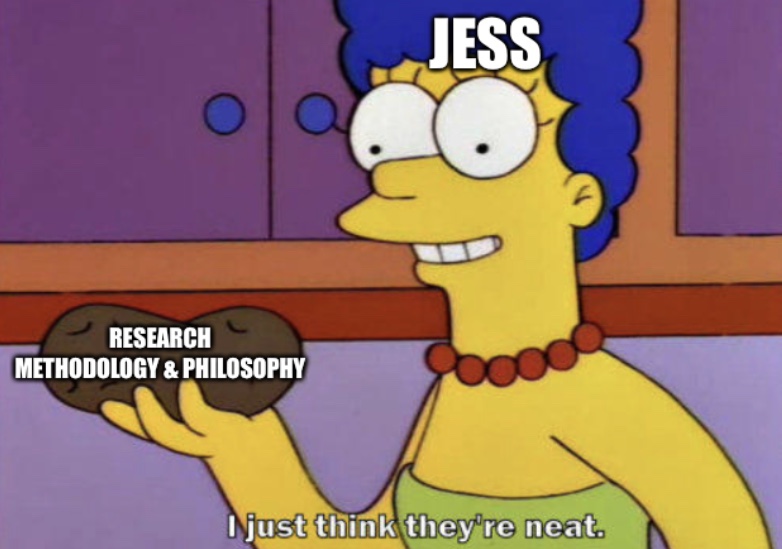
In formulating our capstone project, we’ve been asked to self-assess and analyze our ways of thinking when it comes to this stuff. See, there’s several schools of thought in music therapy research, but two stood out to me as polar opposites — positivism and constructivism. Positivism is essentially the belief that there is an absolute truth that can be measured, while constructivism tends to believe that many things can be true at once and often depends on a person’s lived experience. Neither of these ways of thinking are superior, but it helps to know which side of the coin you’re on before embarking in a research activity.

Most of my classmates leaned toward constructivism. Me? I was the weirdo positivist.

Maybe it’s because I come from an evangelical background that always preached that there was the way, the truth, and the life, and that was Jesus, and there was absolutely no other way to God, do not pass go, do not collect $200. Maybe it’s the fact that I’m autistic and tend to think more literally than a lot of people. I like facts, and proof, and facts that I can prove in some quantitative way.

Maybe there’s more than one answer to the big questions of the universe, but one thing has to be truer than everything else, right?

I really want to think I could play a song like the one above and everyone would have a universal and measurable experience. Like, the sound of a pretty piano piece increases serotonin in the brain by an average of 45 percent in all subjects of the study.

Unfortunately, serotonin is not the bodily fluid most associated with that piece.

You see, several years ago, a video went viral on ye olde interwebs. An absolutely putrid, disgusting video of two women enjoying each other’s…company. I’m not going to name it here, but if you haven’t gleaned what video it is by now, congratulations! You haven’t been corrupted by the internet!
This bowl of ice cream has no relevance to this post. Carry on.

Unfortunately (and probably to the chagrin of Mr. Roy), the piano piece you just heard was used as background music for the aforementioned shock video. So if you’re like me and had sadistic friends, you were probably tricked into watching this monstrosity. And chances are, you were traumatized.

You see, positivism doesn’t account for people’s unique experiences. If you’ve never heard the song in the context of that video, you’d probably have a very different reaction than someone who has. This is why learning to see things from other perspectives and accepting that there’s no one “correct” perspective is so important in music therapy. Music doesn’t exist in a vacuum. A song might evoke a positive emotion for you, but to someone else, that song was performed by their abuser’s favorite band. Or perhaps someone in that band was an abuser: I can’t listen to Brand New or All Time Low the same way anymore, which means half of the music I liked in high school is ruined forever. Thankfully I’ve still got Jimmy Eat World.
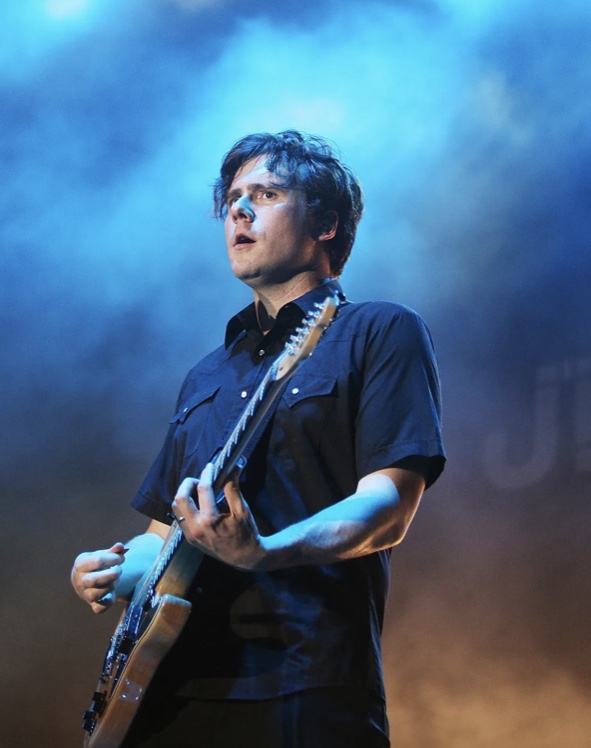
DON’T LET ME DOWN JIM ADKINS.

I never got why music therapy, especially certain listening experiences, were contraindicated for particular patients. Music evokes a lot of emotions, and they’re not always positive. That’s the danger of a strictly positivist philosophy. Emotion is not easy to quantify, and it’s even more difficult to predict.

My perspectives are changing all the time, and the older I get, the more I’m realizing that everyone has a different version of reality. Maybe humans are more complicated than can be described with numbers. Maybe I need to learn to be okay with that. I always sought solace in certainty, in knowing there was an answer. Perhaps no one can know the answers, because there are none. Or conversely, there’s a zillion correct answers.

I may never know for sure, and I need to accept that.
In Search of the “Genesis Week” and the Innately Human Act of Creation

If you didn’t grow up in the church, the idea of a “Genesis week” is probably foreign to you. If you did grow up in the church, you probably heard it told a zillion times in Sunday school, but maybe never heard it phrased that way. Basically, it’s the creation story of the Abrahamic faiths — God spoke, and in seven days, the universe was formed.

These days, in my post-evangelical philosophy, I don’t believe the world was formed in seven 24-hour days, but over several eras, in accordance to what we now know from scientific discoveries. This ideology is known as old-earth creationism, and seeks to reconcile the concepts of evolution and the text of the holy scriptures. In fact, the Hebrew word for “day,” yom, can mean a period of time, not just 24-hours, which implies the creation “week” was actually millions upon billions of years.

This is tangentially related to the topic at hand, kind of (I hope).

I’ve been a little creatively stifled as of late, mostly owing to my own dumb brain. I’ve been meaning to post the entire first part of my story (not just the intro), but I keep chickening out and not doing it. At the same time, my band is in the midst of recording its debut album, and of course, that’s progressing at a snail’s pace too. I want to write and play music and draw and dance and do all of the things that have been on my heart, but I just can’t seem to shake this mental block.

I revisited Psalm 51, the emo poetry King David wrote after being called out by the prophet Nathan for thinking with his dick. (I need to be a biblical scholar with these descriptions, I swear.) I’ve always related to this passage as someone who’s also slutted too close to the sun and ended up hurting people I care about (although I never, you know, had a dude killed in war so I could sleep with his wife). A lot of the time, when reading through this psalm, I’d reflect on the whole “I suck and need God’s grace” aspect of it, but there’s a sneaky little part that I’ve always overlooked. I discovered it when I switched over to The Message version of the Bible, which is basically the translated scripture disguised as John Mayer lyrics.

God, make a fresh start in me,
shape a Genesis week from the chaos of my life.

-Psalm 51 (MSG)

There it is! The Genesis week!

The intention of this verse, I’m assuming, is that we need God to take a Genesis week to work on us, but my first instinct was to apply this to my own life as well. Do I need a Genesis week — a week (or an entire era) of intense creation?

Humans are innately creative, but I feel like sometimes we suppress that part of ourselves. As children, we were always playing make-believe and acting out stories we made up. The fact that we’re born like this is no accident — we were made in the image of God, and so the power and desire to create is rooted in the very depths of the human spirit. It’s the one thing that makes us different from the rest of Animalia. Even if my cat had opposable thumbs, he still wouldn’t be able to paint a picture, or write a story, or dance in a ballet production (as hilarious as that would be). That’s a uniquely human characteristic.

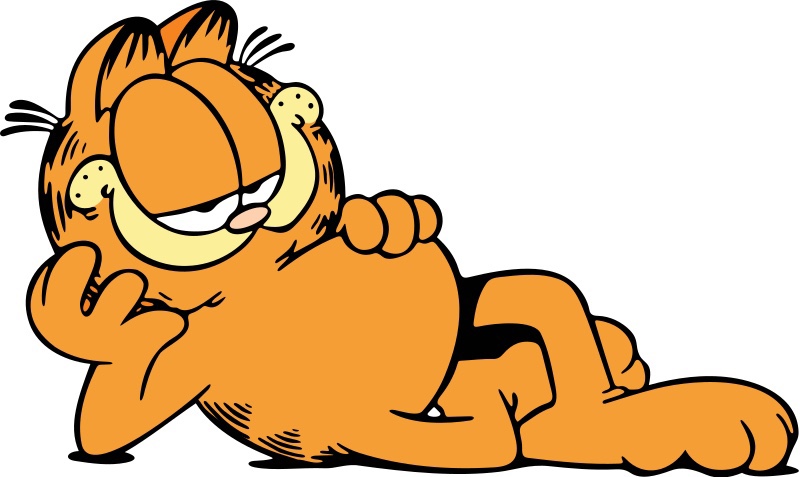
Basically, when God created humans, He gifted us with His own special ability to imagine, to create. Think about it — the power that created the entire universe is inside you! And yet, we take that for granted. Our society tries to beat the imagination out of you before you have the change to do something revolutionary with it, and sadly, it often succeeds. It reduces us to little more than lazy housecats content to eat, sleep, and poop all day. We were built to be like God, but spend most of our time being like Garfield.

I think we all need a Genesis week. Imagine what would happen if we all stepped back for a while and did what made our hearts happy. What would happen if we threw ourselves into our creations and stopped caring what other people think? What if we wrote, sang, danced with abandon? What if instead of being so divided, we united over music and art and storytelling, the way we were intended to be? I think that would spark more than just a revolution. It would create a new Eden, a place of peace and contentment.

There’s a reason I study music therapy, and it’s because I feel there’s nothing closer to God than the act of creation. Nothing heals and changes people quite like creating music — or creating anything for that matter! Throw yourself into your creative endeavours, and if you don’t have one yet, find your passion. Maybe it’s baking. Maybe it’s knitting cat sweaters. It doesn’t matter.

Just create.

I’m Autistic (And Why That Matters)

Fair warning: I’m going to be writing about this topic a lot in the next few months for reasons I’ll elaborate on in a few paragraphs.

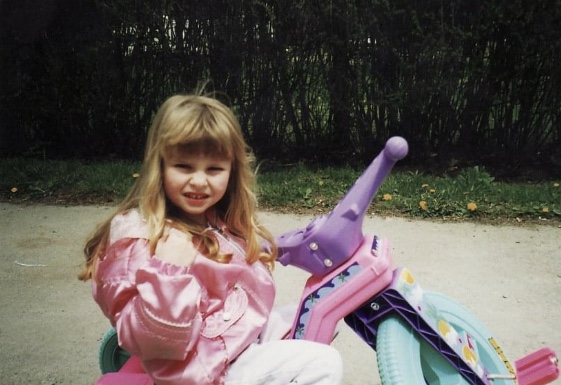
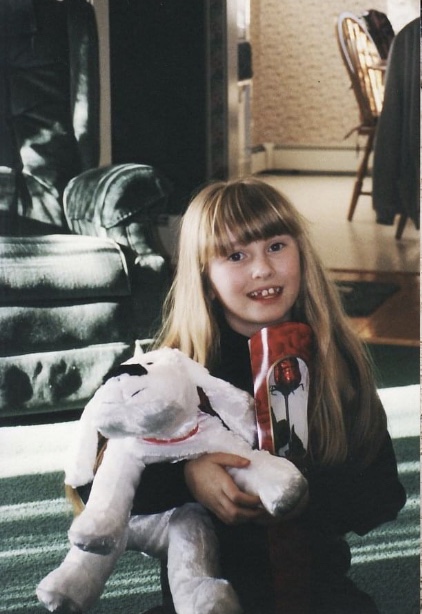
And yes, I will be using this topic as an excuse to post as many adorable pictures of little Jess as I can.

My last blog post delved a little into what it was like growing up autistic and how I’ve learned to mask to such a degree that most of my psychiatrists don’t even take me seriously when I mention that I’m likely on the spectrum. For that reason, I’ve been hesitant to “claim” the title of autism. If I’m “cured,” then I don’t have autism anymore, right? If I can blend in enough with the “normies” to not have any visible disability, and I can’t even get a proper diagnosis, I’m not really autistic. I’m just faking it for attention. Initially, I gave up on getting “properly” diagnosed for that reason.

Last week, I began research on my project for the undergraduate symposium. It will go hand-in-hand with my presentation that is conditional for my receiving of the Brehm fellowship, awarded to students who are looking to contribute to the field of disability research and advocacy. I chose autism as my focus, primarily because it has affected my life in deeply personal ways, even without a clinical diagnosis.

Even if I had to “change” to fit in with neurotypical society.

One of the books I found myself drawn to study was Unmasking Autism by Dr. Devon Price. His research comes from a neurodivergent place, being autistic himself, as well as having a queer perspective as a trans man. The book focuses on the ways neurotypical “passing” folks have used “masks” to fit in with societal norms. Traditionally, these masks were forced on us by things such ABA, now viewed as harmful by most autistic advocates. Some of us, like me, consciously decided to, as I like to say, break our own bones to fit in someone else’s box.

At this point in life, after decades of studying people’s behavior and learning what works and what doesn’t in social situations. I “pass” well enough that I’ve hesitated to claim the autistic title. I’m scared I’ll be looked at as a fraud by the community, someone who claims the title for clout and to excuse my admittedly sometimes annoying idiosyncrasies. But as I’m learning, that’s about as nonsensical as me trying to pass as straight for so many years when I knew damn well I was pansexual, and about as harmful too. It’s harmful to the community, as I perpetuate internalized prejudices by denying my identity, and it’s harmful to myself, as I force my body and mind into a crevice they were not designed to fit into.

Cats make it look so easy.

Here’s the thing — Price explains that oppressed folks are ridiculously underdiagnosed because we’re forced to conform even more than people who are part of the majority. Straight white dudes can skate by on their privilege, but we have to try harder to make it in this world, and part of that involves hiding the less socially acceptable pieces of ourselves. Not only that, but the current diagnostic tools used for detecting autism is literally based on its presentation in white little boys. If you’re black, or an adult, or a woman, or any combination of that, it’s damn near impossible to get a proper diagnosis because of implicit biases in the testing process.

Here’s the other thing — a proper diagnosis isn’t a requirement to be part of the autistic community. In addition to the roadblocks mentioned above, there’s also the problem of access to testing, which is often prohibitively expensive and not readily available to everyone. For this reason, self-diagnosis (or as Price puts it, self-realization) is valid. If you relate to the autistic experience, you’re probably one of us. Surprise!

“ONE OF US. ONE OF US.”

So that’s that. I’m autistic. And no, I don’t have autism any more than I have pansexuality. It’s just part of me. And that’s important, because we need more people to advocate for people like us.

Just a few days ago, a dear well-intentioned friend of mine invited me to an online seminar about some wellness products. The speaker went on and on about how her tinctures and potions can cure this and that. And then — I shit you not — she spoke this exact sentence:

“Our products have been shown to eradicate autism.”

Almost immediately, I excused myself and logged off. I felt gross, like someone told me they could fix my gay, as if that wouldn’t erase the beautiful, loving relationship I have with my wife. This time, that sentence — it was about me. It took me three decades to come to terms with who I am. It took me three decades to learn to have a beautiful, loving relationship with myself, with my own identity. And the fact that someone tried to sell me a cure for that feels insulting.

We need more people to fight the good fight for us. We need more people to stand up and declare that there’s nothing wrong with us, just that society isn’t built for us. We’re not the problem, the current rigid sense of “this is what is socially acceptable and this is what is not” is the real problem. As long as we don’t fit into the narrow ideals of what is acceptable behavior, we’re going to continue to be dehumanized and discriminated against. So something needs to change, and maybe it shouldn’t be us.

This was a lot of words, but I feel like it’s important to say. I am autistic, and I don’t owe anyone a proper diagnosis to claim that. Not in a world that makes it prohibitively difficult for an AFAB adult to even get clinically diagnosed, let alone get assessed. Not in a world that beat all the quirks and idiosyncrasies out of me before I even reached adulthood.

No, I don’t owe anyone a damn thing.

Phantom of Me

Damn it, Rina Sawayama. This website is going to turn into a fan blog if you keep this up.

I swear this woman lives rent free in my head.

I was on my way to work, listening to her as per usual, when her song “Phantom” came on. I’d listened to it in passing, but I never really listened to it. The second verse just hit me like a truckload of turkeys.

If I could talk to you, I’d tell you not to rush
You’re good enough
You don’t have to lose, what makes you you
Still got some growing to do

When did we get so estranged
Haunted by the way I’ve changed
Claiming back the pieces of me that I’ve lost
Reaching in and hoping you’re still, waiting by the windowsill
I’d bring you back to us

I wasn’t a popular kid. Quite the opposite, actually. A lot of it, looking back, was because of my (finally freaking diagnosed) ADHD and (still freaking undiagnosed) autism. I was the weird kid who spun around in the back of the classroom and stimmed by making parakeet sounds. I had special interests like 8-track tapes and Bon Jovi, stuff “normal” kids thought were strange. I had sensory issues when it came to smell and gagged at the scent of ranch dressing, which my peers loved to torment me with. I had to eat lunch in the library to avoid being pelted with the stuff! And it’s so easy for me to forget that I used to come home from school crying every day because kids are so fucking cruel.

What changed?

In the autistic community, there’s a term called “masking.” You hide parts of yourself to fit in. You learn to “pass” as neurotypical, because there’s no other way for people to love you. When I got into middle school, something flipped. I methodically studied what the “cool kids” were wearing and doing, and made myself into a caricature of who I really was in order to be the “most popular” version of myself. I clipped my own colorful wings to become something I wasn’t, all for my peers’ approval. And it worked. By senior year, I was unrecognizable. By college, I was — dare I say — popular. But little Jess—

that Jess was dead. And I killed her.

I’ve brought up getting a proper autism diagnosis to my therapists several times, and each time I get almost laughed out of the clinic. But you’re so popular, and social. You don’t look autistic, whatever that means. You don’t go on and on about your special interests — because I learned early on that talking about the color of Richie Sambora’s toothbrush would get me ostracized. You don’t stim — because making silly little sounds and moving my body in ways that make me feel good aren’t “socially acceptable.” You don’t have sensory issues — because I had to force myself to deal with things that made me really uncomfortable, because otherwise, no one would like me.

I broke my own bones to fit in someone else’s box, and left me with a phantom of myself.

I wish I could tell my younger self that she doesn’t need to change to fit in. That she doesn’t need to hide entire parts of herself. That she’s valuable the way she is, and doesn’t need to change. That’s why autism acceptable — not just awareness — is so important. Because somewhere, some little girl is feeling the exact way I felt back then. And I don’t want her to feel like she needs to kill her autistic self in order to be loved.

I hope she’s still there, waiting by the windowsill.

Raising a Glass (of Stinky Ass Mineral Water)

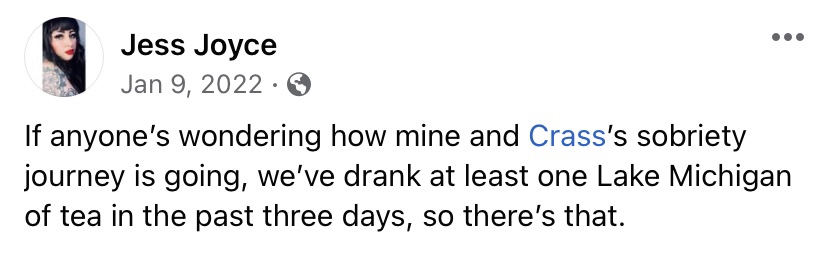
Two things happened recently. I saw a beautiful post by a woman who was addicted to crack and got her life together, and made a heartfelt video about her journey. And then, this status popped up on my own memories:

“One Lake Michigan” is a valid unit of measurement in the Midwest.

It’s been a year since I decided to get my own shit together (for real), and while I did slip up a few times, this was the anniversary of the day my wife and I dumped our liquor and threw our vapes in the trash. That was the beginning of the arc of my story where I actually cared about my health, which led to my current character arc of “working out, taking vitamins and proper medication, and eating better.” It started with that small step of deciding I was better than getting blackout drunk every night and poisoning my body.

And it feels good.

Like, I actually LIKE my body now. Who’d a thunk?

This New Years was a dilemma, since it was the first New Year’s Eve I’ve ever spent sober since I’ve been old enough to drink. Would I make an exception for a nice glass of champagne?

Or would I invent my own tradition?

Back in February, Crass and I got legally married (still waiting to have that big official shindig until we have the money). Our first purchase as a couple was this mineral water we saw on some Ghost Adventures-type show. They were investigating a supposedly haunted Well in Texas, and they sold cases of water from it. This guy was drinking some and it looked like he was having a great time, so we impulse-bought a case of fancy schmancy stinky ass mineral water on our wedding night. Our first purchase as a married couple.

So anyways, we still had some leftover. Not because it tasted bad, but because it was the kind of water that’s hard to guzzle. You know, the kind of heavy water that tastes too mineral-y to be refreshing, but tastes good nonetheless. I don’t know how to describe it properly. I’m not a water reviewer, I’m a lifestyle blogger.

So we cracked open a bottle of fancy schmancy stinky ass mineral water, and celebrated at midnight by toasting with it and dancing to the Black Eyed Peas.

Let’s get it started, indeed.

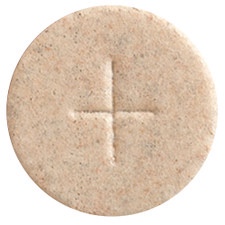
It sucks that I can’t partake in traditional traditions like toasting with real champagne, or cracking open a cold beer at a race (because that’s a thing my hillbilly family does). Hell, I can’t even take Communion properly if I wanna get real technical, although now that I’m Methodist, I don’t use real wine anyways.

Might as well drink grape juice if this is the bread we’re stuck with.

Sometimes, recovery doesn’t look like a carefully curated TikTok video of all your wins. Sometimes, it involves sacrificing long-held traditions. But the beauty of letting go of tradition is that you can start your own, more meaningful traditions in its place. Champagne on New Year’s Eve is a nothing tradition to me. It’s just peer pressure from dead people.

Now, stinky ass mineral water on New Year’s Eve? That’s something unique. That’s something special.

That’s what recovery looks like.

A Blog Post About Making Babies (Kind Of)

Made you look!

Well well, it’s 2023. I’m going on my thirtieth year of life, which is surreal to me. As a kid, all I wanted was to be old. Well, specifically a grandma, so I could have people do stuff for me and I could watch game shows all day.

Living the dream.

Now that I’m actually getting older, the idea scares me. It’s not like I haven’t talked about this on my blog before (so much that I’m too lazy to link all the times I mention my fear of getting old). A lot of it is that I’m scared I’ll be viewed as geriatric in the music business, that people won’t want some 30-something rock star over all the fresh young meat out there. But there’s another side to my fear of growing up, one I always sneered at when other women discussed it in the past. 

The ol’ “biological clock is ticking” feeling.

I feel like it’s often frowned upon in alternative, queer, feminist-leaning communities to want a family and kids. Which is a damn shame, because we’d make much better parents than those creepy reactionaries with a definite breeding fetish and a need to fill their metaphorical quiver with like, twenty soldiers for the Lord.

Looking at you, Duggars.

Maybe I do have a slightly spiritual reason for wanting kids of my own though — I feel it’s my duty to raise up kids who change the world for the better. There’s no higher calling, right? And people have been procreating since the dawn of time. What if my bloodline ends with me? Will I have failed on the most basic measure of success? Animalistic instincts literally exist to keep a creature alive to propagate its species. It’s both a spiritual and an evolutionary need.

But what if I fail? What if I never have kids of my own?

My wife and I are planning on trying for a baby after I graduate from music therapy school and we buy a house, which is way closer than I could have ever imagined. Life moves so slowly day to day, I forget I’m about to jump into the next stage of life soon. And part of that stage involves me getting knocked up (with some help from a sperm donor, obviously). But I’ve never tried for a baby before. All my sexual experiences with penis-havers were characterized by me actively trying NOT to get pregnant. And as far as I know, I’ve never been pregnant before. What if I like, straight-up can’t?

The idea scares the shit out of me. That someday, I will die and no one will be alive to carry on my legacy. That I’ll be completely forgotten.

Why yes, this scene from Coco did traumatize me, a grown woman.

I know I shouldn’t worry about it too much yet. My mom had me at 38, for cryin’ out loud. I’ve got at least eight years to make these kids, right? Right?!

I guess what’s helping me get through this albeit normal fear is that we’re people, not simply animals, and we’ve created multiple ways to “have kids.” Maybe that kid is a work of art, or a story, or a song. Freddie Mercury never had a biological child, but we still know who he is, and people will know him for generations to come. How many others have that honor? Think about it — do you even know your great-great grandma’s name? In the end, we all get forgotten, no matter how many children we bring into this world, unless we do something great on this Earth that will live on after we’re gone.

This has been a really depressing blog post considering it’s the first post of the new year, but I don’t mean for it to be. Rather, it’s a call to do something big with the little time you have here. You’re worth more than just your ability to make babies.

I need to keep reminding myself of that, too.